


Susan B. Whiting
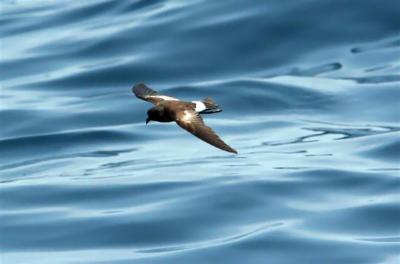
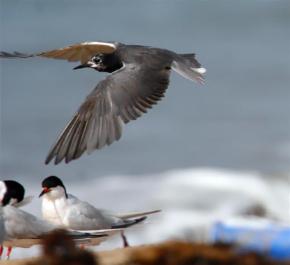
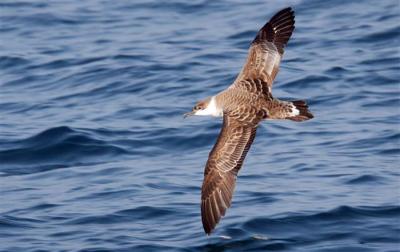
Capt. Flip Harrington took a crew of six of us offshore in his M/V Dovekie on July 18. At one point we were 60 miles offshore, yet the bird life was lackluster to say the least. The most numerous species was the Mother Cary’s Chicken or Wilson’s storm-petrel. We spotted around 135 of them. Next in line were the greater shearwaters, at 25 strong, and lastly the Cory’s shearwater, of which there were two. We had a few of great-black-backed, herring and laughing gulls, double-crested cormorants, common loons, and near Noman’s Land, common eiders. We were all shocked at the huge numbers of double-crested cormorants that were loafing on the cobble beach at Noman’s Land. There is a small colony of common terns near the old dock and among the semipalmated plovers and least sandpipers on the wrack line was one pectoral sandpiper.
The beach is the place to be. July’s hot weather this summer beckons people to a place to jump into the ocean, sound or pond to cool off. Now there are a bunch of us who wear weird-looking long pants that zip off at the knees, long-sleeved shirts with a label that says “Buzz off” and sneakers or hiking boots on the beach. We don’t carry umbrellas or picnic baskets but sport binoculars around our necks and perhaps a spotting scope over our shoulders. We are birders or bird watchers.
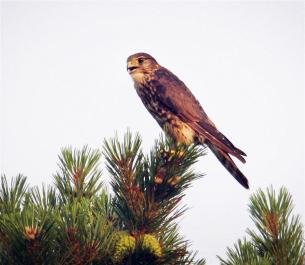
It all started with a message on the bird hot line which I received on July 2. A Chappaquiddick summer resident called to say that she had a pair of merlins that appeared to be nesting on her property. Hmm, said I. I was pretty sure there were no records of merlins nesting in Massachusetts, but I checked the Birds of Massachusetts, by R. Veit and W. Petersen before I called. I was right.
It is very weird for this Island girl to spend a week at 8,000 feet and walk in snow in June. Last week I attended the American Birding Association Conference in Snowbird, Utah.
The mountains were spectacular but so was Salt Lake. The variety of habitats I visited was mind-boggling.
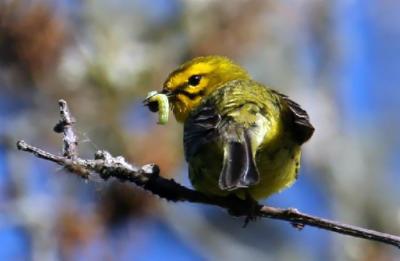
Visions of wide open spaces are what one thinks of when they hear the name prairie warbler. Unfortunately, this lovely yellowish warbler has not been named appropriately. Dendroica discolor is the prairie warbler’s Latin name. Loosely translated, this Latin moniker means multicolored dweller of trees. Now that aptly describes the prairie warbler. How prairie got into the mix remains a puzzle to me.
“Susan, I have what I swear is a peacock hanging precariously onto my niger (thistle seed) feeder. Earlier the same bird was enjoying cooling off in my garden sprinkler. I am sure it is someone’s pet — do you know who owns peacocks in West Tisbury?”