


Tim Boland
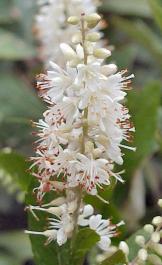
It is often said that our strongest memories are evoked through our sense of smell. For many, the delightful scent of our native summersweet, Clethra alnifolia, calls to mind summer on the Vineyard. At the peak of the season, summersweet’s scented white flowers perfume the air with their sweet fragrance. Adapted to flowering in deep shade as well as in full sun (with sufficient moisture), large colonies of this native shrub occur in natural areas throughout the Island.

Big, blue snowballs of hydrangeas backed by a white picket fence are a summer staple on the Vineyard. While the mophead flowers of bigleaf hydrangea (Hydrangea macrophylla) are the most popular with tourists, there is a whole world of hydrangeas for gardeners to explore. On a seed-collecting expedition to Japan in 2005, I encountered three other hydrangea species that are valuable ornamentals: the panicle hydrangea, (Hydrangea paniculata), the mountain hydrangea (Hydrangea serrata), and involucre hydrangea (Hydrangea involucrata).
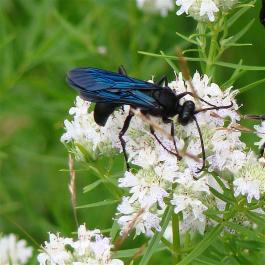
There are many good reasons for growing native plants. Native plants are adapted to local growing conditions, they promote biodiversity and support local wildlife, and in general they need less maintenance. Besides, native plants are Vineyard vernacular — they just look right in our gardens and landscapes.
The Polly Hill Arboretum’s herbarium collection began in 2001, with a gift of algae specimens from Island resident and seaweed expert, the late Rose Treat. A herbarium is a scientific resource consisting primarily of a collection of dried, pressed plant specimens. Herbarium specimens record the past and provide users with the historic and current locations of plants over time.
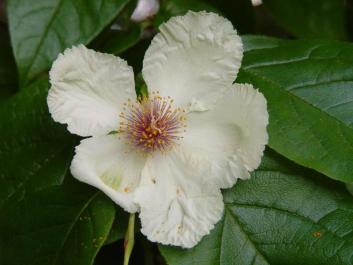
Polly Hill was well known for her love of stewartia trees. They are greatly admired by our visitors and represent years of hard work. Through Polly’s efforts and our continued devotion to these trees, we now have a recognized national collection. What does that mean exactly? The primary objective for the development of a national collection is to assemble the most comprehensive collection of plants within a particular genus.
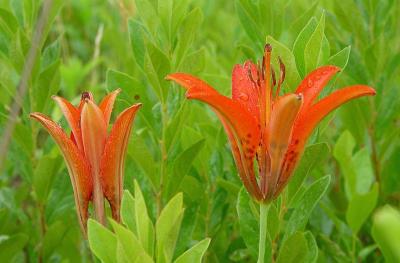
I was thinking the other day about an old friend, conservationist Rusty Walton, who died last year. To say he was quiet would be an understatement. I could rarely make a smile bend on his face no matter how hard I tried. However, as I think back on the times I spent with him it always makes me smile. He was a dedicated naturalist and an accomplished ecologist. He introduced me to my first wild patch of wood lily on the Vineyard almost 10 years ago. Recently I went back to the same spot and, surprisingly, the lilies, like Rusty were gone.