

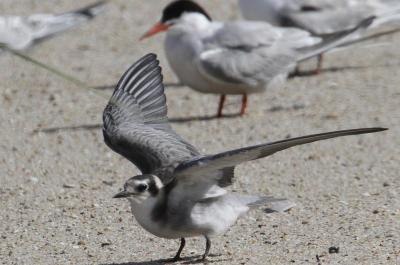
The tide is changing for the bird population. The summer residents are slowly departing and other species are arriving to fill that niche. The most obvious difference for beachgoers is the terns. Where there were a good number of terns in early August, there are just a few lingering souls. The smallest of our nesting tern species, the least tern, is extensively gone, headed for Florida and points south. There are many fewer common and roseate terns loafing on the flats and beaches.
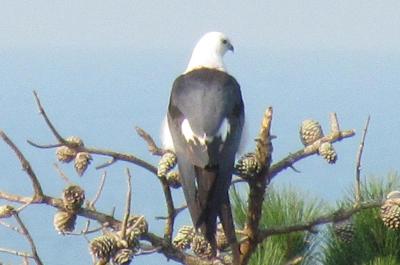
R.K. and Kathryn Warburton of Chappaquiddick were pleasantly surprised to have a rare raptor land in their yard for a spell on August 20. The Warburtons profess to be amateur birders, but they certainly knew that the bird in their backyard was one they had not seen before on the Vineyard. Kathryn was able to take several photos of the bird and their son sent them to me. Wow, a swallow-tailed kite! I wasn’t totally convinced until I saw the photos.

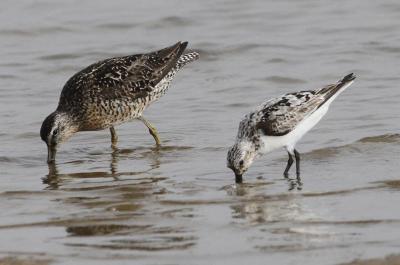
The summer is racing to an end. The Agricultural Fair is this weekend, the Chilmark Community Center programs end on Friday the 16th (although I will lead their last of the season bird walk on August 20), and people are beginning to return to their homes after their summer vacations. And along with all of this, the birding is changing. Large numbers of shorebirds are being found on the flats of the South Shore and along a few of the harbors and Great Ponds. Yellow warblers are disappearing, headed for their winter haunts in the south.
Tim Simmons, a restoration ecologist with the Division of Fisheries and Wildlife of the Natural Heritage and Endangered Species Program, asked Flip Harrington and me if we could take him and Paul Goldstein, an entomologist with Smithsonian Institute, over to Muskegat Island so they could do a survey of the insects on that island. Muskegat is about seven miles east of Cape Poge and is surrounded by moving shoals and is just to the west of Tuckernuk and Nantucket.
Dick Jennings has finished the 2013 osprey nest site inventory for the Vineyard. He found 71 breeding pairs, 23 failed nests and even with that, 87 young ospreys fledged. By towns the breakdown is as follows: Aquinnah had two productive nests, Chilmark had 11, Chappaquiddick had seven, Edgartown had eight, Oak Bluffs had seven, Tisbury had nine and West Tisbury had six.

I joined Allan Keith on July 20 and we did the mid-Island area for the butterfly count. The Vineyard butterfly count is organized by Matt Pelikan each year. It was hot and windy but we still were able to find 18 species. The total number seen by the butterfly counters was 31 species and 579 individuals. The skippers and hairstreaks were the most numerous, and for me the most difficult to identify.