

Nature & Science
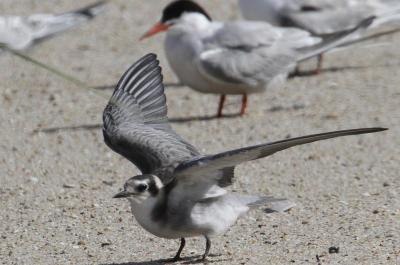
The tide is changing for the bird population. The summer residents are slowly departing and other species are arriving to fill that niche. The most obvious difference for beachgoers is the terns. Where there were a good number of terns in early August, there are just a few lingering souls. The smallest of our nesting tern species, the least tern, is extensively gone, headed for Florida and points south. There are many fewer common and roseate terns loafing on the flats and beaches.
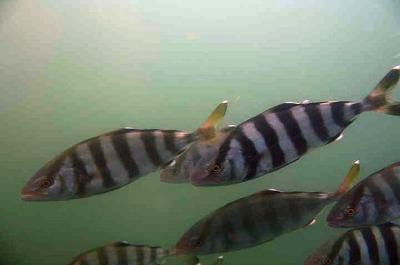
It was a somewhat small fish in a big pond. Though measuring just under a foot, this creature would never have to fish for a compliment.
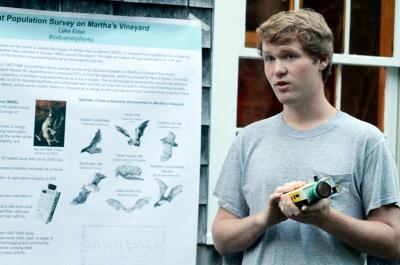
The bat detector sputtered and crackled from its post along Middle Cove Loop at Long Point Wildlife Refuge. It hadn’t yet made the telltale repeating noises that occur when an echolocating bat flies by, but by the time wildlife monitor Luke Elder returned to collect the device in the morning, numerous sonar squeaks had been recorded.

Scientists heading a worldwide shark-tagging research project will visit to the Vineyard Sunday to meet the public and answer questions.

She took her first antibiotic at the age of 19.
“I never really got sick,” Katina L. Makris told an audience of about 30 people on August 18 at the Chilmark Community Church.
This was all before she was bitten by a tick and later diagnosed with Lyme disease.
Ms. Makris’s inspirational talk was part of Bite Back for a Cure, a day on Martha’s Vineyard dedicated to finding a cure.
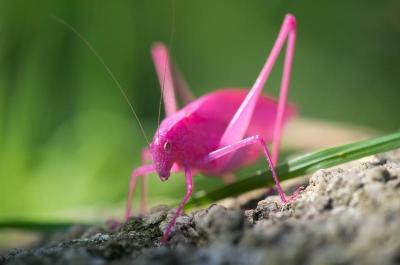
A caretaking crew for a private property in Aquinnah was hard at work Tuesday pruning dead branches with chainsaws. Sawdust was flying everywhere, so Alex Poole of Chilmark stepped down off the ladder to get the stuff out of his sneaker. While down there working on the sneaker, he was distracted by a flash of pink. On closer inspection, he announced: “Pink grasshopper!”
Albert Fischer, the man in charge of the crew, knew better. He’d seen katydids before, but never had they been pink.
Almanac
A comprehensive guide to weather and tides on the Island.

Vineyard Gardener
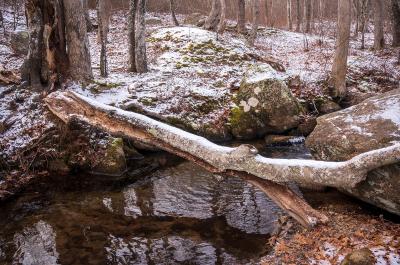
I guess this past week weather-wise is called a January thaw. We did not really experience it the last several years as December was unseasonably warm.
Farm & Field
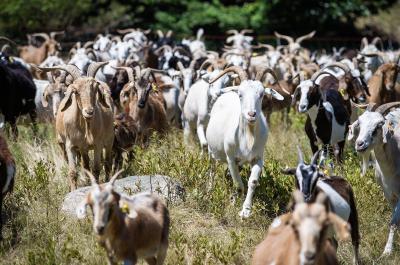
Beige and brown and tan and black, with horns spiraled or semicircular or in undulating waves, a legion of goats marched up the hill toward us, bleating in anticipation of fresh grass and leaves.