


Commentary
June 15 marks the eighth World Elder Abuse Awareness Day, a time for us to build a better understanding of elder abuse and effective ways to respond.
Elder abuse has no boundaries. On-Island and around the globe, the experience of elder abuse transcends communities, cultures and income levels. The term elder abuse refers to intentional or negligent acts that cause harm to those the law recognizes as vulnerable elders Massachusetts law defines an elder as a person age 60 and over. The law requires people in certain professions to report suspected elder abuse to public authorities.
If you didn’t know already, you’ve probably gathered from what has been said so far today, this is one special group. So when they asked me back in January to be the one to give this speech, after a year in which some of them accused me of abandoning them to work with the middle school, I was overcome with gratitude.
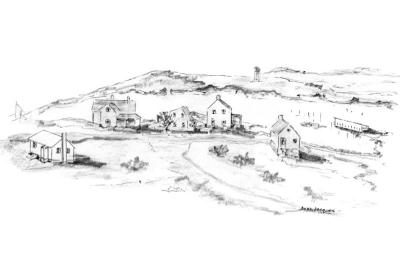
I’m sitting on the Vineyard waiting for the wind to let go so the ferries will start running again so I can drive up to Boston to meet my wife who is in a hotel, also waiting for the wind to die down. When we lived on one of the small islands in Gosnold, the transportation situation was entirely different. The regular ferry service is privately owned and not under the same scrutiny as the Steamship Authority.

If I had the opportunity to provide a family with all its financial needs for a year, I would stick with the basics, but include things that would carry this family for years to come. My idea is kind of like the old saying: “Give a man a fish, you feed him for a day.

Annie and I spent a lot of time at the beach through the years. I stayed at the tide line. She took off for the dune grass looking for small mammals. There were plenty. If she caught a scent of something underground, she would crouch, her big plume of a tail wagging furiously, and leap straight up into the air like an Arctic fox. She was a border collie mix, big at 55 pounds, and the thrill of the chase was what engaged her.
One day at the beach I saw her in the distance trotting toward me and there was something in her mouth.

In January 1851, according to the diary of Jeremiah Pease, a British boat “castaway” off Muskeget with 256 Irish on board. Four froze to death. Who were those nameless people? From the date it is clear they were fleeing from a country that had become a graveyard to seek opportunity and salvation in America. Turning their backs forever on families and communities decimated by famine and oppression, these uninvited and undocumented immigrants hoped to find work and food.