

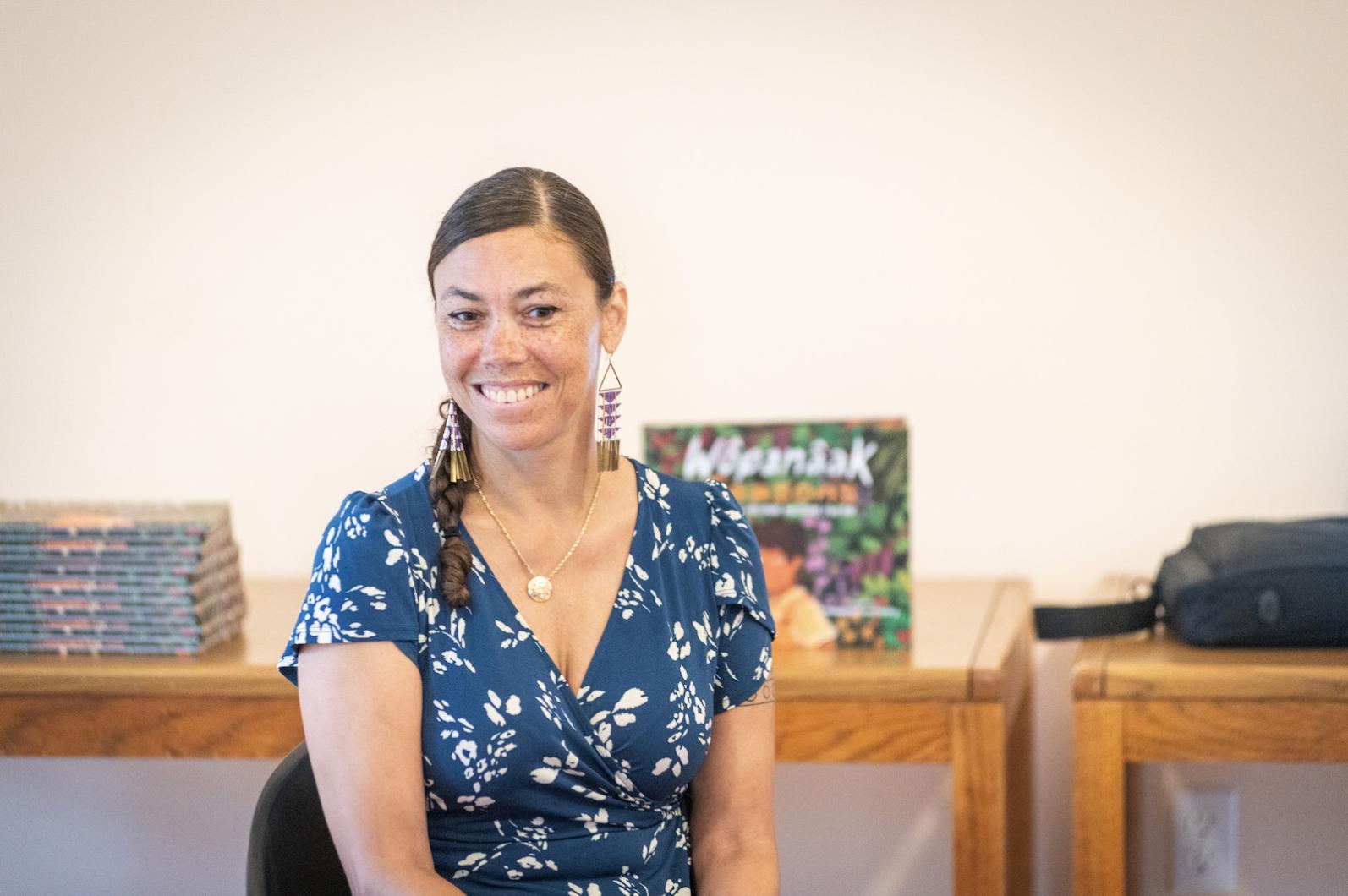
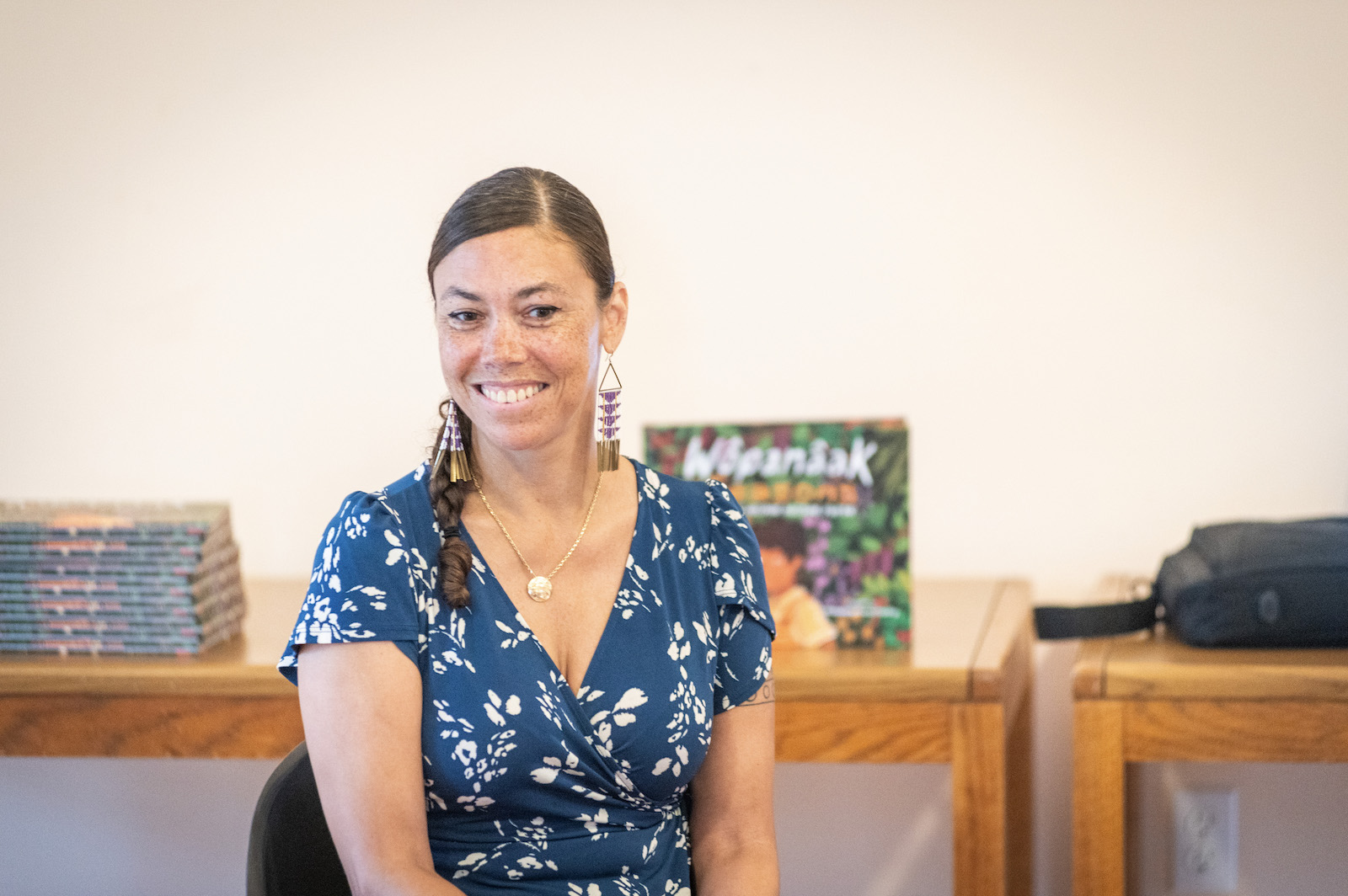
Carrie Anne Vanderhoop told a crowd at the Aquinnah Cultural Center last week that she hopes her new children's book, Wôpanâak Seasons, provides more representation for tribal children and introduces more people to the Wôpanâak language.
Carrie Anne Vanderhoop was constantly writing while growing-up in Aquinnah – journaling in her free time and crafting poems in school.
“Maybe people thought I was writing notes,” Ms. Vanderhoop joked during a visit to the Island this week. “It was really something I did as a practice [that] probably saved me in my school years.”
Ms. Vanderhoop is a member of the Wampanoag Tribe of Gay Head (Aquinnah) and said throughout her education, Indigenous experiences were hardly taught in classes. If they were, it was always from the perspective of non-Native people.

This is Ms. Vanderhoop's first book.
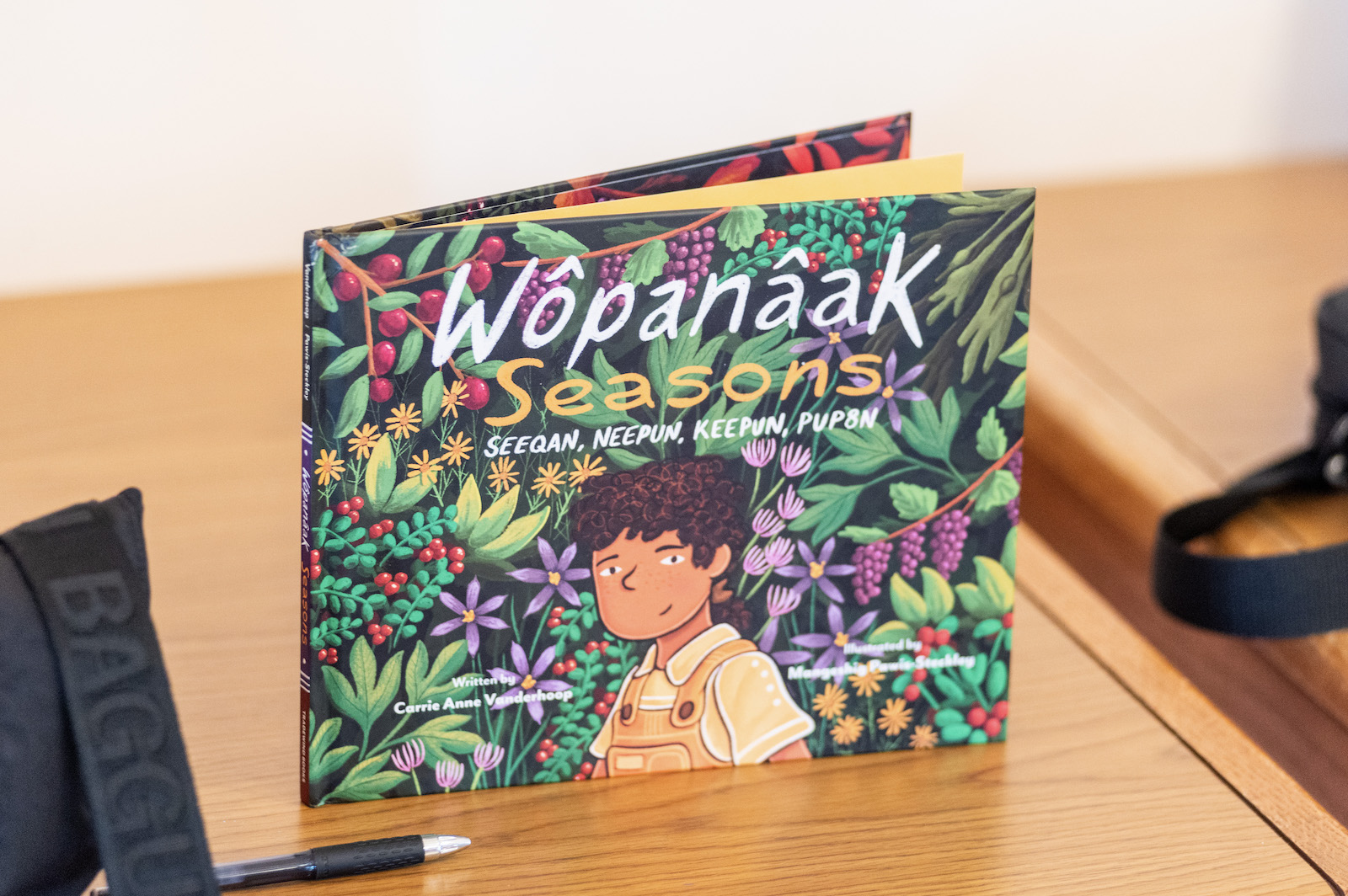
This is Ms. Vanderhoop's first book.
She wrote her newly-released children’s book, Wôpanâak Seasons, to help provide representation for tribal children. At an author talk hosted by the Aquinnah Cultural Center Wednesday, she said the book takes the reader through all four seasons in Aquinnah and shares special moments from Ms. Vanderhoop’s childhood.
“It [is] really important that we see ourselves in classroom material, and that we see ourselves being celebrated and telling our own stories from our own perspectives,” Ms. Vanderhoop said.
More than 50 members of the community where Ms. Vanderhoop grew up filled the room to hear her share her writing process and discuss themes in her book, including environment, community and language.
Wôpanâak Seasons is written in English, using traditional Wôpanâak words to help describe the four seasons: Seeqan (spring), Neepun (summer), Keepun (fall) and Pup8n (winter). Wôpanâak means Wampanoag, or people of the first light.
The main character is a child named Akeeahm8s, which means bee or one who travels over all the land. Akeeahm8s takes the reader to Herring Creek and Red Beach, Menemsha Pond and the cranberry bogs. Ms. Vanderhoop said she wanted her book to feel like growing up in Aquinnah.
“I couldn’t imagine a better childhood with a better community and better people in my life,” Ms. Vanderhoop said. “I think that I just am incredibly privileged and fortunate to have had the love, care and safety that I had here in Aquinnah with the people that I grew up with.”
The prevalence of the Wôpanâak language in the community is different from when Ms. Vanderhoop was growing up. She said it was hardly spoken or taught to tribal children, and the language’s recent revival is powerful and gives her hope.
“I like to say that in [my daughter’s] lifetime, she’s never known the world without our language,” Ms. Vanderhoop said. “That’s profound and powerful and it gives me just this great sense of hope for the future, for our community and our culture…”
Ms. Vanderhoop grew up in Aquinnah and used her experiences as a kid for the book.
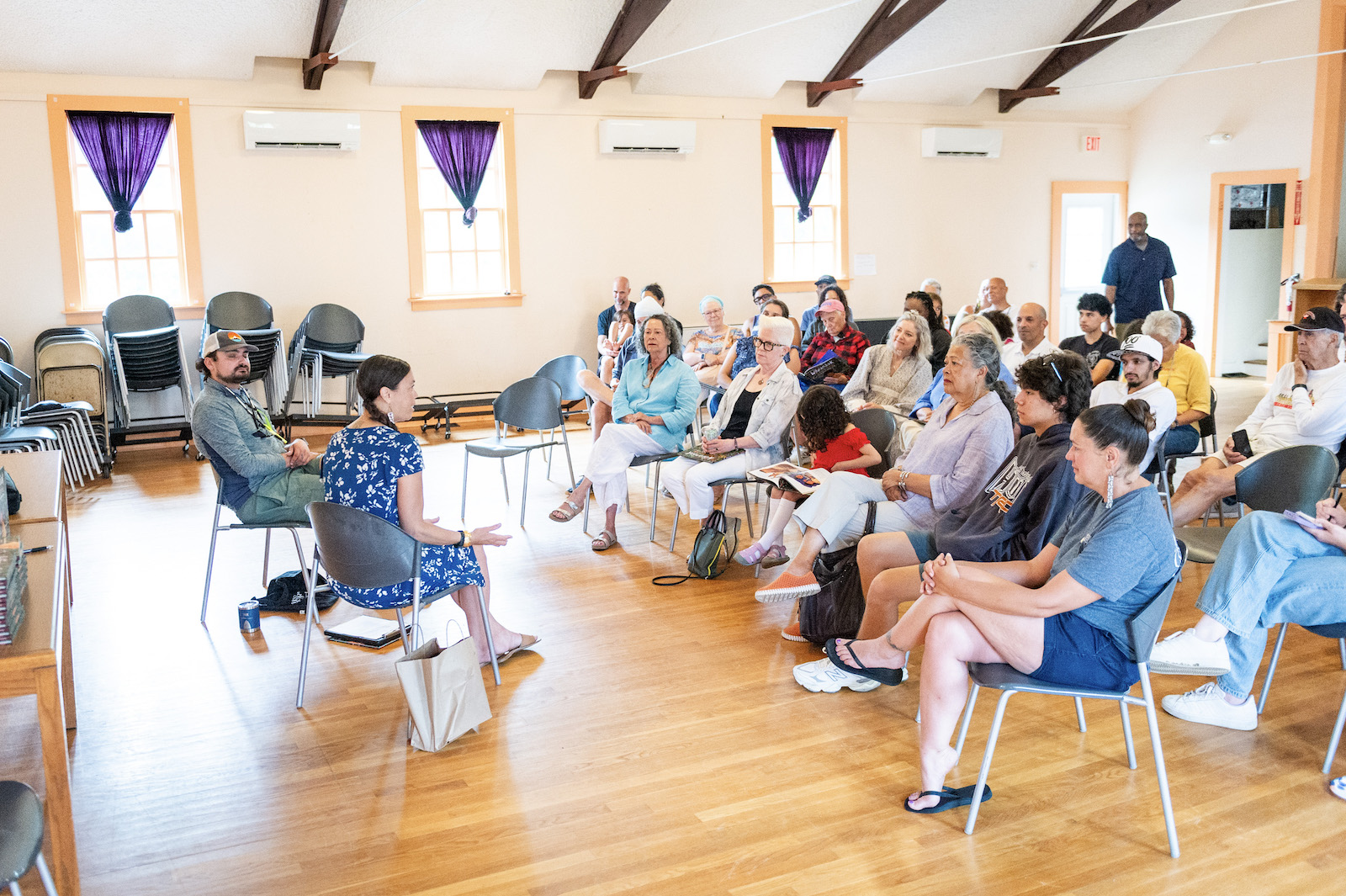
Ms. Vanderhoop grew up in Aquinnah and used her experiences as a kid for the book.
It was important for Ms. Vanderhoop to include the language in her book, so that when young tribal people hear the story, they know the language is available to them and able to be carried on, she said. Ms. Vanderhoop is learning the language herself and worked with the Wôpanâak Language Reclamation Project, which is dedicated to sustaining the language, for guidance while writing.
Ms. Vanderhoop now lives in the Canadian village of Masset, where she works in curriculum and program design for the University of British Columbia. Ms. Vanderhoop is also part Haida, an Indigenous peoples of the Pacific Northwest coast, and in her adult life is living on their land where her family has a strong legacy of weaving.
She was asked to write the book by her publisher Michael Katz, the founder of Tradewind Books and a professor at the University of British Columbia. He learned about Ms. Vanderhoop through her research on early childhood development at the university.
Ms. Vanderhoop said just as much as she loves writing, she enjoys reading, especially to her 15 year-old daughter Rosalie and her nieces and nephews. She said she feels like a kid again when she reads to young people, relishing in their wonder for the world that they’re discovering for the first time.
Ms. Vanderhoop described herself as an auntie, which she said is not solely in the literal sense.
“I’m an auntie where I feel a sense of responsibility for all of the young people in my community, and I want to be that safe place for them and that safe person,” she said.
Ms. Vanderhoop described growing up in Aquinnah as free reign – she dug for clams on the beaches and foraged for beach plums in the dunes. Many of these experiences are in the book, as well as the sense of community, which she said is still nurturing.
The connection to land and nature was essential in her story. She wanted to convey Aquinnah’s biodiversity that sustains the community, and uses vocabulary such as ‘“estuaries” and “intertidal zone” to inspire deeper learning.
“I feel like in this time, where we need to be more conscious of our impact on our environment and our responsibilities as original stewards of the land, that these lessons are being taught,” Ms. Vanderhoop said.
Her book was illustrated by Mangeshig Pawis-Steckley, a member of the Wasauksing First Nation, and features osprey nests, lush grape vines, murky cranberry bogs and horseshoe crabs. Mr. Pawis-Steckley visited Aquinnah during the tribe’s spring social to accurately convey the magic of Ms. Vanderhoop’s home.
Ms. Vanderhoop said she hopes Wôpanâak Seasons will encourage other Indigenous people to tell their stories.
“There’s so much room out there, and our voices are so important and so powerful…” she said. “Everyone’s individual perspectives and stories are important.”
Comments
This sounds like a wonderful
Bill Ryan Edgartown/ New JerseyThis sounds like a wonderful book! I am ordering one today! If anyone reading this knows where I can get a signed cipy would you please respond here? Thank you!
Me Too
Frederick Rundlet TisburyMe Too
"[email protected]
Kutaputush
I would bet the Aquinnah
Mitzi Pratt AquinnahI would bet the Aquinnah Cultural Center would have them at the Vanderhoop Homestead. This weekend is also the Annual Native Artisans Fest, c'mon up!
This book sounds very
Meredith McHoings Rhode Island/ MatylandThis book sounds very interesting. I’m a member of the Chappaquiddick Wampanoag Tribe and would like copies to share with our youth.
Aho
Add new comment