

For more than 15 years, from the 1960s into the 1980s, Broadway and Hollywood costume designer Patricia Zipprodt was the owner of the 19th-century West Tisbury farmhouse, God’s Pocket, on the West Tisbury-Edgartown road.
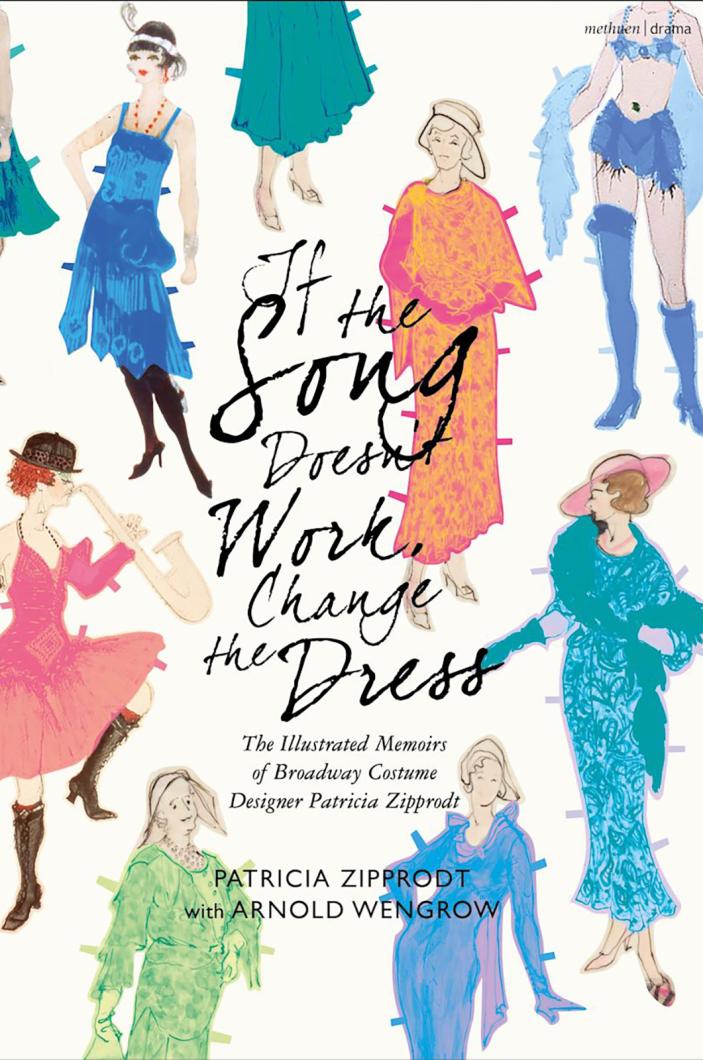
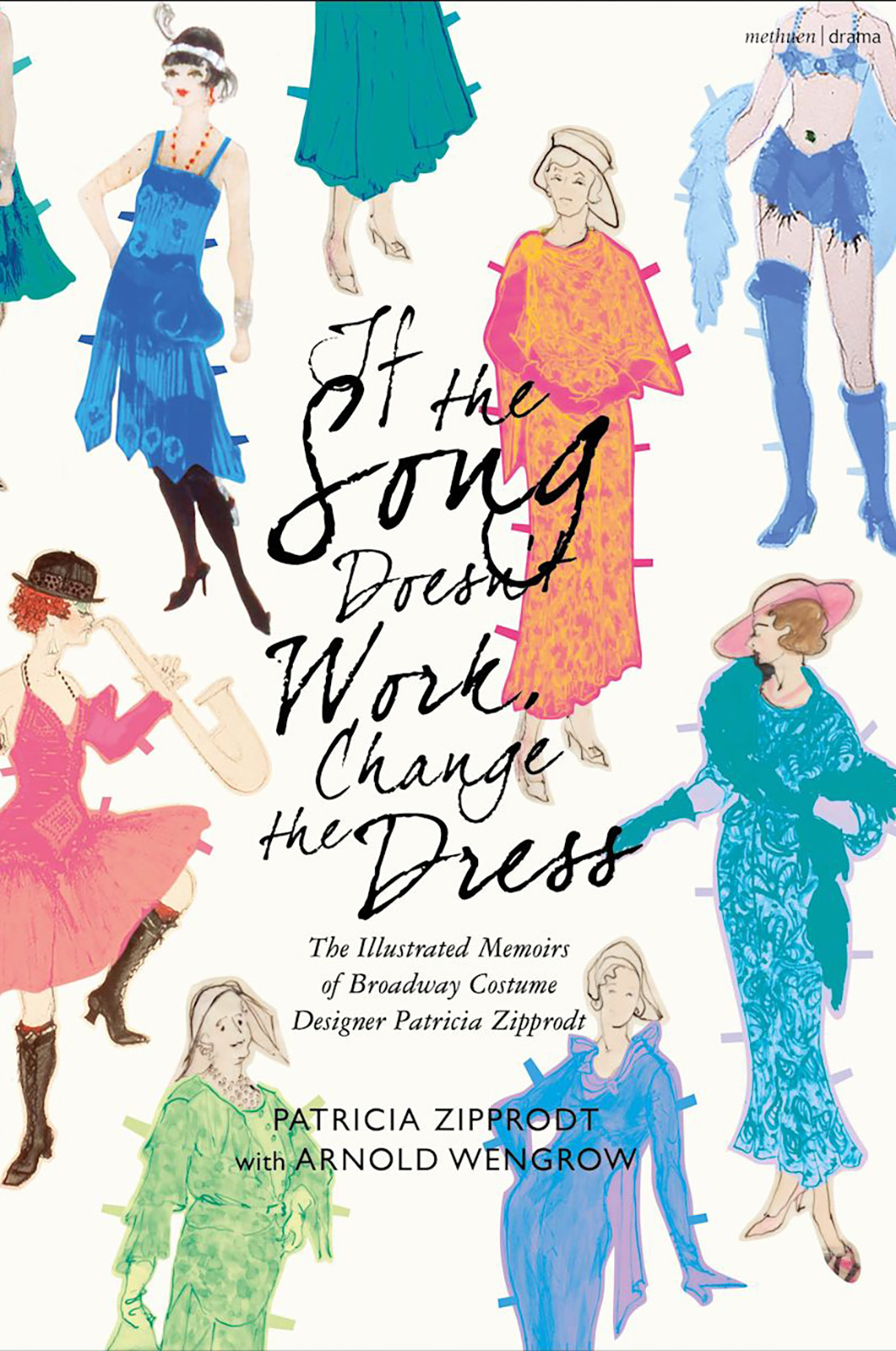
If the Song Doesn’t Work, Change the Dress: The Illustrated Memoirs of Broadway Costume Designer Patricia Zipprodt by Patricia Zipprodt with Arnold Wengrow. Methuen Drama, Bloomsbury Publishing. 206 pages. $35.
Review By PHYLLIS MERAS
For more than 15 years, from the 1960s into the 1980s, Broadway and Hollywood costume designer Patricia Zipprodt was the owner of the 19th-century West Tisbury farmhouse, God’s Pocket, on the West Tisbury-Edgartown road.
She was the recipient of 10 Tony nominations for the finest costumes on Broadway, with three wins, for Fiddler on the Roof, Sweet Charity and Cabaret. She was also nominated for nine Drama Desk Awards from New York theatre critics for her costumes, with five wins: Shogun, 1776, Zorba, Pippin and King of Hearts. Her costumes for the classic Mike Nichols film The Graduate are themselves considered classics. She designed costumes for Katharine Hepburn’s first television film, The Glass Menagerie.
Ms. Zipprodt died in 1999 but in February of this year a new autobiography was completed with the help of Arnold Wengrow, professor emeritus of drama at the University of North Carolina at Asheville. The book is elegantly illustrated with her drawings for her costumes.
Mr. Wengrow was just beginning to collaborate with Patricia at the time of her death. In the preface to the book, he describes Patricia’s writing as “buoyant, incisive, sometimes acerbic, always expansive,” and it is, indeed. Any lover of the theatre or of films should surely enjoy this “inside story” of how she made her way to the top and will delight in the working drawings for her costumes.
She grew up largely in the Chicago suburb of Kenilworth during the Depression. Her father had a lithographic advertising agency that designed and printed colorful advertising posters and window displays. Her mother, who had been a model, had beautiful clothes that the young Patricia admired. Pat was taken to children’s theatre in Chicago and to Christmastime events at the Chicago Civic Opera House.
Like most girls of that period and background, she had ballet lessons and piano lessons and acted in grade school and high school plays. On days when she was bored as a young child, she made and dressed paper dolls. Pictures of those dolls, rediscovered by her mother when her parents were packing up to retire to Florida, are included in the book.
As a teenager, she took painting lessons in Chicago at the Art Institute and decided she wanted to get her college degree there. Her art teacher, however, encouraged her to go to a regular college for a broader education. She then came to Massachusetts to attend Bradford Junior College in Haverhill and, later, Wellesley.
After graduation, she got a job traveling the country with a puppet theatre and ended up spending three months with it in Washington. Always a horseback rider, she frequently rode in Rock Creek Park. In Washington, she met Robert Emmett O’Brien, a lieutenant colonel in the U.S. Cavalry, assigned to the Pentagon. Later, he was transferred to Fort Sheridan, near her home in Kenilworth. He proposed, but she declined, explaining that she wanted a career in the theatre in New York.
Decades later, after the death of his first wife, O’Brien (as Pat always called him), living near Washington, rediscovered her name in a Kennedy Center Playbill. He tracked her down, and they were reunited and married in 1993, 43 years after his first proposal. The couple divided their time between her Greenwich Village apartment in New York and his Virginia horse farm, Happy Hill. He died in 1998.
Pat occasionally came to the Vineyard as a visitor in the 1960s, sometimes for pleasure, sometimes for work, saying that she thrived “in the fog and the green atmosphere.”
She came once to talk with playwright Lillian Hellman, who had a West Chop house. Then, one day, when Pat was at work on a film in Louisiana, she received a phone call from a friend on the Vineyard, telling her God’s Pocket was for sale and asking if she would like to put in a bid for it. Always a flower-lover, when she heard that it had lilacs by the front door and wide pine floors, she put in a bid, sight unseen, that was accepted. She soon started redecorating it in what she called “murky dark reds, strange greens and sienna and purple.”
She put theatrical gauze curtains on the windows and a dark wool rug she had bought in Greece while working on the Broadway musical version of the film Zorba the Greek.
She quickly made friends, in particular with Ann Hopkins of West Tisbury, the real estate agent for God’s Pocket, and Bill Prokos and Lucia Evans (later Lucia Moffett), who had a Greek restaurant in Edgartown (and later in Vineyard Haven). In Pat’s final illness, Lucia Moffett (now deceased), who then lived in Ireland, but kept an apartment in New York, was at her side almost all the times.
The foreword to the book was written by two close friends, the actor Joel Grey and the costume designer Ann Hould-Ward, who started out as Pat’s assistant and later was her co-designer for Sunday in the Park with George. In his recollections of her, Joel Grey describes Pat as “like champagne.”
Comments
Is the book available at any
Aaron HillIs the book available at any local bookstores?
Thanks Phyllis, your story
virginia yorke AquinnahThanks Phyllis, your story inspired, won't miss this one.
Thanks Phyllis for this
Walter Robinson North Abel’s HillThanks Phyllis for this superb review on such an extraordinary creative talent. Patricia Zipprodt touched my life deeply. I could always rely on staying at her West Village King Street penthouse loft whenever I visited New York. I still have fond memories an organized chaos of clothing…meaningful clutter of colors and cloth spread around making her apartment a costume in itself!
Thank you Phyllis for your recent five day loan of her book so I am able to confidently say your review is world class in capturing all its inspiring moments.
Hands down the book is a unique lens into iconic Broadway history.
I owe so much to Patricia Zipprodt who as an unselfish mentor / friend introduced me to Hal Prince, who in turn gave me an indelible transformative experience of priceless one on one time.
Patricia’s bucolic West Tisbury residence sums up her life in which she overcame so many daunting challenges to create a legacy of greatness proving God always had Patricia in His Pocket.
Loved Pat! I rented God'
Helen Green West TisburyLoved Pat! I rented God' Pocket from her for years. Funny, I was thinking about her recently and then this book review popped up.
Add new comment