

Chris Riger
Well, the first two weeks of 2015 have already brought a jarring handful of ominous tidings for our near future here.
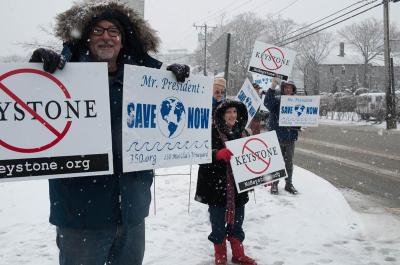
Last Friday the State Department released its final environmental impact review of the proposed northern segment of the Keystone XL Tar Sands Oil pipeline. The immediate reaction from the press was that the environmental community would be disappointed as the review said the project “is unlikely to significantly affect the rate of extraction in oil sands areas.”
A week after attending the West Tisbury Congregational Church service on Sunday, Nov. 10, to hear guest pastor Rev. Reebee Girash give a sermon explicitly focused on actively responding to the climate crisis, one striking impression still seems central to all the others.
Have you been noticing the reports since Hurricane Sandy, consistently, nearly every week, all over the world — of very extreme weather events and conditions? If you’ve been denying yourself the opportunity to keep up on the details, now would be a good time to break the habit.
In 2013 can any community on earth surrounded by the ocean remain passive in the face of unmistakable climate change? If you don’t trust your own memory and sense of the weather to tell you something’s changed, there’s more than enough accurate, trustworthy analysis and predictions out there. But there’s no substitute for direct experience like ours of the last two years. This has been not slow and steady change that we can adapt to smoothly but more like sudden chaos.
In 1967 and 1968, here on the Vineyard, I began to prepare myself to meet the epic sea change that is the Occupy Wall Street Movement today. Those years began a 43-year course in what is possible in this life we live together on earth.
It has been an uninterrupted series of lessons on the power of beauty, on right and wrong, on the limitlessness of love, on the authority of compassion, and on the depth of the grief we must embrace for all that we have destroyed and lost over the last 150 years.