

In Vineyard Skies
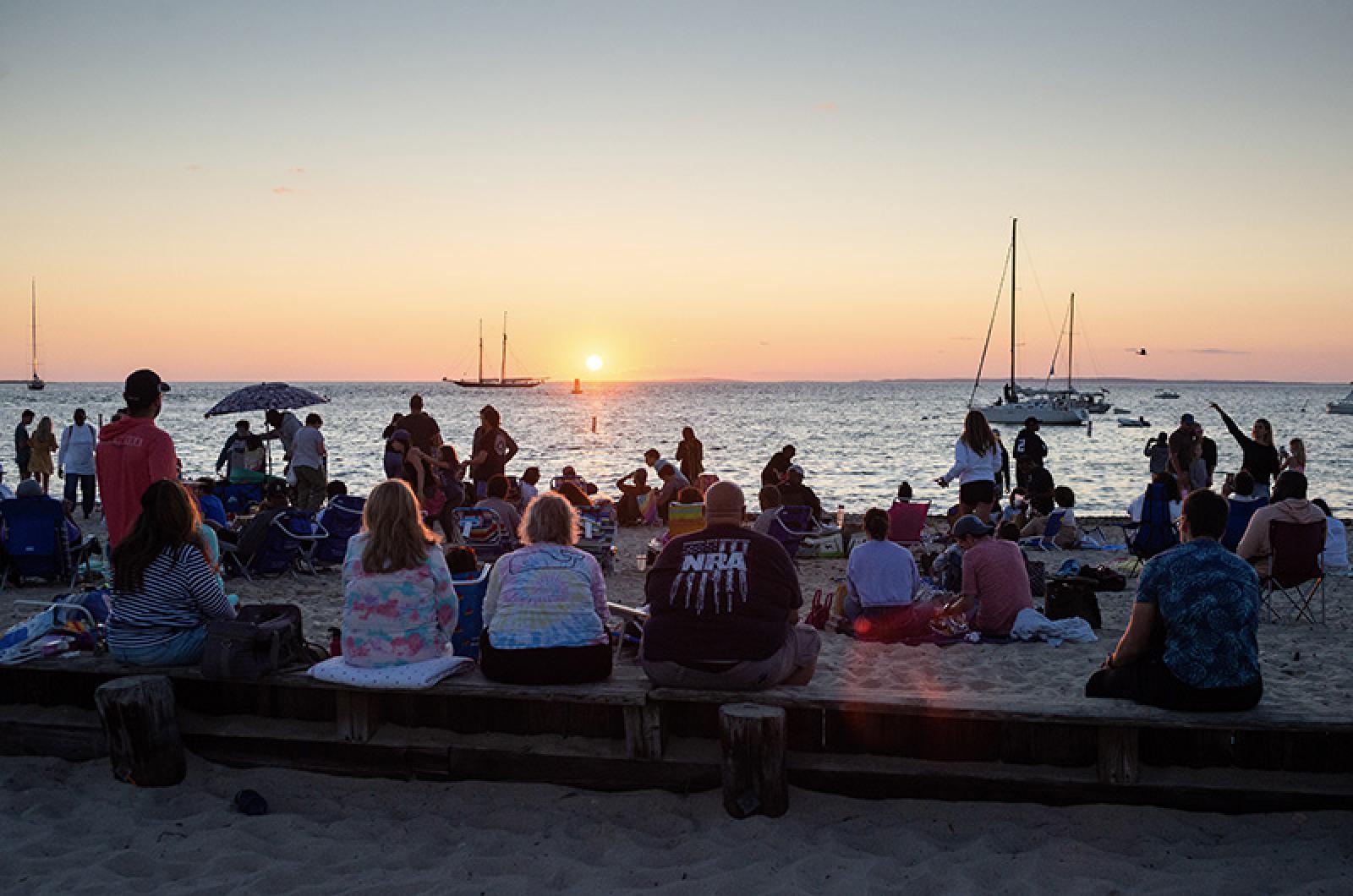
It was only a few weeks ago that Venus was high in the western sky at sunset. We got a number of calls from observers who wondered what that bright planet was residing high in the west after sunset. Tonight you can’t find it in the night sky.
Temperature: Precip.
Day Max. Min. Inches.
Fº Fº
March 13 42 27 .00
March 14 38 24 .00
March 15 47 34 .00
March 16 51 27 .00
March 17 46 34 .00
March 18 46 28 .00
March 19 52 41 .00
Water temperature in Edgartown harbor: 43º F.
Today is the first day of spring and it arrived precisely at 7:44 a.m. This is the moment when the noontime sun crosses from the Southern Hemisphere, across the Equator, and into our Northern Hemisphere. From here on our days will get longer than our nights. Day and night are about even, at 12 hours, though the actual moment of sunrise and sunset is not so exact.
Temperature: Precip.
Day Max. Min. Inches.
Fº Fº
March 6 43 31 Trace
March 7 57 40 .00
March 8 64 41 .00
March 9 61 38 .37
March 10 39 31 .43
March 11 46 37 .03
March 12 47 32 .18
Water temperature in Edgartown harbor: 43º F.
Venus, the brightest planet in our evening sky, is getting a bit more difficult to spot, appearing lower in the western sky than a week ago. The planet is sinking. By April, Venus shifts from an evening planet to a morning planet.
Our skies at night have two planetary visitors. Venus is high in the western sky after sunset, and at the same time there is the ringed planet, Saturn, rising in the east. Both are bright and easy to spot.