


Shotgun hunting season opened last week, and runs through Dec. 13. In addition to putting food on the table, the season is essential for gathering the data used to manage the deer population.
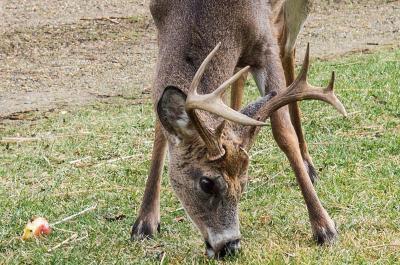
The arrival of spring means longer days, budding blooms, birdsong and, unfortunately, the unwelcome arrival of deer in the backyard. Deer dig up gardens, eat tulips, and trample plants. They scrape bark off young trees and decimate backyard greenery, all in their quest to find food. Bambi is a beautiful creature, but he can be very detrimental to a garden.

At first glance, it seems unlikely that there is a connection between the abundance of white-tailed deer and the long-term documented decline of many songbirds. But let’s take a closer look.
Amazingly enough, deer used to be scarce, with low populations nationwide prior to 1900. Their populations rebounded once restrictions on hunting were put in place and now they are incredibly abundant, making this perhaps one of the most successful wildlife conservation efforts ever.
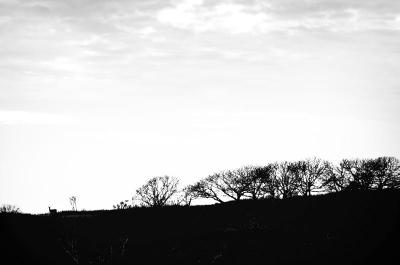
Although frost still covers the ground some mornings, Island boards of health already have their focus turned towards summer and tick season.
At last week’s All-Island Selectmen’s meeting, Tisbury health commissioner Michael Loberg and Edgartown health agent Matthew Poole presented their annual year-end report for the Tick-Borne Illness Reduction Initiative, a five-year study funded by a grant from the Martha’s Vineyard Hospital. The study has just completed its second year.

In an attempt to quantify the Vineyard deer population, a Mount Holyoke College professor flew across the Island last Friday afternoon taking thousands of aerial infrared photographs for a tick-borne illness study. While a snowy, 20 degree day on Martha’s Vineyard may not be most visitors’ optimal conditions for a flight around the Island, professor of geography Thomas Millette deemed Friday’s weather ideal. A frozen ground, calm winds and an overcast sky all optimize the efficiency of the thermal imaging system developed by Mr. Millette.
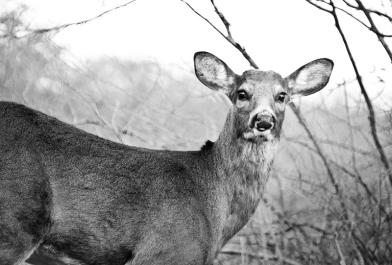
Next week the deer hunting season shifts from bow and arrow to shotgun.
“You are up close and personal when you are in archery season, at 20, maybe 30 yards away,” said Walter Ashley, an experienced hunter on the Island. “With a shotgun, it’s not so critical.”
Mr. Ashley has been hunting for nearly 50 years, whether it be bow and arrow, shotgun or muzzleloader.
“I’d go if they had a stick and stone season,” he said.