

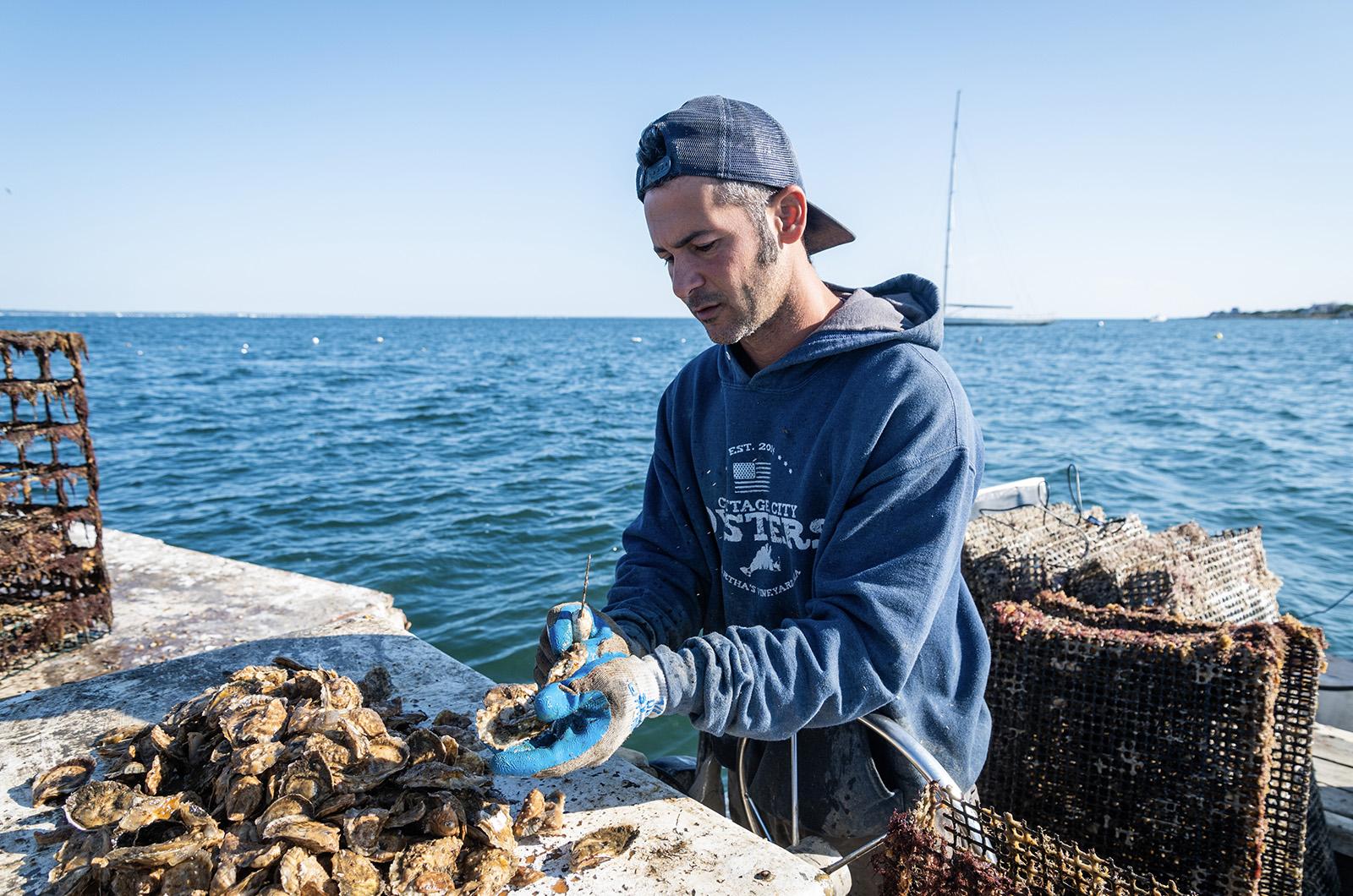
With the future for aquaculture looking bright following a successful experiment in farming blue mussels this year, the Chilmark selectmen voted this week to award two Menemsha shellfishermen five acres of North Shore water to continue their work growing mussels.
Tim Broderick and Alec Gale harvested 1,900 pounds of blue mussels this summer in the experimental farm. Now they plan to set up ten 500-foot lines in Chilmark waters, where they hope to grow 10,000 pounds.

The Chilmark selectmen will award bottom grants next month for 15 acres of north shore water to shellfishermen who want to grow blue mussels in Vineyard Sound.
The selectmen will hold a public hearing on the grants on Oct. 5. The current site has been used for an experimental mussel program supported by the Martha’s Vineyard Shellfish Group, the Chilmark shellfish committee and the Marine Biological Laboratory in Woods Hole.
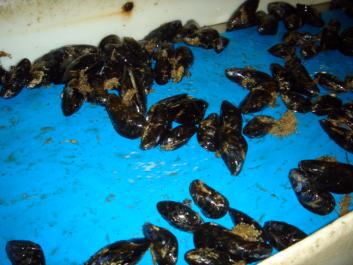
The Vineyard’s first offshore farm-raised blue mussels will be distributed among Island fish markets and a few restaurants this weekend. The shellfish are being grown as part of a federally and locally-funded offshore aquaculture experiment to bring farm-raised blue mussels to market on the Island.
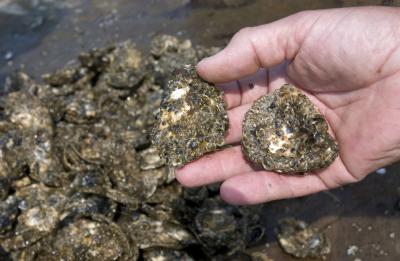
Vineyard ponds may be in peril, but somebody forgot to tell that to the Tisbury Great Pond which is loaded with wild oysters this year, the biggest natural spawning of oysters in recent memory.
“It is huge,” said Rick Karney, who has been director of the Martha’s Vineyard Shellfish Group for over 30 years. “I’ve never seen anything like it,” Mr. Karney said.

A top state fisheries official told a Vineyard gathering on Friday afternoon that it is not feasible to restore the 61-year-old state lobster hatchery — at least not for raising young lobsters for release.
“We have no evidence that we did enhance the wild population to any significant degree at all,” said Paul Diodati, director of the Massachusetts Division of Marine Fisheries. “That and the cost in the past 10 years of government has become a real concern. Funding has withered,” he added.
Creating sanctuaries and aggressively managing the protection of juveniles are two of the low-cost ways towns can jump-start their bay scallop fishery, according to the results of a five-year study into how to promote the growth of bay scallops in local coastal ponds.