

A Tour of the Charles W. Morgan

An inboard perspective of the Charles W. Morgan. Research indicated that most of the above-deck surfaces were painted ocher, which the masts and yards were white. Davits, wooden timbers fastened to the sides of the ship, held whaleboats.

An inboard perspective of the Charles W. Morgan. Research indicated that most of the above-deck surfaces were painted ocher, which the masts and yards were white. Davits, wooden timbers fastened to the sides of the ship, held whaleboats.

One of the only decorative parts of the ship is the reproduction gold-leafed billet head. While some ships had ornate figureheads, Quaker investors like Charles W. Morgan found modest bill heads more appropriate.

One of the only decorative parts of the ship is the reproduction gold-leafed billet head. While some ships had ornate figureheads, Quaker investors like Charles W. Morgan found modest bill heads more appropriate.

Far aft was the forecastle, or the fo'c's'le, which was where the ordinary seamen slept. The forecastle was dark and crowded, with several bunks crammed in a small area. The front end of the ship was also in constant motion.

Far aft was the forecastle, or the fo'c's'le, which was where the ordinary seamen slept. The forecastle was dark and crowded, with several bunks crammed in a small area. The front end of the ship was also in constant motion.

One of the unique features of a whaing ship was the tryworks, a brick oven where blubber was rendered into oil. The tryworks was ceremonially dissembled at the end of a voyage.

One of the unique features of a whaing ship was the tryworks, a brick oven where blubber was rendered into oil. The tryworks was ceremonially dissembled at the end of a voyage.

The captain's quarters had a gimballed bed that compensated for the motion of the ship. Nearby is the captain's sitting room, which had a red velvet settee and a small desk.

The captain's quarters had a gimballed bed that compensated for the motion of the ship. Nearby is the captain's sitting room, which had a red velvet settee and a small desk.

The captain's dining area, where the captain and others would eat their meals. "Eighty years at sea, people sat at this table and ate in any number of circumstances," Matthew Stackpole said. The cabin had superior food stores; the crew ate mostly hardtack and salted meat.

The captain's dining area, where the captain and others would eat their meals. "Eighty years at sea, people sat at this table and ate in any number of circumstances," Matthew Stackpole said. The cabin had superior food stores; the crew ate mostly hardtack and salted meat.

Amidshi is a large skylight that provided light and fresh air for the captain's quarters, which were located directly below. It was dark below deck. Elsewhere on the ship, glass prisms in the deck provided some daylight.
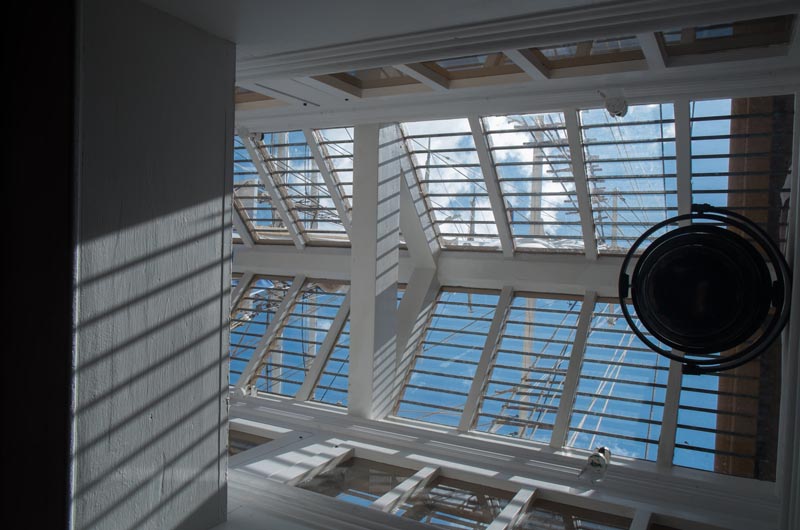
Amidshi is a large skylight that provided light and fresh air for the captain's quarters, which were located directly below. It was dark below deck. Elsewhere on the ship, glass prisms in the deck provided some daylight.

The binnacle, which houses the compass, was visible in the skylight, facing the wheel. The wheel was nicknamed a shin cracker becaues it was mounted on a tiller that moved side to side as the ship was steered.

The binnacle, which houses the compass, was visible in the skylight, facing the wheel. The wheel was nicknamed a shin cracker becaues it was mounted on a tiller that moved side to side as the ship was steered.

The windlass was at the front of the ship, and would bring aboard the ship's anchors, which weighed between 1,000 and 2,000 pounds. The windlass was also used to hoist aboard pieces of whale blubber.

The windlass was at the front of the ship, and would bring aboard the ship's anchors, which weighed between 1,000 and 2,000 pounds. The windlass was also used to hoist aboard pieces of whale blubber.
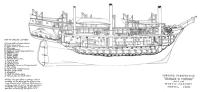


The Charles W. Morgan, the last surviving whaling ship, has been extensively restored at the Henry B. duPont Preservation Shipyard at Mystic Seaport. She has been restored to the era when she was rigged as a bark, meaning she had square sails on two of her three masts. Parts of the Charles W. Morgan were unique to a whaling ship, like the tryworks that was used to render blubber into oil. In other ways the ship was just a working sailboat, built to house the captain and crew during lengthy voyages around the world.
From fore to aft, here's a tour of the Charles W. Morgan.