

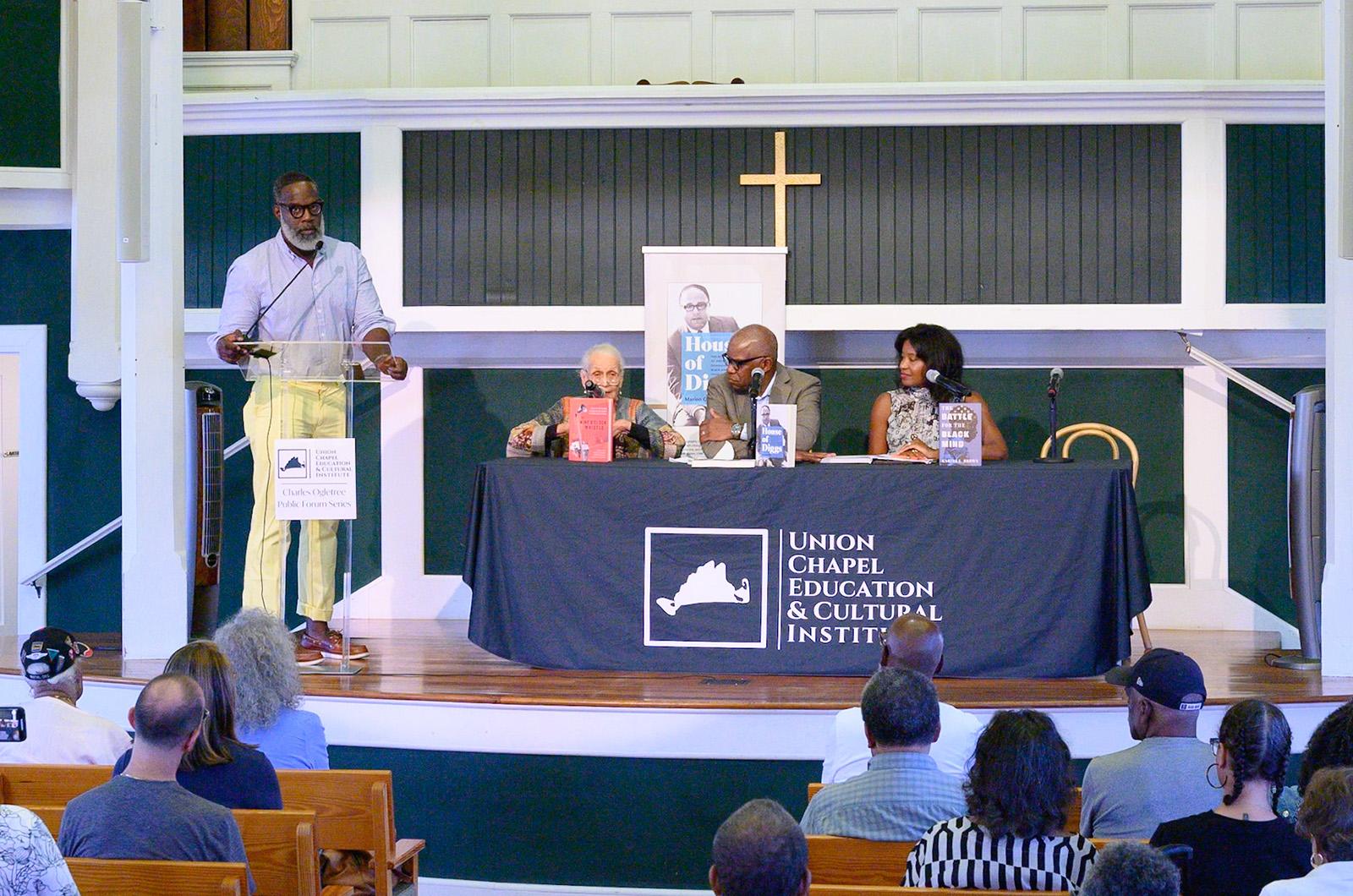
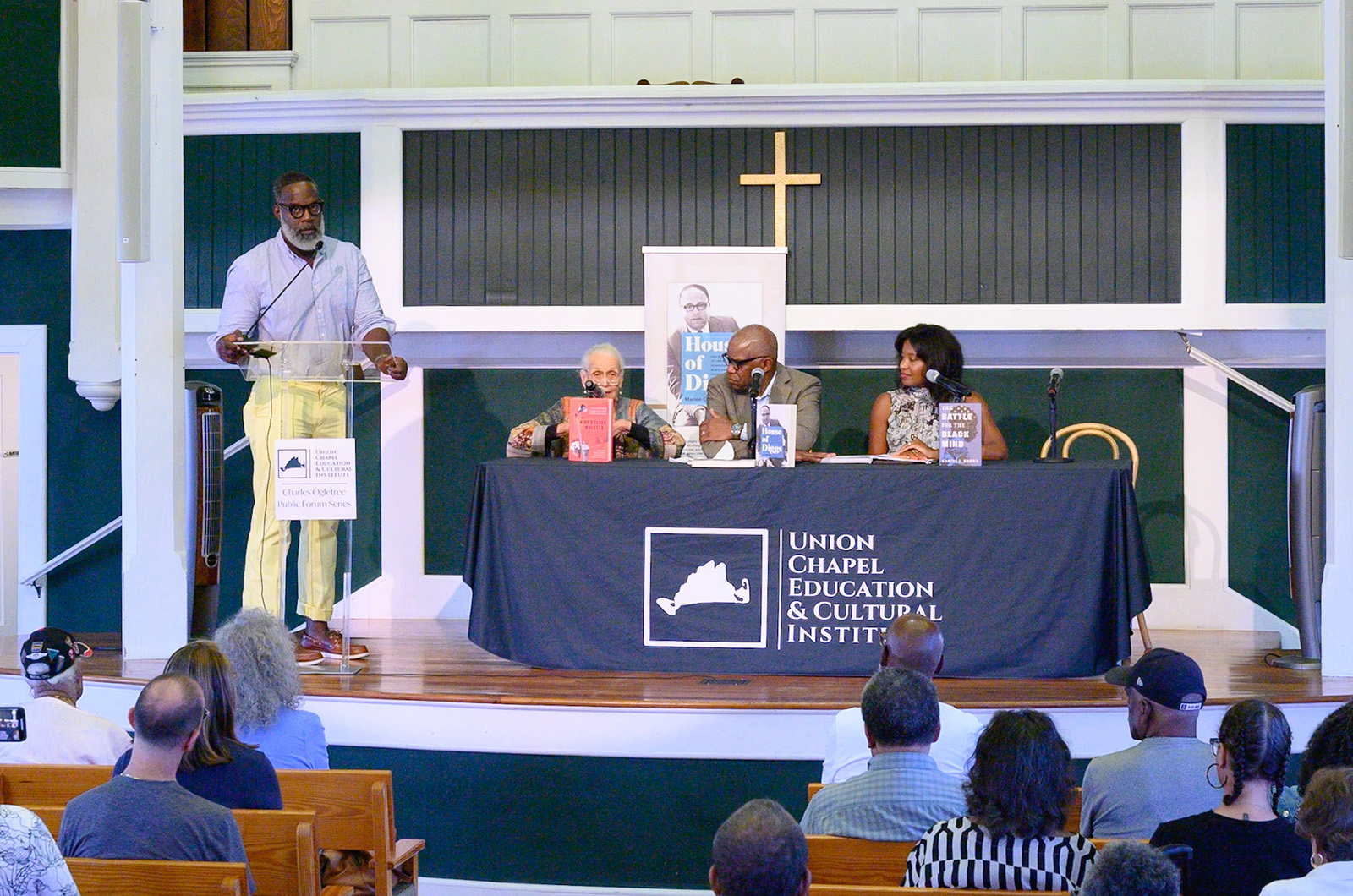
he Charles Ogletree Public Forum Series concluded its summer lectures with a discussion about book bans and the subsequent consequences of this growing movement around the country.
The Charles Ogletree Public Forum Series concluded its summer lectures with a discussion about book bans and the subsequent consequences of this growing movement around the country.
The talks took place at Union Chapel on Wednesday evenings throughout the summer. The final discussion on August 27 featured authors Marion Orr, Willa Cofield and Karida Brown.
Each participant incorporated their individual expertise in a discussion that highlighted the dangers of Black history being erased. The panel was moderated by civil rights attorney Charles Coleman Jr.
“Banned books is really just a symptom of a larger problem and that is a wholesale attack on this country’s knowledge ecosystem, and what that means in our museums, including our beloved Blacksonian databases....” Ms. Brown said. “Book banning is just one of many ways in which our knowledge system is being attenuated.”
Dr. Karida Brown.
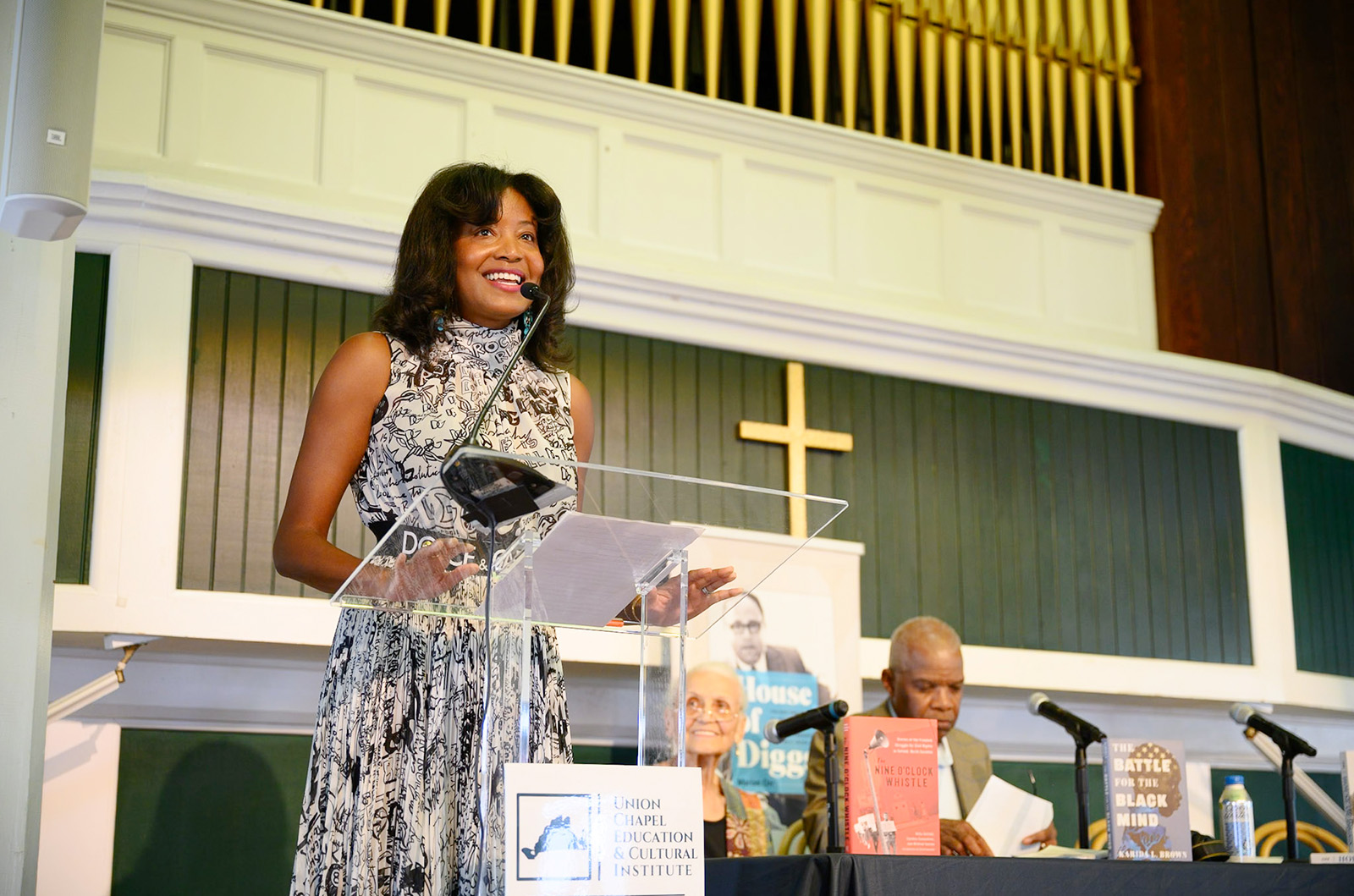
Dr. Karida Brown.
School curriculums around the country are changing rapidly, the panelists said, and it is up to each individual to ensure that their kids and they themselves are educated.
“What does it mean for our nation to have certain kinds of curriculum being taught across certain parts of the country about Black people, compared to other states?” Mr. Orr said. “I think it leads to a very interesting dynamic for us as a nation.”
Ms. Brown cited PragerU, an advocacy group that promotes conservative ideologies in school curriculums, as an example of dangerous coalition building.
“Do you notice the rhetoric is pretty much the same across the country when a certain book is being attacked,” she said. “Those talking points are not organic. This is a well-funded coalition that shows us how power moves in a way that many of us don’t agree with, but it’s a model.”
To combat the current presidential administration’s attempts to rewrite history, Ms. Cofield urged people to continue telling their stories despite the obstacles.
“Our stories are valuable and we are the ones who need to preserve them, and we are the ones who need to know them well,” she said. “We need to write it down, or we need to put it in forms that other people know about.”
Mr. Coleman emphasized the importance of taking action in one’s local community.
“Our ability to find space, designate time to say this is a space that is being held for community, to make sure that our stories are told, our history is known, we are arming ourselves in this battle for our Black lives,” he said.
Persistence is also key when fighting for the rights of all citizens, according to Mr. Orr.
“We should be pushing for this country to stand up to the ideals laid in these founding documents about equality. That’s what we should be doing,” he said. “Push it, live up to the true meaning of democracy [and the] true integration of democracy.”
Add new comment