

In centuries past, whalers kept meticulous records, including their location, daily weather occurrences and whale sightings. Now, researchers are using those logs to develop a better understanding of climate change over time.
In centuries past, whalers kept meticulous records, including their location, daily weather occurrences and whale sightings. Now, researchers are using those logs to develop a better understanding of climate change over time.
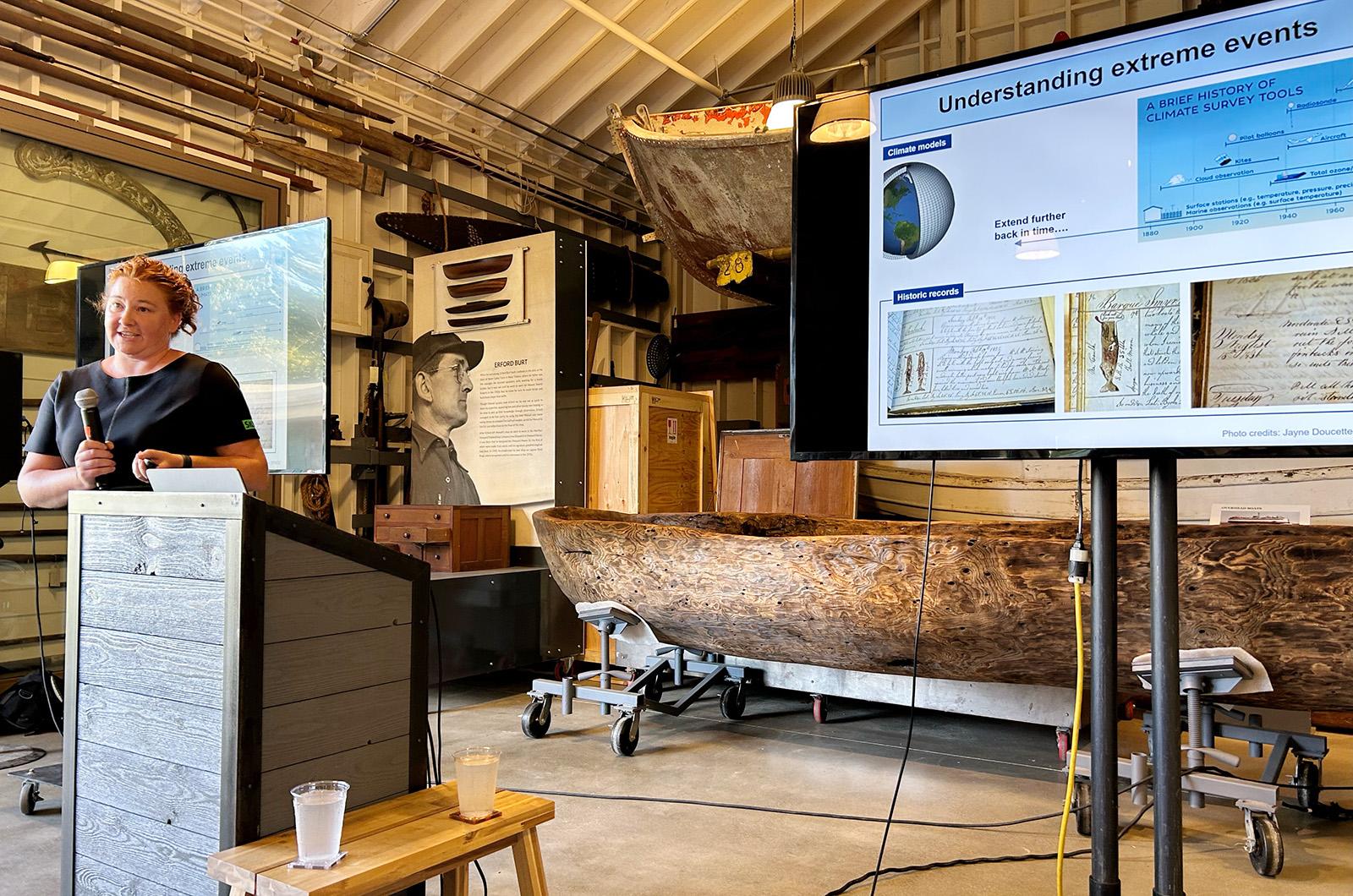
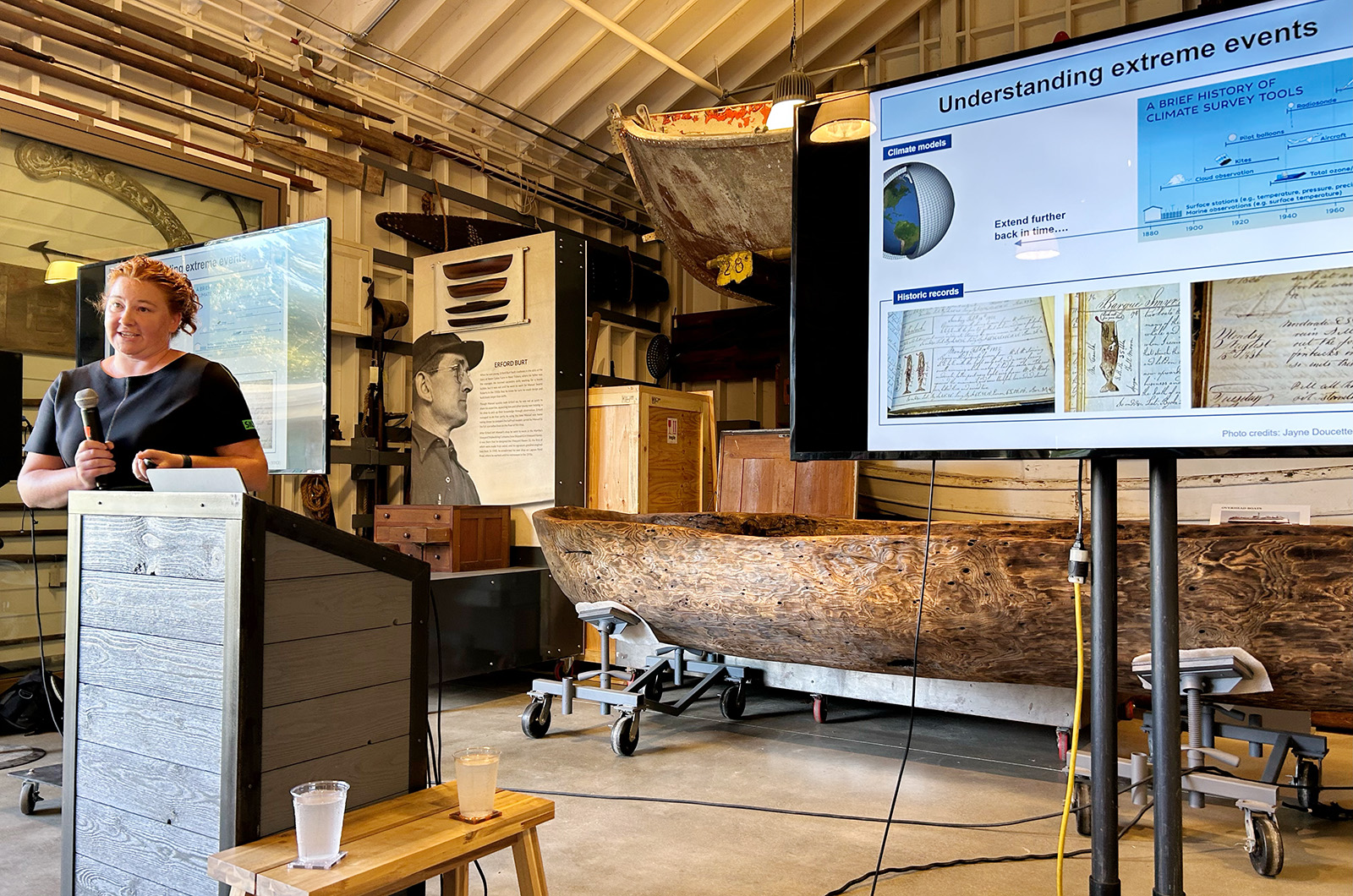
Oceanographer Caroline Ummenhofer and historian Timothy Walker spoke with an audience at the Martha’s Vineyard Museum on July 19 about their current work, and how the logbooks provide valuable data from a time before weather information was recorded globally in the way it is today.
Ms. Ummenhofer works at the Woods Hole Oceanographic Institution.
“We have satellites but they really only cover the last 40 years or so,” she said. “Going back to the 1800s or so, there’s a mix of different tools that we use, but they become sparser and sparser and might only give you very few isolated spots.... We need other ways to actually get at long term climate records.”
She added that the information will also help improve regional weather reconstructions and understandings of oceanic patterns.

Historian Timothy Walker and oceanographer Caroline Ummenhofer.

Historian Timothy Walker and oceanographer Caroline Ummenhofer.
Mr. Walker, who works at University of Massachusetts Dartmouth, noted that the New England whaling industry traveled the entire world.
“They are all over the map and they fill in places where other ships don’t go, and that makes the data really valuable,” he said.
The logbooks start in the mid-1700s and continue until the early 20th century. Processing one logbook can take around 50 hours.
“One of the issues is that these guys are recording information qualitatively,” Mr. Walker said. “They’re descriptive, they’re creative. There are hundreds of terms that they come up with to describe the weather that they are experiencing.”
Mr. Walker translates the descriptions into points on the Beaufort wind scale, which measures wind strength from zero, meaning calm, with winds going from zero to one mile per hour, to twelve, which registers a hurricane, at 72 to 83 miles per hour.
Although the project is focused on climate information, marine biologists have reached out, asking the researchers to keep track of other megafauna recorded in the logbooks, such as any penguins and seals encountered while provisioning.
Mr. Walker noted that the logbooks also include interpersonal intrigue, such as instances of racial tensions, sex and murder.
“Lots of stuff is happening, so try and tell your 20-something researchers not to worry about that stuff,” Mr. Walker joked.
Ms. Ummenhofer said that the climate data they have extracted has helped provide a longer context for changing weather patterns, including those of the westerly winds around the Southern Ocean. The records of wind conditions have shown how weather patterns have shifted, which is important to understand because these winds carry rain to southern Africa, South America and southern Australia.
“What that indicates is that over time, since the 1840s, these westerlies have been getting stronger, and they’ve also shifted further south,” she said.
As the work continues, Ms. Ummenhofer and Mr. Walker said they are hopeful their work will be able to provide more insights for climate scientists around the world.
“I could come up with about 20 climate science questions that...I’d be interested in and I think that this can help us answer,” Ms. Ummenhofer said. “Really, the sky’s the limit in that regard.”
Add new comment