


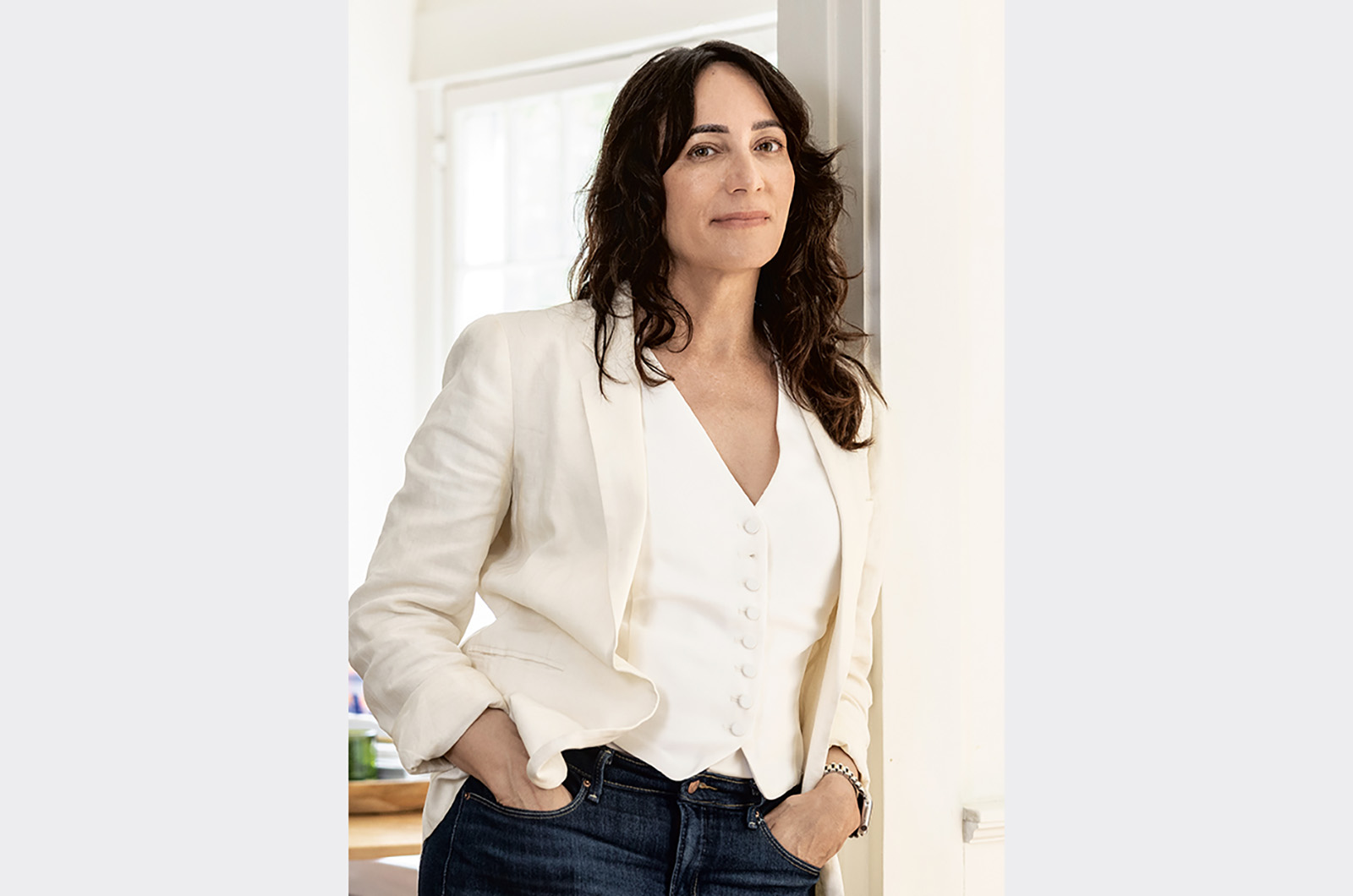
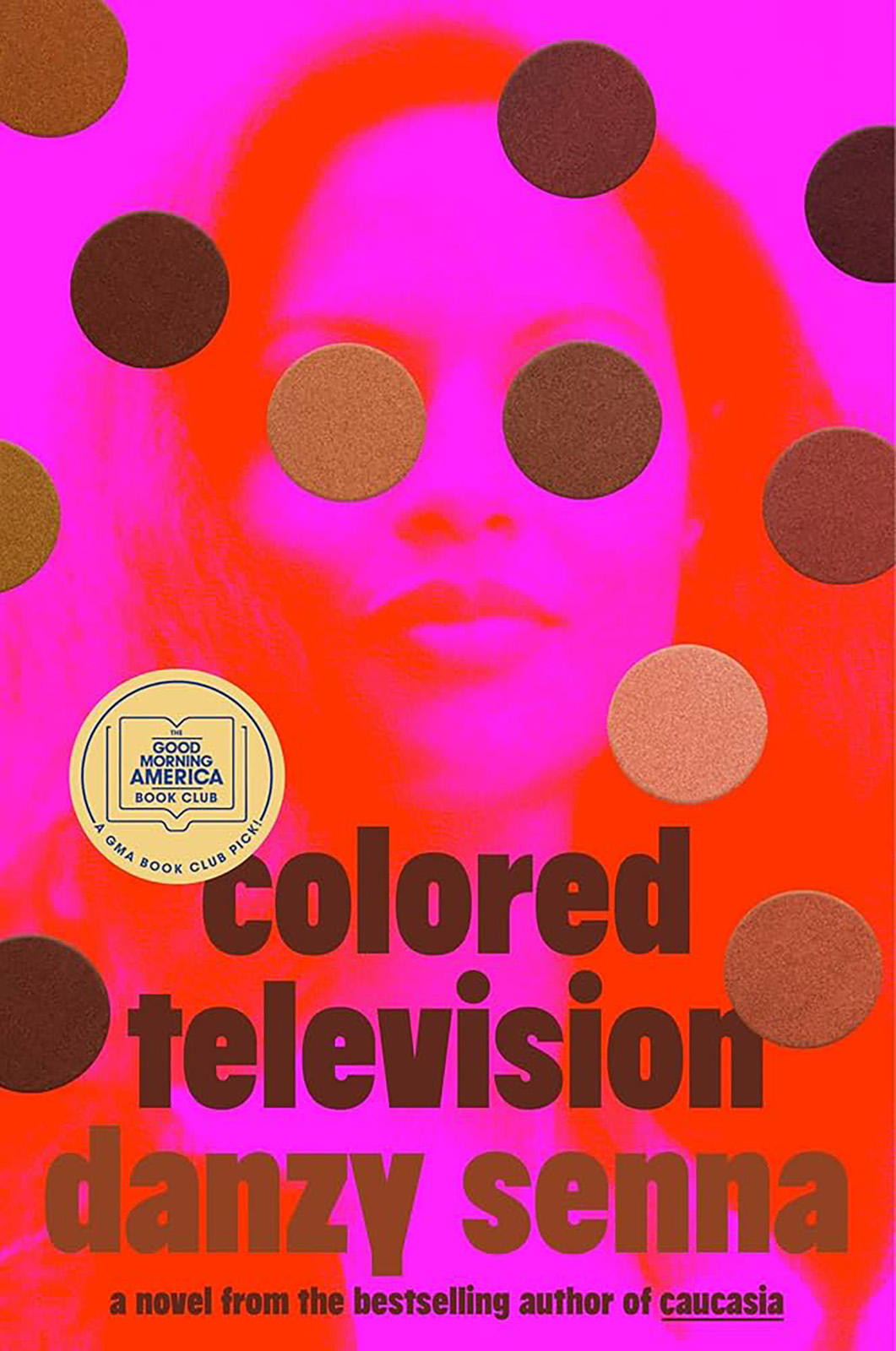
Colored Television, the seventh book by Danzy Senna, was published in September of 2024 and won the Anisfield-Wolf Book Award for Fiction, which focuses on books that make a contribution to the subjects of race and social justice. It was also nominated for a Pen/Faulkner Award.
Colored Television, the seventh book by Danzy Senna, was published in September of 2024 and won the Anisfield-Wolf Book Award for Fiction, which focuses on books that make a contribution to the subjects of race and social justice. It was also nominated for a Pen/Faulkner Award.
The main character, Jane, is a mixed race novelist who is trying to complete her second novel, a hefty tome she has been working on for eight years, and which her husband, also an artist, describes as “the mulatto War and Peace.”
At the beginning of the novel, Jane and her family are house-sitting for her friend Brett, a wealthy television writer. The lavish house and surroundings are seductive to the struggling artists who are trying to raise two children in Los Angeles while pursuing their artistic passions.
“Jane had discovered somewhere along the way that if you did not have money there were benefits to hanging around with people who did,” Ms. Senna writes. “Rich friends got divorced, or they got restless; they went away on sabbaticals and film shoots and retreats. They didn’t stay in one place, and they needed people to watch their possessions or pets or plants. Jane and Lenny and the kids were those people. They were those friends.”
However, suddenly not content to merely be “those friends” anymore, Jane embarks on a quest to break into television writing, surreptitiously reaching out to Brett’s agent and taking the plunge.
“In the email she wrote to Marianne Berkowitz that evening, in the waning light of Brett’s office, Jane told three lies,” Ms. Senna writes. “The first was that Brett had told her to be in touch. The second was that Jane had a television show idea she couldn’t wait to share with Marianne — a pitch for a show that was particularly relevant at this historical juncture.” Whatever the hell that meant. She hoped the agent would google Jane and see that all she wrote about — all she’d ever written about — was mulattos. The third lie was that she’d just finished a major novel.”
Following Jane’s journey through Hollywood, the book explores themes that have been prevalent throughout Ms. Senna’s career, including class and racial identity. Her first novel Caucasia, published in 1998, is a coming-of-age story of two sisters, set at the end of the Civil Rights movement.
Ms. Senna is mixed race herself. Her mother, the poet Fanny Howe who died last week, is white, and her father, editor and writer Carl Senna, is black.
“My desire to be a writer was, in many ways, driven to write myself and all the worlds I knew into existence because of being so aware of this erasure,” Ms. Senna said in an interview with the Gazette.
Being a part of a mixed race family is also what brought Ms. Senna to the Vineyard.
“My mom really picked Martha’s Vineyard in part because there was no other place for an interracial family and multi-racial home to come out and have a really comfortable time,” she said. “It’s such a fun thing now, to have teenagers going to the Island and seeing this sort of history come back in a way.”
Ms. Senna said that many of her own traits become part of her character’s. Ms. Senna said she sees herself in Jane’s desire for a fancy life, as well as in the cynicism of Lenny, Jane’s husband.
Ms. Senna said she does not insert herself into the characters strategically, but rather sees the similarities after the fact.
“It’s more later, I see that I’ve done that. I think it’s because all of the voices and thou
ghts are coming from me,” she said. “We all contain multitudes, and when you’re writing a novel you can indulge it....Having characters that can hold all of your contradictions is really fun and liberating for me.”
Although the book grapples with topics such as race and being a writer, Ms. Senna eschews the idea that writing about those subjects is therapeutic. When she is writing, she focuses on the construction of the novel.
“You’re building a house. It’s not therapy. You are trying to figure out how to keep this house, how to make it strong and hold it together,” she said. “That’s going to require so many other elements of yourself that are much more of a craft person. I never confused it with that gooey, therapeutic process because it’s hard. It feels like that takes away from the fact that it’s actually labor.”
Danzy Senna will take part in a panel discussion on Saturday, August 2 at 12:15 p.m. The talk is entitled America: Marginalized Identities, and will also feature Nicholas Boggs and Joseph Lee; moderated by Michele Norris. On Sunday, August 3 at 1:40 p.m., Ms. Senna will be featured at an Author Talk, in conversation with Amy Brenneman.
Add new comment