

Nature & Science

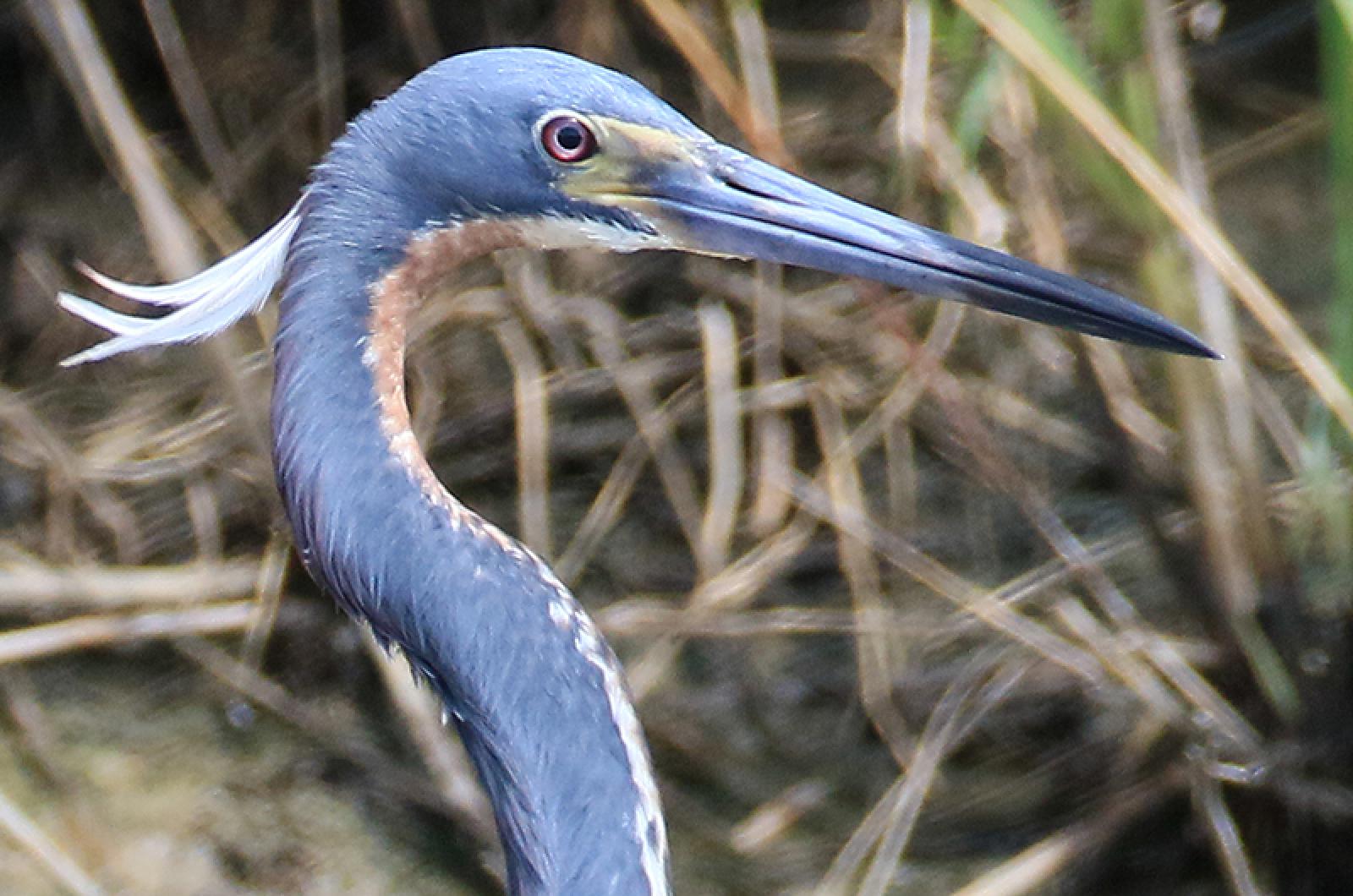
How do birds survive the winter? It’s amazing, when you think about it, that such tiny animals can successfully survive in our region, with snow often covering up food supplies and temperatures that can dip below zero sapping the energy out of warm-blooded creatures. If it’s warm enough to rain, that might even be worse; wet feathers, as you know if you’ve ever gotten soaked while wearing down clothing, are almost useless as insulation.
Some of the Vineyard’s wild species deal with winter by leaving – many of our nesting birds, for example, head south, as far as South America in some cases. Warm-blooded critters that stay here year-round – birds and mammals – all rely on some combination of curtailed activity (to conserve energy), exploitation of food sources, such as seeds and berries, that persist into winter, and shelter (to prevent heat loss) in order to survive the colder months. It’s easy to observe some of these species as they go about their daily business of survival.
For a homeowner, especially one with a fondness for gardening and landscaping, winter is the season for making plans and thinking about the possibilities of the coming year. As you contemplate your yard this winter, here’s a question to ask yourself: “How much lawn do I really need?”
Modern patterns of homebuilding and landscaping tend to make sod-grass lawn the default use for any available space.
A dead dolphin spotted Saturday on the shore of Cape Pogue Pond is not one of the two dolphins that were observed Wednesday and Thursday swimming inshore near the Dike Bridge, a New England Aquarium official said.
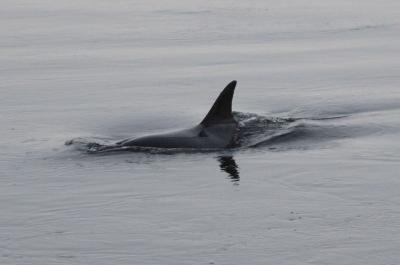
Two common dolphins were observed in the inner coastal waters of Chappaquiddick this week. The pair were observed swimming close to shore in an area known as the narrows, near the opening to Cape Pogue, north of the Dike Bridge.
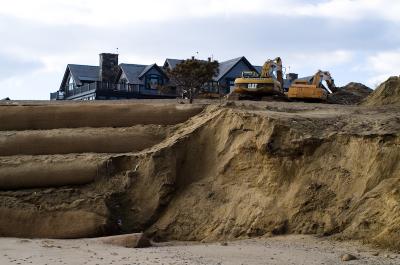
A planning board hearing next week will address plans to move two homes on Chappaquiddick.
Plans have been filed with the board to relocate Richard and Jennifer Schifter’s home at Wasque Point, which is threatened by rapid erosion. When the house construction was completed in 2007, it was 220 feet away from the bluff; today the eroding bank is about 50 feet away from a stone pool enclosure next to the house.
Almanac
A comprehensive guide to weather and tides on the Island.

Vineyard Gardener
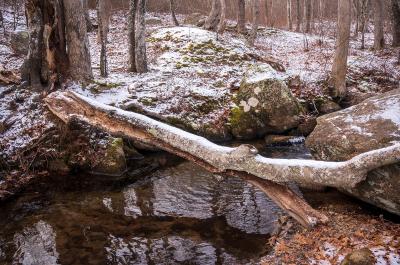
I guess this past week weather-wise is called a January thaw. We did not really experience it the last several years as December was unseasonably warm.
Farm & Field
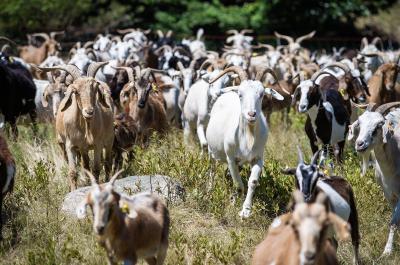
Beige and brown and tan and black, with horns spiraled or semicircular or in undulating waves, a legion of goats marched up the hill toward us, bleating in anticipation of fresh grass and leaves.