

Nature & Science
Words and emotions filled the air Monday night, when some 350 people packed the Martha's Vineyard Regional High School Performing Arts Center to air their views about the controversial Cape Wind project planned for Nantucket Sound.
Opinion split nearly straight down the middle among the 50-plus people who spoke at the public hearing, from local fishermen to high school students to powerful politicians. All spoke with passion and conviction.
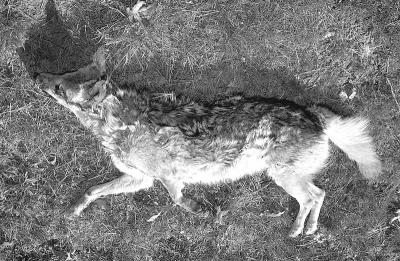
A coyote, whose carcass was found on the North Shore last weekend, may have swum to the Island from the Elizabeth Islands.
On Wednesday morning, under a warm sun and blue sky, David and Karen Berube were out on Cape Pogue Pond, at it again.
It has been billed as a native forest restoration project unlike any ever seen, aimed at promoting biological diversity and preventing catastrophic wildfires while improving the health and appearance of the Manuel F. Correllus State Forest.
But for Island conservationist Robert Woodruff, several key issues need to be addressed before the first tree is felled in the new plan to clear away more than 500 acres of dead and dying pine trees from the heart of the Vineyard.
Now a genetic study of the skins of scores of heath hens, all of them from the Vineyard, shows that the Island bird, although it looked and behaved much like its supposed parent species in the Midwest, was a wholly distinctive creature. Genetically it was more different from the greater western prairie chicken - that supposed parent species - than the Midwestern bird is from any other family member in its genus, which includes the lesser prairie chicken, the endangered Attwater's prairie chicken of eastern Texas, and even the sharp-tailed grouse. It is possible that instead of being a subspecies of the prairie chicken - which scientists have considered it to be since it was first typed in the last years of the nineteenth century - the heath hen might have been a species unto itself.
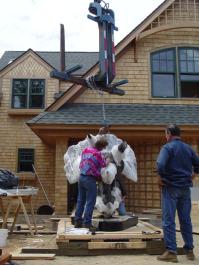
Mr. Barnes, along with an assortment of local builders, contractors and heavy machinery, helped place a 1,000-pound, seven-and-a-half-foot fossilized Triceratops skull atop a metal pedestal in the specially renovated hallway of a Vineyard Haven home.
Almanac
A comprehensive guide to weather and tides on the Island.

Vineyard Gardener
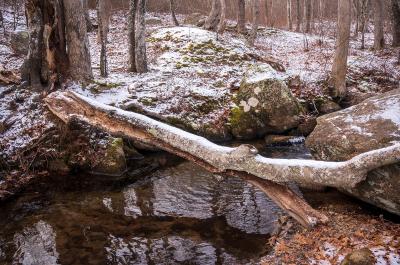
I guess this past week weather-wise is called a January thaw. We did not really experience it the last several years as December was unseasonably warm.
Farm & Field
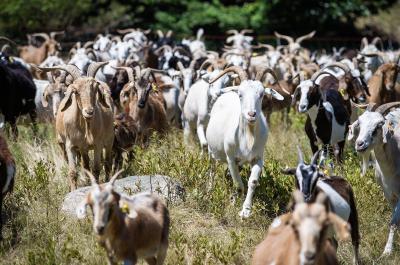
Beige and brown and tan and black, with horns spiraled or semicircular or in undulating waves, a legion of goats marched up the hill toward us, bleating in anticipation of fresh grass and leaves.