


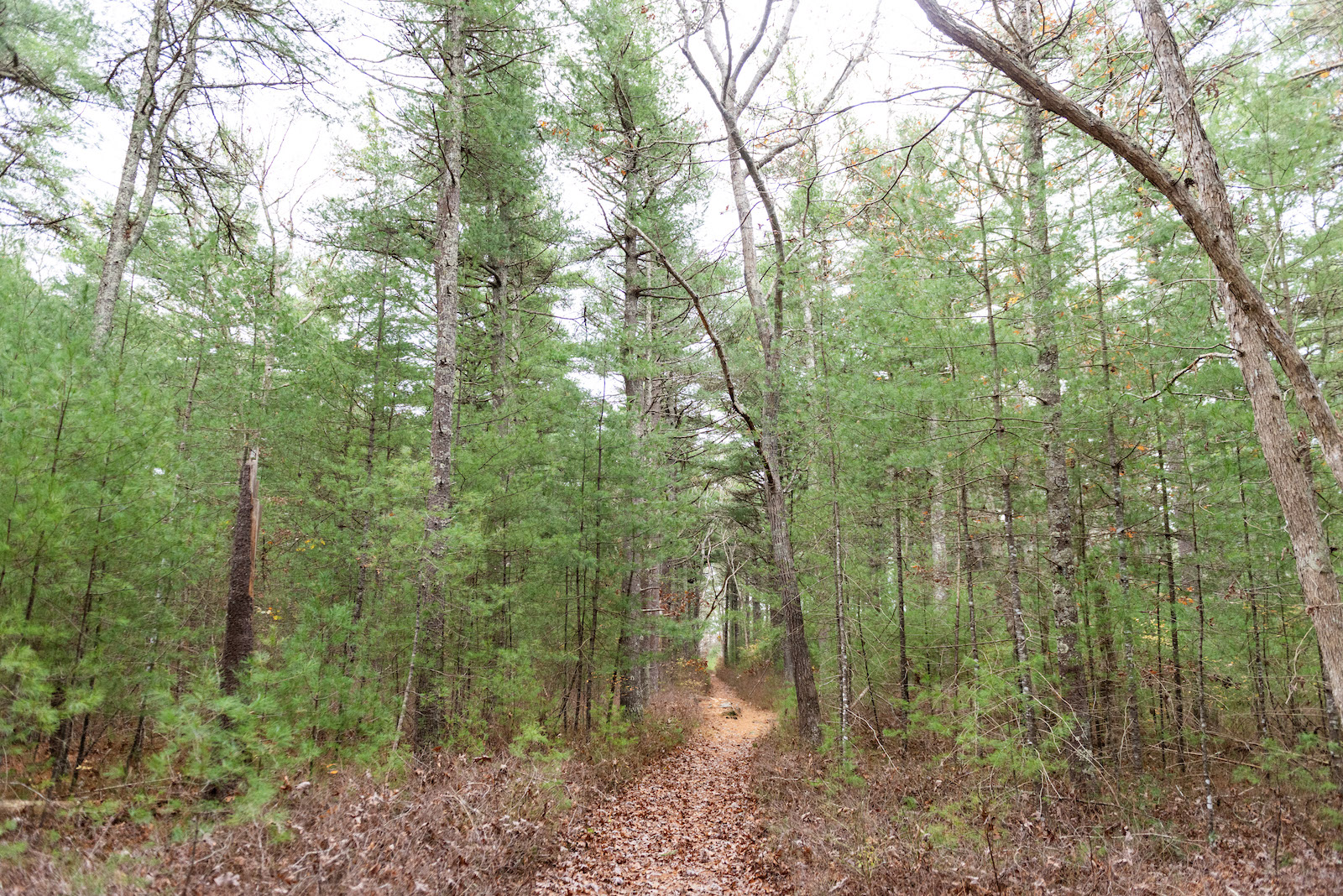
A plan to cut down 175-acres of pine trees in the Manuel F. Correllus State Forest is set to proceed after a state environmental agency determined the project does not need to go through another layer of environmental review.
A plan to cut down 175-acres of pine trees in the Manuel F. Correllus State Forest is set to proceed after a state environmental agency determined the project does not need to go through another layer of environmental review.
A pair of Islanders earlier this year asked the Massachusetts Environmental Policy Act (MEPA) office to weigh in on if the controversial tree cutting plan, sought by the state to restore the globally rare sandplain grassland habitat in the forest, was required to go through the office’s review process.
In a six-page opinion released on Dec. 26, MEPA director Tori Kim wrote that an environmental impact review was not needed, though the Department of Conservation and Recreation, which manages the forest, would need to create a property-wide management plan for all of its activities for review by the end of 2026.
The Department of Recreation and Conservation (DCR) says the ruling allows the department to move forward with the first phase of its cutting plan, which will remove about 52 acres of pine trees in the southeast corner of the 5,300-acre forest.
“Based on the advisory ruling from MEPA, we plan to move forward with the work at Manuel Correllus State Forest,” a DCR spokesperson said in a statement. “We will be updating our timeline for implementing this work, which aims to restore native plant habitat and support rare species within the forest.”
DCR in July got approval to start its cutting plan, a requirement under a 2001 permit that allowed DCR to expand its fire breaks in the forest. The cuttings are marked for areas where white pines, which were planted in the 1900s in an attempt to start a lumber industry, have proliferated, choking out other plants and habitats.
Proponents, including a Martha’s Vineyard Commission task force, said the cutting would help revive the sandplain habitat, while also tamping down the potential for an uncontrollable forest fire that has worried the Island’s fire departments for years.
Opponents, which have been numerous and vocal, say the state’s plans will get rid of strong trees that provide important carbon storage. They also argue that there isn’t ample evidence that the sandplain grassland was a natural feature of the New England landscape.
One of the chief critics has been David Foster, a West Tisbury resident and longtime director of Harvard Forest. He, along with Megan Ottens-Sargent, raised the questions about further environmental review, arguing that the state had made it a requirement under the 2001 permit.
MEPA determined that a retroactive review would not benefit the office and much of the review requirements had been filled in other filings. Ms. Kim also noted that the tree cutting plan was exempt from MEPA review.
Ms. Kim did order DCR to come up with a new management plan for the forest, which will describe the operation and maintenance plans for all of its facilities, including firebreaks, bike paths, field headquarters and the disc golf course. Proposed habitat management activities, including the plantation removal, would also have to be included in the plan.
The plan needs to be submitted to the Massachusetts Natural Heritage and Endangered Species Program by Dec. 31, 2026, and be posted for public comment.
DCR had originally hoped to put the work out to bid in the fall or early winter this year, and has said it will only conduct cutting in the off-season, between November and April. The bidding process has not happened yet though, according to the department, and DCR is working on a new updated timeline.
Comments
Put some affordable housing
Charlie Callahan So Boston/EdgartownPut some affordable housing in there if it's on the edgartown Tisbury rd. No one cares about a SAND PLAIN HABITAT.They do care about needed housing
Please look up sand plain
Susan Desmarais Oak BluffsPlease look up sand plain habitat. It’s not true no one cares about them. They are rare, support native plants and wildflowers. Know your facts.
Sand plains were HOMES for
Barbara Leland Onset MASand plains were HOMES for different WILDLIFE.
DO THEY NOT DESERVE THEIR HOME BACK?????
Sounds like a lawsuit is in
Johanna Hynes CharlestownSounds like a lawsuit is in order.
For what possible reason? To
Tim Johnson TisburyFor what possible reason? To try and save the non native trees that were planted for future logging needs so very long ago? Make saving a planted invasive tree species make sense please. Weare all truly interested
The question come up: will
Tim Johnson TisburyThe question come up: will they do a tick count pre cutting and post cutting-maybe 1 year after the work is done. Having that data should they chose to do some open burning in the future could be useful.
No one cares about sandplain
John M.No one cares about sandplain grasslands? I care! As do many others who want to restore this globally rare habitat.
I’d like to share what I
Lea Hamner ChilmarkI’d like to share what I learned speaking to foresters, regarding the opponent view point that these trees offer “important carbon storage”. I learned that once the trees are mature, they really aren’t storing much *new* carbon. Harvesting these mature white pines for timber once mature then locks the carbon into buildings, so it doesn’t decompose and go back into the environment as carbon. NEW, growing trees and saplings are what stores and traps carbon. So it is actually part of environmental stewardship and forest management to harvest mature trees and trap carbon. Thought I’d share because I didn’t know!
The 2025 report "Carbon Smart
Prudy Burt West TisburyThe 2025 report "Carbon Smart MV Final" report (https://www.woodwellclimate.org/pdfviewer/carbon-smart-mv-final-report/… by the Woodwell Climate Research Center and commissioned by the MV Commission and Sheriff's Meadow Foundation) identifies these evergreen plantations as having the highest carbon storage on the island, greater than 200 metric tons per hectare; see maps and graphs on pp 8 and 10. While this report goes on to delve into complicated discussions about whether to manage land for carbon storage or for habitat considerations does not set aside this key fact.
From the report: "Forest ecosystems store large amounts of carbon in the woody tissues of trees and shrubs... Mature forests with larger trees generally store more carbon aboveground than young forests with smaller trees. Forests also store carbon below ground in soil organic matter, and soil carbon storage can be large in forests where soil organic matter has accumulated over long periods of time". DCR does not propose to use these trees for lumber, but to chip them into dump trucks, to be trucked off island. The climate/carbon impacts increase when one stops to consider the perpetual ongoing management - brush cutting, burning, potential use of herbicides, etc needed to maintain this landscape to a particular point in time.
While reducing tree density
Joe V EdgartownWhile reducing tree density to minimize wildfire risk is an important consideration, it should not be assumed to be the best or only solution in today’s conditions. We are currently facing a severe tick infestation, with many island residents suffering from Lyme disease, alpha-gal syndrome, and other serious co-infections. Ticks thrive in grasslands and open areas, and increased clearing can expand these habitats—placing people who walk, work, or recreate in these areas at greater risk of exposure and infection. Land management decisions made without accounting for these realities risk worsening an already serious public health crisis. Any study or policy developed today must reflect current environmental and health dynamics. Rushed actions, however well-intentioned, can lead to long-term consequences that outweigh their immediate benefits.
I appreciate the mention of a
Ron Dagostino West TisburyI appreciate the mention of a possible uncontrolled wildfire. Imagine multiple deaths and dozens of structures burned — or possibly worse. It would be a terrible tragedy and a defining moment in island history. If we pretend to look back from that place — sometimes called a “premortem” — what would we wish we had done today? It doesn’t mean we should do these things, but it does help add some helpful perspective on an important issue.
Truly insane. Why? Purpose?
LJ EdgartownTruly insane. Why? Purpose?
The biggest threats to this
Bill Simpson VHThe biggest threats to this island are a) the financial and health implications of the ticks and b) the massive wildfire risk that surrounds us.
This is a huge hurdle cleared to start to fix both.
Just burnit and that will gey
Charlie Callahan So Boston/EdgartownJust burnit and that will gey rid of the trees and probably kill off millions of ticks and it will be a lot cheaper than having a tree company cut them down. thats if the wood is of no value
“You don’t know what you have
Judith Counsell W.T.“You don’t know what you have until it’s GONE” Lots of people live here now that are not native to our Island. We need trees to breath.They have been here for generations. Just walk among these trees and you can feel the peace and quiet they creat. They are good for your sole and well being.
Maybe they could cut back all
J.Counsell W.T.Maybe they could cut back all the scrub oak to widen the fire lanes.I’ve also seen poison. Oak the size of trees that grow along the bike paths,reaching out into the paths.Those could go. Cutting back the scrub oak might help lower the tick numbers.Maybe leave some for cover and nesting sights for the smaller animals and birds.There must be other options than clear cutting all those beautiful white pines,that contribute so much to clean our air,and block the noise levels.
Add new comment