


Life on Martha’s Vineyard is increasingly shaped by tick-borne illness. A new Island nonprofit, Tick Free MV, is trying to change that.
Life on Martha’s Vineyard is increasingly shaped by tick-borne illness.
Many Islanders know someone with Lyme disease and are used to checking themselves and their kids for its tell-tale bullseye rash. Where to stock up on permethrin, a synthetic tick repellent, is typical dinner table conversation. In recent years, alpha-gal, a potentially life-threatening tick-borne allergy to red meat and other mammalian products caused by the bite of a lone star tick, has become so commonplace that it’s shaping cafeteria menus at schools and the hospital.
“It’s affecting quality of life in so many aspects,” said Island tick biologist Patrick Roden-Reynolds. “I’ve talked to a lot of people that are stopping hiking on the trails. They’re stopping gardening [and] anything that they used to enjoy.”
A new Island nonprofit, Tick Free MV, is trying to change that.

Deer are a major food source for ticks.
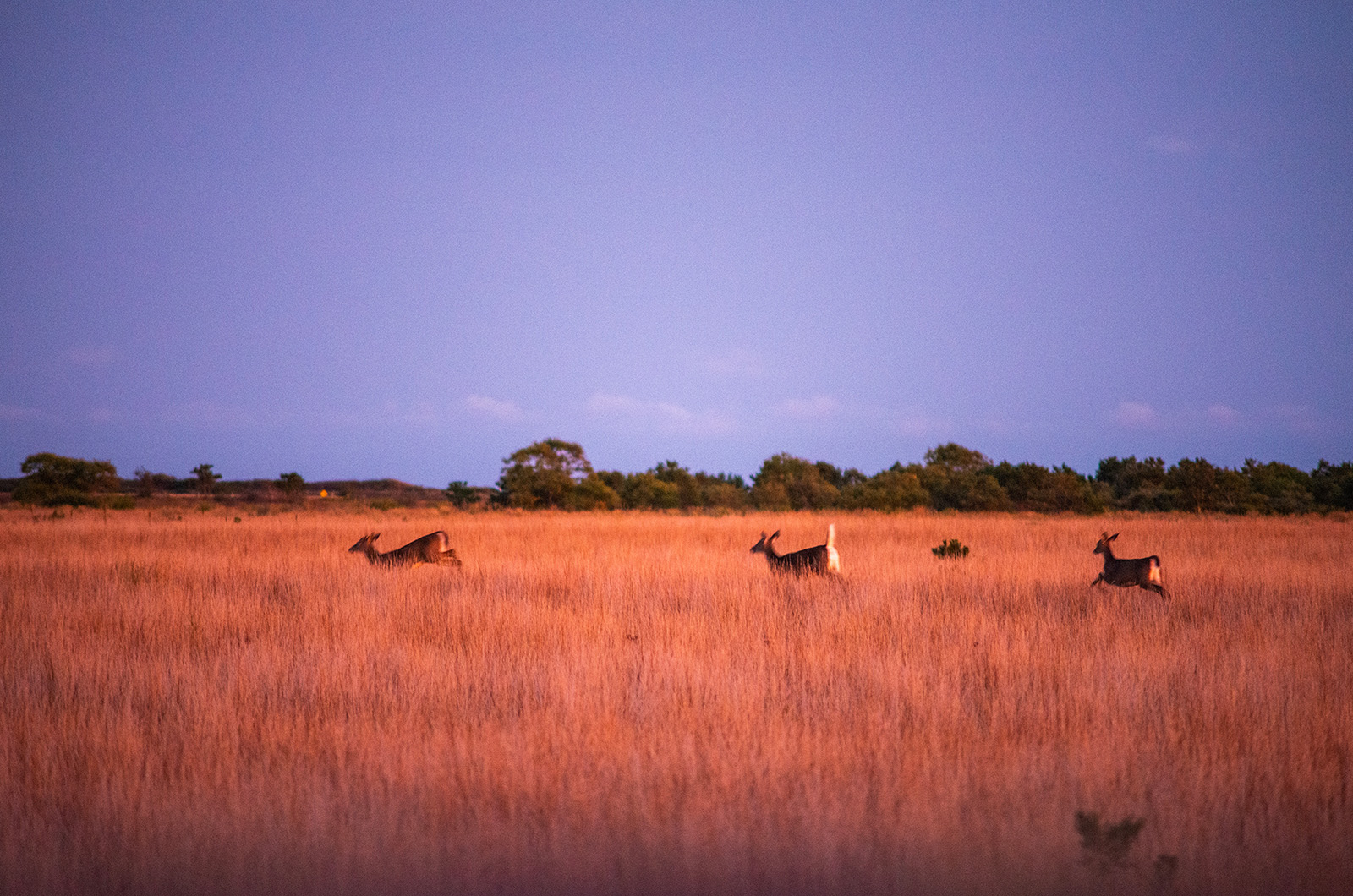
Deer are a major food source for ticks.
Officially launched on Dec. 4, Tick Free MV’s mission is to tackle tick-borne illnesses by reducing the total number of ticks on the Island, in part by targeting the Island’s population of deer, the main food source for ticks.
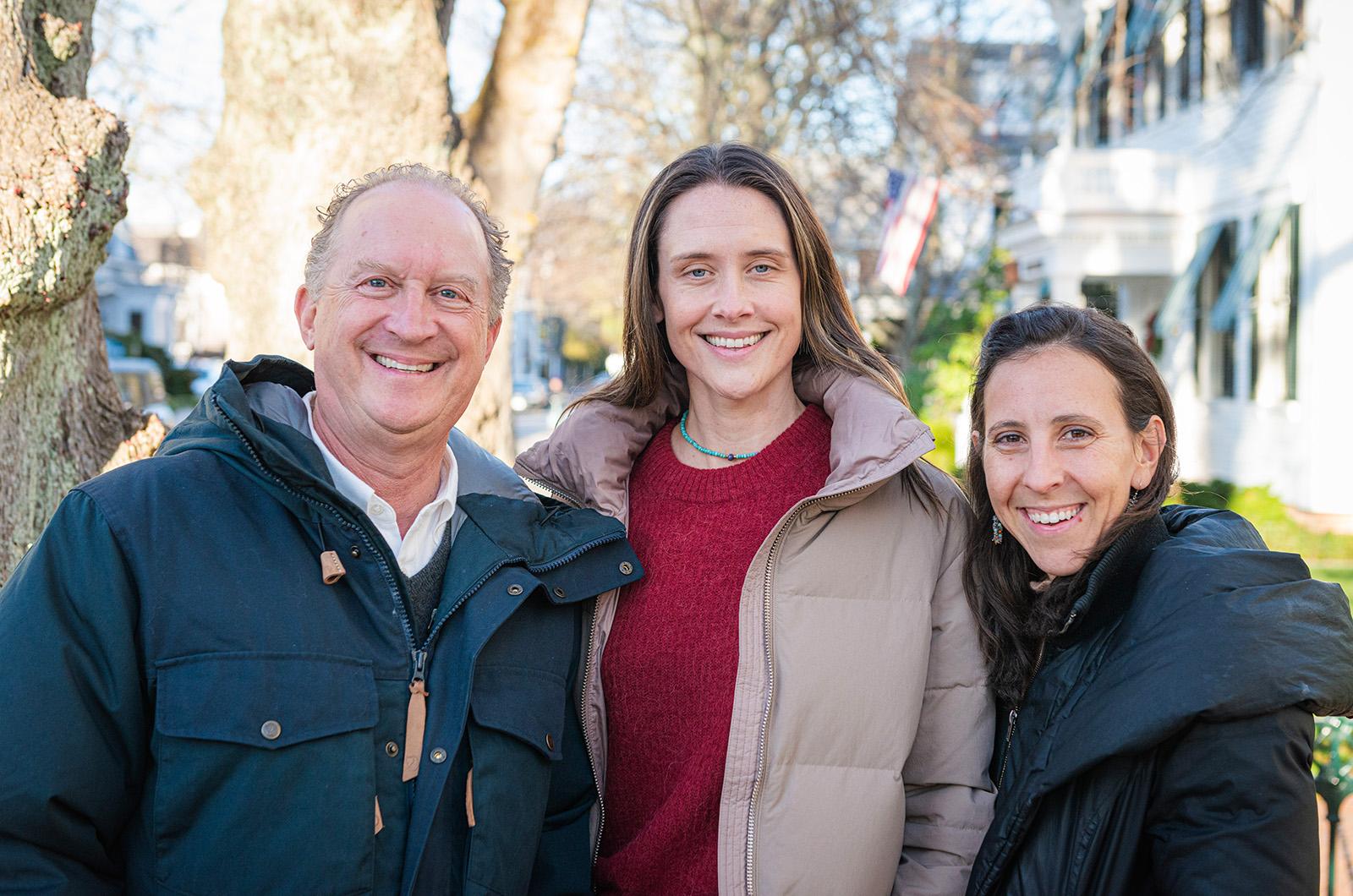
Virginia Barbatti, former development director for Island Grown Initiative, has been named executive director of Tick Free MV. The board of directors is co-chaired by Jeff Levy, CEO of Martha’s Vineyard Medical, and attorney and education activist Megan Chernin. Guiding the organization will be a growing group of senior advisors, including Mr. Roden-Reynolds and epidemiologist Lea Hamner.
Tick Free MV board member Isabelle Lew, partner at law firm Reynolds, Rappaport, Kaplan & Hackney, has been part of efforts to get the group off the ground since August. She said early conversations with experts and concerned Islanders made clear that it was time for all hands on deck.
“We sat down and looked at the current status of where things are on the Island and came to the conclusion that this would be a useful next step,” she said.
The Vineyard’s rates of tick-borne illnesses, such as Lyme disease, babesiosis, Rocky Mountain spotted fever and alpha-gal syndrome far outpace the rest of the commonwealth. The Island’s rates of Lyme and babesiosis are 11 times higher than the state average, and rates of Rocky Mountain spotted fever and tularemia are 185 times higher and 143 times higher.
Recently, the growth of alpha-gal on the Vineyard has been exponential. In 2020, Martha’s Vineyard Hospital recorded just two positive cases of alpha-gal. This year, the hospital recorded 724 positive tests in the first 11 months of the year.
Mr. Levy has seen the tick crisis unfold firsthand at his clinic, where 19 per cent of visits last summer were tick-related. While not wanting to understate the threat Lyme and other tick-borne illnesses pose to Islanders, Mr. Levy said that a rapidly rising alpha-gal rate has pushed the public health burden of tick-borne illness into terrifying new territory.
In fact, he’s convinced that the number of Vineyard-related alpha-gal cases is significantly higher than is currently recorded.
“Think about how many people test elsewhere,” he said. “People test at our clinic and don’t go to the hospital. There are people who go to Falmouth or other people who come here and visit and go home.”
Local tick biologist Dick Johnson, now on the Tick Free MV board, has been watching the situation worsen on the Island for the past 14 years.
He recalled taking a tick sample from Cape Pogue around 2014 that yielded more lone star ticks than he had ever seen in one place. In recent years, those numbers have continued to rise. Now, Mr. Johnson said scientists are regularly locating 40 or 50 lone stars on a single property at a time, all over the Vineyard.
“The last three years have just exploded,” Mr. Johnson said. “It’s some kind of critical mass, and suddenly they are everywhere on the Island.”
Mr. Roden-Reynolds, tick biologist for the Island’s boards of health, said he’s seen a dramatic change in how ticks have been affecting quality of life on the Vineyard over the four years he’s served in this capacity.

Attempts to boost hunting have been done in the past.
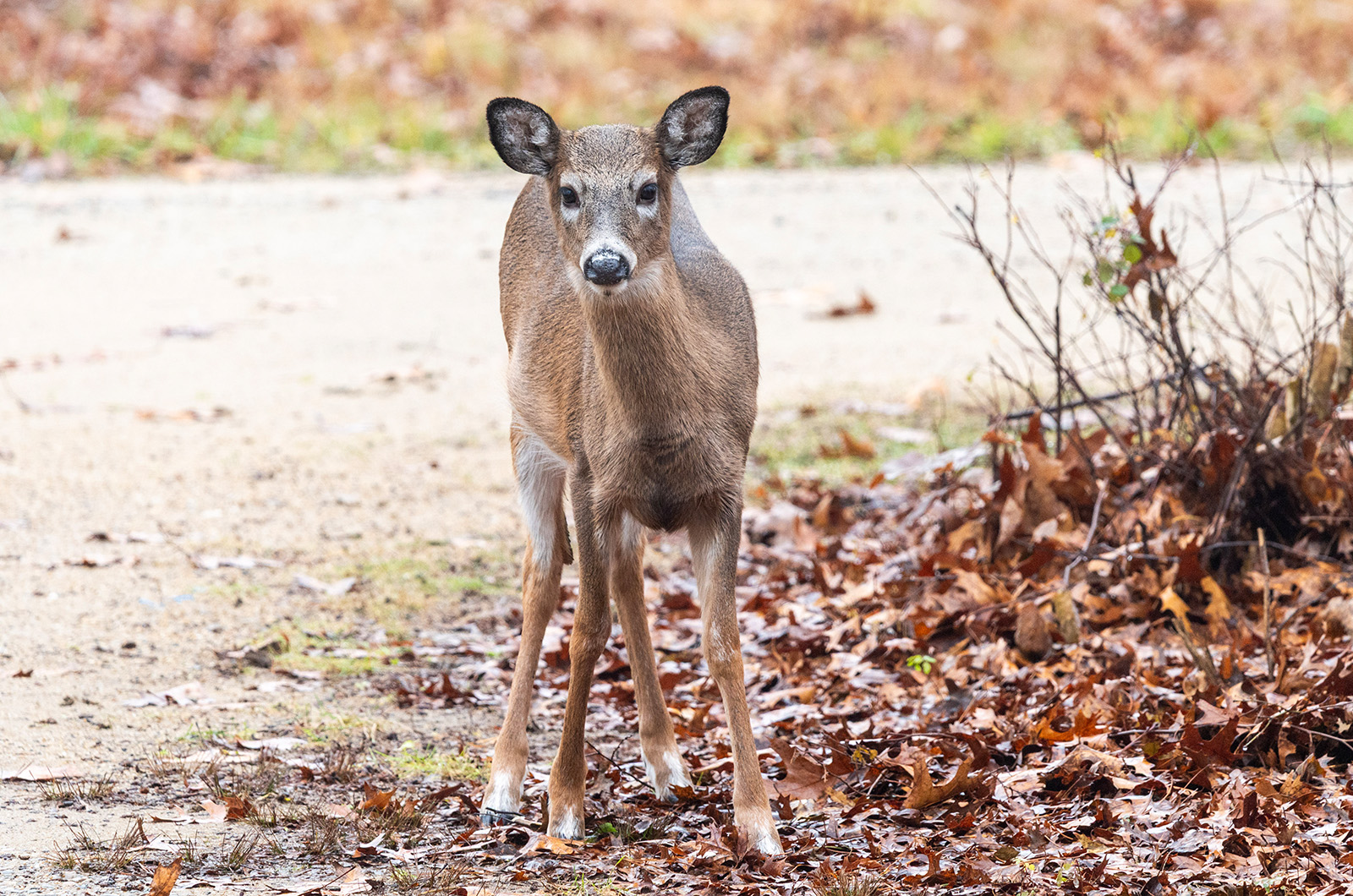
Attempts to boost hunting have been done in the past.
“Our public health burden with deer ticks and Lyme disease was already bad enough — some of the worst in the state,” he said. “And now, with lone star ticks and alpha-gal concerns, it’s just reached a boiling point.”
He pointed out multiple factors that could be contributing to the timing of the rise of lone star ticks on the Vineyard. The Island’s ecosystem, composed of grasslands and forests, is ideal for ticks. So too are the Island’s increasingly warm winters and temperate summers.
But if the cycle is to be broken, Mr. Roden-Reynolds said, intervention must start with winnowing the Island’s density of deer.
Deer are considered the primary host for adult deer ticks and lone start ticks, he explained. While ticks regularly bite a variety of animals, including birds and small mammals, ticks seek out deer as hosts that will allow them to reproduce and complete their life cycles.
He noted an “extreme overabundance” of deer populating the Island at a density far above state recommendations. While the state recommends a deer density between 12 and 18 deer per square mile, MassWildlife places the Vineyard’s density at over 55 deer per square mile — the highest deer density in the commonwealth next to Nantucket’s.
“By reducing the density of deer, you essentially reduce chances for the ticks to reproduce and create new ticks the following year,” he said.
Mr. Levy confirmed that culling the Island’s deer population is one among many of Tick Free MV’s objectives, undertaken in order to restore the herd to ecological balance. To this end, the organization has made boosting hunting a priority.
Tick Free MV is partnering with Island Grown Initiative and the MV Hunt Club to encourage deer hunting by offering a monetary incentive for every deer donated to the Share the Harvest Program. The partnership will provide hunters with $100 for every buck and $150 for every doe donated.
“We’re recognizing that [hunting] is a time-consuming activity,” Ms. Lew said.
A similar program was run by the MV Tick Program, but was scrapped in 2024 because few people took advantage of it.
Tick Free MV is also trying to expand the Island’s use of deer damage permits, which allow people whose crops or property are affected by deer to hunt them as pests. To date, there have been zero deer damage permits issued on the Vineyard.
“It’s nuisance removal, so the hunting regulations don’t apply if there’s a deer damage permit in place,” Mr. Levy said.
After the hunting season concludes in early 2026, Tick Free MV will conduct a thermal drone survey of the Island to locate deer population hotspots. The group has contracted deer management company White Buffalo, which also offers managed white-tailed deer hunts, for the survey.
“That will assist, I think, culling efforts by hunters,” Mr. Levy said of the drone survey. “It also ought to give us... a sense of the absolute size of the herd here, so that we can understand what we are working against.”
According to Ms. Barbatti, Tick Free MV has not at this point made the choice to contract White Buffalo or another company for an organized cull.
“We have to get the information first before deciding what we want to move forward with,” she said.
Tick Free MV is not alone in identifying deer density as a crucial part of tick-borne illness reduction. Just last week, the state held a summit on the crisis with local tick experts, including Tick Free MV affiliates, where Beacon Hill officials announced an expanded six-week winter deer hunting season. An additional 10-day deer hunting season will also be held in September 2026, and the state is considering opening hunting on Sundays next year.
But there is no tick-reduction panacea, say members of Tick Free MV.
While Ms. Lew called deer population management the group’s “foundational starting point” for tick reduction, she said it will need to be accompanied by other interventions. Tick Free MV is formulating a three-to-five-year plan that will address solutions targeting mice, for example, with the specific goal of reducing the spread of Lyme.
“This is going to have to be a toolbox of many tools, and looking at deer is one of those tools,” Ms. Lew said. “Based on the experts in the field, it seems as though that’s a very important tool, but certainly not the only one.”
The topic of thinning the Island’s deer herd is a sensitive one for some Islanders. Despite receiving mostly positive early feedback, the group recognizes that the community has a range of perspectives on deer and tick-borne illness management.
“We know that there are going to be people who are uncomfortable, and we understand why,” Ms. Barbatti said. “We’re going to talk with them, and we’re going to be in dialogue.”
For Ms. Barbatti, a successful Tick Free MV needs to powered by the community.
The organization will rely on donors across the Island to support the group’s initiatives. While Tick Free MV waits on its official 501(c)(3) status, the group’s fiscal sponsor is the Martha’s Vineyard Community Foundation, which is collecting immediately tax-deductible donations on its behalf. Tick Free MV is also accepting direct donations, which will be retroactively tax-deductible.
Though the group anticipates a long and winding road ahead, it hopes that at the end lies a safer, healthier Island.
“We’re doing this as neighbors, as fellow Islanders, as people really wanting to come together on something that’s become such a big problem for all of us,” Ms. Barbatti said.
Comments
Alpha Gal is a very very big
Tom EdgartownAlpha Gal is a very very big problem. Glad to see more and more reporting on it, and how to address it here …
I have advocated for a longer
Dr Thomas Green AquinnahI have advocated for a longer deer hunting season for years. There isn’t a day that goes by without me removing ticks ( now mainly Lone Star) from my dog or myself.
Now I read that even though the hunting season has been extended, that there aren’t enough places to take deer to be butchered once killed? This apparently led to less deer being culled this season.
I’m not a hunter myself but when I see 6 or more deer in my front yard every day ( that I could hit with a rock from my deck) I wonder how many problems there are in controlling this situation!
We do need to work together to make this beautiful island more safe for walking trails and exploring. I hope that this new project will be successful in trying to improve our environment on the Vineyard.
I have heard that birth
Lisa Burkin Chilmark, MAI have heard that birth control feeding stations have used in other areas with great success in reducing the deer population. Hunting isn't the only option.
I agree, the Island should be
PM WT/Cape CodI agree, the Island should be creating feeding stations rather than culling the herd. Why not also introduce species that kill the tick population, like Opossums or certain types of fowl?
Does this organization have
Chilmark resident ChilmarkDoes this organization have any actual power to deal with the problem? Were any of these people elected? How could they organize culls on public land? And what's the science behind their programs? These seem like important questions before they start implementing programs that affect all of us.
I find it very concerning
Frank Conklin VHI find it very concerning that a small group of deep pocketed summer residents are making decisions about wildlife management for the entire island. We can all agree that ticks need to be dealt with, but pinning it all on eliminating the deer population is problematic. I don't believe the tribe has been brought into this yet, and they must have a seat at the table before decisions are made. Also, why are qualified public health officials running go fund me campaigns to continue to do their work, while a small group of donors have decided to start their own non profit with salaried positions. Why not support the health officials who have already been working on this?
I am glad that there are
seasonal mvyI am glad that there are folks out there who care enough that are willing to donate time and money (per your post). If the state and county government bureaucrats did their jobs protecting public health, it would be unnecessary for others to step up and seek a solution. Thankfully we have 'deep pocketed summer residents" who are generous or we would not have the new hospital, the covid testing, college scholarships, and the massive number of well funded charities on this island.
State and county officials
Scott Terry VTState and county officials are doing their jobs. They, unlike you, understand there is no solution. You can always find an expert if you pay them enough that will tell you killing the deer will solve the tick problem. It won’t. Scientists have been warning us that global warming will have grave impacts on our lives and now it is. First our fish all left, now new ticks are marching north bringing new diseases we can’t deal with. I suggest investing in EPI pen stocks. And don’t come to Vermont, we have more ticks here now than you do.
The “deep pocketed summer
Sally EdgartownThe “deep pocketed summer residents” have realised their investment on island is underwater with the current trajectory of alpha gal…
I had never heard of “deer
Bambi Kyler West TisburyI had never heard of “deer damage permits”. They sound like a magic bullet!
Nonsense!
Shelley Wilbur ChappaquiddickNonsense!
I’ve had Lyme disease eight times, took the antibiotics for it and I’m just fine.
Last summer and the summer before I ended up in a hatch of Lonestar ticks and have been diagnosed with Alpha gal and I’m just fine.
I don’t eat meat mostly because I don’t want to. And I do eat dairy from time to time and it doesn’t bother me.
I do carry an epi-pen at all times just in case I do have an anaphylactic shock or someone around me who is stung by a bee or whatever.
But I also stay away from sugar and junk food, and anything that increases inflammation.
I believe peoples’ inability to get over these diseases has more to do with an unhealthy gut biome and underlying pre-existing inflammation than anything else.
Does anyone really believe the polluting our environment is going to help us stay healthy?
If you do a bit of research by the way, permethrin is not the best choice as it is toxic.
Picaradin is a better choice, the unscented version, as it is more effective against ticks with a much lower toxicity profile.
Get a grip people!
We cannot destroy the environment because we are a bunch of scared weaklings.
We either learn to live with our environment or we kill it and we go down with it.
Birth control for deer sounds
Susan Desmarais Oak BluffsBirth control for deer sounds like a great idea.
And I’ve red that guinea hens eat a tremendous amount of ticks in a day. While I know their noise can be bothersome it’s a lot easier to live with than tick borne illnesses!
If you removed every deer off
DanIf you removed every deer off the island we would still have an abundance of ticks. Deer cannot, and do not carry Lyme Disease. A large herd of deer has been stable on the island for decades, perhaps even a century. The correlation between deer population and an increase in tick population is not related. Ticks have many hosts, not only deer. Deer are one target, but not the biggest low hanging fruit. As mentioned, this is a habitat/environment issue. One controlled Burn in the state forest would eliminate far more ticks than killing all the deer ever would. (Ticks jump off the deer when it dies). It would do a lot of good to burn the undergrowth and clean the forests. Or rake it up and compost it. Minimize tick habitat. The host animals are not the right target
Deer population and increase
Ng VHDeer population and increase in ticks is related. While ticks feed on numerous hosts, deer are where ticks find each other to reproduce and lay eggs, which are then spread around the island as the deer travel. Small mammals like mice are ticks' first blood meal, and where the nymphs may pick up Lyme spirochetes, then ticks mature and seek out larger hosts like humans or deer. If you've ever field dressed a deer, you may see hundreds of ticks attached. Ticks won't find a mate easily crawling through underbrush, they find mates on large hosts like deer. Ticks don't jump off deer when they die, and they don't jump at all. Mice can't host hundreds of ticks, they would get sucked dry, and they aren't as far-ranging as deer. And while there may always have been a lot of deer on MV, the more explosive population growth has been people. I agree with bringing back controlled burns which would minimize mouse populations and kill tick nests, also deer culls, and controlling small rodent populations, doesn't have to be one or the other. Constant mowing underbrush is also not the answer, as that reduces bloom time for many plants, then pollinators suffer. The main culprit that we unfortunately can't tackle alone is climate change. More ticks and mice are surviving warmer winters, wet springs explode rodent and tick populations, less food during summer droughts are bringing animals into people's watered yards and gardens, human population is encroaching on animal habitat. With few apex predators to put pressure on deer and mice, humans have to step up our game.
Spot on!
WesleySpot on!
More Islanders =
James EdgartownMore Islanders =
More development =
More nutritious landscaping plants =
More deer =
More ticks =
More tick-borne disease incidence and prevalence —>
Repeat
Totally agree with regularly
WesleyTotally agree with regularly prescribed controlled burns. Needs to be done and will absolutely help reduce number of ticks. However, your assertion that tick population is not related to deer population is absurd. Please do your research. 55 deer per square mile is absolutely too many deer, for lots of reasons- not just tick control. Deer health and habitat quality both suffer from overpopulation. Ask any biologist or ecologist. Maybe hunting is not the answer, but that number has to be brought down somehow, and it will absolutely help reduce the tick population.
Agree that deer are not the
James EdgartownAgree that deer are not the only animal in town carrying deer and/or lone star ticks. The sample numbers from tested lots and tick density seem too great even with very high deer density in most Island areas. One can kill ALL the deer and ticks will still spread by animals we see (raccoons, rabbits, skunks, dogs, and even turkeys) and those we don’t see often (possum, mice, rats, voles). I’m a proponent of natural selection trimming these populations — bring n the foxes and coyotes! No need for bounties, and these apex predators will keep the vector densities low.
In Massachusetts a wild deer,
Scott Terry Milton, VTIn Massachusetts a wild deer, until legally tagged, is the property of all the state's residents. No private group gets to set a policy culling deer on their own. If the state sanctions this, I expect there would be legal challenges. Given that most of the island is private property and densely populated, I should think permission would need to be granted in writing by every landowner wishing to have high powered rifle bullets whizzing through their yards ( and if White Buffalo are allowed to have pay to hunt culls, you will not have professionals doing the shooting). I cannot imagine what they are charging for a thermal drone deer count, but if done properly, the deer population will be far lower than expected. Solutions are being demanded of experts, and, until you cure warming winters, there are none. Deer neither carry nor transmit Lyme disease (in fact their blood contains a serum that kills it on contact). If you already fear stepping into the woods, killing a bunch of deer will not make it one bit safer for you.
Add new comment