


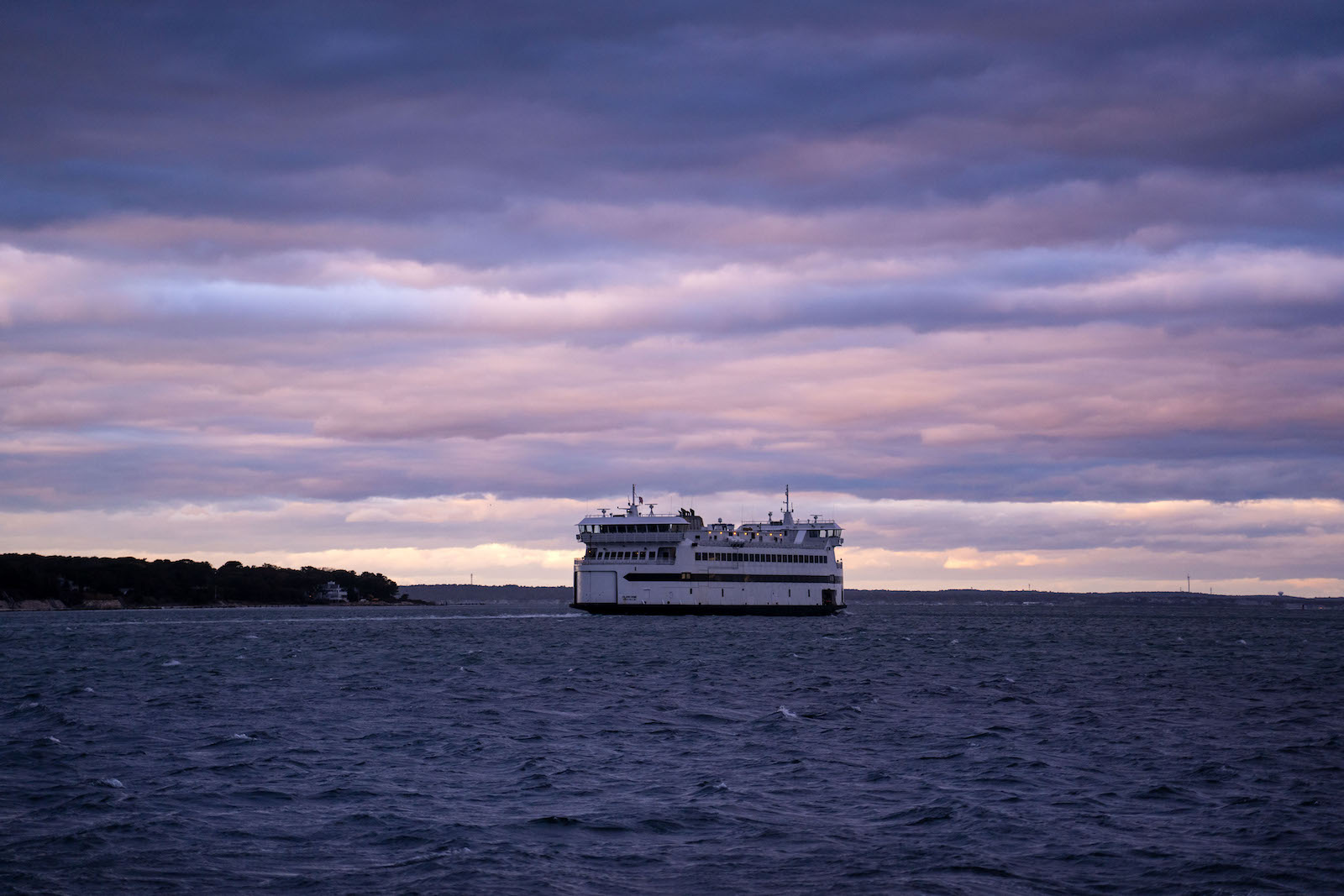
Islanders got their first glimpse last week at the Steamship Authority’s new reservation system that is expected to be rolled out next year.
Islanders got their first glimpse last week at the Steamship Authority’s new reservation system that is expected to be rolled out next year.
Planned to replace the 1990s technology that currently handles the more than 500,000 cars and trucks that travel between Woods Hole and Martha’s Vineyard annually, the new reservation system will be cloud-based and designed to streamline terminal operations, ferry line officials said at an open house Thursday.
Thomas Innis, a technology consultant for the Steamship Authority, said that the Steamship will switch to a “one-system” model where all data is managed on a central platform. The website’s interface will change to have a “responsive design” that will adapt to different types of screens with the goal of being more user-friendly.
“This is a pretty radical change,” he said. “This is not just making sure that customers are comfortable with the new experience, but really making sure that everybody at the terminals [and] everybody at Mashpee is also ready for this change.”

Meeting was held in Tisbury on Thursday.
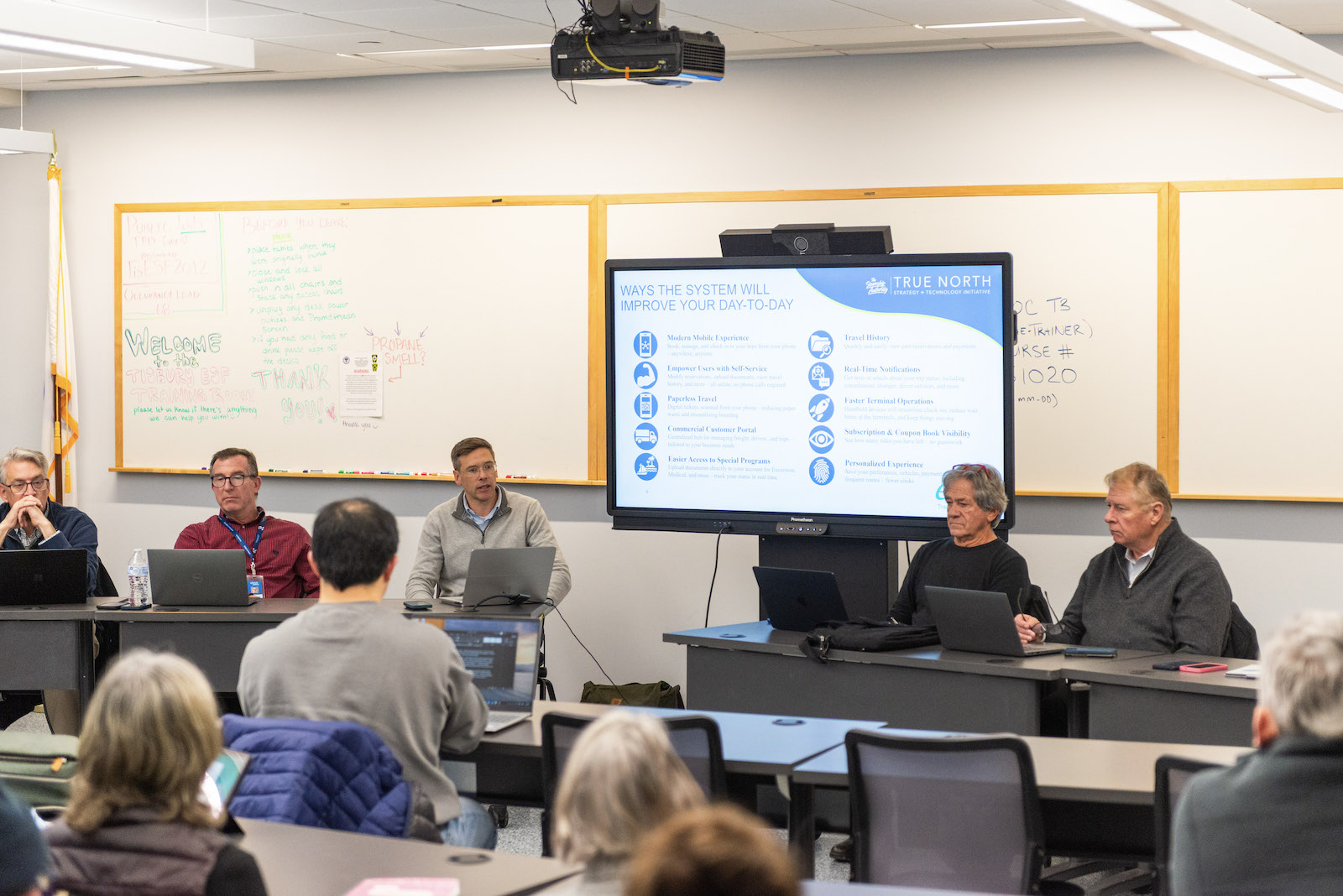
Meeting was held in Tisbury on Thursday.
About 20 people attended the open house at the Tisbury emergency services building to hear about the new system and offer input.
The Steamship Authority earlier this year hired E-DEA, an Italian company, to build the new reservation system. Mr. Innis, whose company Gibbous LLC recently did a top-to-bottom review of the ferry line’s information technology systems, said the new reservation system will be similar to the one E-DEA designed for the Scottish ferry company Caledonian MacBrayne.
He gave attendees a demonstration of how the Scottish ferry reservations work. The website guides users through the ticket purchase process step-by-step in what officials hope will be a more streamlined and intuitive way. Additionally, the sample website adapts its screen presentation depending on the type of device being used, making it easier to manage reservations on-the-go when compared to the current system. This will also lend itself to a more robust mobile notification system for real-time changes, officials said.
“The Steamship right now has one desktop experience that’s different from the mobile experience, that’s different from the other mobile experience[s],” Mr. Innis said. “We’re making sure that everything’s aligned.”
Additionally, standby could become virtual on the new platform, meaning it will be possible to “get in line” for a ferry without being physically at the dock.
The existing reservation system dates back to 1997 and has been a concern for both passengers and Steamship officials in recent years. The system, whose sole owner is inching towards retirement, has crashed several times during the first day of summer vehicle reservations. Many users have also complained that the system is not staying updated to reflect real-time space availability aboard the boats.
Mr. Innis said the new technology will make it easier to manage the website’s back-end, which will in turn improve the user experience.
“This project brings a whole new level of functionality and capability for internal,” he said.
Steamship treasurer and comptroller Mark Rozum said that in order to maximize the new system’s potential, other structural and policy changes must take place. For example, he discussed improving channels of communication between different Steamship staff and the technology itself so passengers can have the most up-to-date information possible on cancellations and new availability.
“The goal is to get what’s in the system to match what’s actually in the dock and on the boat, to get the inventory flowing both ways correctly,” he said. “Part of this process is not only [changing] the system, but looking at our policies and behaviors…. So there’ll be policy changes to help improve the efficiency of all system changes.”
Thomas Innis shows off the CalMac system, which will be similar to the new Steamship one.
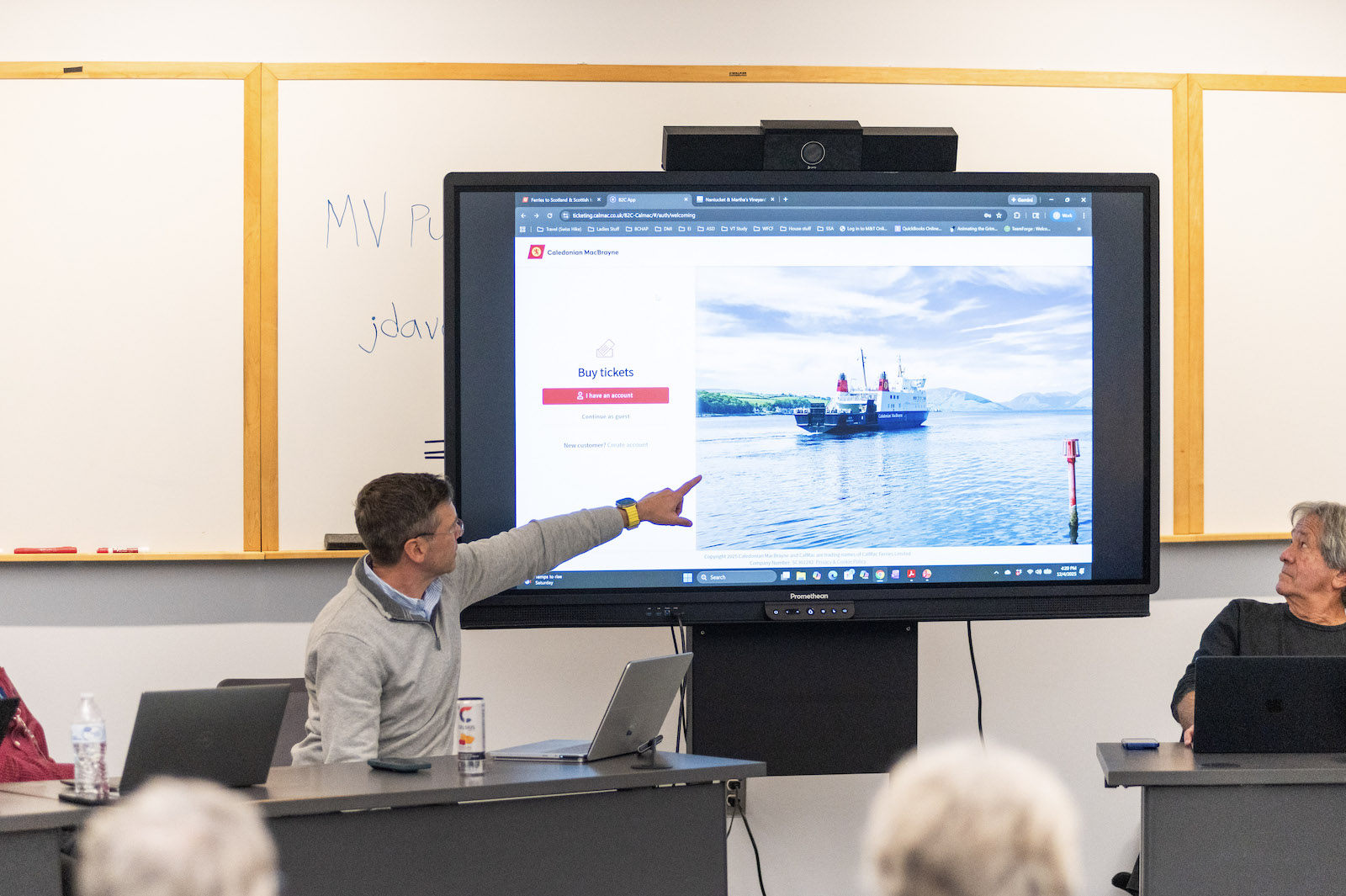
Thomas Innis shows off the CalMac system, which will be similar to the new Steamship one.
The public question and answer part of the meeting led to more larger questions about how the Steamship operates and how it could be better.
There was discussion of the Steamship Authority’s current system for accommodating medical transports and whether or not it should change. Attendees also questioned how the waitlist will function on the new platform and how the new system will support customer-to-customer ticket transfers without encouraging a secondary market for Steamship tickets. While there were no definitive answers to some of these larger questions Thursday, Mr. Innis said the Steamship will continue working with the public and the contractor to come up with solutions.
Also discussed was the possibility of eliminating paper tickets in favor of e-tickets. When informally polled, about half of participants said they’d rather use e-tickets, though others said they prefer physical tickets.
Mr. Innis noted that officials also want to hear what people like about the current system so it can be preserved.
“We also want to make sure that as we’re going through this process, we don’t break the things that are working inadvertently,” he said.
Ferry line officials have said they hope to roll out the new software in the spring of 2026 on the passenger-only Nantucket fast ferry, before implementing it fully on the Nantucket and Vineyard routes, possibly by the end of 2026.
In the meantime, Steamship officials have asked the public to sign up as beta testers for the new system by emailing [email protected]. Another open house on the reservation system will be held on Dec. 11 at 5 p.m. over Zoom. The meeting can be accessed at https://bit.ly/TrueNorthtownhall.
Comments
I’m all for trying a new
Wesley Nagy West TisburyI’m all for trying a new system, the current one obviously has so many glitches and too many empty boats when reservations should be available, I’m all in favor of “out with the old in with the new!”
If the goal is to get the
Danny Easy ChopIf the goal is to get the system to match what’s on the dock; then virtual standby is a terrible idea. Imagine the complaints when you leave cars on the dock waiting for someone logging in from Bourne Bridge.
Wonderful news. I have spent
Lorraine EdgartownWonderful news. I have spent weeks on Scottish ferries, outstanding, beautiful ships, immaculately kept, comfortable and safe. We do well to emulate this ferry company.
What level of complaint will
Tim Johnson TisburyWhat level of complaint will happen from the folks that so often say they don't like it because they simply hate change. The we have always done it this way crowd.
The question that should be
Rob Lytle Oak BluffsThe question that should be asked is if this is a product that is being configured - or if is custom software that is being built and will need be maintaned.
Software evolves.
Albert GosnoldSoftware evolves.
They need to limit the number
joanne oak bluffsThey need to limit the number of reservations a person can hold. Some people make 20 and then cancel close to date. Makes it impossible for others to make advance reservations.
Agree. Limit number of
Marc Vineyard HavenAgree. Limit number of reservations each year.
This might mean big changes
Ron Dagostino West TisburyThis might mean big changes if the current operational flow is relatively informal and/or the attitude is “just do what is good enough to keep things moving”. Quality data can’t exist in that type of environment. If that is indeed what exists now — and I don’t know if that is the case — but if it is, then the policy changes are going to be critical because the software can only be as good as the quality of the data that it knows about. Someone or something is going to have to create an electronic event and get that into the system anytime anything happens. If someone checks in virtually from the Bourne Bridge, for example (as was conjectured above), then the system has to know about it, and then another data event has to get created either when that car actually enters the physical line or if the clock hits a cutoff point and they haven’t arrived on time. Will cars that virtually checkin beforehand have to go through the checkin booth when they arrive? Probably, otherwise how will the system know that the car actually arrived? Unless there is a special line for cars that have virtually checked in already, and it is self-service? But then how do you as the driver know where to put your car if someone doesn’t tell you “make a hard right and get in lane 3” or whatever?
A big area where having accurate data could be helpful is with push-based events. We could be notified about when things happen that impact us. For example, we could get a notification on our phone that our ferry is n
on-time and it is time to virtually check in along with a link to do so. Or we could get a push-based notification when a waitlist request gets filled, or a ferry is late or cancelled, etc. Some of this stuff already happens more loosely (emails, or public notices on the website), but hopefully it can become more targeted and therefore more effective and helpful.
The gist of it is that this is probably more than just a better, more consistent user interface that both looks good and is easy to use no matter where you access it from. It could entail physical and operational changes that conflict with how the public at large as well as the steamship authority employees themselves have come to expect: It would not be surprising if this didn’t go smoothly and/or the suggested 2026 delivery dates end up not being met. But maybe it will go relatively well — someone will deserve kudos if it does. Regardless, this is the right way to go. We just have to keep that in mind and be prepared for the changes it will require.
You need a paper ticket
Bob Kelly Oak BluffsYou need a paper ticket option. Your phone could die or you've packed it. Maybe just a few people use it -but don't make it a phone only option. Even the airlines don't do this because they know it won't work for everyone and issue a paper boarding pass for that reason.
Absolutely correct. Not
MikeAbsolutely correct. Not everyone uses a cellular phone.
Paper is dead.
Albert GosnoldPaper is dead.
I agree with Bob Kelly,
Lorraine EdgartownI agree with Bob Kelly, please keep the paper ticket option. I always print out my boarding passes, ferry, etc., as I have seen electronics fail. In no way should it be e-ticket only. Too many slips twixt the cup and the lips....
What time is the Zoom on
James EdgartownWhat time is the Zoom on December 11?
The meeting is at 5 p.m.
Ethan Genter News editor, Vineyard GazetteThe meeting is at 5 p.m. Details are available here: https://www.steamshipauthority.com/news/372-informational_open_houses_s…
Head's up...more data mining
Elizabeth EDG and NYCHead's up...more data mining about us, in addition to any other perceived or real benefits. Something is always lost when change occurs. Do we know what that is? What about the WONDERFUL group who work the phones in Mashpee tirelessly, calmly and with some local charm? And yes, paper tickets. Believe it or not, not everyone has a "smart" phone or wants to use it - even when the batteries are charged.
I have used Caledonian
Katherine Putnam EdgartownI have used Caledonian MacBrayne and their app many times in the last 7 years. I have travelled on 12 different routes of theirs. Their app works well and is updated. Their ferries are tailored to the routes they run, the longest of which I have tried was 4.5 hours over mostly open water. They don’t run with the frequency that our ferries do and they do both shorter and much longer routes. They vary in size to fit the location and travel with their own vehicle bridges. Their ferries are mostly older and the new ones on order from the Glasgow shipyard have been taking up to ten years to build and some are not completed yet. So they turned to a Turkish yard and have gotten ferries from them inside 3 years. Their ferries come with comfortable seating, hot food and waitstaff to clear. That said, they have been known to cancel ferries on short notice (like an hour beforehand) and not make it easy to reschedule. They don’t have a waitlist but they do have standby. Note that there can be as long as another day between runs, as in Barra to Oban is one round trip a day. Their customer service staff is just as nice as Mashpee. They do tie their reservations to a specific vehicle. I have not tried to make multiple vehicle reservations for the same car on the same route so I cannot tell if they permit that. I hope not since it clearly creates major problems for other travelers.
They also don’t allow passengers to stay in their vehicles or access the vehicle deck while in transit.
The boats are clean and parts are carpeted.
I have lots of pictures of Cal Mac ferries from our repeated trips on their ferries.
Katherine sounds very
Barbara Vineyard HavenKatherine sounds very knowledgable about Cal Mac ferries, their routes, their boats, etc, but we are talking about a new reservation system (only) for the Steamship Authority which would be the first significant update to reservations in 30 years!
Keep the paper ticket option
Beatrice Phear West TisburyKeep the paper ticket option as electronics sometimes die
Paper vs Not is the least of
Ed Edgartown / North Palm BeachPaper vs Not is the least of the problems. The default s/b paper, it can be eliminated later. The biggest issue I see getting the rules correct and coded. The attitudes are much improved over say 5 years ago. If they get this right, the call centers will be very much different, even good traditional systems will allow for less staff even before AI plays a significant role.
Paper vs Not is the least of
ed Edgartown / North Palm BeachPaper vs Not is the least of the problems. The default s/b paper, it can be eliminated later. The biggest issue I see getting the rules correct and coded. The attitudes are much improved over say 5 years ago. If they get this right, the call centers will be very much different, even good traditional systems will allow for less staff even before AI plays a significant role.
My first question is “How can
William Wilmington, MAMy first question is “How can the team set a target implementation date (“Ferry line officials have said they hope to roll out the new software in the spring of 2026…”) when the final system design has not been determined? I concluded that the design is not final because the team is still collecting input on what should be in the system (“Mr. Innis noted that officials also want to hear what people like about the current system so it can be preserved.”). Policy and operational changes may also influence the design. This caution is coming from someone who has worked in the trenches managing systems development and implementation. Setting unrealistic – or at least premature – expectations may lead to disgruntled stakeholders later in the process. It is better to be realistic, even in the face of mounting pressure to get the new system up and running. As a ferry traveler and user of the system, and also one who has suffered through the previous false starts, I am also very anxious for a new system – but one that works as expected and is delivered in the agreed upon timeframe.
Add new comment