


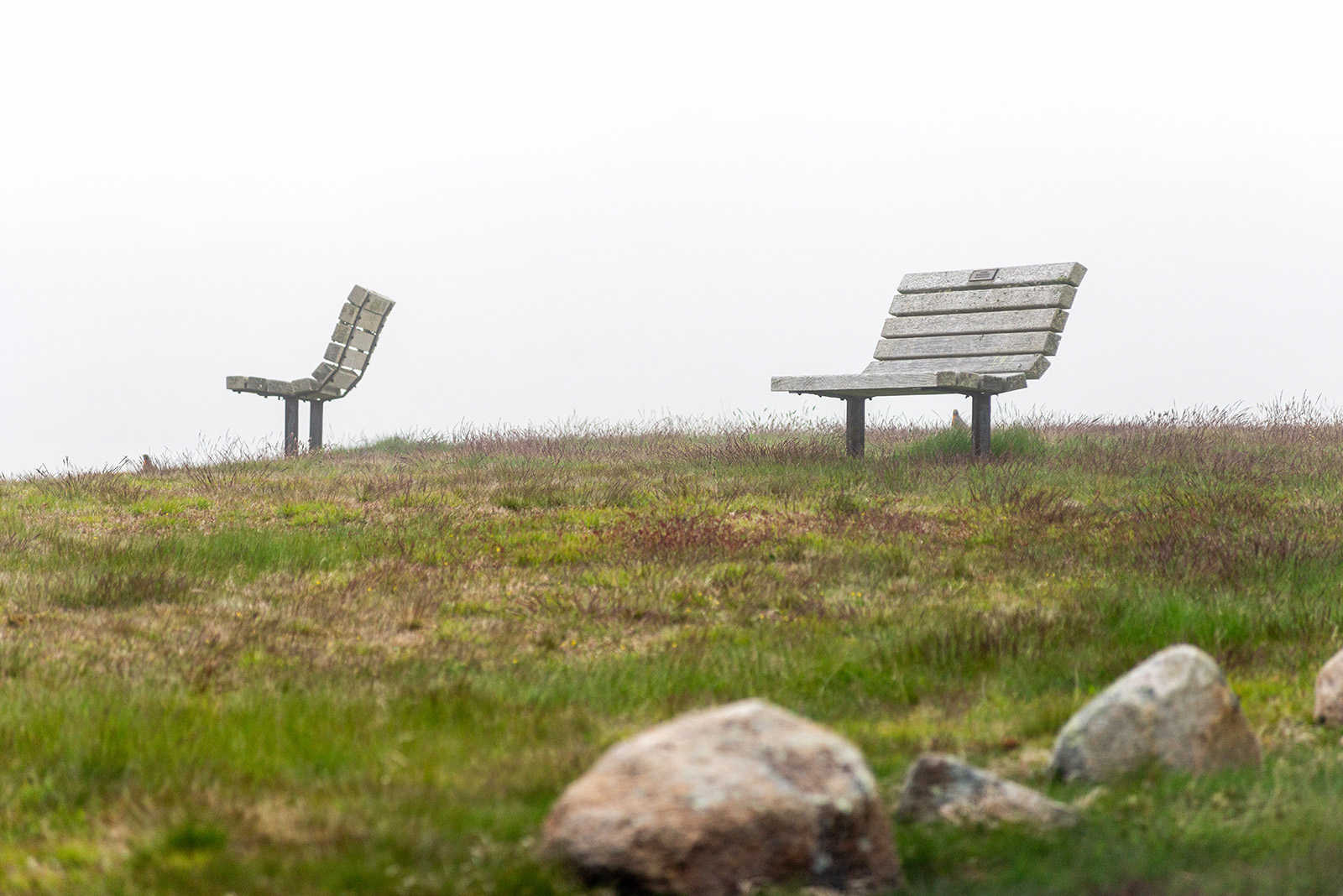
A new report from the Martha's Vineyard Commission points to loneliness and isolation as one of the major concerns faced by Island seniors.
When Dr. Robert Laskowski was still practicing medicine, his older patients would often come in for check-ups and tests, but by the end of their visit another need often emerged: connection.
It’s a common concern among seniors, one that several health care providers on the Vineyard have pointed to, and which is being highlighted in an Islandwide report recently released by the Martha’s Vineyard Commission.
With the older population on the Vineyard poised to hit an all-time peak by 2030, the issue of isolation and loneliness among seniors was listed among the highest concerns by providers.
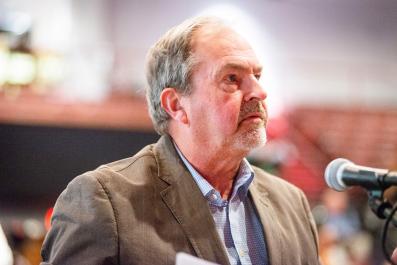
Bob Laskowski said many of his older patients dealt with isolation.

Bob Laskowski said many of his older patients dealt with isolation.
“It’s an illness essentially,” said Dr. Laskowski, who serves on the Dukes County Health Council. “Loneliness, that makes whatever you have worse.”
Several service providers in interviews with the Gazette said isolation is interconnected with other issues, such as transportation, and isn’t unique to the Vineyard. But it is a growing problem given the Vineyard’s demographics.
“Loneliness and isolation is one we wrestle with every single day,” said Cindy Trish, the executive director of Healthy Aging Martha’s Vineyard, a nonprofit focused on helping seniors live comfortably on the Island. “It touches everything.... Life can get very small, very quickly, even for people who have expansive deep roots on the Island.”
The commission’s new report sought to give a point-in-time evaluation of older adult services available on the Vineyard, and identify challenges, gaps and opportunities moving forward. The project, spearheaded by the commission’s research and communications manager Alex Elvin, is now being presented to Island select boards to get their input on how to help the situation.
“We want them to wrap their heads around it and read it,” he said. “We hope that one thing that will come out of this is further collaboration going forward.”
Though quantifying the need around isolation is hard, some organizations report that a large portion of their work involves emotional support for people dealing with loneliness and stress of aging, according to the commission’s study.
For instance, Island Elderly Housing service coordinator Mary Gosselin told the commission that, apart from the usual challenges of transportation, the biggest issue for residents is emotional support.
West Tisbury reference and IT librarian Rachel Rooney told the commission she develops relationships with people who might not otherwise have much human contact.
In the report, Ms. Rooney noted that people are often reluctant to participate in group activities. Instead, they seek connection through TV, which can intensify the feelings of isolation and fear.
About 35 per cent of the 20,000 people in Dukes County are 60 or over, according to the 2020 census, which is about 10 per cent higher than in 2010. That proportion is higher than Massachusetts and the U.S., and is projected in one estimate to reach a peak in 2030, with 8,398 people 60 and older.
Rose Cogliano, the Oak Bluffs council on aging administrator, knows first hand how hard it can be to get some seniors to get out of the house and interact with the community. While the council on aging holds a variety of different programs, sometimes people don’t want to venture out, either literally from their home or metaphorically from their comfort zone.
“People have to take that first step,” she said. “It is all dependent on the person. If someone is interested they are going to make the move.”
Cindy Trish said new efforts are being formed to help with the problem.
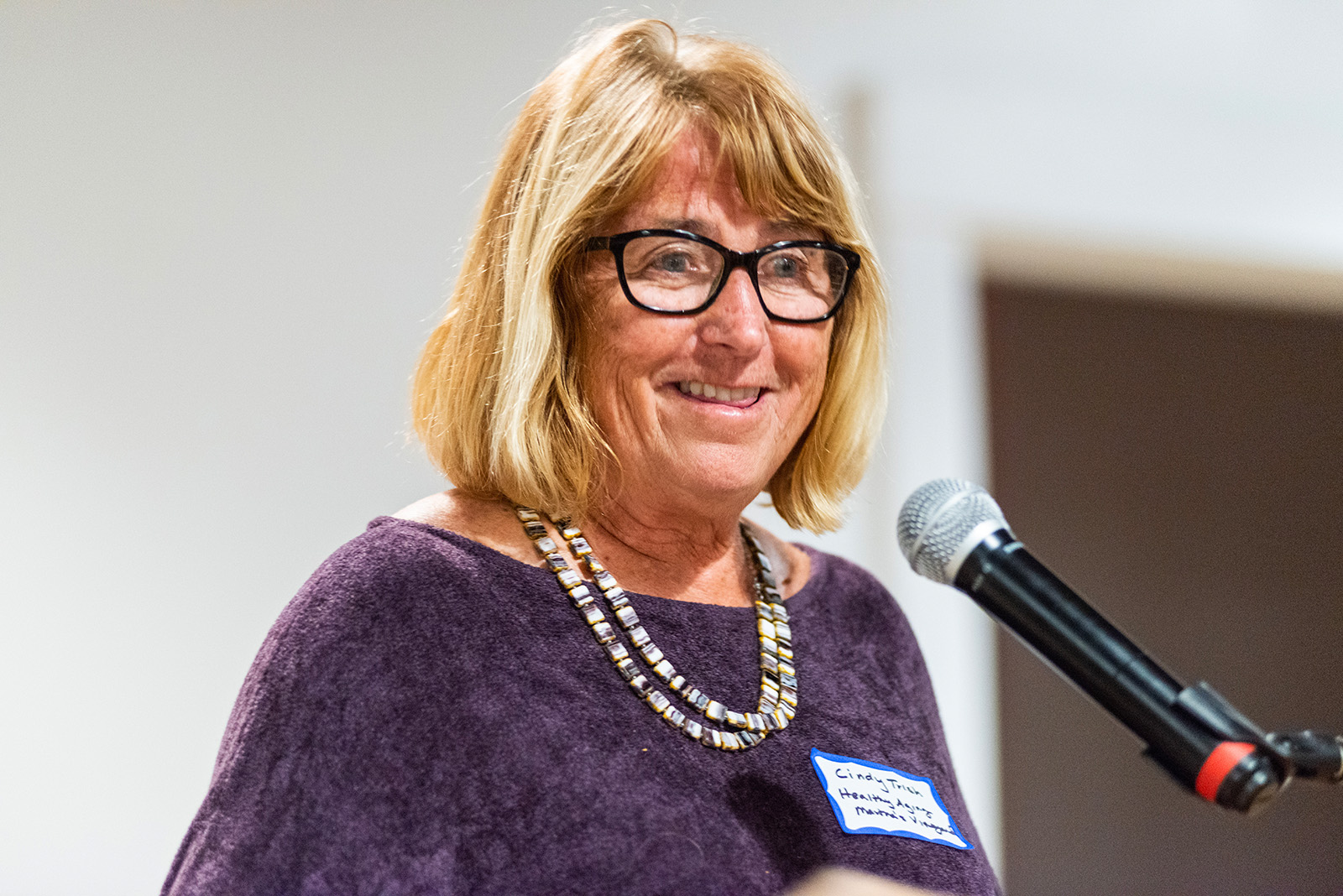
Cindy Trish said new efforts are being formed to help with the problem.
The council on aging does advertising and outreach on social media, via newsletters and posters around town buildings. They also hold pizza parties, exercise classes and bowling outings. But it can be hard to break old patterns, or coax people out after they’ve lost their loved ones.
Paradoxically, some seniors feel that the council on aging is for people older than them.
“I have people in their 80s who say they are too young to come in,” said Ms. Cogliano.
Along with the work at the councils on aging, several other organizations have formed in an attempt to battle the problem.
Last year, Maeve Cook-Martin and Hannah McCormick, both seniors at Martha’s Vineyard Regional High School, formed the generations club, which pairs students with the older generation for conversation and other activities.
Both had one of their grandparents die, and saw first-hand the difficulty seniors who are grieving face. Now, twice a month, a handful of students will meet with elders at the Federated Church in Edgartown to play games, tell stories and learn from each other.
Ms. Cook-Martin said she had one senior specifically tell her that she hadn’t been out of the house in a number of years.
“It was one of the things that helped her out of the house and engage with the community,” Ms. Cook-Martin said of the generations club. “This is our way to try and build and grow the community and have people engage with each other.”
For Ms. Trish, these types of programs are essential and help both generations.
“That’s an amazing way to broaden someone’s horizons,” she said. “We know multi-generational interactions are a real way to reduce loneliness and isolation.”
With the new report out, Healthy Aging is also looking at other ways to fill in gaps, including a potential shuttle service where seniors could be picked up and brought to several fixed spots, such as the council on aging and a grocery store.
There have also been talks about creating a cross-Island group that will examine any existing gaps and the potential of creating more programs, such as friendly visitors, where volunteers are matched with seniors for regular visits, said Ms. Trish.
The commission report supported exploring options to collaborate on issues and consider more innovative solutions, such as “social prescribing,” a practice where health professionals task patients with non-traditional medical services, such as fitness or support groups, volunteer opportunities or nature-based programs to get them outside.
The idea has gained supporters in England and could help instill a sense of belonging here, according to Mr. Elvin.
Both Ms. Trish and Dr. Laskowski said that there is a wider recognition of the problem, which is a critical step toward a solution.
“This is on the radar screen,” Dr. Laskowski said. “We’re going to continue to work on this.”
Comments
I think loneliness is a
Sara Piazza EdgartownI think loneliness is a national epidemic, not just among the elderly, though that age group is at higher risk for various reasons: most of their (our) friends are gone, they don't have the ability to get out and about to socialize as much as they once did, friends and family who are too busy to look in on them. But yes, it is a national epidemic for all ages, exacerbated in large part by the delusion that social media connects people.
Add new comment