


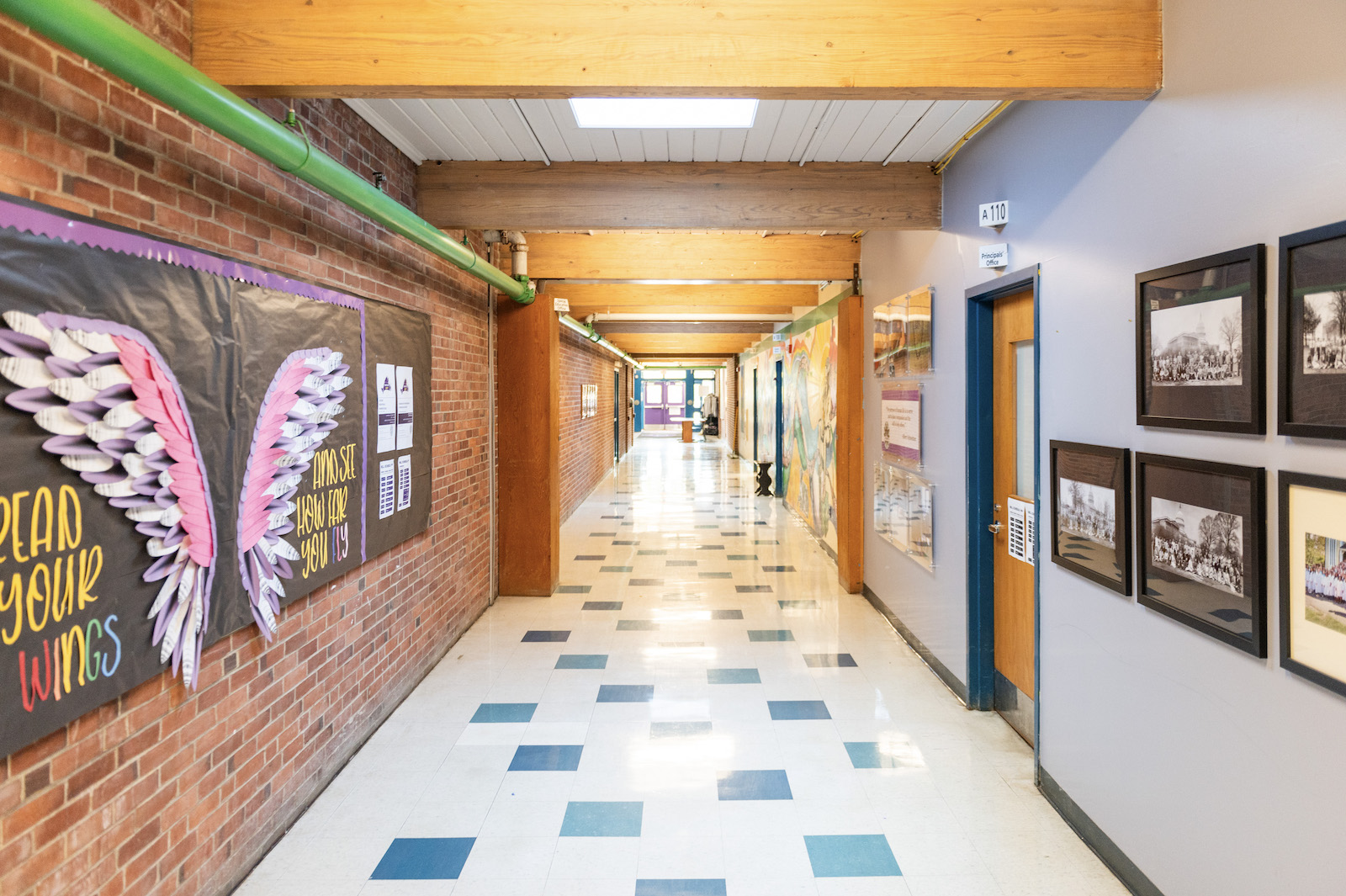
Also known as a district election, the single-issue vote will be held simultaneously in all six towns, replacing the traditional town meeting process and individual town elections to determine the outcome.
The Martha’s Vineyard Regional High School committee voted 7-1 Monday to call an Islandwide election next year on local funding for the proposed school building project, which could require towns to provide an estimated $220 million to $270 million of the roughly $340 million total cost.
Also known as a district election, the single-issue vote will be held simultaneously in all six towns, replacing the traditional town meeting process and individual town elections to determine the outcome.
“A district-wide vote gives everyone an equal voice,” high school committee member Marcia Shufrin said at Monday’s meeting.
“This approach better reflects our shared community,” said Ms. Shufrin, an Aquinnah resident and former teacher in Island schools.

School building was originally built in 1959 and is showing its age.
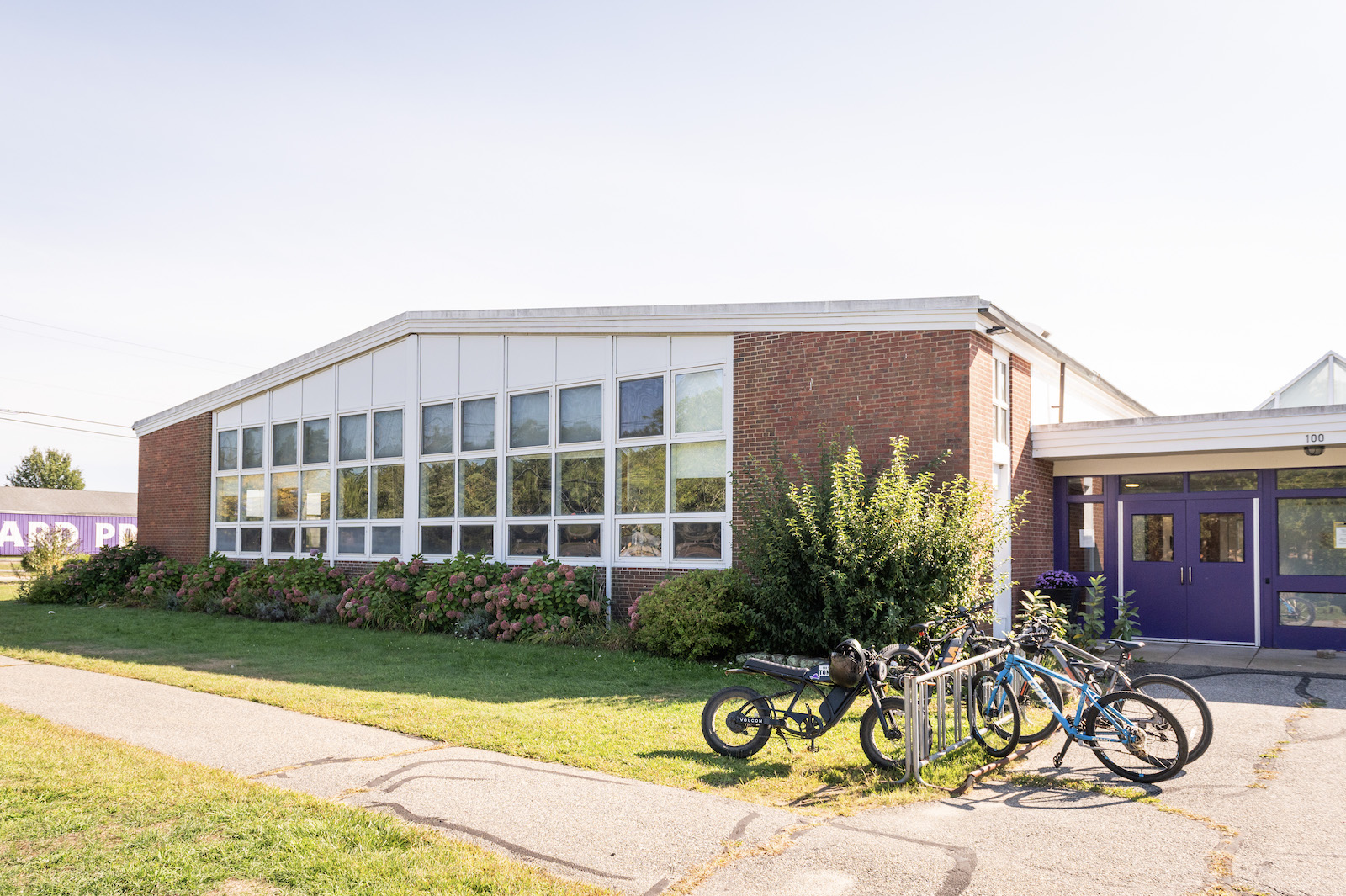
School building was originally built in 1959 and is showing its age.
Monday’s decision marks the first time an Island school district has exercised its right, under state law, to call such an election. A simple majority is required to pass the referendum and unlock access to an estimated $100 million in reimbursements from the Massachusetts School Building Authority (MSBA).
If the high school committee were to follow the customary process, the six Island towns would each have to muster a two-thirds majority at town meeting and a simple majority at the ballot box — 12 votes in all — in order to meet the MSBA’s conditions for reimbursement.
High school committee chair Jeffrey (Skipper) Manter cast the dissenting vote Monday.
“In small town government, there’s nothing more important than town meeting. That’s where all the issues are debated by the members of the public, back and forth,” said Mr. Manter, who also serves on the West Tisbury select board and town school committee.
His comments echoed the words of several town officials who addressed the committee earlier in the evening, opposing the one-day vote.
“I think not going the traditional route is going to do profound damage to not only the construction of the school, but the school committee’s standing in communities,” said Chilmark select board member Marie Larsen.
Oak Bluffs select board member and high school building committee chair Dion Alley spoke even more forebodingly, raising the specter of retribution through the high school budget process.
“I honestly believe you’re going to do irreparable harm to the relationship between the regional school district and the towns … and so the pound of flesh will come in budget season,” Mr. Alley said.
“You won’t have a relationship with the town going forward after this is done,” he said.
Tisbury treasurer Jonathan Snyder took a milder tone as he cautioned against bypassing the town-by-town votes.
“With the traditional town meeting vote, there is opportunity for a lot of discussion and education of voters,” he said.
“There’s no other forum like the town meeting for getting voices out there, dissenting voices, responses, exchanges of ideas and then votes,” Mr. Snyder said.
Superintendent of schools Richard Smith also spoke up for the town meeting process.
“We’ve got so many things that require trust. Trust matters,” he said.
“We’re going through our operational budgets [which] continue to get larger and larger, and I think we need to work within the confines of what we’ve done in a traditional manner,” Mr. Smith said.
Most of the committee members, however, indicated the time for debate should be well in advance of the funding vote.
“If it’s about educating about the project and what the educational program [is], that’s on the school committee and the school leaders to get out into each town and talk about that,” said Amy Houghton, who chairs the Tisbury school committee.
Ms. Houghton said she spoke with many town residents who support the district-wide election, particularly in the light of the Tisbury School debacle of 2018.
That spring, town meeting voters approved a new, $46.6 million school with $14 million of the cost to come from the MSBA, but the measure failed at the ballot box by fewer than two dozen votes.
Forced to withdraw from the state’s building program, Tisbury wound up financing the entire cost of a renovation and addition that topped $81 million.
Ms. Shufrin also referenced Tisbury in her remarks before voting.
“It is so regrettable that a handful of Tisbury residents were able to undermine the initial vote to renovate the school at the ballot box and forfeit a significant amount of funding for the MSBA. As the sole school committee member from the town of Aquinnah, I’ll do everything in my power to prevent that from happening with this proposed project,” she said.
Tisbury finance and advisory committee member Rachel Orr told the high school committee that her community’s property taxes are being tapped at a greater rate than other Island towns.
“The tax rate differential, that is not Islandwide. And so there are real winners and losers with the current arrangement,” said Ms. Orr, appealing for a reconsideration of the regional cost-sharing formula.
Ms. Houghton reminded those present that the agreement Ms. Orr referred to was ratified by voters in all six towns in order to advance in the MSBA program.
“The regional agreement and the way it is constructed is not going to change. I think we need to be honest about that,” Ms. Houghton said.
Timing for the election, which will be administered by the six town clerks at the expense of the high school committee, is yet to be determined but expected to be early in 2026.
The school building committee meets Tuesday at 5:30 p.m. to discuss next steps.
School administrators have been eyeing major renovations for the regional high school for years. Built in 1959, the school has outdated air-handling and utility systems, leaking roofs and cramped learning spaces that are no longer meeting building and educational codes.
The school committee earlier this year opted to move forward with a project that would include a large renovation of the existing building and an addition. The project would take several years and the district has previously estimated that it could be done by the end of 2030.
Comments
$400,000,000 for a school is
Michael Edgartown$400,000,000 for a school is an over the top too extravagant building for the Vineyard. The island will become even less affordable causing those of us that live on the Island year round to make our meager earning stretch even further and making the cost of living even more unreachable for us Islanders.
Does the school need work?
Albert GosnoldDoes the school need work?
How much should be spent?
Do you have kids who will be going to this school?
The highest cost to the towns
Terry Donahue EdgartownThe highest cost to the towns would 270 million. I have tried to compare the cost but I haven’t been able to place a dollar value on a child so any formula is useless.
The cost per year can be lowered by extending the bond period.
In todays world education is priceless if we are not willing to do what is required for our children we have ceased being a viable community.
I re-read this article many
Patti Blinds TisburyI re-read this article many times. Many. I am disgusted that an elected official would threaten other elected officials in public. Literally threatening the education of the island kids because he doesn’t like the school committee choosing an option in the agreement that all towns approved. Then the “trust” card gets played. Another terrible look. Does that mean the 25 person committee has no clue what they are doing and the island wide taxpayers shouldn’t not trust 3 select board members, 2 town administrators, builders, teachers, administrators to deliver the best and most fiscally responsible project to voters. Shame.
Add new comment