

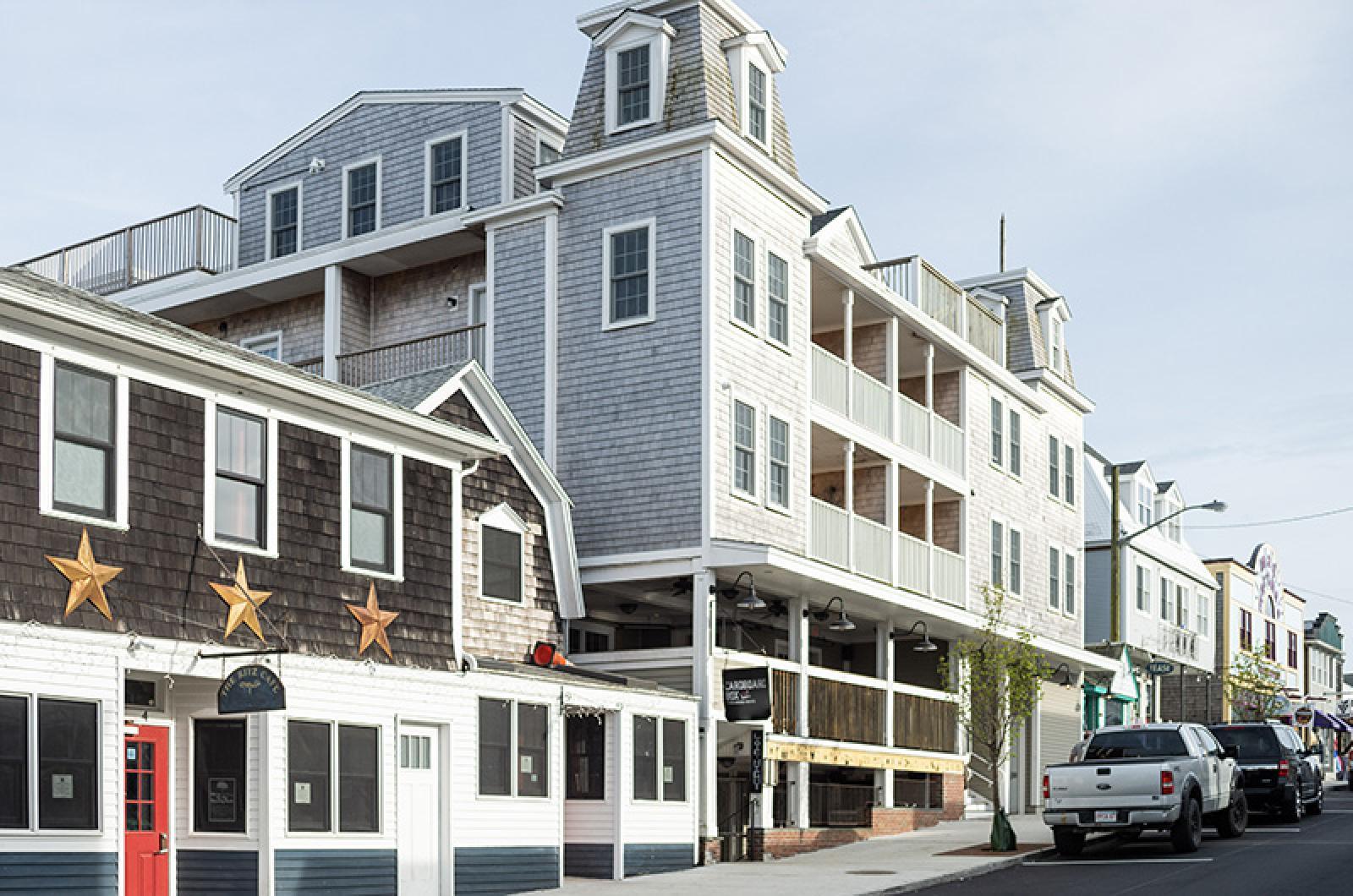
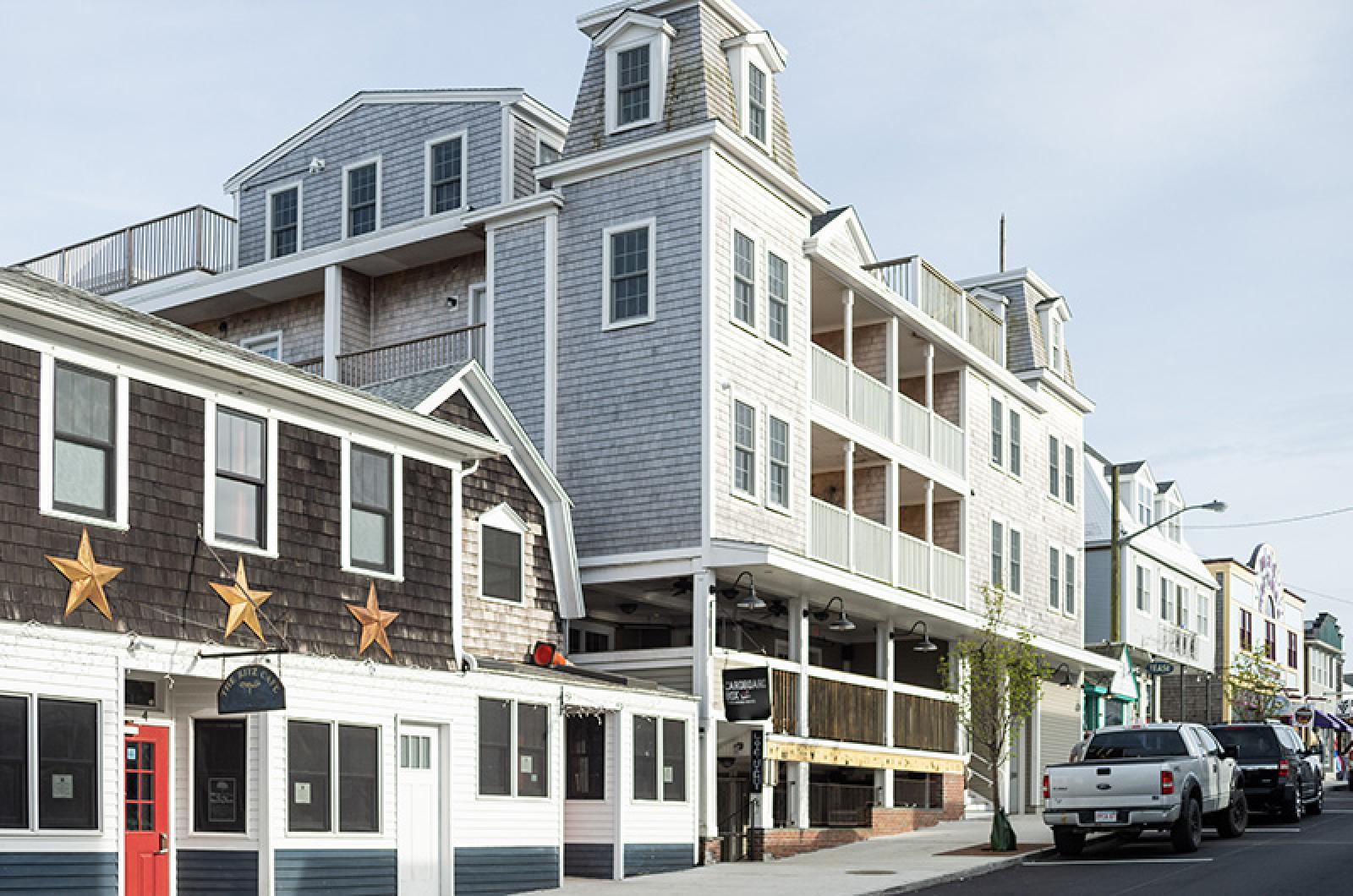
Windsor Circuit, Ltd. owner of the building that formerly housed multi-story Circuit avenue bar and nightclub The Lampost, is seeking to overturn a 2022 MVC decision that denied the company’s request to reduce the number of restricted workforce housing units in what used to be the bar’s upper three floors.
A multi-year legal battle between the owner of an apartment building in Oak Bluffs and the Martha’s Vineyard Commission went to trial in Dukes County Superior Court this week.
Windsor Circuit, Ltd. owner of the building that formerly housed multi-story Circuit avenue bar and nightclub The Lampost, is seeking to overturn a 2022 commission decision that denied the company’s request to reduce the number of restricted workforce housing units in what used to be the bar’s upper three floors.
While Windsor Circuit contends that the commission’s decision was vague and allowed for different uses, the commission is calling on the court to uphold its decision for fear of vacation rentals edging out desperately needed workforce housing.
Superior Court Judge Maureen Hogan presided over the trial on Tuesday and Wednesday and said she expects to hand down a decision in several months.
In 2017, Windsor Circuit president Adam Cummings received permission from the Martha’s Vineyard Commission to convert the top three floors of the Lampost building into dormitory-style housing earmarked specifically for Island workers. The following year, a zoning bylaw change in Oak Bluffs allowed Mr. Cummings to gain the commission’s permission to modify the dorms into 10 apartments for the same purpose.
But in 2021, Oak Bluffs officials discovered that Mr. Cummings was renting Lampost building units on the short-term rental platform Airbnb. Mr. Cummings then requested that the commission allow him to use only four of the 10 units as workforce housing, which the commission unanimously denied.
Mr. Cummings subsequently filed his suit against the commission in 2022, and his attorney Thomas Orr argued this week that the commission never explicitly banned using some of the units as short-term rentals.
Commission documents state Mr. Cummings’s intent to use the apartments for workforce housing “as needed” and do not contain provisions barring other uses. Mr. Orr argued in court that Windsor Circuit shouldn’t necessarily be required to use all 10 units for workforce housing under these circumstances.
“This project was, is and always will be a workforce housing project,” Mr. Orr said. “This dispute is about the scope of that workforce housing restriction.”
Attorney Johanna Schneider represented the commission in court and argued that all of the Lampost apartments should be used as workforce housing. Ms. Schneider said the burden is on the plaintiff to prove that the commission’s interpretation that the project was strictly for workforce housing isn’t reasonable, and if they can’t the commission’s opinion must stand.
“It is not enough for Windsor Circuit to present an alternate interpretation,” she said. “The commission is entitled to deference as long as there is a rational set of facts that supports that interpretation.”
Both parties agreed on the severity of the Island’s workforce housing shortage, and Ms. Schneider argued that when the commission assessed the benefits and detriments of the project, these assessments were made under the assumption that it would fill a growing need for seasonal and year-round workforce housing.
She also emphasized that Mr. Cumming offered a provision himself to the commission specifying the intent to use the building for workforce housing.
“All of the benefits were tied to the project being a workforce housing project,” she said.
But Mr. Orr maintained that the commission’s language on the Lampost approvals lacks the exactitude of other decisions in the past. He cited other workforce housing projects before the commission that stated an exact number of units to be used for seasonal or year-round workforce housing.
In his testimony, Mr. Cummings did say that he had not explicitly asked the commission to use the property for anything other than workforce housing. He said he started renting the apartments with Airbnb in 2019 and did not contact any local businesses to see if they had workforce housing needs.
He maintained his interpretation that the “as needed” language should grant him the flexibility to commit units to other uses. He also noted that he rejected an early draft of the 10-apartment plan that contained language explicitly banning the property’s use for short-term rentals.
“I was not happy with it and would not agree to it,” he said. “We weren’t going to agree to that type of limitation.”
Mr. Orr presented evidence from a 2018 commission meeting where commissioners discussed concerns about the units potentially being used for short-term rentals. He asked the judge why the commission would agree to remove the condition if short-term rentals were truly not allowed at the property.
“They had the opportunity to get that assurance,” he said. “They did not do that.”
Ms. Schneider said the commission has historically used a “permissive” style of permitting, meaning that a permit holder can only do what is explicitly allowed with a property and nothing outside that. The fact that the DRI didn’t mention short-term rentals, she argued, didn’t mean they were allowed.
“The commission at all times has been very clear about the meaning and intentions of the decision,” she said.
A number of current and former commission staff with knowledge of the project testified, including executive director Adam Turner, former DRI coordinator Alex Elvin, Island housing planner Laura Silber and former affordable housing planner Christine Flynn. Oak Bluffs building commissioner Matthew Rossi also testified. All maintained that the commission’s intent behind and understanding of the project was that it would be entirely for seasonal and year-round workforce housing.
Ms. Silber testified that the commission’s understood definition of “workforce housing” inherently excludes short-term rentals.
Judge Hogan will review post-trial briefs and the presented evidence before handing down a decision.
Comments
I'm hopeful Judge Hogan can
Sally Rogers Oak BluffsI'm hopeful Judge Hogan can see through the smokescreen and games Cummings has been playing.
Multiple clients of mine used
EdMultiple clients of mine used to rent these apartments during high summer season to use for short term vacations. If peak times in the summer season don’t constitute “needed” worker housing, then the housing problem doesn’t exist. Having seen the workers streaming on and off the boat daily, and meeting waitstaff that commute over from the cape, I am pretty certain that is not true.
Cummings tried to cheat the
Drew Oak BluffsCummings tried to cheat the system and got caught. He seems to have changed his argument from one of outright defiance to a nuanced fairy tale. “As needed” was to apply to the needs of workers, not his greed. I only hope the court sees through this as a failure to support the commission will undermine existing and future workforce housing programs.
“as needed” clearly means as
Bill Simpson VH“as needed” clearly means as the applicant needs it. Not as the commission or you or I need it. If treated fairly, I think he has a winning case here. The problem is that the judge is probably going to rule with their emotions and not their English dictionary.
Add new comment