


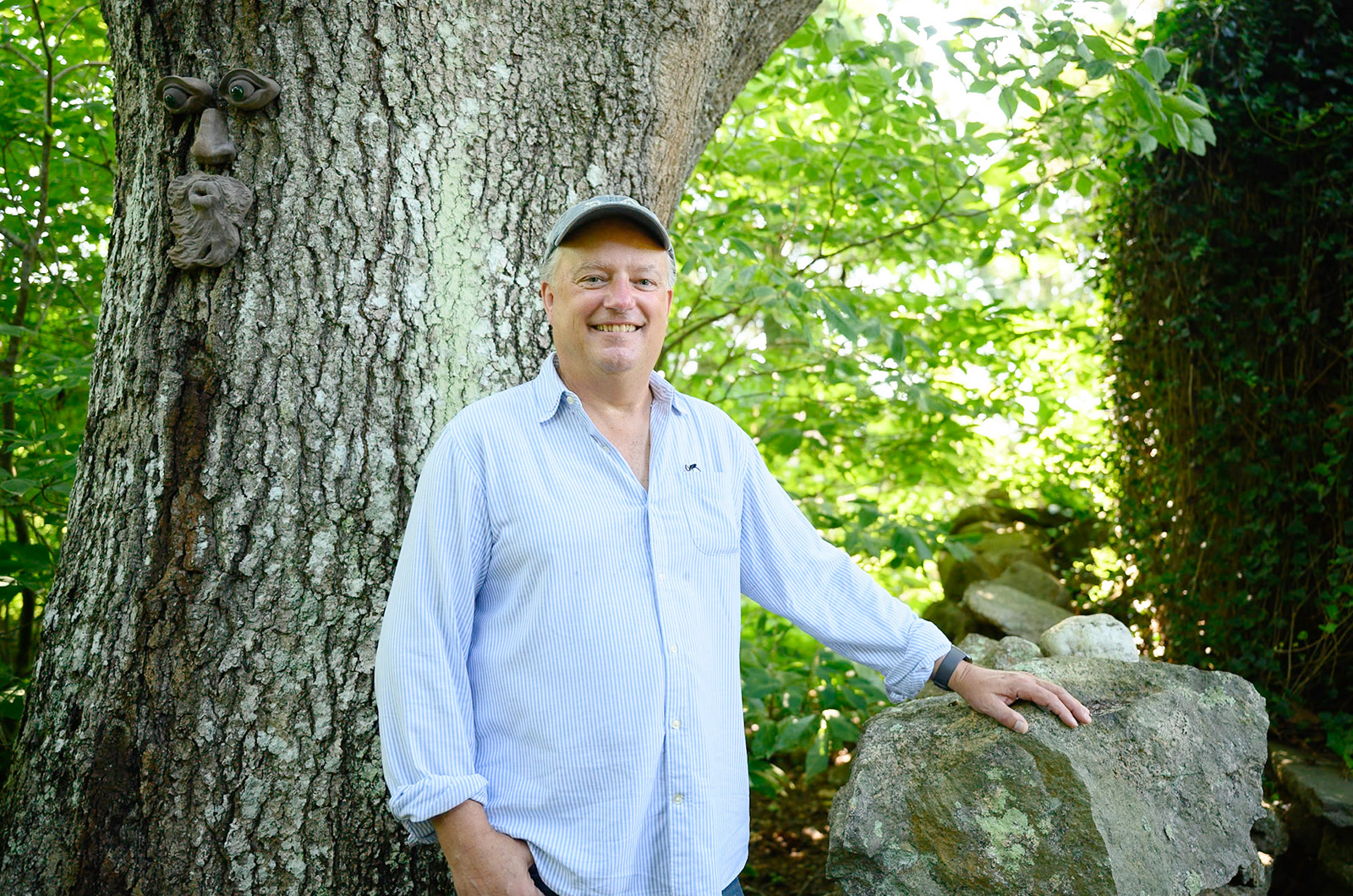
Horticulturist Tim Boland, the longtime executive director of the Polly Hill Arboretum in West Tisbury, plans to retire at the end of next summer.
Horticulturist Tim Boland, the longtime executive director of the Polly Hill Arboretum in West Tisbury, plans to retire at the end of next summer.
“It’s about that time,” said Mr. Boland, who first came to Polly Hill as its curator in 2002 and moved to his current position in 2004 following the retirement of the arboretum’s founding executive director, Stephen Spongberg.
Mr. Boland is just the second executive director at the arboretum, which was founded by amateur botanist Polly Hill.
Formerly a sheep farm dating back to the 17th century, the property was purchased by Ms. Hill’s parents in the 1920s as a summer home for the family. Since opening to the public in 1998, the arboretum has become known world-wide for its extensive collection of flora and fauna.
Mr. Boland has been instrumental in maintaining the arboretum's horticultural legacy.
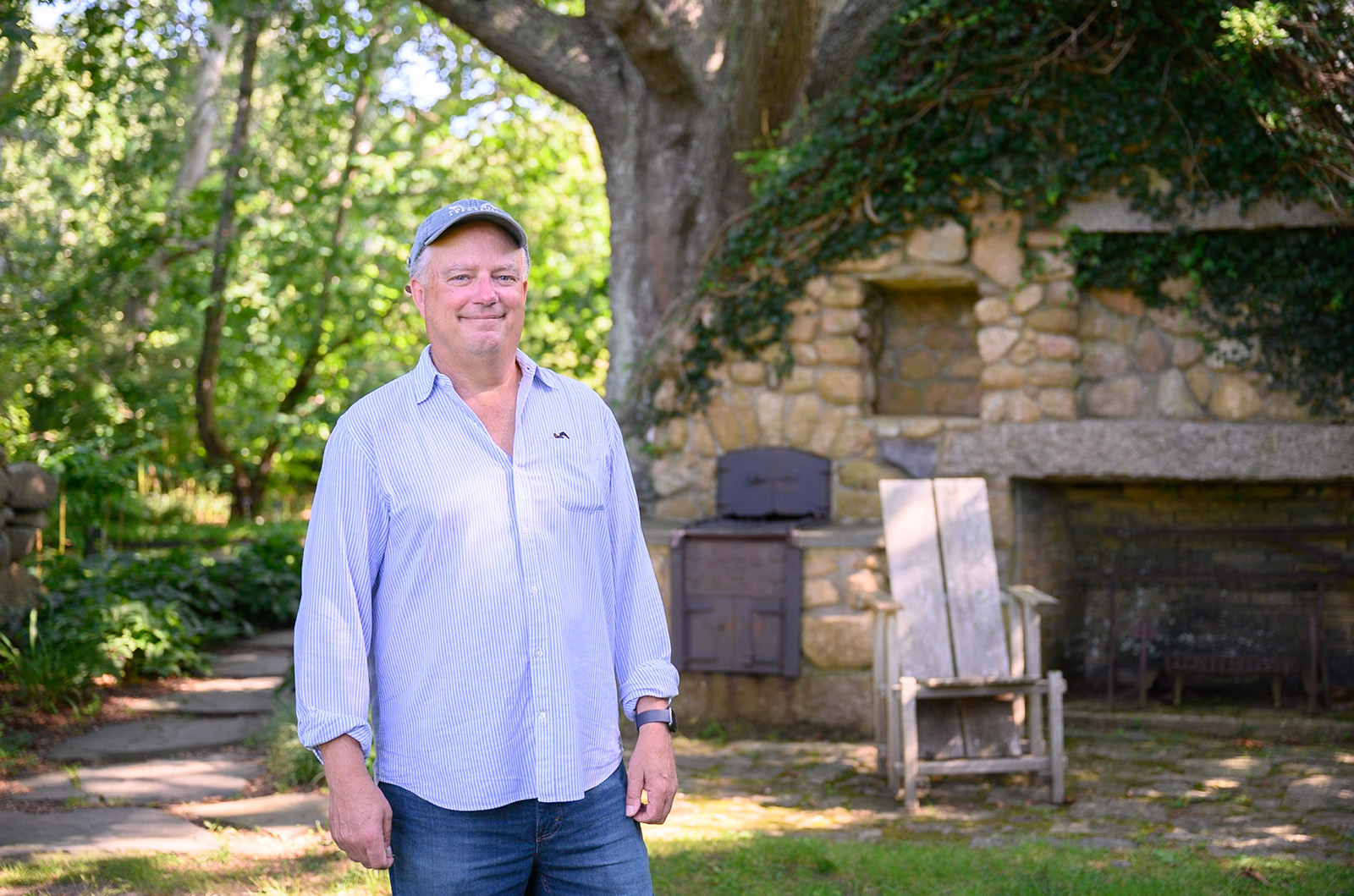
Mr. Boland has been instrumental in maintaining the arboretum's horticultural legacy.
During his tenure, Mr. Boland has been instrumental in maintaining Ms. Hill’s horticultural legacy while also broadening the scope of study and the mission of the arboretum, a popular destination for Islanders, tourists and experts in the field.
Mr. Boland, who formerly was a horticultural curator at the 1,700-acre Morton Arboretum in Lisle, Ill., said he targeted Sept. 1, 2026 for his retirement date in order to give the Polly Hill board of directors ample time to hire the right successor.
“We’ve always been kind of thoughtful and take our time,” he told the Gazette, during a stroll through part of the arboretum’s 72-acre grounds earlier this week. “That’s a Polly thing. She was always like that.”
Mr. Boland and Ms. Hill initially met at the start of his career, at a horticultural conference when Mr. Boland was 24, he said.
“I was giving a talk and I featured her local native holly,” he said. “She sat down with me [afterwards] and... said I gave a great talk, and it was very encouraging.”
They later exchanged letters about deciduous hollies, he said.
While Mr. Boland became a professional plant propagator in his 20s, Ms. Hill (who died at age 100 in 2007) was already 50 when she hatched the idea of creating an arboretum on the land she and her husband had inherited from her parents. She introduced more than 80 new plant varieties from her seedbeds on the farm, establishing her name as a leading propagator of hollies and other plants.
Mr. Boland chose his career path early in life. He studied at Michigan State University, where he earned an undergraduate degree in ornamental horticulture and a master’s in botany and plant pathology.
Michigan State is also where he met his wife, Laura Coit, a fellow horticulturist who works at the West Tisbury library as the assistant director and head of circulation.
Mr. Boland and Ms. Hill renewed and deepened their acquaintance after he began working at the arboretum, where he regularly picked her up at her farmhouse residence in a golf cart for tours of the property. Along the way, he said, Ms. Hill shared her thoughts on starting and growing plants and the philosophy behind keeping wide-open fields as part of the arboretum’s landscape.
“She always used to say, ‘If people came back, would they recognize us as a farm?’” he said.
Over more than 20 years as only the second executive director at the arboretum, Mr. Boland has overseen the nonprofit’s development from a nascent foundation to a respected botanical garden, known for its collections of plants and trees from the U.S. and Japan.
“We turn out to have the world’s greatest collection of stewartias,” he said.
“What’s fun about that is from what we know, Polly was the first person to cultivate them in the Northeast — way before the Arnold Arboretum,” said Mr. Boland, referring to Harvard University’s arboretum whose own specialty is oak trees.
Over the years, Polly Hill Arboretum has expanded its work to researching, documenting and propagating native Martha’s Vineyard plants, Mr. Boland said.
“We found a new tree that’s endemic only here on Martha’s Vineyard. It took about 20 years to prove it,” he said. “With botanists, that’s fast.”
Called the cleft-leaf hawthorn, the shrubby plant was first discovered on Chappaquiddick.
“We’ve been able to propagate it, so we’ll be able to plant it in our collections and share it with other groups,” he said.
The greenhouse — which opened on Ms. Hill’s 100th birthday — has enabled the arboretum to propagate other native Island plants, including her own introductions such as the North Tisbury azalea, as well as other varieties suited for growing alongside native species.
Along with its mission to preserve and document plants and trees, the arboretum also is investigating some of the ailments that threaten them on Martha’s Vineyard.
“The Island has asked us to weigh in on certain things. We’re studying the beech-leaf disease, which is a tough one,” Mr. Boland said.
Another study seeks to track the southern pine beetle, a destructive tree pest on the Vineyard.
During his tenure, Mr. Boland developed new facilities and programs that the young arboretum — still only 27 years old — initially lacked.
“We were fairly, I would call it, embryonic, as a public garden,” he said. “We didn’t have gardener offices. We didn’t have clean-up stations. We didn’t have any storage for equipment,” he recalled of his early years at the arboretum.
Donor support is critical to Polly Hill’s existence, Mr. Boland added, now more than ever with the reduction in public funding for museums and libraries — including botanical gardens. He is currently gearing up for a fund-raising event on July 31, titled Giving Voice to Trees.
“We’ll be talking about the reason for our collection [of trees] that are rare in the wild, and the real need to collaborate and support this work because of so much uncertainty,” he said, citing both climate change and the ebbing tides of nonprofit funding.
Polly Hill employs a staff of seven, bolstered by volunteers who work in the visitor center and elsewhere on the grounds. Mr. Boland said he may join the volunteer ranks himself and dive into some research projects after he retires next year.
After raising two children in West Tisbury, he and Ms. Coit — who now have a grandchild as well — look forward to seeing more of the Vineyard’s natural landscape and traveling to other scenic spots, he said.
“I’d like to visit some of the national parks,” Mr. Boland said.
Comments
Lovely article. I hope to
Jennifer Wollock New York, NYLovely article. I hope to bring my aspiring tree specialist (now a junior in college) to visit and learn..
Thank you!
I met Polly Hill shortly
Robert Skydell Antigua, GuatemalaI met Polly Hill shortly after moving to the Island in 1985. I was keen to start the process of shedding my former urban life by planting a tree (and raising goats!). It was Polly who suggested that I plant some seeds instead of purchasing an expensive sapling. That seemed like a crazy idea to me since I was in such a hurry, but I took her suggestion to heart. As the years piled up, I was glad I had, and when I headed in a new direction and a new chapter in life, I left behind several majestic, 40-year-old Black Walnut trees.
Thank you, Tim, for your dedication and leadership at the Polly Hill Arboretum over the years and best wishes on your next chapter in life wherever it may lead.
Tim and the team he has
Dan Benarcik Wilmington, Delaware.Tim and the team he has assembled and led over the years, his sweet wife and family they raised, along with the legacy of Polly and Julian Hill will have forever impacted my life and my career in horticulture. Thank you so much for your time and efforts. You will be remembered, and occasionally missed.
My sincerest congratulations,
DB
Add new comment