

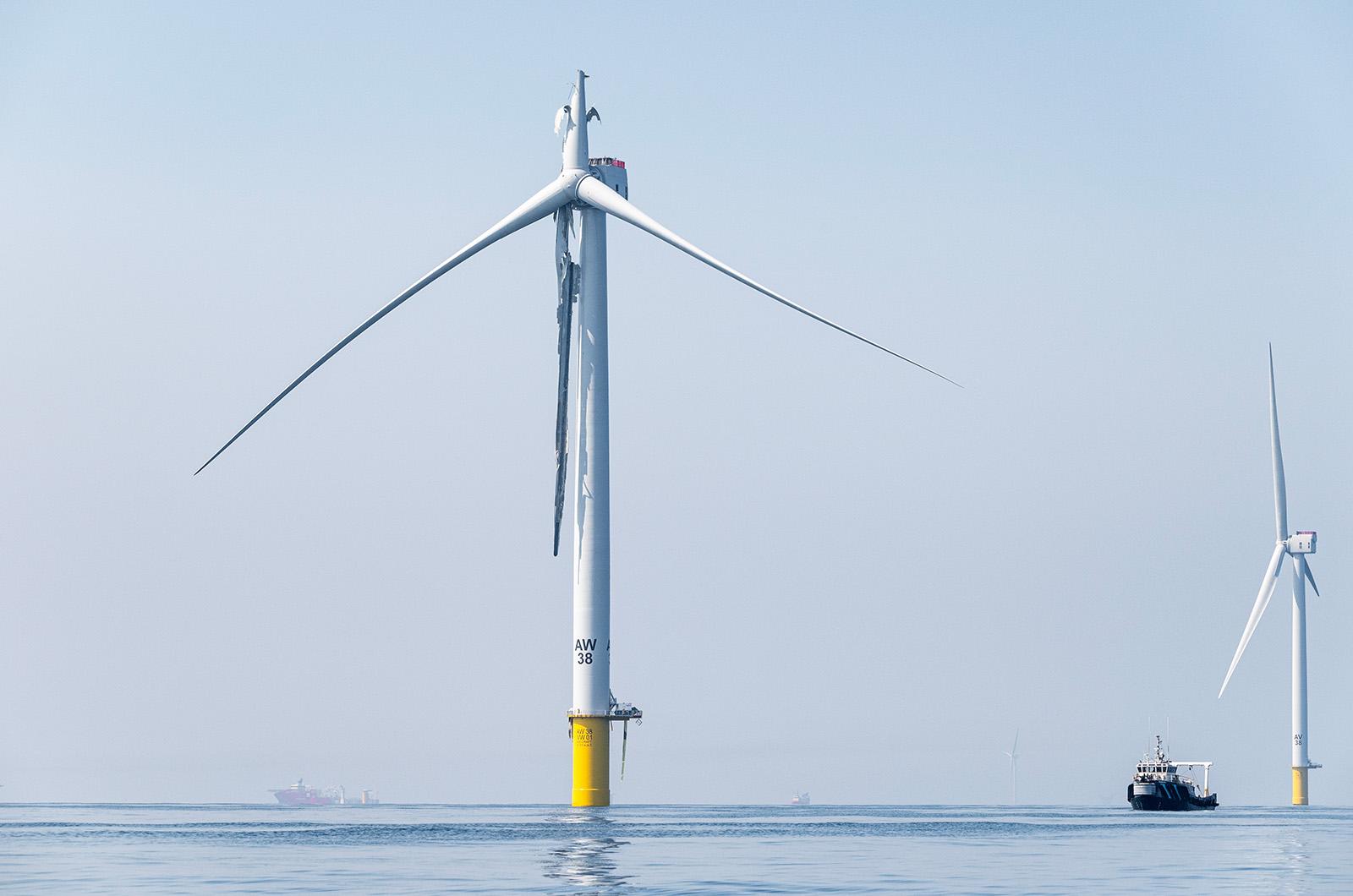
While the Vineyard Wind blade failure was an initial black eye for the industry as it was attempting to get started, offshore wind energy finds itself in an even more vulnerable position one year later.
One year ago Sunday, the U.S. Coast Guard got a report it had never received before.
At 7:01 p.m., about 20 miles off the Vineyard’s southern shore, large pieces of debris were scattered in the water near the Vineyard Wind wind farm.
Green and white bits of fiberglass and foam, some the size of kitchen tables, were floating in the water, and eventually, with the help of wind and tides, would make their way onto Nantucket beaches.
Nantucket charter fishing Capt. Carl Bois was one of the first people to see the bobbing detritus off the outer continental shelf when he was out on his boat the next day.
Much of the debris washed up on the beaches of Nantucket.
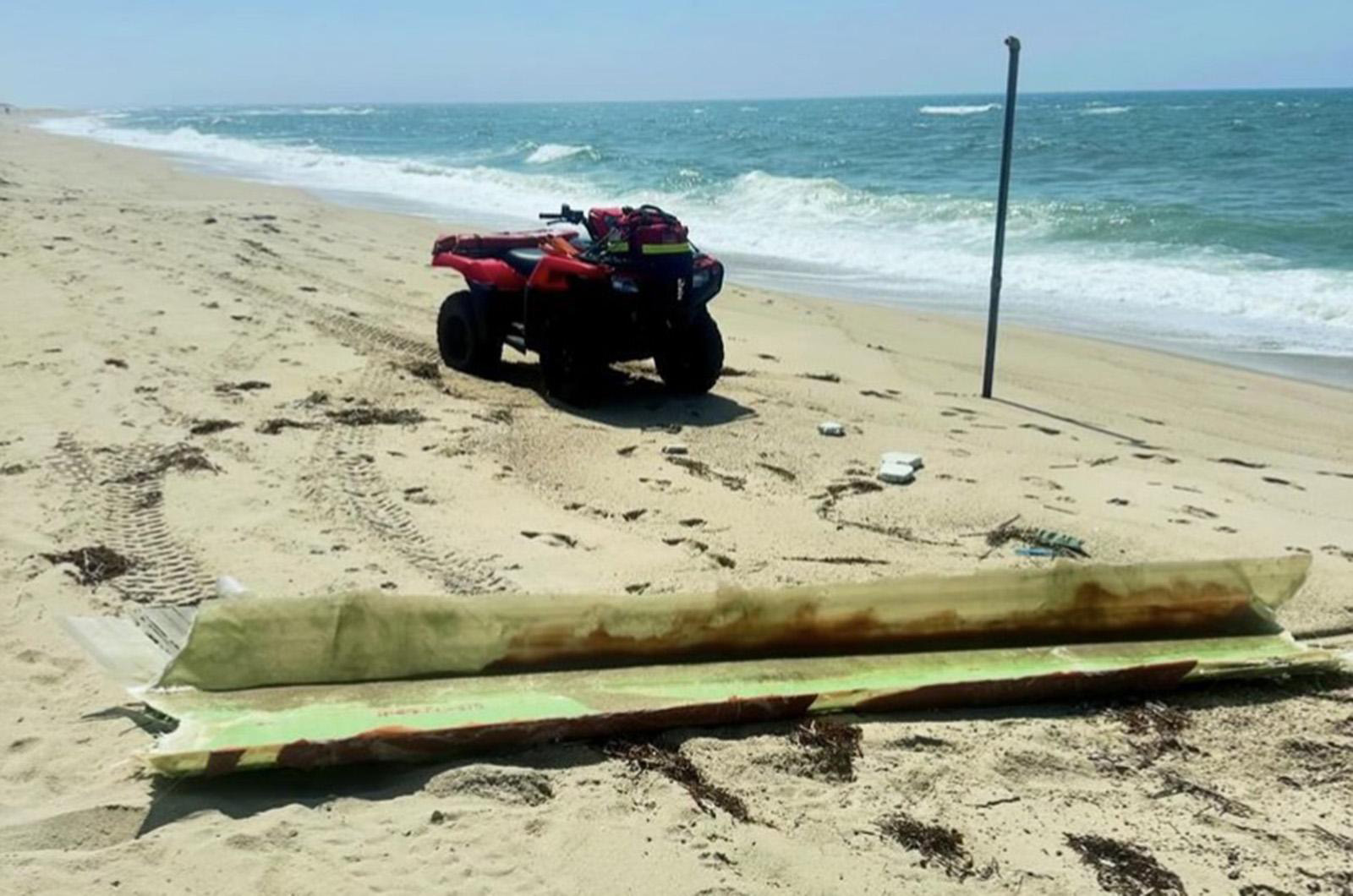
Much of the debris washed up on the beaches of Nantucket.
“I’ve never seen anything on the water quite like that,” he said at the time.
Not long after, Vineyarders, Nantucketers, state lawmakers and some of the highest ranking officials in Washington, D.C. learned all too well what Mr. Bois was seeing: pieces of a broken Vineyard Wind turbine blade.
On July 13, 2024, the 107-meter GE Vernova Haliade-X turbine blade on the offshore wind energy farm’s southernmost turbine snapped unexpectedly and dumped thousands of pieces of fiberglass into the ocean. Broken about 20 meters from its base, a large portion of the blade would later drop into the water, sinking to the bottom.
At the time of the blade failure, Vineyard Wind was the largest offshore wind energy farm in the country. It was quickly shut down, and an internal investigation found a manufacturing flaw that could affect dozens of other blades destined for the 62-turbine project. The federal Bureau of Safety and Environmental Enforcement (BSEE), the agency tasked with overseeing offshore wind projects, also launched an inquiry into the incident.
While the malfunction was an initial black eye for the industry as it was attempting to get started, offshore wind energy finds itself in an even more vulnerable position one year later.
President Donald Trump, who has long harbored animosity towards offshore wind energy, signed an executive order on his first day back in the White House that put a halt to any permitting of new wind farms, while also setting up a potential threat to existing ones.
As he prioritizes fossil fuels, the President is requiring a review of all offshore wind leases to see if they are economically and environmentally viable. Despite legal challenges to the order by Massachusetts and other states, this will likely set several projects that were still in the regulatory pipeline, including SouthCoast Wind, back several years.
“The United States is really, at its own peril, going to stay out of this movement,” said Eric Hines, an engineering professor who leads the offshore wind energy graduate program at Tufts University. “The pause and the need to wait it out is definitely going to cause damage. It’s impossible to say the extent.”
The arrival of the Trump administration also has given rise to an opaqueness in the offshore wind industry. Once celebrated milestones now seem to go unmentioned by developers, and the agencies have largely not answered questions about Vineyard Wind.
It’s unclear how much work has gone into the offshore lease review prescribed by the Trump administration. The White House deferred questions to the Department of Interior, which was tasked with carrying out the executive order. The interior did not respond to a request for comment.
BSEE has also not issued any public report on its findings in the Vineyard Wind blade failure in the year since.
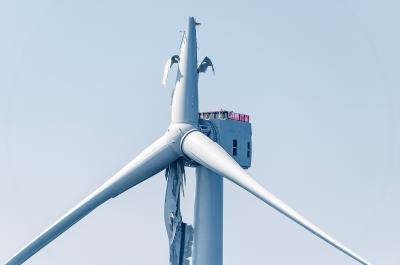
Vineyard Wind has been quiet since it started generating power again this year.
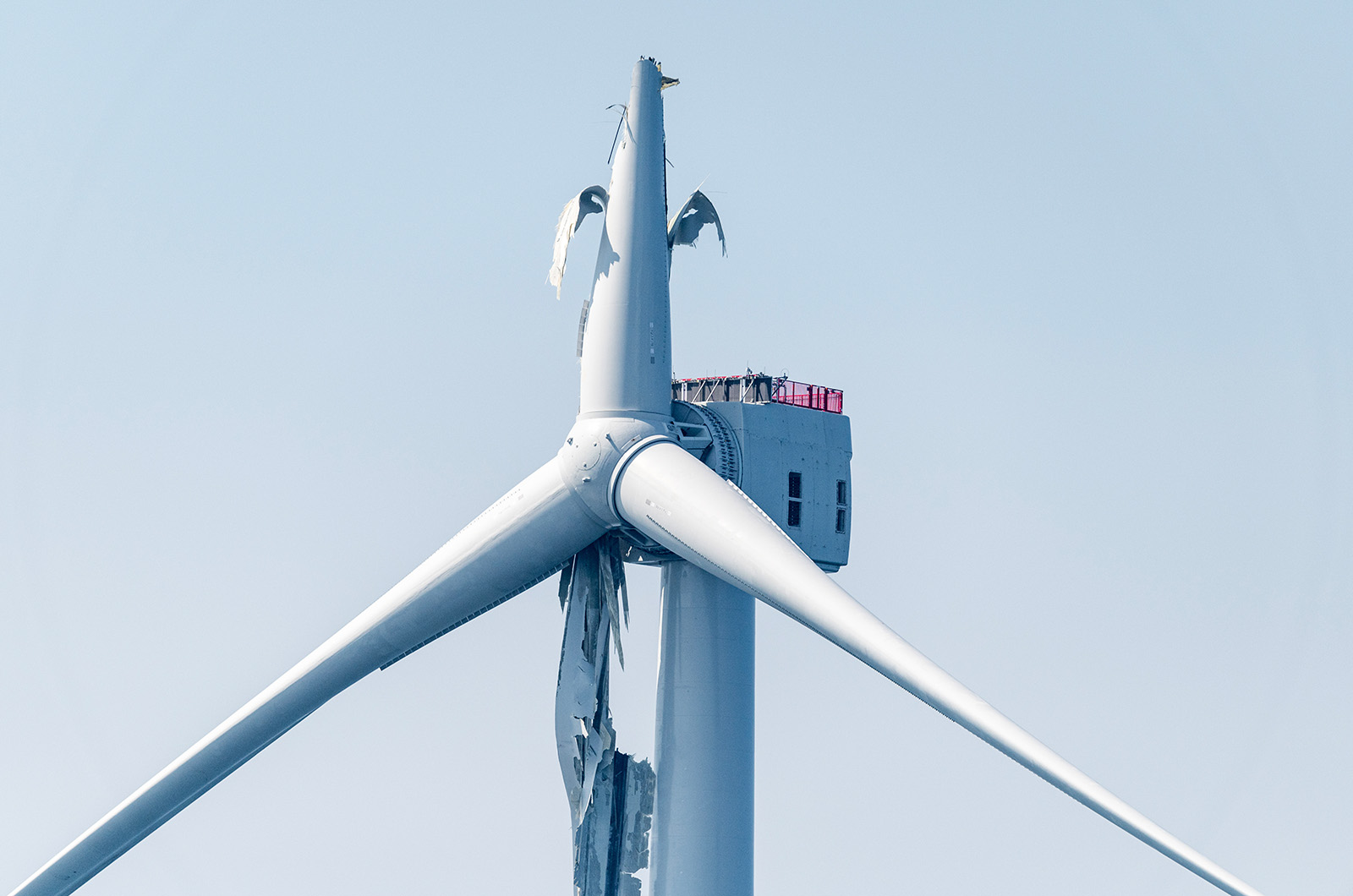
Vineyard Wind has been quiet since it started generating power again this year.
GE Vernova, the company that manufactured the turbine parts and is installing them out to sea, said in the aftermath of the break that the issue was due to insufficient bonding on the blades. The defect was tied to the company’s Gaspe-based facility in Canada, and was not caught in the quality control process.
BSEE has not contradicted or confirmed that finding and the agency did not respond to questions over the last two weeks on the status of the investigation, as well as if Vineyard Wind has completed required environmental studies to understand the impact of the blade break on the ecosystem.
This is the first time BSEE has investigated a large offshore wind turbine blade failure. The agency has largely overseen offshore drilling in the past, leaving little precedent on how long these types of inquiries can take.
Vineyard Wind was allowed to resume some construction in the months after the break, and BSEE greenlit the reinstallation of turbine blades and the generation of power in December.
As of January, Vineyard Wind got its first turbine back up and running, delivering power to the New England grid. But officials with the project have kept mum about its progress since. Maps for mariners that used to show the construction progress of the project with icons of towers and blades have since been replaced with black dots, leaving it hard to track how much work has been done 14 miles off the Vineyard coast.
Vineyard Wind has also routinely declined to comment on news stories in recent months, including for this article, and on stories about legal victories, lightning strikes and when the company successfully retrieved the portion of the turbine that sank to the ocean floor.
The blade failure came as the U.S., under the Biden administration, was moving fast to make up ground and meet the energy needs of the country, Mr. Hines said.
After the incident, though, he felt that the response by both the government and the company was good.
“It was very disappointing that it happened, and after it happened, I think it was handled well,” he said.
The way he saw it, the blade failure was a symptom of the U.S. trying to catch up to the rest of the world, in terms of wind power.
“The industry was growing so fast, the turbines were growing so fast,” he said.
Not everyone is as pleased with the response, though. Nantucket, which had the largest amount of blade debris wash up on its shores, has demanded more from Vineyard Wind, and even tried to set up a forum with BSEE officials, before it was cancelled.
On Thursday, the neighboring island’s select board was scheduled to have an executive session related to potential litigation against Vineyard Wind and GE Vernova over the wind turbine failure.
Richard Andre, the executive director of Vineyard Power, an energy cooperative that has helped broker community agreements with offshore wind energy companies, believed that Vineyard Wind, after the delays, should be on track to finish the project by the end of the year, capping more than a decade of planning for the first ever utility-scale project to be approved in the U.S.
Mr. Andre feels its completion is crucial to help Massachusetts meet its climate goals, and provide energy to match the growing electricity demands.
“This is a significant source of power,” he said. “That project is going to be 6 per cent of the state’s power.”
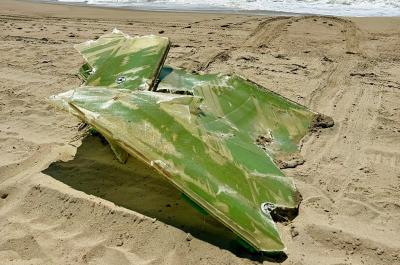
Chunks of fiberglass fell out of the broken blade into the water.
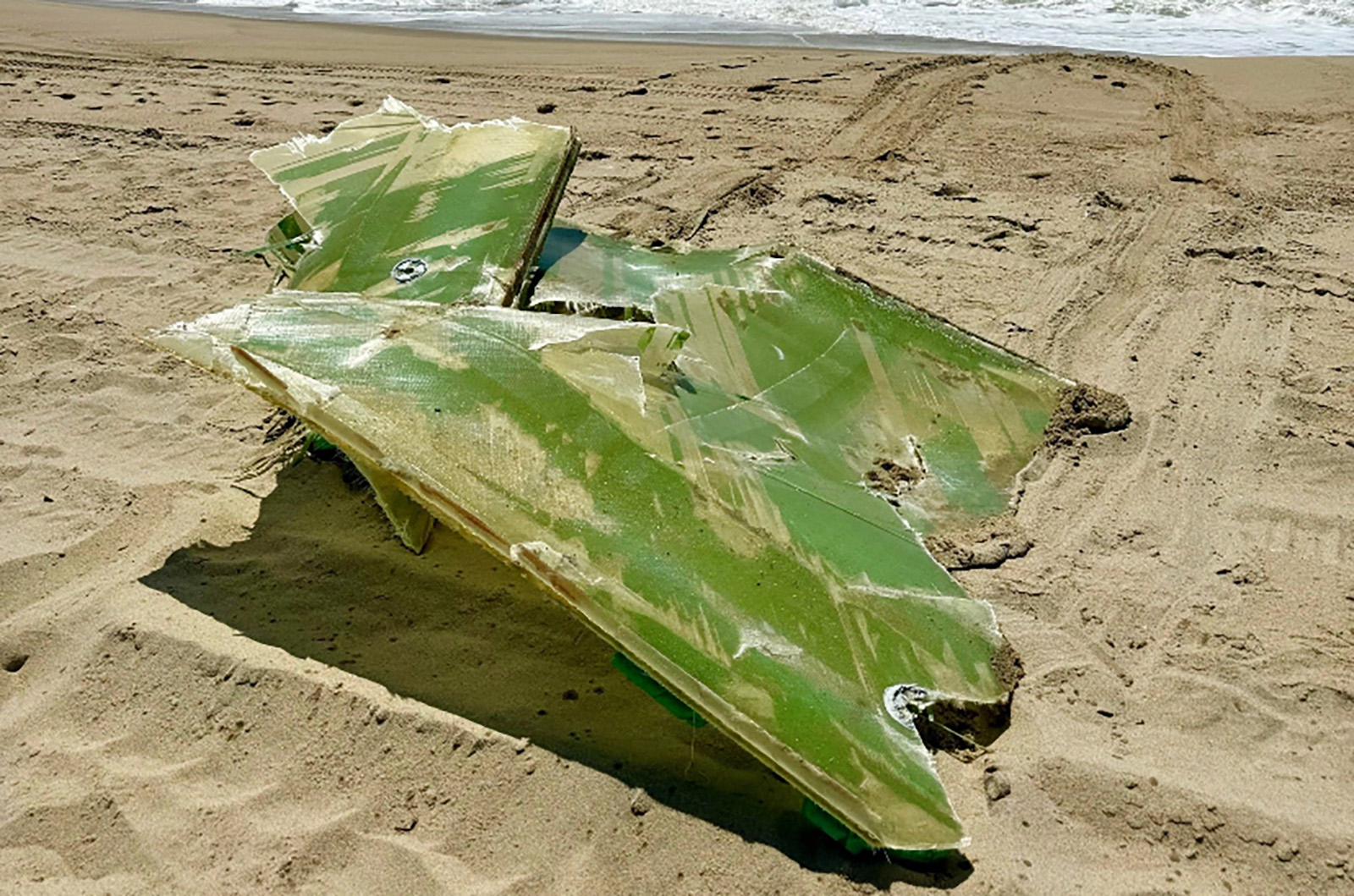
Chunks of fiberglass fell out of the broken blade into the water.
Meanwhile, other projects that already had approvals in hand have quietly progressed as Vineyard Wind continues its work. Revolution Wind off the coast of Aquinnah is on track to be completed in 2026, and Sunrise Wind, another project off the Vineyard, is set to be done in 2027, according to a spokesperson for Orsted, the backer of the two wind farms.
Mr. Hines did see additional bright spots for the industry. The Trump administration shut down Empire Wind, a project off New York, earlier this year, despite the farm having all of its approvals in a row for construction. But the administration later rescinded its stop-work order, indicating to some that the attempts to stop already approved projects had shaky legal standing.
“I was glad to see that Empire Wind is moving forward,” Mr. Hines said. “I think it’s an illustrative case.”
As offshore wind energy continues to debated on the national stage, advocates for renewable energy stress that the planet continues to get hotter.
“A year later, the planet continues to warm, with 2024 being the hottest year on record at 2.3°F above pre-industrial levels, beating out 2023, and with 2025 on track to exceed that record,” said Amy Boyd Rabin, the vice president of policy and regulatory affairs at the Environmental League of Massachusetts. “Climate change hasn’t stopped, and neither has our commitment to offshore wind as a vital resource for New England.”
Vineyard Wind has done its due diligence to understand the reason for the blade failure and met BSEE’s demand’s, she said.
Still, some remain unconvinced. When Capt. Bois was asked about his recollections of finding Vineyard Wind debris, he had little to add other than his feelings about the project in general.
“I don’t really have anything to say other than I wish the wind farms would be stopped,” he said.
Comments
If we are ever to be honest
Susanne H. Conley Osterville, MassachusettsIf we are ever to be honest about offshore wind, organizations like the Environmental League of Massachusetts will finally admit what BOEM has stated — offshore wind will do nothing to mitigate climate change. That claim is the most blatant example of greenwashing used by the industry’s propaganda machine.
So what will mitigate climate
tom BostonSo what will mitigate climate change? More coal production? Drill for more oil and gas? Extracting energy is not a pretty business. You just don't want it in your backyard.
Absolute hogwash. Being able
John VHAbsolute hogwash. Being able to power over four hundred thousand homes without having to burn fossil fuels as the source of energy will absolutely prevent the furtherance of climate change. As a matter of fact, if you go to ELM's website, you will read that they strongly advocate "rapid and responsible wind project development". Here is the link: https://www.environmentalleague.org/clean-energy/
And meanwhile in Spain this
albie scott york, maineAnd meanwhile in Spain this week, solar, hydro, and wind power supplied all that country's energy needs for 24 hours.
An argument between pro and
Bill amaru OrleansAn argument between pro and con concerning the value of wind energy is a non starter, at least for me it is. Better to admit the needs for power, electricity included, is growing beyond human beings ability to safely provide it, no matter the source. Is it ever going to happen that we admit we cannot continue the growth of our economic culture at the rate of late twentieth and early twenty first century without imperiling health of our planet? I believe when we, as a species, admit life here on planet earth should not be driven by material wealth and economic growth but rather by the quality of life we should be pursuing will we ever have a chance to live as most of us want. Stop yelling about who is right or wrong about energy production and use. Decide you will follow reason and cut back. When we read about the shrinking of our economic footprint in this newspaper rather than its growth, we will be moving toward a safer more livable planet.
Well said, Bill. Pure common
Shirley LouisianaWell said, Bill. Pure common sense. Thank you.
Add new comment