


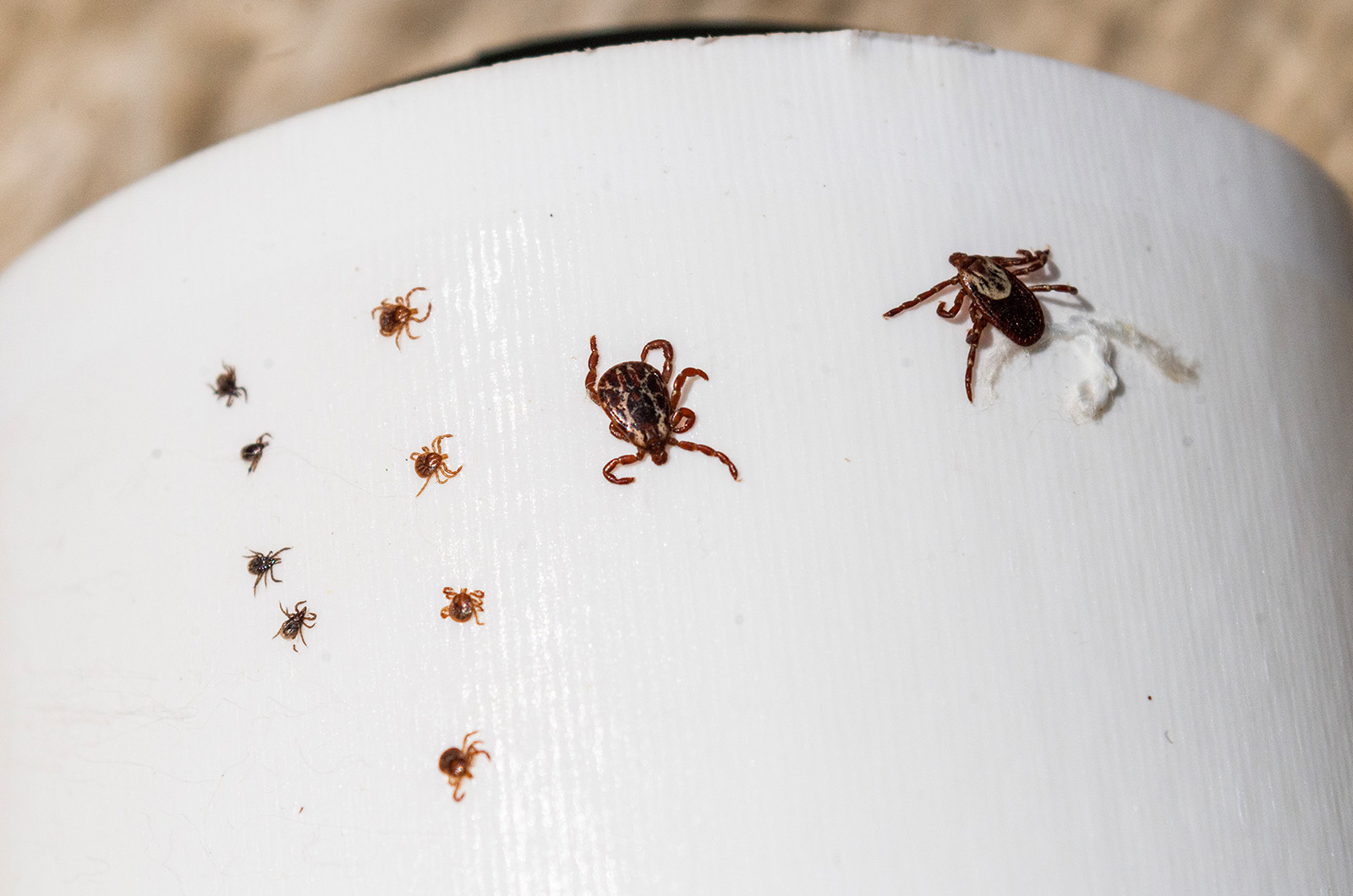
Researchers from across New England have been surveying thousands of people and studying lawns in search of one thing: is tick control helping?
Researchers from across New England have been surveying thousands of people and studying lawns in search of one thing: is tick control helping?
The New England Center of Excellence in Vector-Borne Diseases, or NEWVEC for short, has embarked on a multi-year project to answer that question which has long been on the minds of Vineyarders concerned with the rising number of ticks on the Island.
Known as Project: ITCH (Is Tick Control Helping), the effort began in 2023 and for the first time this year included lawn surveys from the Island.
The goal of the research is to see if lawns treated with tick sprays, as well as other mitigation efforts, really do lead to lower densities of ticks, said Stephen Rich, a zoonotic disease expert at the University of Massachusetts Amherst and the executive director of NEWVEC.

Ticks cover the eyes of a fawn in Aquinnah.

Ticks cover the eyes of a fawn in Aquinnah.
Companies have sprung up across the region promising effective treatments to get rid of ticks, and the NEWVEC team, which includes scientists from all six New England states, wanted to assess what does and doesn’t work.
While the study is ongoing, Mr. Rich said preliminary evidence indicates that the synthetic sprays that contain chemicals such as permethrin do work and result in backyards with fewer ticks. So-called natural chemicals don’t seem to work as effectively.
It is unclear what the different treatments mean when it comes to the transmission of diseases such as Lyme disease and Rocky Mountain fever, as well as the newer alpha-gal syndrome, though, he warned.
“We don’t know what [treating lawns] does to reduce the incidences of disease,” Mr. Rich said. “We have cautions that we put into these findings.”
With the new data coming in from the Vineyard, courtesy of the Island’s tick biologist Patrick Roden-Reynolds, Mr. Rich hopes to get better information about how lone star ticks stand up to lawn treatments.
Lone stars have been on the rise throughout the Northeast, and the Vineyard has been on the frontline of their incursion into New England. The ticks, named for the white-spot found on the backs of adult females, can cause people to become allergic to red meat and other mammalian products ranging from gelatins to dairy.
The allergy, known as alpha-gal syndrome, has skyrocketed on the Island in a matter of years, rising from just two positive cases in 2020 to 445 individual positives tests at Martha’s Vineyard Hospital in 2024.
Ticks absorb permethrin and the lawn treatment chemicals through their legs. For deer ticks, which are a common spreader of Lyme, it is usually a quick death, but it’s not clear what happens to lone stars, according to Mr. Rich.
“We’re not sure if they are destined to die,” he said. “We’re trying to see if it works on all kinds [of ticks].”
The research comes as Islanders become increasingly frustrated with the tick problem here. Where once trips into the woods were the only cause for concern, the rise of lone star ticks mean even sojourns to the mailbox can result with an embedded arachnid and a disease to boot.
Management of the tick population is tough because there is no single, effective way to eradicate the pests. Mr. Roden-Reynolds said he is often approached by people looking for ways to wipe ticks off the map, and he has to be the bearer of bad news.

Patrick Roden-Reynolds says reducing the number of deer is one way to help.

Patrick Roden-Reynolds says reducing the number of deer is one way to help.
“There’s no one thing to reduce tick numbers,” he said.
Several methods have been tried before, including bait boxes and tick tubes, a pair of methods that attract mice, and other rodents that carry Lyme and other diseases. When the critters go into the boxes or tubes, they are treated with an acaricide, which then kills ticks that later feed on the animals.
But they have not proved very effective in the long run, said Dick Johnson, the former head of the Vineyard tick prevention program.
Both he and Mr. Roden-Reynolds see only one real method available to cut down on ticks: reducing their food supply.
The Vineyard has some of the highest densities of deer in Massachusetts and subsequently the highest rate of Lyme in the country. The mammals are one of the prime food sources for deer ticks, lone stars and other species.
“I think our only chance and best chance is we have to do something about the deer,” Mr. Johnson said. “As long as we have this number, there’s nothing we can do.”
Part of the reason why the Vineyard has become such a haven for deer is its mix of habitat. Parts of the Island are still rural, creating the perfect cocktail of forests, developed lots and the “edge” habitats that deer love.
Mr. Roden-Reynolds, a hunter himself, said extending the hunting season could help cut down on the number of ticks, and he also advocated for more prescribed burns.
“It’s a good reset button,” he said. “It should burn or kill a lot of ticks in the area.”
Municipalities across the country have tried different methods to try and deal with ticks, but no real success story has been found as of yet. Mr. Roden-Reynolds said he’s heard of sharpshooters being brought in to thin out deer herds, though that is a politically fraught and expensive proposition.

Patrick Roden-Reynolds inspects a deer for ticks.
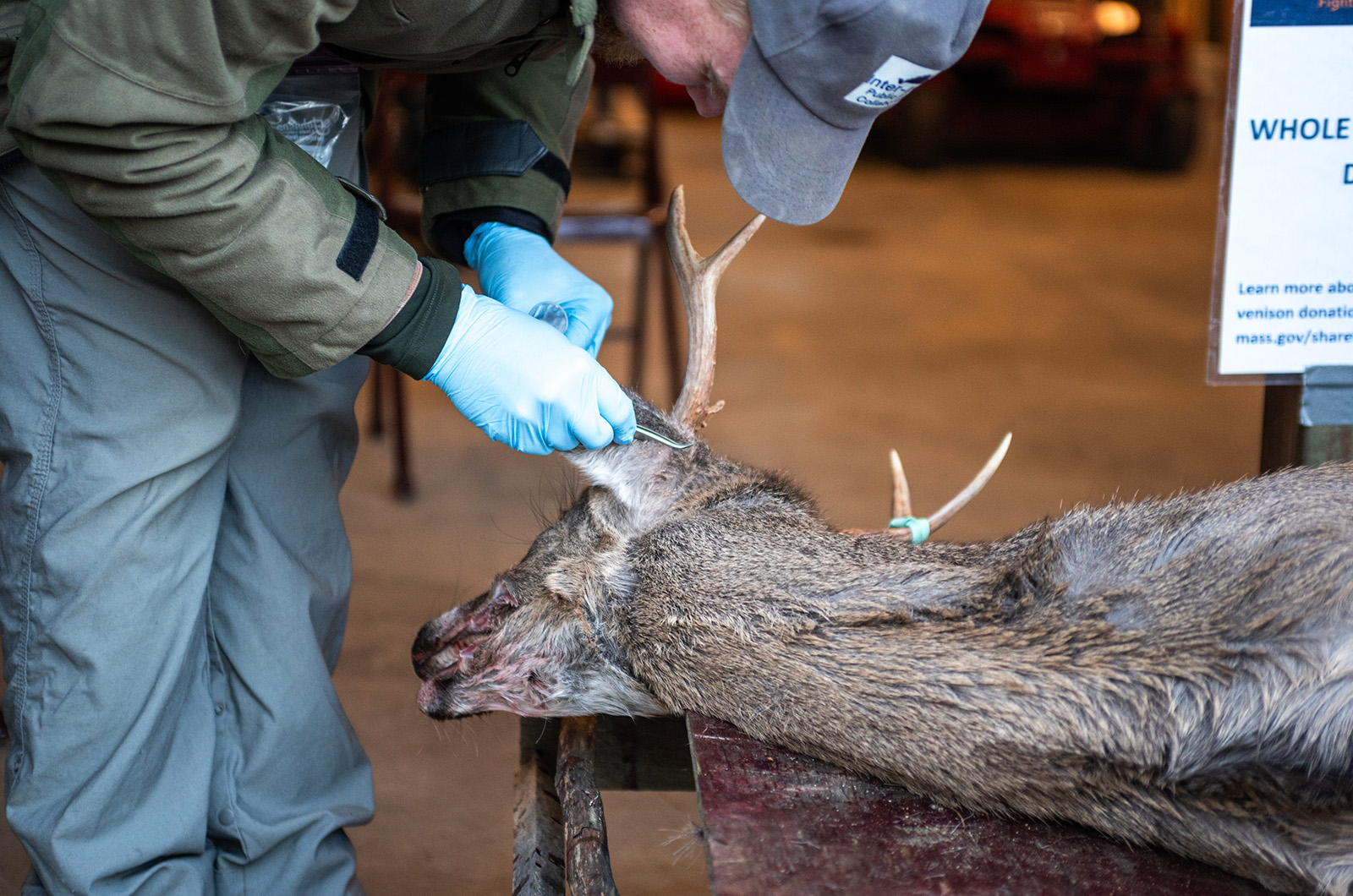
Patrick Roden-Reynolds inspects a deer for ticks.
Spraying permethrin on a larger scale is a common suggestion from the public, he said. Though spraying can work on individual properties, Mr. Roden-Reynolds, Mr. Rich and Mr. Johnson all said that wide-scale efforts are impractical, cost prohibitive and possibly destructive to a host of other species.
“I think people think it’s the easy option,” Mr. Roden-Reynolds said. “It’s a little more nuanced than that. Even properties that are sprayed, I can find ticks around.”
Others have tried to introduce fowl that feed on ticks, but the evidence has been inconclusive given that these birds are also a potential meal for ticks. For example, in 2017, the town of North Hempstead on New York’s Long Island raised and released northern bobwhite quail into its parks as a non-toxic method of controlling ticks. Ticks have continued to overrun the region, though, far outpacing what the quails could ever hope to eat.
“They do eat ticks, but since the tick population has increased tremendously over the years, they will not impact the number of ticks or be considered a major variable in reducing ticks,” the Center for Environmental Education and Discovery, a nonprofit which aided with the reintroduction program, told the Gazette. “They do play a part in a natural ecosystem, so it is important that they are present.”
Mr. Johnson was interested in bringing back four-posters — a mechanism that attracts deer with bait and then applies acaricides (a pesticide designed to kill ticks) via paint rollers as they feed.
Four-posters were tested on Chappaquiddick years ago, but haven’t been implemented much on the rest of the Vineyard. While the method has proven effective in small areas, the Centers for Disease Control and Prevention found they were not suitable on a broader-scale.
Dick Johnson was interested in giving some methods of mitigation a second look.
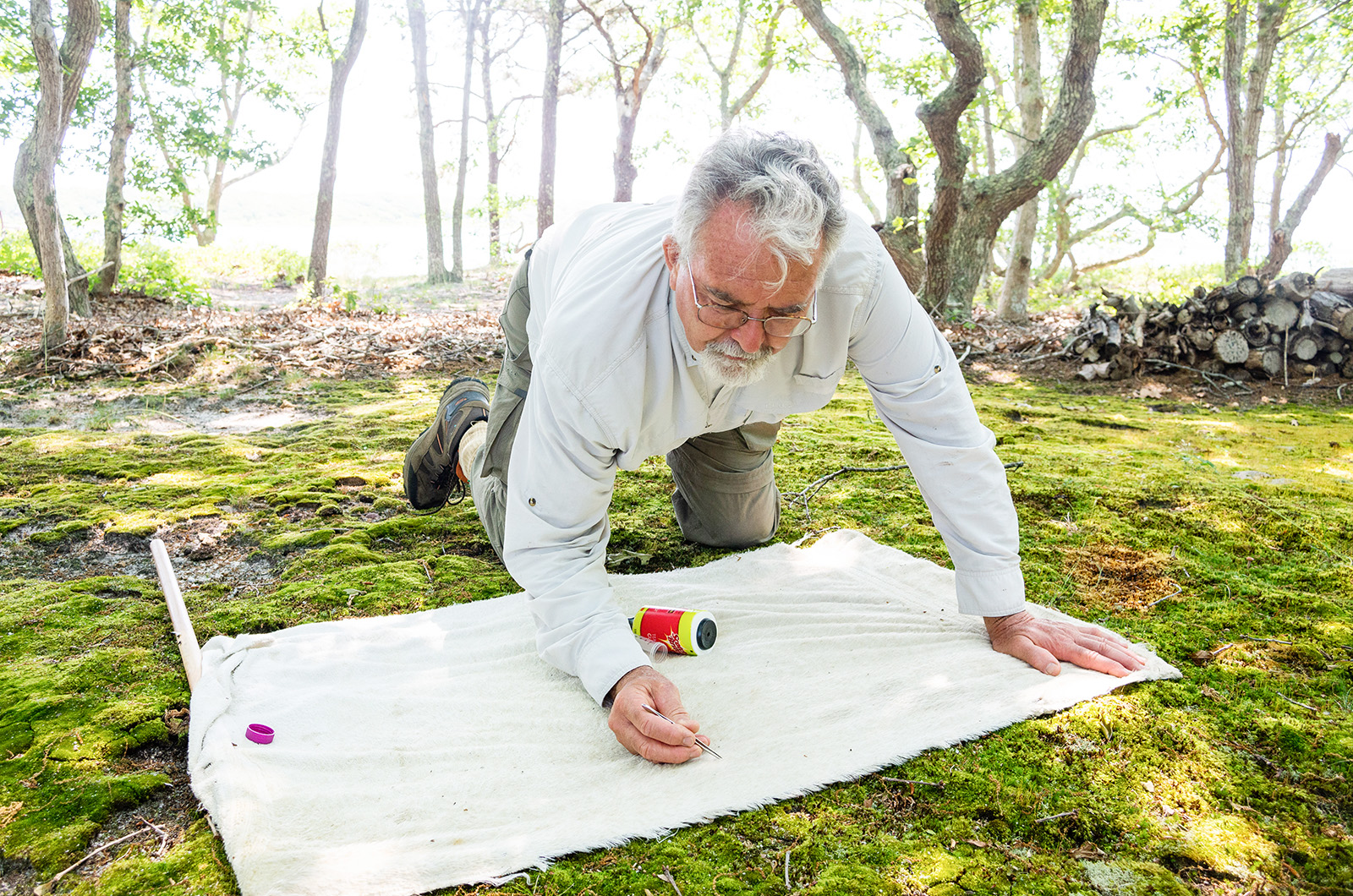
Dick Johnson was interested in giving some methods of mitigation a second look.
Mr. Johnson believes they deserve a second look, however, because of the rise in lone stars.
While scientists continue to seek solutions to the tick problem, perhaps the biggest challenge, researchers said, is getting people into a new mindset. Personal protection measures, such as wearing permethrin-treated clothing, wearing long pants when outside and doing regular tick checks, are some of the most effective things that people can do to prevent tick bites and the spread of disease, they said.
“That’s something you can do today and it will protect you tomorrow,” Mr. Roden-Reynolds said.
Mr. Rich hoped people would think of the current situation in the same light as when society learned of the cancer risk from sun exposure. Where sunscreen was pretty much unheard decades ago, it is now commonplace for people to apply SPF when they head outside.
“We don’t want the sun to go away. That’s just something we have to do to go outside,” he said. “I think that if people could get in that mindset of a management problem along those lines, that would be a big win.”
Comments
Permethrin is a synthetic
Prudy Burt West TisburyPermethrin is a synthetic insecticide that is lethal to all of our native bees and pollinators- it essentially kills everything, and is particularly lethal and persistent in and near aquatic environments. Having lived here all my life, and worked as a gardener and property manager here for the last 40 years, I've been treated for Lyme disease several times, and am positive for alpha gal syndrome (though for now, I can still eat dairy). I've been wearing treated clothing for several years and it works, period. I recommend this for anyone keen on enjoying our outdoors; take responsibility for your health without poisoning our environment.
Well put Prudy.
Cement Truck Diver VHWell put Prudy.
Can your reporter ask
CHRIS OBCan your reporter ask officials why doesn't the island extend the deer-hunting season? When the temperature is in the 80s with high humidity, you can't wear long pants and long sleeves unless you want to contend with heat exhaustion. The tick situation is a serious problem here. I have Alpha-Gal syndrome, and it was discovered after I had such violent gastric upset that I fainted twice. My next door neighbor has just been diagnosed with babesiosis and is very sick. The island towns need to stop talking about this serious public health issue and DO something about it.
We are on an unsustainable
MN ChilmarkWe are on an unsustainable path unless we radically reduce the deer population. Do we really want to be wearing long pants and shirts every time we set foot on the grass or take a walk? To have the highest incidence of Lyme in the country is a sad state of affairs. The deer aren’t enjoying it either, based on that photo.
What about using long term,
JR OBWhat about using long term, injectable contraceptives on the deer population. If extending the hunting season is not acceptable, why not try and look at reproductive options.
Kill the deer,feed the needy
Charlie Callahan So Boston/EdgartownKill the deer,feed the needy and that will solve a big part of the problem. There are more deer here than people and unfortunately the deer are infested with ticks.You don't even need a high school education to figure that out,but u do need common sense which is unheard of on fantasy island
There are more deer here than
Jon TisburyThere are more deer here than people? I'd rather have an over population deer than the over population of people we have here these days. Not that I'm against deer hunting, but your sense of common sense is questionable. Even if there were no deer here, there will still be a tick problem at this point, it's well established that deer aren't the only tick vectors on the island. Should we kill all the other tick bearing animals on the island too? Or maybe just pave the whole place, that would go a long way toward solving the tick problem.
“Kill the deer… and that will
Bill Simpson VH“Kill the deer… and that will solve the problem” is a nice oversimplification bordering on a fallacy.
“There are more deer than people” is another one.
The reality is that no one wants to admit that the war is already lost. These are solutions that might have made a difference decades ago but certain people never wanted to deal with it then. Now if we killed every deer tomorrow, the ticks would turn towards all the other medium sized animals: foxes, dogs, alpaca etc and you, humans. I think that eliminating all deer would just turn humans into even more of a target. The lone stars are said to even stalk people into their homes. The island is not a safe place anymore if you are concerned about tick illnesses. The sad reality is that they will just target us more.
Most of these comments are focused on changing the battlefield a little and expecting great results. Good luck with that. It’s not how wars are won.
Don’t dare introduce possums.
George Stein OBDon’t dare introduce possums. That would give wolves and coyotes more nutritional supplements. Just like shark week have a cull the herd to feed the homeless week.
They keep extending the deer
MC ChilmarkkThey keep extending the deer season...it was MUCH shorter when I was growing up. And, that hasn't helped reduce the population. Deer are not stupid, and they know where no hunting is allowed & go there. More & more areas have become off-limits as the population here has grown.
Even knowing just how hard
Me HereEven knowing just how hard the ticks are hitting mv, I'm shocked at the blasé mention of wide-scale permethrin use. It is an indiscriminate insecticide. Take out one level of the food chain and the whole ecosystem crashes.
I remember a number of years
Shawn Taylor Scherer Côte d’Azur, FranceI remember a number of years ago a friend who had a summer house called me and asked if I thought it was safe to bring her family to the Island for the Summer due to the prevalence of Lyme. Not being an expert, I wasn’t willing to say either way and this was way before Alpha-Gal. Now I’m telling my friends on the island that I’m too concerned about the current situation to come back for a visit. I feel stupid saying that sometimes but it’s true. I have friends there suffering from tick borne illnesses and I’m just not willing to take any chances at this stage in my life. I really makes me sad. The spraying of chemicals sounds scary too. Again, I’m not an expert I just hear and read the stories. Oh and that friend years ago who wanted to know if it was safe to visit… her young daughter was bit and ended up on antibiotics.
Between one thing and another
Me HereBetween one thing and another, I wasn't able to make it to the Vineyard this year. I'm not gonna lie, I have had mixed feelings about missing it. I love the Vineyard, but the things I like doing involve being outside and moving my body. And I'm gradually starting to feel like the Vineyard in July isn't the healthiest place to do that. Between the ticks and the blue-green algae and the times when the seals seem anxious (staying in groups close to shore, always with one leaning back and keeping watch under the water), it does sometime feel like planning the day's activities is a matter of risk-abatement!
As a life long hunter on MV I
Native EDGARTOWNAs a life long hunter on MV I can tell you first hand the four-posters WORKED! Deer we shot that had visited the bait stations had far fewer ticks on them than other deer we killed. The four-poster deer had a kind of sheen on their necks that had a wet look to it. We were careful, however, to make sure the hair side of the hide never came in contact with the meat we intended to eat.
What is a four-poster?
Chris OBWhat is a four-poster? Please explain.
Field mice are the main
Geo Woods HoleField mice are the main "reservoir" for deer ticks. These ticks simply feed off of the blood of deer. However, they can feed off of other mammals as well. Eliminating Island deer will not solve the problem.
Add new comment