


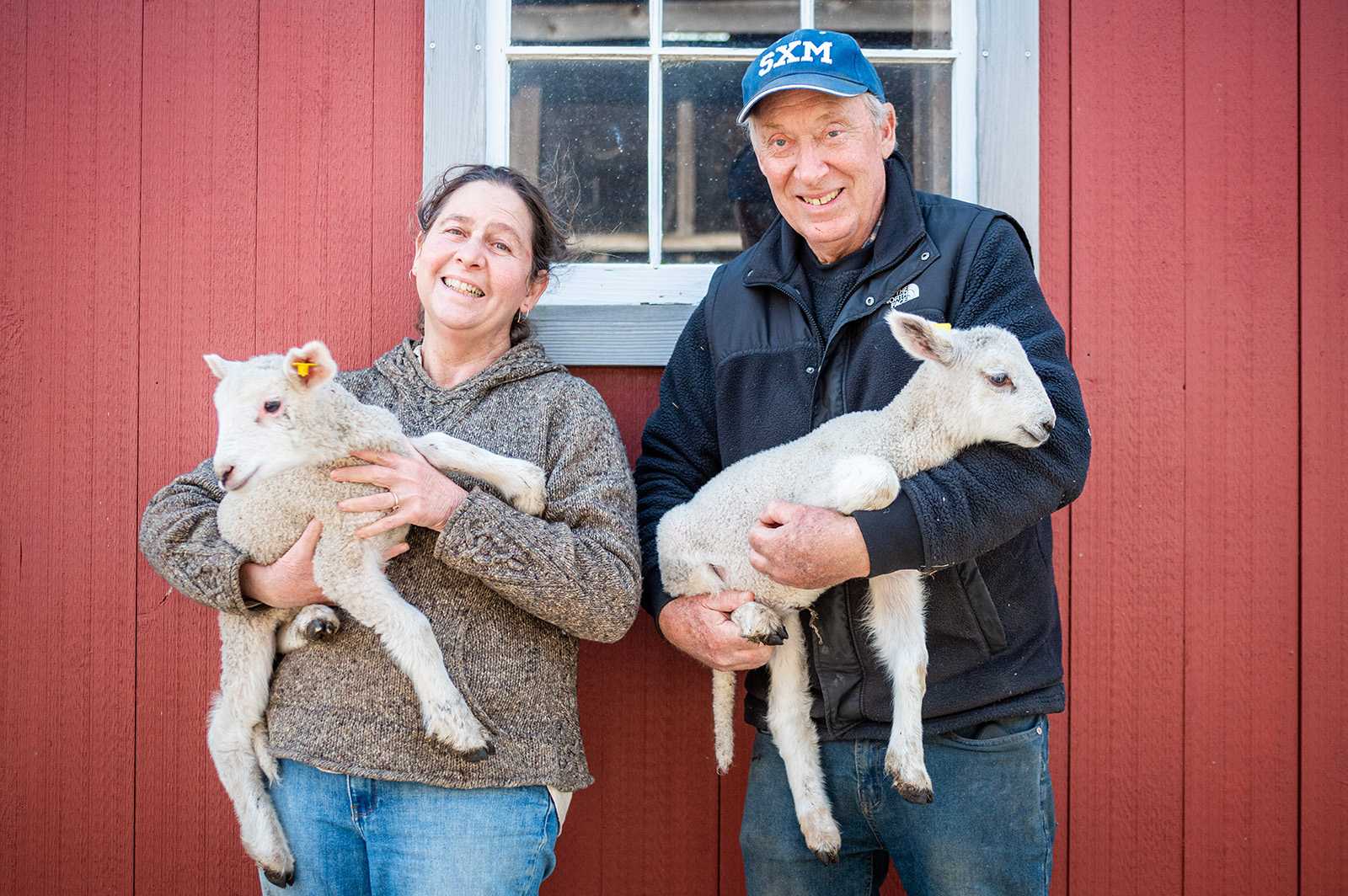
At farms around the Island, lambs are one of the many spring harbingers here that include the chorus of pinkletinks from the swamps and wetlands, and majestic osprey circling overhead as they build their nests.
At Flat Point Farm in West Tisbury, Christa Fischer greets her sheep like old friends. She also keeps a binder close at hand to catalogue family trees, an especially important detail during lambing season.
Sometimes she will name a sheep after a writer and the offspring will carry that theme forward.
“For example, all of Louisa’s [children] are named after Louisa May Alcott characters so we can keep track of the lineage,” Ms. Fischer said during a recent tour of the coastal farm. “It’s fun to see how much like their mom they are.”
At farms around the Island, lambs are one of the many spring harbingers here that include the chorus of pinkletinks from the swamps and wetlands, and majestic osprey circling overhead as they build their nests.
Mermaid Farm lambs get comfy.
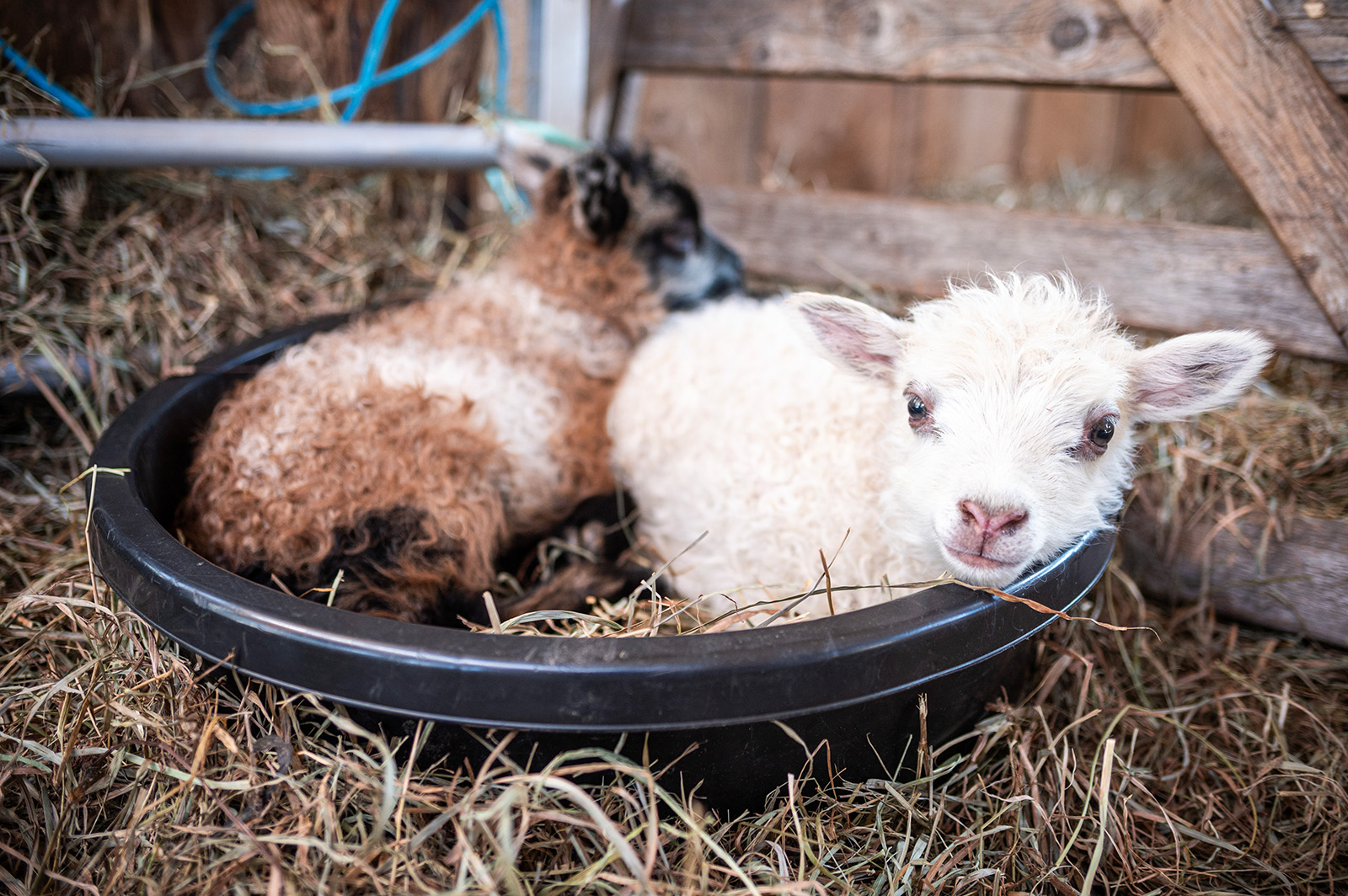
Mermaid Farm lambs get comfy.
Lambs are usually born in March and April on the Vineyard. Flat Point Farm’s first lambs arrived on March 24 when Maria gave birth to Eliza B. and another unnamed lamb (the males are not named). So far this season, there have been 13 new lambs born, with at least two more expected.
“You first start noticing that the lambs are developing an udder,” farm co-owner Arnie Fischer Jr. said. “So then we start keeping an eye on them. Sometimes you do have to help [when they’re born].”
Mr. Fischer’s father started the farm in 1939. The family legacy lives on, as Christa, Arnie and his sister Eleanor Neubert run the operations. The farm sells lamb, pork, beef and eggs. Arnie and Christa’s daughter Emily Fischer also handles the processing of wool and felt, and runs her own business making goat milk soap.
Not far away at the Whiting Farm, another historic West Tisbury sheep farm, Allen Whiting recalls growing up with hundreds of lambs. They would sprawl around his house, warming up beside the fireplace or napping in front of a warm oven. But in his lifetime the Island sheep farming industry has changed. He now raises about 20 lambs each year.
“If I try to count them all, I’ll fall asleep,” joked Mr. Whiting, who is also a noted artist.
Mr. Whiting said sheep raised at his farm are almost all harvested to provide meat for his family, or sent to auction. He said the wool market is now too small to be profitable for a small farm.
Allen Healy, with Mermaid Farm, watches his flock.
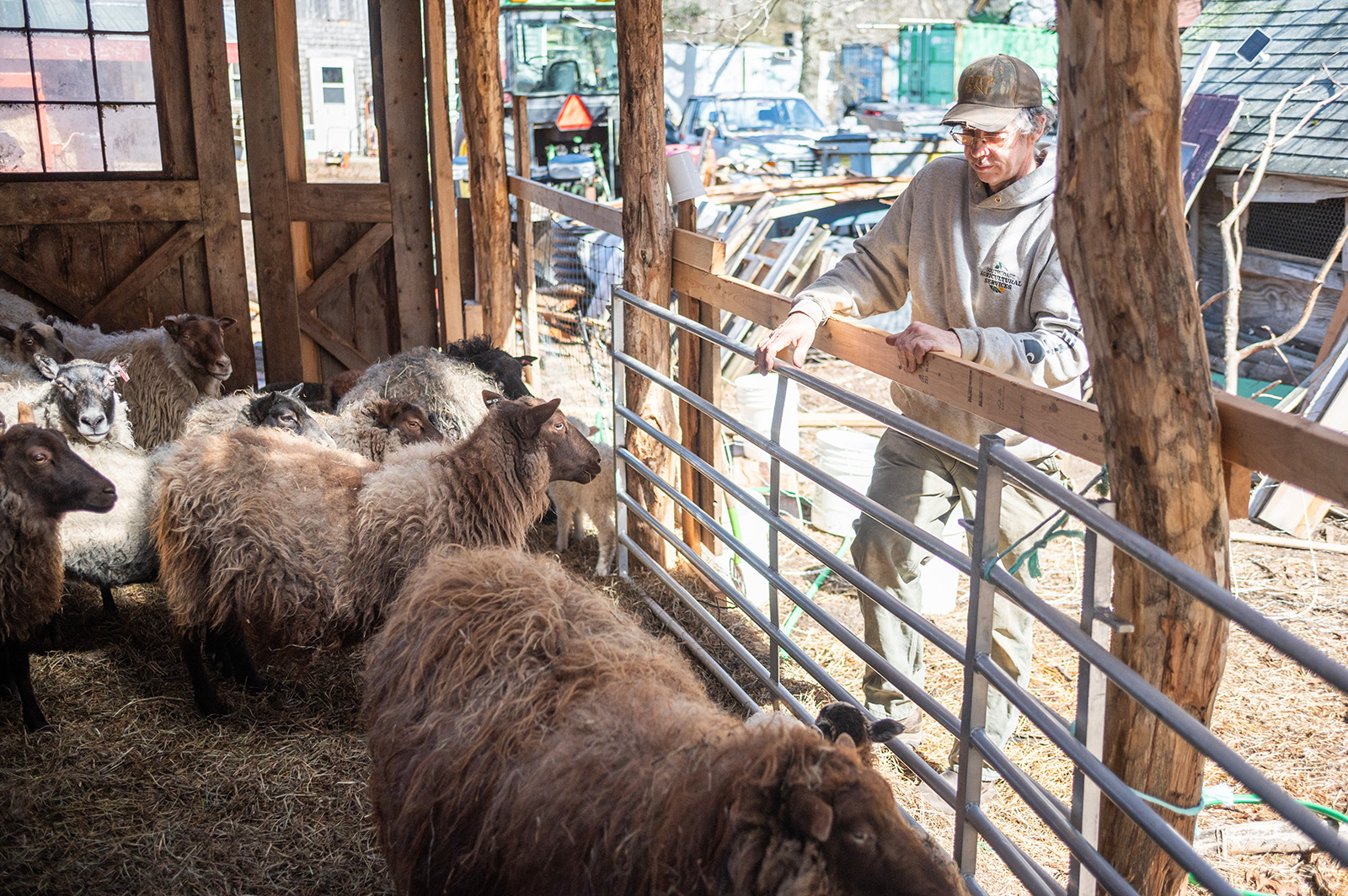
Allen Healy, with Mermaid Farm, watches his flock.
“I think basically, on a real economical reality, this farm has been out of business since I was born,” Mr. Whiting said. “But we love it. We want to take care of the land . . . and we do the best we can.”
At the Allen Farm on South Road in Chilmark, with its sweeping views of the Atlantic Ocean, sheep raising has been a practice since 1762. Farm co-owner Clarissa Allen said lambing season sees up to three births a day at the farm, and continues to be one of the busiest and most exciting times of the year for her family.
This spring, the Allen Farm is expecting over 60 lambs. So far only one has needed to be bottle-fed, something Ms. Allen’s grandchildren — Tavira, Arlo and Florence — relish.
“The lambs bond with them and follow them around like, you know, Mary Had a Little Lamb,” Ms. Allen said.
At Mermaid Farm on Middle Road in Chilmark, Caitlin Jones, who runs the farm with her husband Allen Healy, said the farm’s pen is filled with Icelandic lambs in shades of brown and white.
“What’s cute is when the moms lie down, the lambs will climb on top of them and do the marshmallow ride across them, you know, jumping from one to another,” Ms. Jones said.
Mermaid Farm has been raising lambs for 25 years. Ms. Jones said a majority of the male lambs are harvested for meat and they keep the females for breeding.

Bleating for joy.
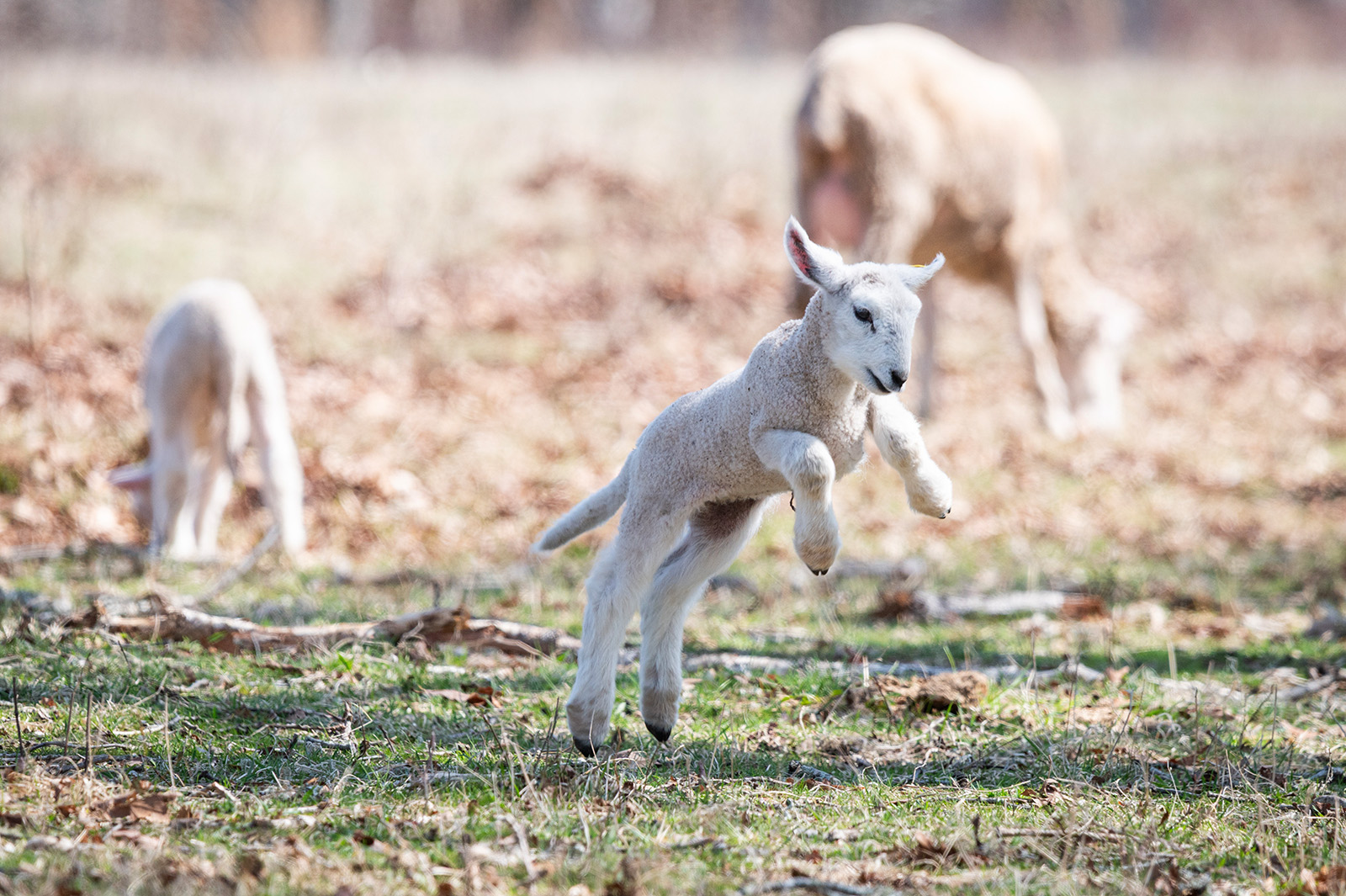
Bleating for joy.
She added that the birthing process is just as hard for sheep as it is for cows and horses. When something goes wrong, she relies on the wider sheep-raising community for help.
Collins Heavener of the Marshall Farm on Chappaquiddick agreed. He said all the Island sheep farmers will call on each other if a lamb is struggling during birth and even exchange medicines.
“I have no idea where I’d be without them,” Mr. Heavener said.
It’s been a tough lambing season at the Marshall Farm, which is only in its fourth year. Three of Mr. Heavener’s lambs died despite his best efforts, which he said is a sad reality for sheep farmers.
“Most years they just do their thing, and I show up and there are lambs running around,” Mr. Heavener said. “It’s beautiful.”
Lambing season usually takes place in March and April.
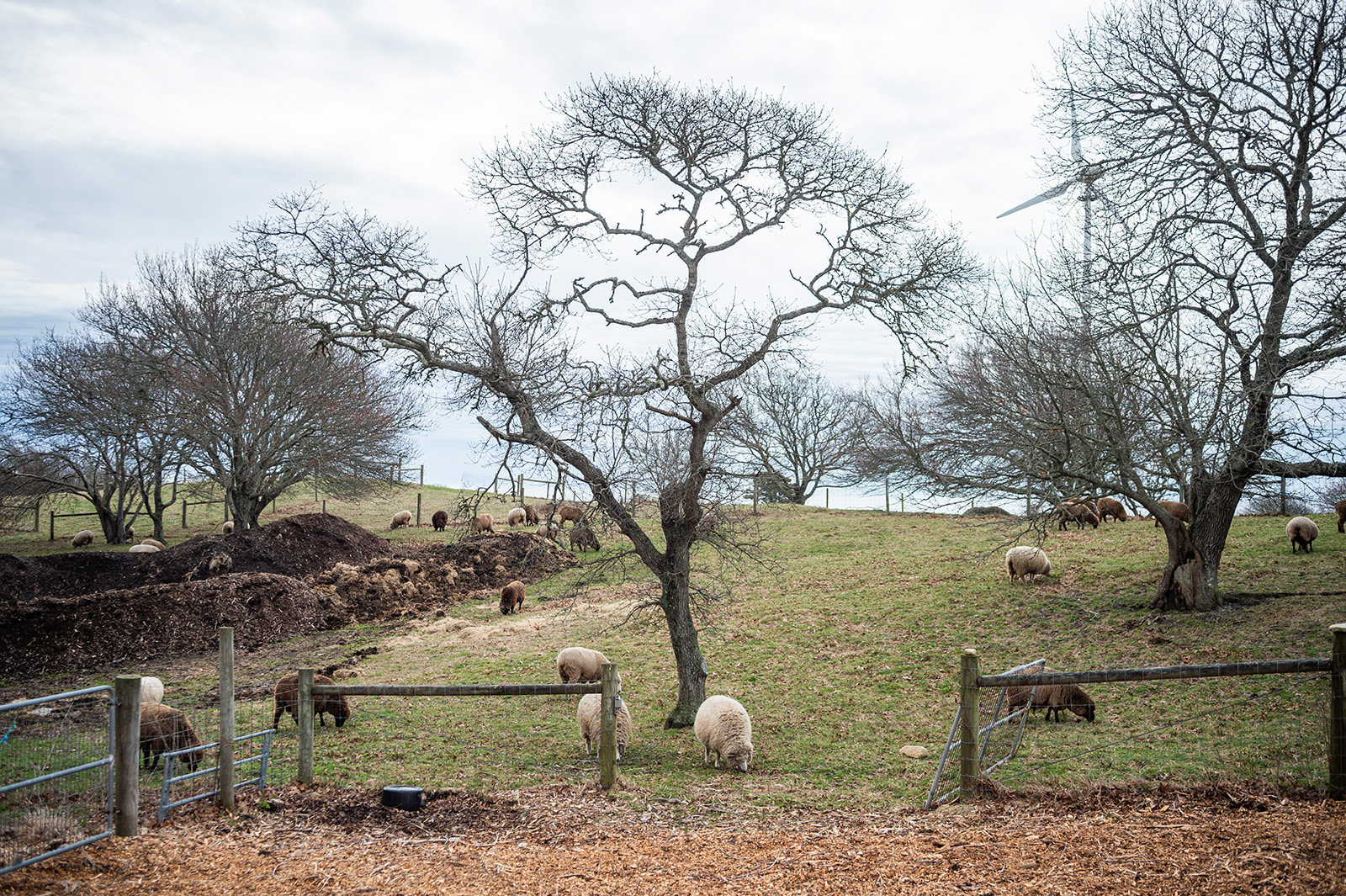
Lambing season usually takes place in March and April.
Back at Flat Point Farm, as the days stretch longer, the lambs have begun to get bolder and more inquisitive of their surroundings.
“Look at those lambs,” Mr. Fischer said with a laugh. “Two days old and trying to nibble grass.”
Mr. Fischer estimates that in about a month, the sheep will roam to the vast fields bordering the Tisbury Great Pond. But there’s no knowing exactly when that will happen.
“When they start getting through the fence, they’ll make the decision for us,” he said.
Comments
A story about beautiful baby
Betsy Burmeister West TisburyA story about beautiful baby lambs who are just like puppies.
“ What’s cute is when the moms lie down, the lambs will climb on top of them”. The lambs follow children,
“The lambs bond with them and follow them around “.
To say this story is heartbreaking is an understatement. The Cognitive Dissonance is real.
These babies are “ harvested”??? ” They are killed! Call it what it is… they are killed for no other reason than you like the taste of their flesh. How cruel and self serving.
Before you say it’s your ‘ personal choice’ to kill them ,remember that’s what all abusers say. And it’s not your ‘ personal choice ‘ when there is a victim.
It is 2025! You have plenty of “ food” choices. Animals aren’t “ food “. They are sentient beings who share this earth with us.
The stories about them following children, leaping through the fields, and loving on their mothers show that feel just like we do. Just as a puppy would. But then they are killed.
And that is acceptable ?
Yes, I know, most of you will say “ Don’t shove your views down our throats” Think about what you are doing. You are literally taking a baby ,killing her,and shoving her body down your throat.
This story broke my heart, and made me question whether there is any kindness or compassion left in the world. If people think that describing the innocence and joy in these precious lambs in one breath, and then seeing nothing wrong with killing them to eat their bodies in the next breath, it is a disturbing world. When harming someone is accepted, and even celebrated, there is something terribly wrong.
“ We cannot have peace among men whose hearts find delight in killing any living creature.” Rachel Carson ( 1907-1964)
Betsy, you certainly have a
Susan Desmarais Oak BluffsBetsy, you certainly have a right to your opinion. And I am friends with Christa and Arnie, so I’m biased. They are caring, dedicated and loving people. Their farm is their life, they work and live responsibly. Your judgmental words are searing and unfair. The Fischer farm animals know kindness during their lives. Delight is NOT taken at the animals deaths.
There are, tragically, places in our country, our world where that can’t be said. Many beings don’t get to live with love or kindness. Shaming others is never the answer.
Our island is so fortunate to
Susan Desmarais Oak BluffsOur island is so fortunate to have these dedicated farmers!
Check out the adorable new
Heather Norton TisburyCheck out the adorable new lambs at Norton Farm too!!
Betsy, I understand your
Ellen Miller Vineyard Haven, MABetsy, I understand your feelings but please note: trying to shame people for doing what their families have done for generations (in this case eat meat) does not create compassion, only resentment. Many (if not most) of these animals would not have been bred except as food. You can choose how you want to regard these animals but you need to respect that other people have as much right to their beliefs as you have the right to yours.
Add new comment