

As alpha-gal syndrome rapidly spreads across the Vineyard, Island public health officials are hoping to gauge the public’s concern over the meat allergy and gather important information that could aid in future research.
As alpha-gal syndrome rapidly spreads across the Vineyard, Island public health officials are hoping to gauge the public’s concern over the meat allergy and gather important information that could aid in future research.
The Martha’s Vineyard Tick Program put out a new survey last week on alpha-gal, and the scientists behind it are especially interested in hearing from hunters. Lea Hamner, an epidemiologist with the Inter-Island Public Health Excellence Collaborative, urged people to take 10 minutes out of their day to help her and other researchers educate, prevent and support people affected by alpha-gal.
She also hoped the survey, which is anonymous, could help her design a study around hunters’ risk for alpha-gal.
“If you talk to anyone about alpha-gal syndrome on Martha’s Vineyard, they are concerned, but having some numbers would help me make pitches for programming,” Ms. Hamner said Friday at the Island’s deer check station in the state forest.
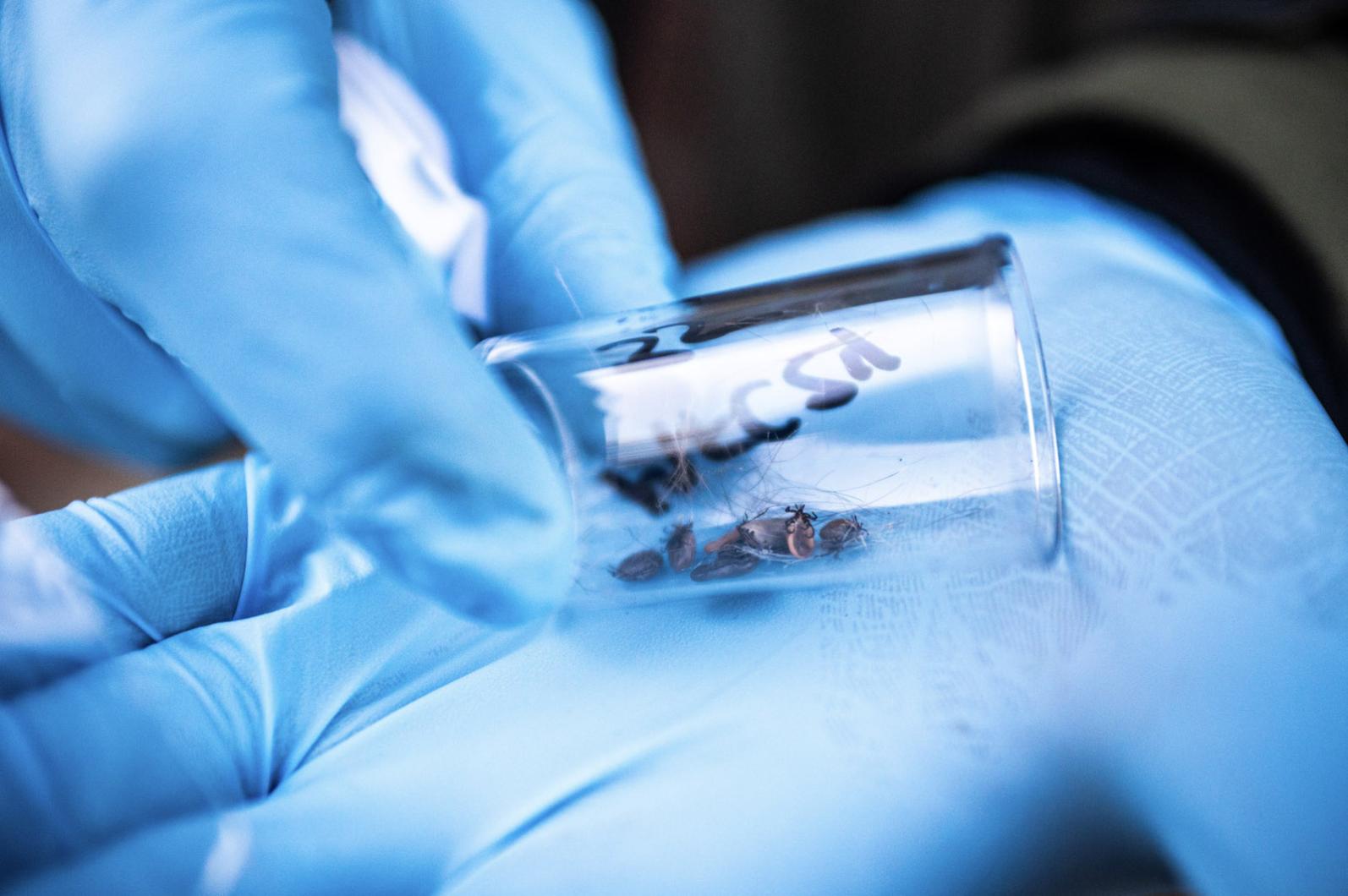
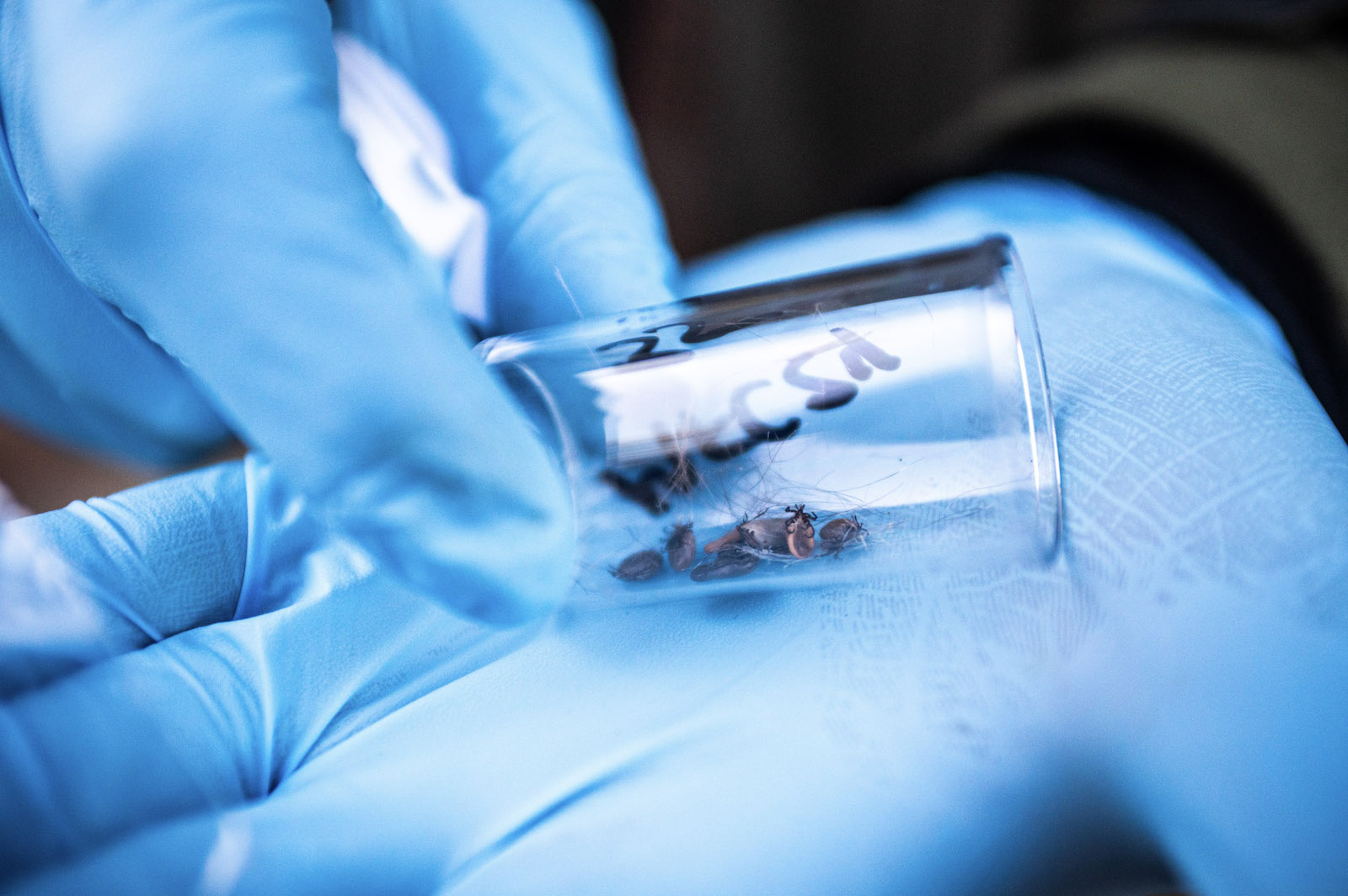
Collecting ticks off a deer.
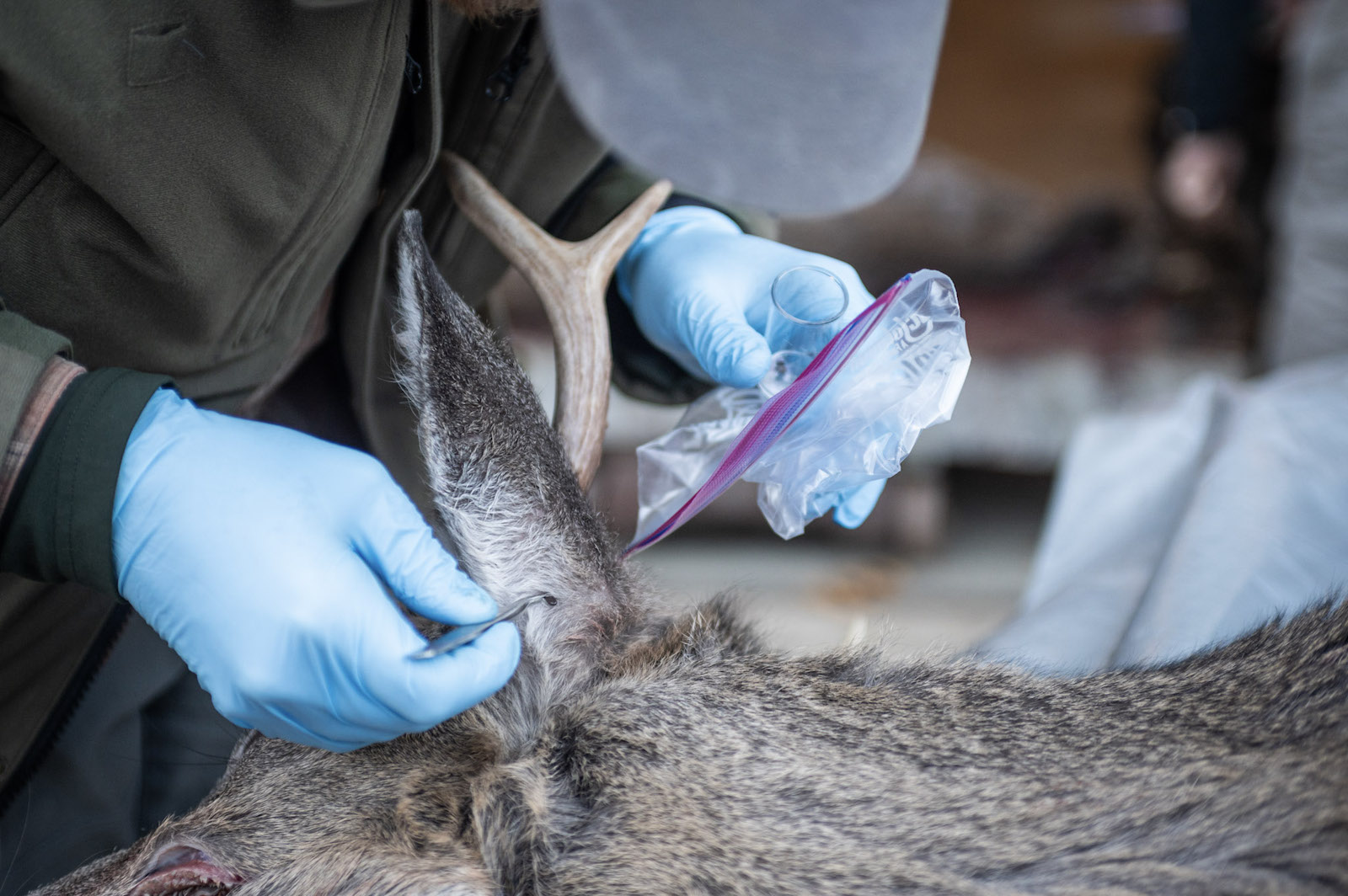
Collecting ticks off a deer.
The Vineyard has already developed a relationship with one of the foremost experts in the emerging syndrome, and Ms. Hamner had floated the idea of setting up a multi-year study following hunters.
“Alpha-gal, a red meat allergy, to a hunter would be significant,” she said, as a couple of deer were checked in. “It’s not only what we eat, but it’s part of their personal identity.”
Alpha-gal first came up on the Vineyard’s radar about four years ago, after lone star ticks gained a foothold on the Island.
Researchers believe that lone star ticks carry the alpha-gal carbohydrate, something that is naturally occurring in mammalian meat. When a lone star tick bites a human, the human body can begin to make an allergic antibody that recognizes alpha-gal, giving people various allergic reactions when they come into contact with the carbohydrate again.
Islanders have reported reactions to everything from eating a steak dinner to just the smell of cooking meat. Other products, such as milk or even gelatin in medications, can cause an allergic reaction.
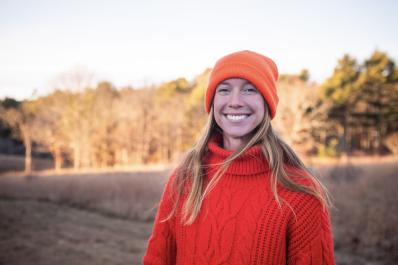
Lea Hamner, an epidemiologist with the Inter-Island Public Health Excellence Collaborative.
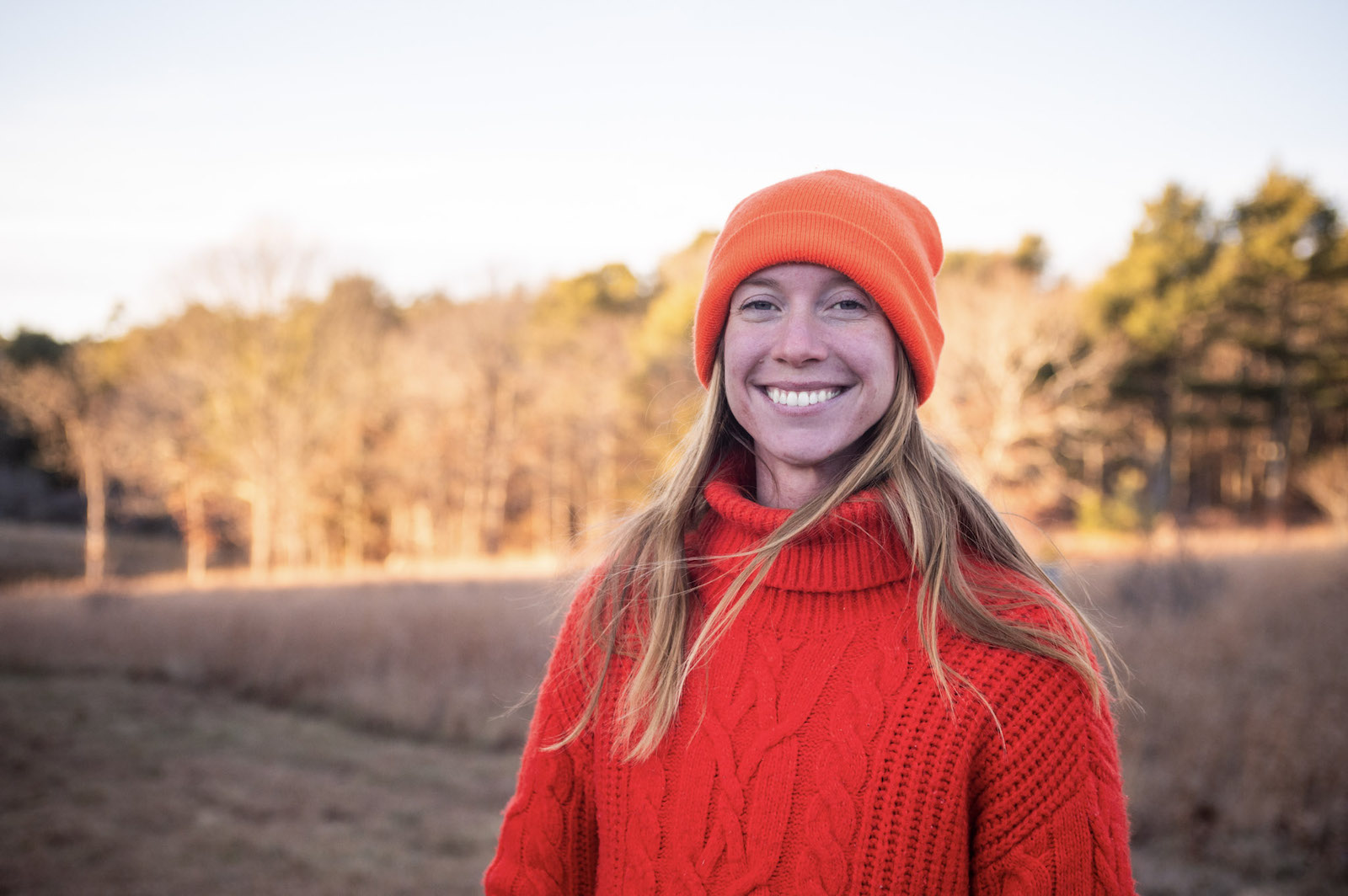
Lea Hamner, an epidemiologist with the Inter-Island Public Health Excellence Collaborative.
Ms. Hamner was at the check station to talk to hunters about the survey and hear about their experiences with the allergy.
“I have talked to a hunter who is still hunting, even though he cannot consume meat because he has alpha-gal syndrome,” she said. “But I’ve also talked to other hunters about whether they would continue hunting, and they hunt for venison so they would not continue. So there’s different motivations and interest in the sport versus food [aspect]. But certainly everyone’s concerned.”
The survey asks 27 questions, ranging from concerns about the meat allergy to the types of ticks people encounter, and if members of the public would take part in a future study.
Ms. Hamner said that interest in the issue is growing, pointing to a virtual event she held earlier this year with an alpha-gal scholar at which about 100 people attended. She added that the survey is open to all Islanders, not just hunters.
Having a public willing to participate in research could help bring more scientists to the Island, she said.
“There’s a lot still to learn and we would appreciate the Island helping us to do that,” Ms. Hamner said. “Having an interested population willing to participate in that kind of research is very intriguing to experts.”
The survey is available at https://www.surveymonkey.com/r/MValphagal.
Comments
I am curious to know why she
Polly K Bassett West TisburyI am curious to know why she has such a focus on deer hunters, who are only in the woods for several weeks a year, while there are hundreds of us who are on the trails year round on a daily basis.
Hi Polly! Thank you for your
Lea Hamner, epidemiologist ChilmarkHi Polly! Thank you for your question. Hunters have emerged as a group we want to work with because they have expressed not only deep concerns about alpha-gal impacting their food supply and passion, but they actually are spending a lot of time outdoors than just several weeks a year. Many hunters are outdoors enthusiasts, and deer hunting is just one of their fall activities. They are also unlikely to change their diet preemptively out of concern for alpha-gal syndrome.
However I hear your concern that there are many different types of groups concerned about alpha-gal syndrome on Martha's Vineyard, not just hunters. We wish we had the staff and resources to study more of them. However with the resources we have and the interest we have received, this is somewhere we can get started on improving the knowledge base around alpha-gal syndrome.
Hi Lea,
Sarah Vail West TisburyHi Lea,
I am so happy to hear that there will be a study about Alpha Gal. I have heard of a few people that believe that they have gotten themselves or their children over the allergy by micro-dosing meat and building up a tolerance. Let me know if you care to talk to these people. I have wondered about using that method. I know that is how people with bee allergies get over their life threatening allergy.
It is good to see that this
Andrew ChilmarkIt is good to see that this issue is being focused upon. Lone Star Ticks are surging and may be a bigger threat than Lyme. We need to figure out how to properly proactively treat. Also, this is not just an issue for hunters. It is an issue for anyone on the walking paths or landscapers.
Thank you for your support,
Lea Hamner ChilmarkThank you for your support, Andrew! We agree wholeheartedly that this is not just a problem for hunters. At this point, this is a concern for all islanders, seasonal residents, and visitors. The Martha's Vineyard Tick Program continues to do an incredible amount of work across the island, from residential yard surveys to public presentations to outreach at major events. For example, you'll see Tick Alert placards at most trail heads advising on best ways to protect yourself while enjoying the outdoors. Check out the website to see all that we're up to at https://www.mvboh.com/tickborneillness.
We have also been figuring out how to support people with a higher risk of tick bites at work, like landscapers, gardeners, excavators, septic installers, etc. Our #1 prevention message is to treat clothing with permethrin to prevent tick bites. Many employers provide permethrin for workers to treat their own clothing at home, but there's also a longer lasting option to treat your own clothing industrially so the treatment lasts 70 washings rather than 6. InsectShield.com has offered a 15% discount code to anyone who uses MARTHASV2024 at checkout. We get no profit from this program, and are grateful that Insect Shield has been willing to help make prevention more accessible to our community.
I worry about the many
Alissa KeenanI worry about the many landscape workers and utility workers, painters, construction workers, and tree workers. So many of them are unaware of the dangers of, and even existence of, this life threatening condition They are put in an unfortunately super susceptible position just by going to work. Maybe public health resources could be directed to provide workers with knowledge and preventive measures such as permethrin to spray clothes and shoes, at least?
Over the past summer I was
Lucas Murphy Chilmark (Easton Ma)Over the past summer I was introduced to the loanstar tick. My mom’s fields in Chilmark were loaded in them the first few times I mowed the property in June I would find them on me. I hope your study helps lead to some type of cure. I myself had symptoms of lime twice when I lived on the island full time
Add new comment