



For countless Island businesses, providing employee housing has become a cost of doing business.
It has been years since a guest stayed at the Outermost Inn in Aquinnah.
The restaurant still bustles with activity, booking out weeks in advance. But since 2021, Hugh Taylor, the proprietor of the Outermost Inn, has put the inn’s eight guest rooms to an unconventional purpose: employee housing.
“I can’t say that it’s a permanent condition, but it certainly seems to work at this point,” Mr. Taylor said.
Denise Schepici, the president and COO of Martha's Vineyard Hospital, displays architectural drawing of Navigator Homes.
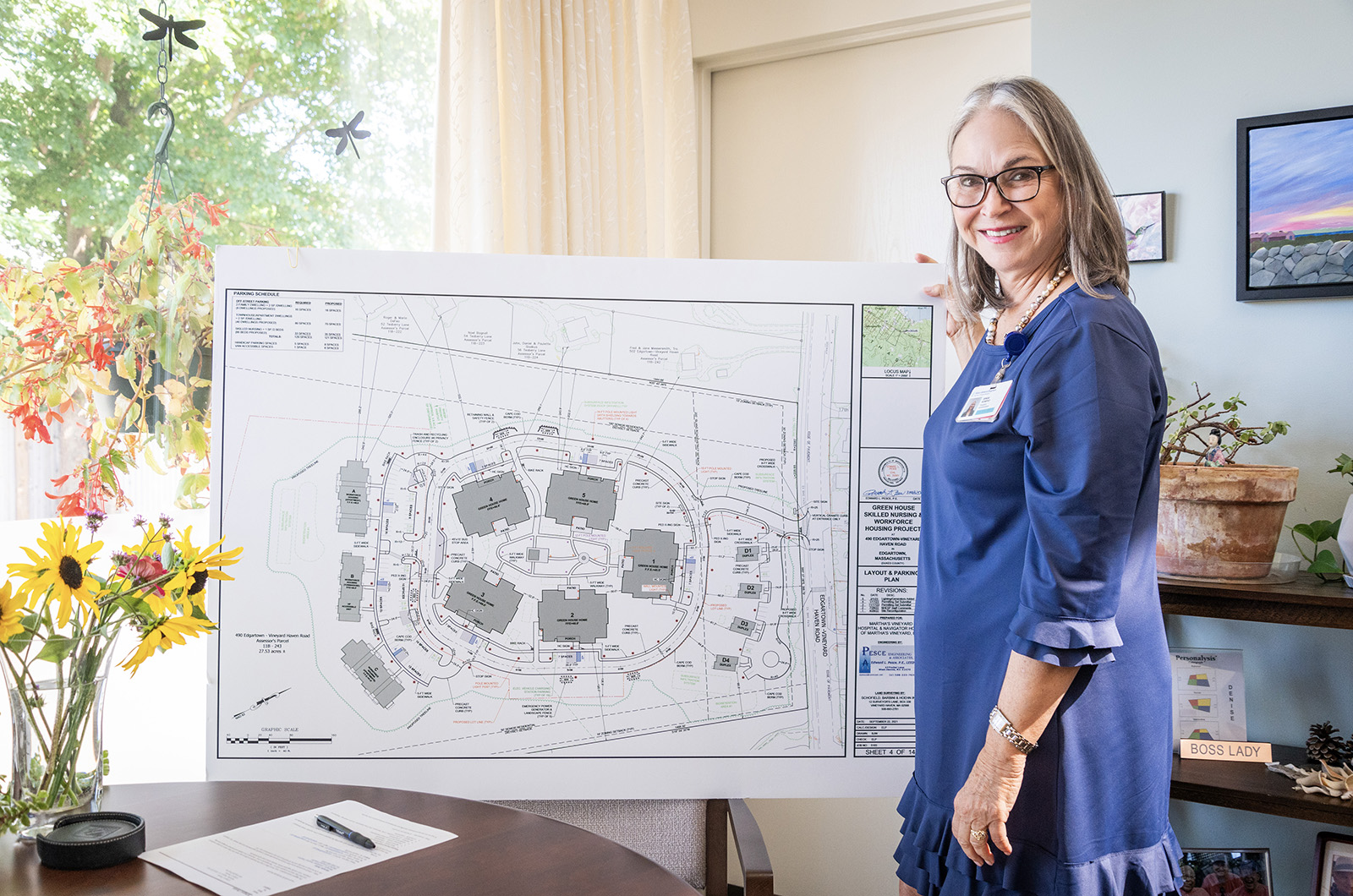
Denise Schepici, the president and COO of Martha's Vineyard Hospital, displays architectural drawing of Navigator Homes.
For Mr. Taylor and countless other Island businesses, providing employee housing has become a cost of doing business. With housing prices, both year-round and seasonal, continuing to rise to unprecedented levels, business owners must provide stable, subsidized housing for their workers, or risk losing them.
Larkin Stallings, owner and operator of the Ritz in Oak Bluffs, said he has no other option if he wants to stay in business.
“I don’t want to be a landlord. It’s not what I do for a living,” he said.
Mr. Stallings rents an apartment above the Ritz and leases another property on Edgartown-Vineyard Haven Road and offers the rooms to employees at a subsidized rate. And yet the two properties hardly make a dent in his housing needs, he said.
It is an Islandwide issue, one faced by both small and large businesses, who in addition to the demands of finding staff for the intense summer season when the bulk of their annual income is generated, must now come up with a patchwork of living arrangements. However, each added responsibility can bring with it new complications.
Martha’s Vineyard Commission housing planner Laura Silber said that when more than 20 Island business owners and nonprofit leaders met with the state secretary of housing earlier this summer, each said that employee housing “was not an ideal solution.”
“Every single business owner, nonprofit directors, small businesses, larger businesses, banking, all said they do not want to be having to provide housing for their employees,” Ms. Silber said.
They described employee housing as “a default position that they have to take responsibility for in order to keep their services running,” Ms. Silber said.
For employers, providing employee housing poses two main challenges. The Island’s housing supply is limited and expensive, so finding properties that employers can afford to lease or purchase can be difficult. And once housing is secured, employers face a host of ethical, legal and emotional issues not previously in their job description.

Hugh Taylor, the owner of the Outermost Inn, uses his inn for employee housing.

Hugh Taylor, the owner of the Outermost Inn, uses his inn for employee housing.
At Morning Glory Farm, Simon Athearn has overseen a continual push to expand employee housing.
In 2018, Morning Glory Farm built a small dormitory capable of housing nine workers, created to complement two cabins and an existing dormitory on the farm grounds. Over the past few months, Mr. Athearn has built five additional double-occupancy cabins on his family’s land in West Tisbury.
Mr. Athearn said that 38 workers — more than a quarter of the farm’s summer payroll — live in employee housing. More than half of those workers are now year-round staff members, a major shift after the pandemic drove up housing prices and rentals way past what employees could afford — even in the offseason.
“A big change for us was when what were stable Island employees lost their stable housing, and needed to move in with us in order to keep them on,” Mr. Athearn said.
The new cabins in West Tisbury were built to accommodate those year-round staffing needs, Mr. Athearn said.
The scale of employee housing needs and costs increases by an order of magnitude with the size of an organization. Martha’s Vineyard Hospital president Denise Schepici said that 250 of the hospital’s 900 employees live in housing owned or leased by the hospital, which it provides to workers at a subsidized rate.
The number of employees housed by the hospital was up 48 per cent between July of this year and July of last year, Ms. Schepici said.
“We have everything from physicians who cover weekends and nights or are here for the summer, to nurses, all the way to water and facilities people, environmental services staff [in employee housing],” Ms. Schepici said.
The hospital currently holds 135 leases with 81 different landlords, Ms. Schepici said. Nearly all of those leases are for one year terms and therefore subject to unpredictable increases in rent. So, like Morning Glory, the hospital has begun a series of new employee housing construction projects, designed to scale down the number of leases it holds.
Navigator Homes, the planned long-term skilled nursing homes development set to replace Windemere next summer, includes 48 units of employee housing with 76 beds, to be divided between the nursing home (30 beds) and the hospital (46 beds). The employee housing alone will cost the hospital nearly $35 million, Ms. Schepici estimated.
The hospital is working to convert this Oak Bluffs cottage to employee housing.
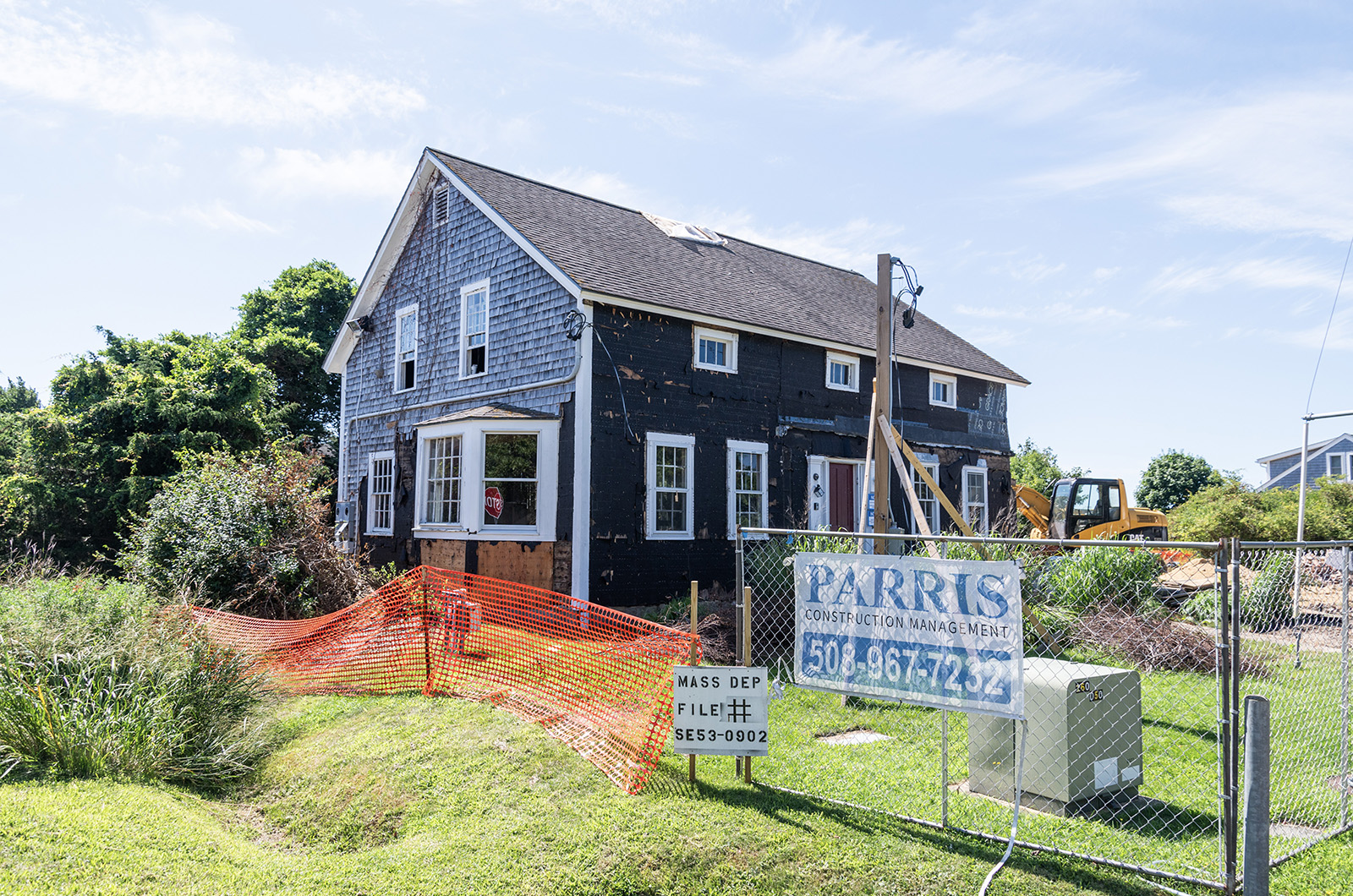
The hospital is working to convert this Oak Bluffs cottage to employee housing.
A neighboring home owned by the hospital is also being renovated, Ms. Schepici said.
“My goal is to have controllable, affordable housing for hospital staff because if I don’t have hospital staff, we’re not going to have health care,” Ms. Schepici said.
As a result, Ms. Schepici must oversee an entire staff dedicated to managing the hospital’s employee housing. The hospital even employs a handyman, per diem, to service the failing refrigerators, broken screens and leaking air conditioners at leased units.
At the Harbor View Hotel, chief operating officer Alton Chun said that house-cleaners and facility staff double as the maintenance crew for the hotel’s employee housing, which, like the hospital, it owns and leases around the Island.
“If there’s maintenance, we have an engineering team. If there’s housekeeping, we have a housekeeping team here. So we do cross utilize some of our employees, which is also great because we want to take care of our employees like we would our guests,” Mr. Chun said.
With so many employees living in staff housing, Mr. Athearn and other employers said they have had to set up boundaries to mediate disputes.
At Morning Glory Farm, a live-in house manager at the dormitory reports regularly to the farm’s management on any facilities issues or personal misconduct. If repeated warnings are not heeded, employees can lose their housing, Mr. Athearn said.
Similar rules prevail at the hospital, Ms. Schepici said.
The close connection between employment and housing risks putting employers in difficult ethical, and even legal, positions: Can I let an employee go if they will lose their housing? Can I afford to kick someone out of housing if I will lose their labor?
“I’ve talked with several other Island businesses about this exact thing,” Mr. Athearn said.
Mr. Athearn said that his family are farmers and did not intend to be in the housing business, right down to providing amenities such as laundry soap and towels to workers in employee housing. And yet wading into the world of real estate is now a necessity.

A communal employee housing barn is being erected for Morning Glory Farm.

A communal employee housing barn is being erected for Morning Glory Farm.
“It would bristle for my dad to hear that,” Mr. Athearn said.
There is no going backwards, however, as the need for employee housing increases. Employers are making do in whatever ways they can, and they are looking to government officials to step up, both with funding and, when necessary, zoning changes.
The hospital’s Navigator Homes employee housing development required the amendment of town zoning laws, Ms. Schepici said. But for others, more granular issues exist.
Mr. Taylor said that he would happily build a multi-room summertime employee housing on the Outermost Inn’s nine acres. However, any new building would push the property passed its formal wastewater limit, he said.
Mr. Stallings said he hopes that members of the Island business and nonprofit communities can band together to create a permanent workforce housing development that could support summer workers and take the pressure off employers as landlords. That type of development is in the works in Provincetown, Nantucket and Rocky Mountain ski towns.
Ms. Silber also pointed to the need for a more proactive approach by the community and local government.
“We have a choice about how we want to handle this,” Ms. Silber said. “But it doesn’t happen automatically, it’s an intensive, long-term effort that takes professional coordination . . . and planning over the long term on the part of local governments. And it takes public funds to address.”
Comments
Airbnb and VRBO killed
Doreen Trainque MVAirbnb and VRBO killed affordable housing on our island.
And everywhere else too
Slater MVAnd everywhere else too
To be fair it was pretty bad
R Scott Patterson EdgartownTo be fair it was pretty bad before air bb, although they did make it worse.
STR’s like VRBO and others
Jim EdgartownSTR’s like VRBO and others support our Economy. Why is it some Islanders don’t get this??
Be careful what you wish for. We push away the tourists you also push away good paying jobs.
Our Island housing shortage
Frederick Rundlet TisburyOur Island housing shortage started with the proliferation of Short Term Rentals over the past six years. The solution rests with limiting STRs to Island residents only.
Without Rentals we don’t have
Jean OBWithout Rentals we don’t have a sustainable Island!
STR properties are largely
Amy EdgartownSTR properties are largely owned by investors, not year round islanders. An astonishing number of essential workers need to commute from the mainland daily. THAT is not sustainable. And that is a marked change in recent years. Change the zoning laws to allow for year round accessory apartments on MV properties whose residents primary home is here. THEN the island will have sustainable housing for essential workers.
Without housing for workers,
In Search of a Year Round Rental Somewhere on the VibeyWithout housing for workers, you have no economy.
Amy, you say STR are largely
tom BostonAmy, you say STR are largely owned by investors, not year rounders. Two comments: is it true investors largely own STR? Is there data supporting this? Maybe here is. I am guessing the majority of STR are owned by second homeowners who rent their homes out for a few weeks in the summer and use their house the rest of the time (paying the majority of property taxes on the island). Secondly, if year rounders owned the majority of STR, would the problem be any better? They still would be renting the homes out for the summer thus depriving he island of year round rentals.
Also Amy, workers facing
tom BostonAlso Amy, workers facing significant commutes is really a fact of life. Look at Boston (and most major cities). Commuters started within the 128 belt then it grew to the 495 belt and now workers commute all the way from Worcester (and soon the New Bedford area). Commuting from the Cape to MV is no different. A high speed ferry would lessen the commute (like the express train from Worcester). At the end of the day, we can destroy the character of the island by building endless housing or we can manage it. It's one or the other. Unlike Boston and the surrounding suburbs, MV is an island. Continued growth is not sustainable unless we are willing to ruin the island.
That is simply not true. The
John VHThat is simply not true. The island economy has always been sustainable, just at a lower population level, which was nice, and more sustainable in a lot of ways.
You don't think the year
tom BostonYou don't think the year round population growth factors into this at all??
Data regarding these STR
Amy EdgartownData regarding these STR properties is indeed challenging to provide, as it is widely understood that many of these are not legal dwellings and thus not public record. That being said, if one regularly attends town meetings/ reads local zoning appeals & real estate transactions, it is apparent that there are many familiar names that keep popping up as buyers for multiple “single family homes” aka “investors”. I agree with you that a large majority of STR’s are also owned by second homeowners. However I disagree with how much time they may spend as part of the community here within those homes. Rental management companies and caretakers often reference communication with these homeowners as being from afar -with little to no time spent on the island at all. These are also “investors” in my mind.
Perhaps if there was more of an incentive for year round island residents to rent their accessory spaces, specifically on a year round basis, maybe this would make a small dent in the housing market.
"Neighbors of the Spring
Larry Edgartown"Neighbors of the Spring street property say their quality of life will suffer if, as expected, the nine-bedroom home becomes a group residence for unrelated employees of Island businesses."
Here's a direct quote from another article in the same paper on the same date. Pretty much speaks for itself and the problem that will never go away. And people saying the towns should provide money and/or housing for island employees are forgetting some flaws with that argument. Lawsuits if someone get hurts and becoming landlords for housing that might be occupied for 5 months a year. Businesses should be the ones providing housing for their employees, period. Just consider it the price for doing business. If that's something they don't want to do, then move your businesses elsewhere.
I agree its up to the
visiting mvI agree its up to the businesses to provide housing for their employees. Judging by the price gouging here on the island, there's plenty of profit to invest in housing from those $35 burgers
Yes and kill all the mom and
Michelle Vineyard HavenYes and kill all the mom and pop shops that have been here for generations! Great plan! Jaws themed rip off tshirts for everyone!
About darn time
San issokson V hAbout darn time
get rid of the problem filled
michael edgartownget rid of the problem filled, unsustainable ferry and all our problems are solved. people would live here and commute with ease
During the next recession a
Marty Milner TallahasseeDuring the next recession a number of people and families who were part of the Island community fabric will be financially overrun by forces not directly under their control. This happens in cycles, over the decades, and rarely are the slots those people held, replaced by people with skillsets needed by the community, or people who end up being part of the community. The true value of a family generational home is rapidly becoming a very distant memory on the Island. It doesn't have to be this way. This is just my personal observation.
I’m kind of surprised to read
Sue EdgartownI’m kind of surprised to read all the negativity about what forward looking employers are doing to help their business and their employees. Yes, housing that is affordable is out of control. As it is also for those who make good incomes and still can’t afford a modest home. But, please. The foresight of Simon and Hugh and Denise is really a gift. They are forward thinking and providing decent housing for their workers.
Why do not island employers
CJ EdgartownWhy do not island employers not band together and build college style dorms at the airport. They could build buildings large enough to house hundreds of people. Close to bus stop and plenty of room for parking.
The FAA will not allow such
Enough Already Oak BluffsThe FAA will not allow such structures. Let's stop throwing that idea out there as well as using the state forest, never going to happen.
When you accept the grant
just a thought mvyWhen you accept the grant assurance from the FAA (= money and free airport) you must play by their rules. Housing is not an acceptable use of airport property. Thankfully the airport business park IS.
What wastewater treatment can
JJ EdgartownWhat wastewater treatment can handle that? The MVC would never approve your idea.
Martha's Vineyard has done so
Debra Ponte NantucketMartha's Vineyard has done so much and doing so much more to make a dent into this dreadful Housing crisis! Congrats to all and keep up the great work!
The housing issue is
To house or not to houseThe housing issue is correcting itself. Employers are doing exactly as they should, investing in their employees. This article leaves out that at the end of this business person time they will have the value of the real estate that they’ve paid for using rent arrived from their employees. It’s not hard it’s a Hardship it’s a windfall . The hospital is offered more houses than they need and is now building their own and will release homes back to the rental pool. STVRs have reached saturation and are now being listed as winter rentals. The proliferation happened when interest rates went historically low and will correct itself when 5 year adjustable mortgages reset to today’s rates. We have also had an explosion in our year-round population. The wonderful Eastern European community is working to keep around the float is different than previous communities in the sense that they don’t leave after the summer they stay year-round. There is no one place to point a finger without the short term rental you won’t need any of these employees anyway.
Is there any follow up on
Editor Question EdgIs there any follow up on what it’s costing MFG to build each unit? Or what employers are spending as far as CAPEX on their housing needs?
I was under the impression
Confused WtI was under the impression that cabins and tiny houses weren’t allowed under WT (or island) building codes. There’s the solution to our housing crisis if it’s allowed, right?
Add new comment