

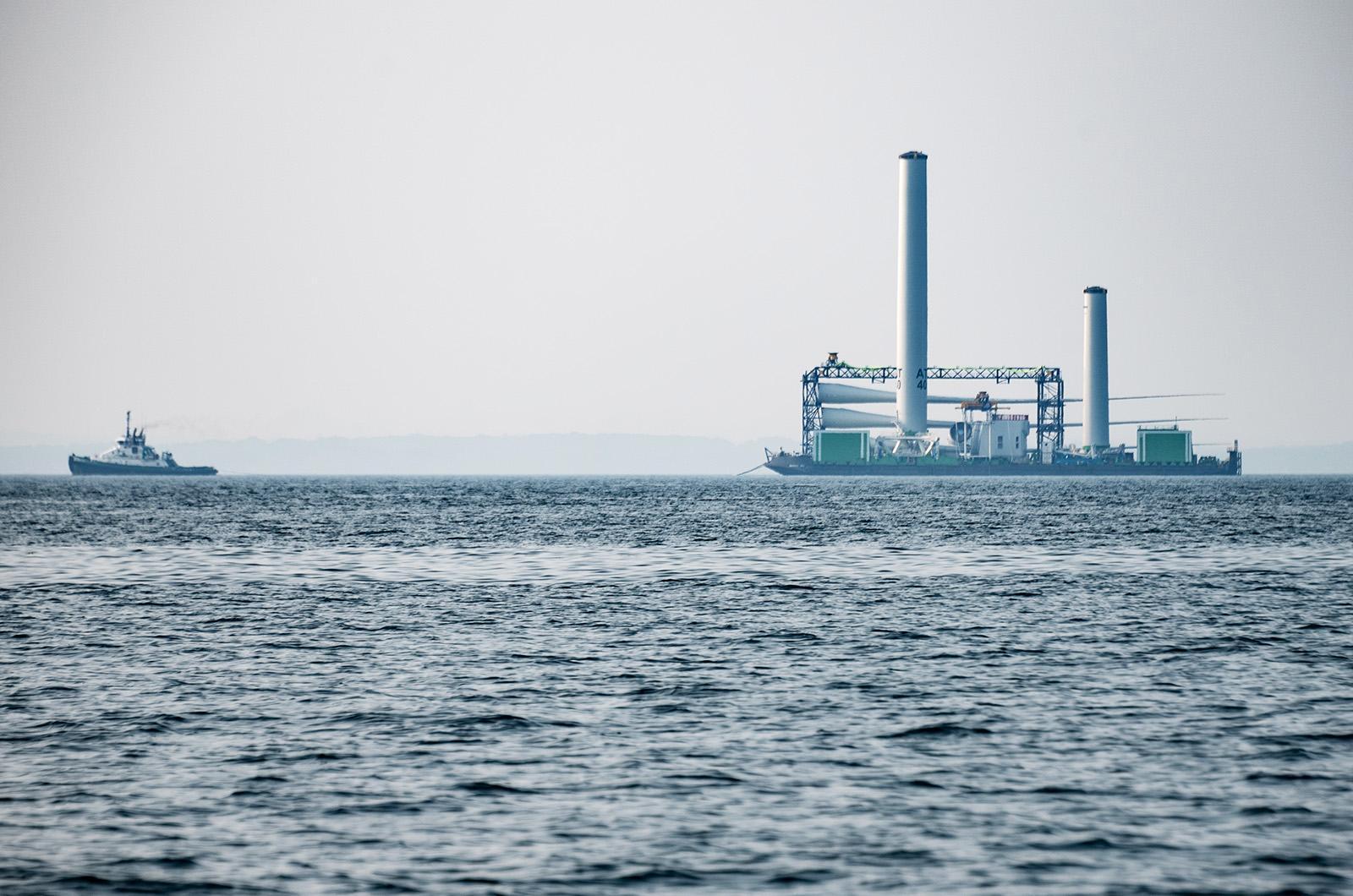
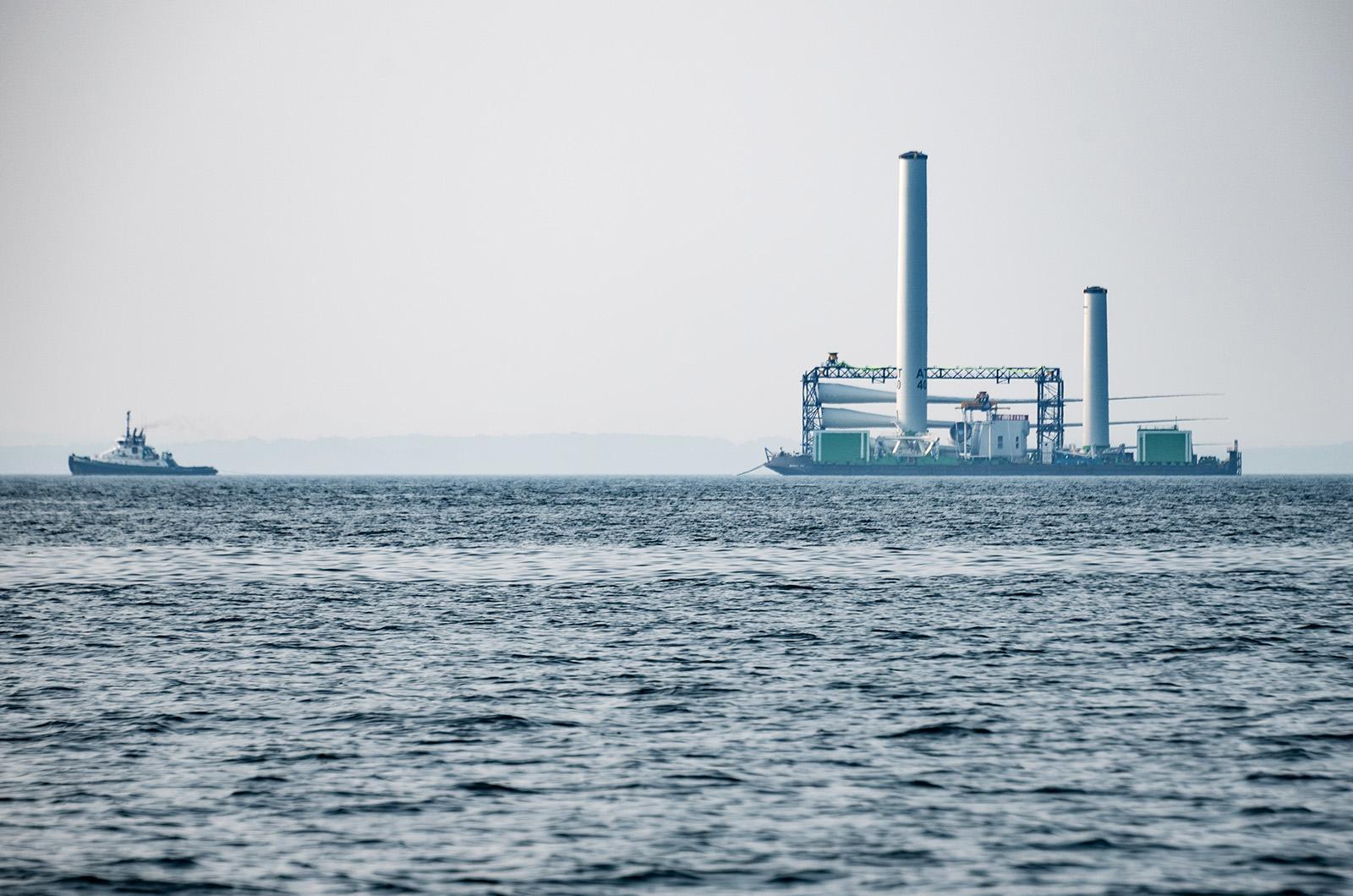
GE Vernova CEO Scott Strazik told investors Wednesday that there was a "manufacturing deviation" in the Vineyard Wind blade that broke off and fell into the ocean.
The Vineyard Wind turbine blade that broke off and tumbled into the sea last week had a manufacturing defect, according to manufacturer GE Vernova.
Adhesives on the 107-meter long blade were not working as they were supposed and subsequent inspections did not catch the “manufacturing deviation,” officials with the company said.
The cause was announced during a GE Vernova earnings call Wednesday, and it was the first inkling into how the turbine broke on July 13 and eventually littered the ocean and Nantucket beaches with thousands of pieces of fiberglass and styrofoam.
“While we continue to work to finalize our root cause analysis, our investigation to date indicates that the affected blade experienced a manufacturing deviation,” GE Vernova CEO Scott Strazik said during the call. “We have not identified information indicating an engineering design flaw in the blade or information of a connection with the blade event we experienced in an offshore wind project in the UK, which was caused by an installation error out at sea.”
In a statement to the Gazette after the call, the company said the issue with the blade involved “insufficient bonding” that should have been identified by the quality assurance program.
“Our investigation is ongoing, and we are working with urgency to scrutinize our blade manufacturing and quality assurance program across offshore wind,” the company said. “We have work to do, but we are confident in our ability to implement corrective actions and move forward.”
There was no timeline for how long the investigation would take, but GE Vernova said it was going to reinspect about 150 blades from its Gaspe, Canada factory where the deviation existed.
The further inspections would include all of the blades on the turbines about 14 miles south of the Vineyard, as well as those currently on hold in New Bedford and those planned to be delivered as federal officials investigate the failed turbine.
GE Vernova officials declined to give a timeline for the work, saying the testing, which is akin to an ultrasound, would be done thoroughly and focus on safety.
While the company continues to investigate the breakdown, debris is still washing up on Nantucket, but continues to miss the Vineyard.
Late last week, The Trustees of Reservations reported that debris may have washed up on Wasque Point on Chappaquiddick after GE Vernova conducted an aerial survey. But trustees spokesperson Mary Detloff on Monday said there was no sign of actual debris on Chappy.
“We continue to look for debris as part of our ranger patrols,” she said. “We are also continuing to ask beachgoers to exercise caution and report any potential debris to our rangers or staff at the gatehouse.”
New details on the recovery effort were talked about at the Nantucket select board meeting Wednesday. GE Vernova and Vineyard Wind told the board they have been trying to get the remainder of the blade that is still attached to the turbine off, and rotated the blades about 10 degrees on Wednesday to see if there are any more loose pieces.
GE Vernova has hired Resolve Marine, a marine recovery company that helped work on the Key Bridge collapse in Maryland, to help establish a removal plan once it’s deemed safe to work in the area.
Cleanup efforts did extend past Nantucket, and Vineyard Wind was working to pick up debris off Chatham and the small islands of Muskeget and Tuckernuck.
GE Vernova also hired an environmental consultant to look into the environmental considerations of the debris. On Tuesday, the consultant, Arcadis US, delivered a report to Nantucket outlining the characteristics of the blade and potential risks of the fiberglass.
The primary risk is injury to people who may come into physical contact with the shards of fiberglass on the beach. While there are no PFAS chemicals in the blade itself, officials said, there is a small trace of PFAS chemicals in aerodynamic add-ons that are attached to the blade. According to Arcadis, these chemicals make up a fraction of the football field-sized blade.
Water testing and considerations on what happens to local seafood that could ingest the fiberglass are still being worked on by the companies, officials told the Nantucket select board.
A large portion of the blade remains on the ocean floor and Vineyard Wind and GE Vernova are still figuring out how to remove it.
Comments
That makes sense. Well, you
Carol formerly ChilmarkThat makes sense. Well, you know the QA will be about 1000 times more tight after this incident - good. Although (before all the complainers get their comments in) I would remind you all that the Deepwater Horizon incident - just one of many, many oil spills - killed 11 people, went on for 87 days and polluted the Gulf of Mexico with an estimated 134 million gallons of crude oil.
Since we just had the hottest day in Earth's recorded history yesterday, let's all embrace solutions - like offshore wind, like rooftop solar, like EVs - and get on with fixing this like adults.
The Deepwater Horizon
Wendy West TisburyThe Deepwater Horizon incident, which as you mentioned resulted in a massive oil spill causing extensive damage to marine life and habitats along with several humans deaths, is just one example of how human actions have negatively affected the marine environment. Continuing to Use the ocean for projects like windmills to combat climate change on land raises significant ethical and environmental concerns. The ocean, a vast and complex ecosystem, should not be exploited to rectify the consequences of human activities. We do not possess the moral authority to impose additional burdens on the ocean’s ecosystems, especially given our historical record of environmental degradation.
Not to mention, we do not know the full effect of this tragedy as of yet. All situations in which the marine ecosystem is disrupted by humans is an issue.
How do you propose that human
ROBERT PALMERI YARMOUTH PORTHow do you propose that human society satisfies its continually growing demand for energy to keep up its continually expanding middle class. The Cape & Islands are simply a nano-drop in this world-wide phenomenon but we are adjacent to a major source of energy: almost universally constant wind with enough energy to supply most of America when harnessed using wind turbines. We have already defiled our oceans with waste and removed most of its marine life in order to feed and fuel humans and their life style.
It’s hard for me to
Helen Benham ChiLMARKIt’s hard for me to understand why anyone involved in the science and construction of these windmills in an ocean would move forward with the project. It will only get worse. Leave our oceans alone ! Hasn’t enough been damaged already on the earth’s surface and in the air?
Helen, you should have
Robert Skydell Antigua, GuatemalaHelen, you should have included the damage already done to our ocean. More than a century of burning coal from industrial plants as far away as the Midwest have deposited highly toxic heavy metals, cadmium, lead and arsenic into the ocean where it has steadily accumulated in the flesh of the fish we regularly consume. The government has even included warnings on the consumption of large species such as swordfish and tuna, especially by pregnant women.
Wind farms are neither new nor experimental. Decades of data exists in regard to both offshore and onshore facilities. Our energy future will consist of a variety of means of production, natural gas, hydroelectric, tidal, nuclear, solar and wind, but a single blade malfunction is not and should not be the harbinger of doom.
It seems to me that something
Chris EdgartownIt seems to me that something needs to be done. As Carol points out, the path the earth is on now is not great (climate change, sea level rise, fossil fuel dominance, etc.). Steps need to be taken, even if they are not 100% perfect. Seems like the more the wind people learn from these relatively minor incidents, the better and safer the technology will get. Doing nothing will not change anything.
I would in no way call this a
KGI would in no way call this a "minor incident."
Add new comment