


A new support group on the Island hopes to offer community and medical support to the growing population of Islanders diagnosed with alpha-gal syndrome, a tick-borne allergy that leaves people unable to digest red meat.
A new support group on the Island hopes to offer community and medical support to the growing population of Islanders diagnosed with alpha-gal syndrome, a tick-borne allergy that leaves people unable to digest red meat.
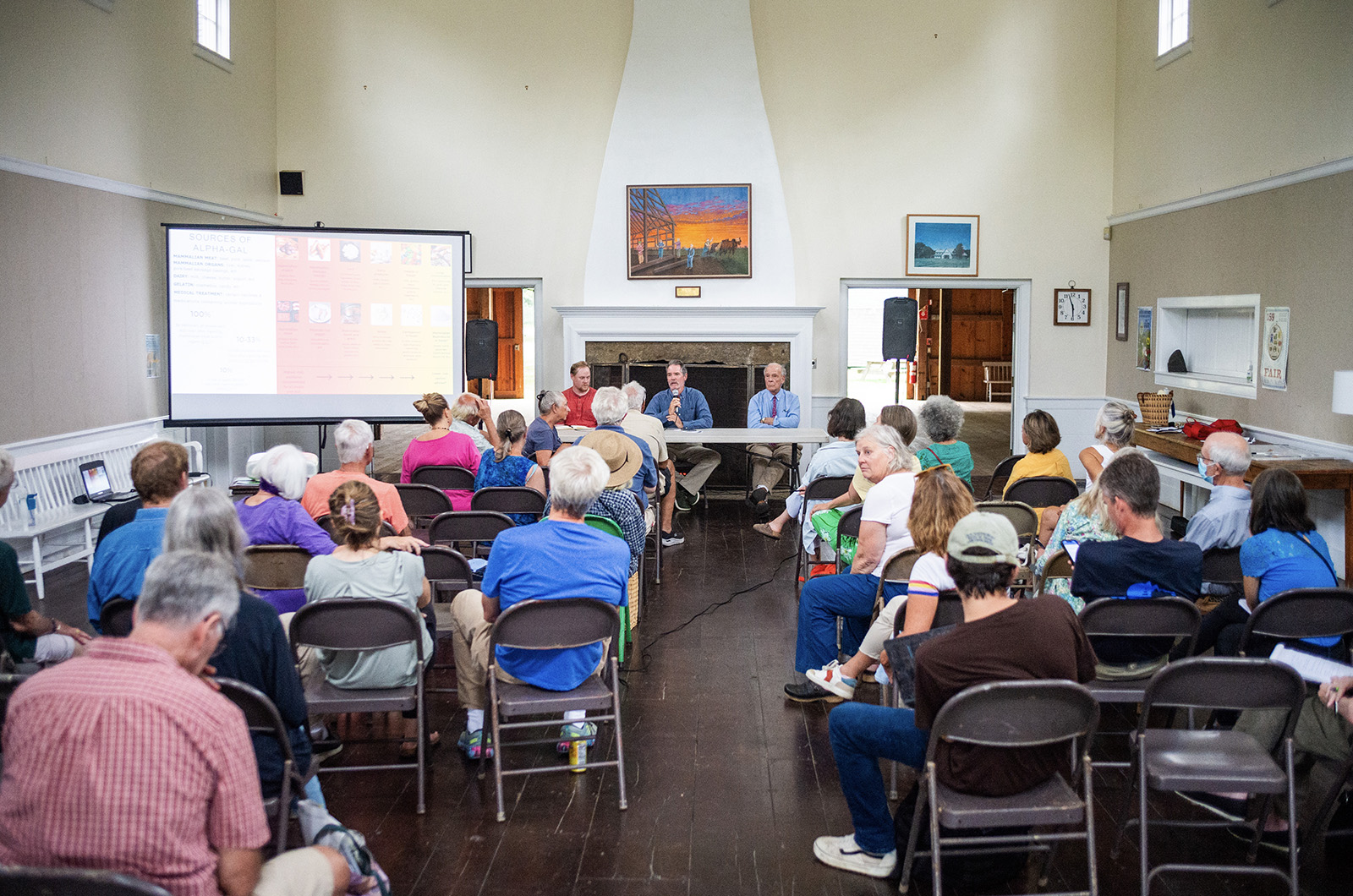
The alpha-gal support group met for the first time last Wednesday, July 17 at the Agricultural Hall in West Tisbury. More than three dozen Islanders affected with the condition gathered with local tick and allergy experts to discuss doctors’ best understanding of the perplexing condition, and what those affected can do to minimize health risks.
Public health nurse Amelia Hambrecht and Island tick expert Patrick Roden-Reynolds started organizing the support group last summer, after hearing from more and more Islanders who wanted regular, reliable information.
“Alpha-gal being relatively new to the medical community… there wasn’t much support out there as far as tips or guidance of what to do, or a community of folks going through the same thing [as you],” Mr. Roden-Reynolds told the Gazette.

Patrick Roden-Reynolds tells people about the alpha-gal, which is spread by lone star ticks.
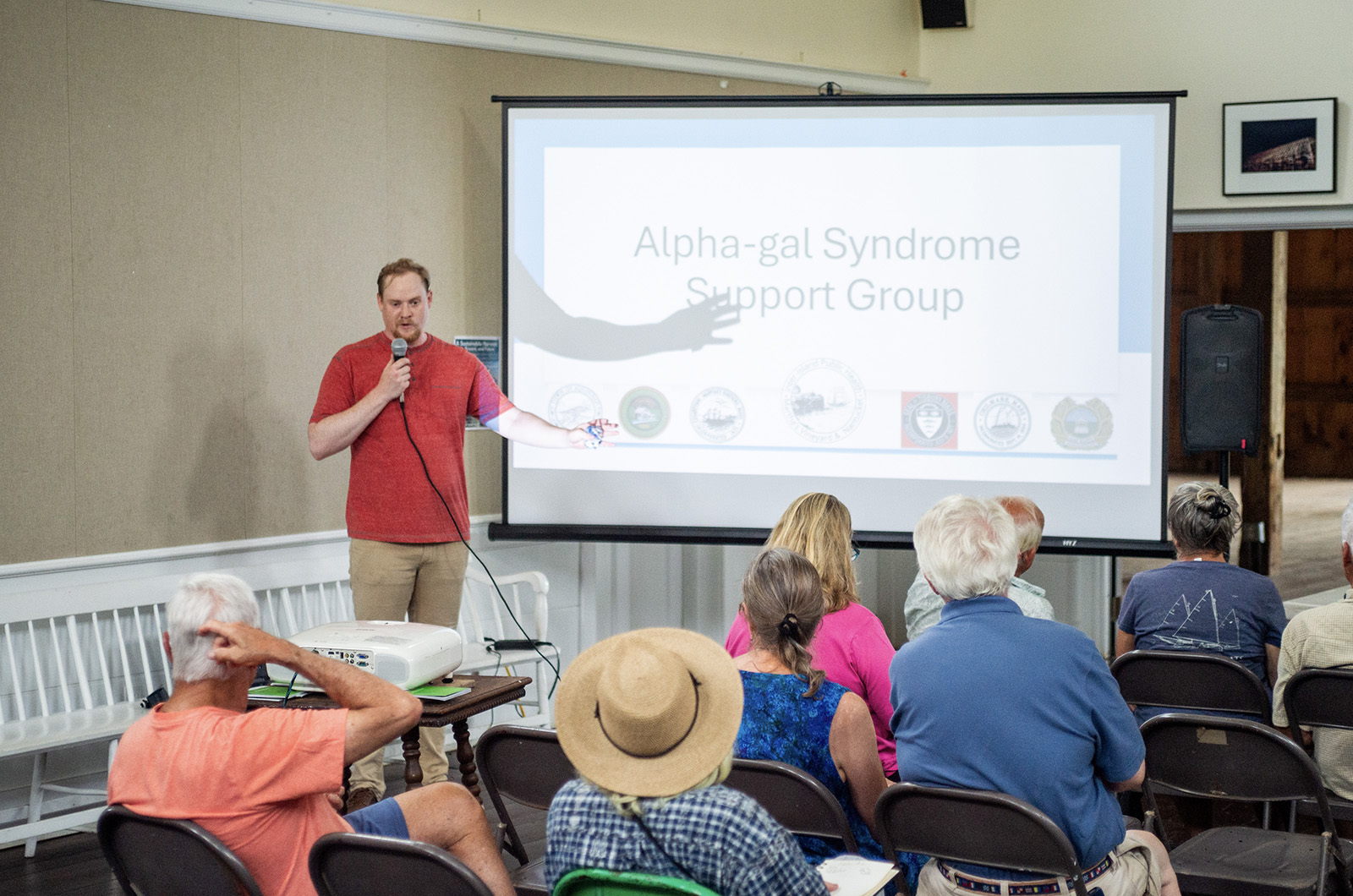
Patrick Roden-Reynolds tells people about the alpha-gal, which is spread by lone star ticks.
Unlike other tick-borne illnesses, alpha-gal isn’t caused by bacteria or a virus. Instead, it happens when a lone star tick bites someone, and their body triggers an immune response to the alpha-gal carbohydrate.
Usually the human body has no response to the compound, which occurs naturally in red meat. The next time the human body encounters that carbohydrate, that immune response kicks into overdrive, leading to an allergic reaction that can involve respiratory and digestive symptoms and, in severe cases, life-threatening anaphylaxis.
Since alpha-gal is an allergy, “there’s no real treatment other than avoiding things in your diet,” Mr. Roden-Reynolds said.
Mr. Roden-Reynolds opened last week’s support group with a brief discussion of tick behavior and ecology on Martha’s Vineyard. Lone star ticks, once only found at the edges of the Island, are now in every town.
With the tick spreading, the number of alpha-gal cases has risen, said Island allergist Ed Caldwell and physician Gerry Yukevich.
“I have over 250 in my practice who have diagnoses of alpha-gal sensitivity,” Dr. Caldwell told the group.
Nurse Amelia Hambrecht started organizing the new support group last summer.
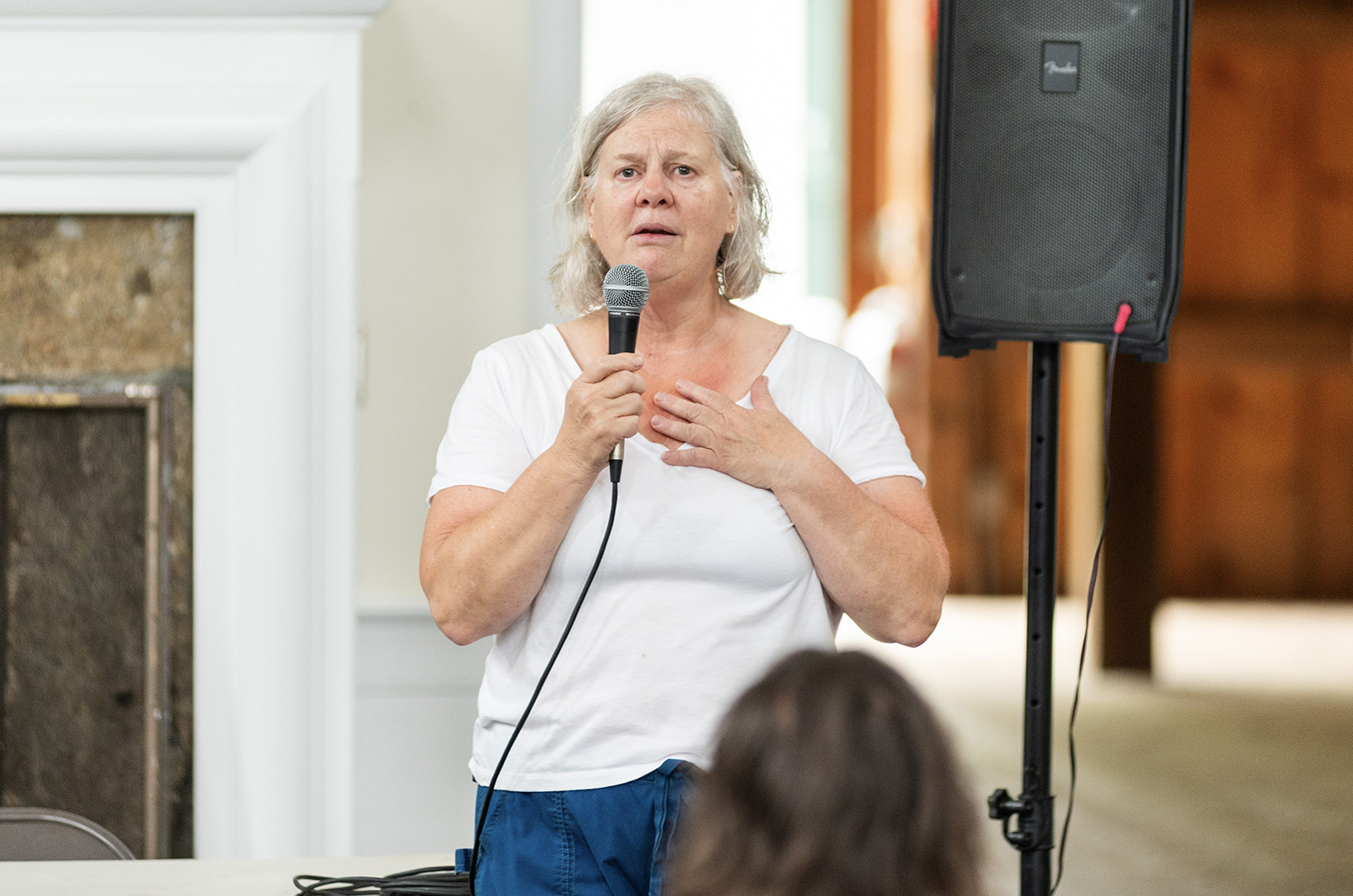
Nurse Amelia Hambrecht started organizing the new support group last summer.
Across those patients, he has seen a wide range of sensitivity to alpha-gal. Some patients suffer from prolonged, intense sensitivity to nearly all mammalian products, down to the gelatin used in medicine capsules, Dr. Caldwell said. For other patients, sensitivity to alpha-gal can wane within a year.
“We get about 60 per cent of our propensity to be allergic from our genetics . . . If you are predisposed to allergy, particularly food sensitivities, you’re probably going to be at an extremely high risk of developing sensitivity,” Dr. Caldwell said.
Some may repeatedly find lone star tick bites and never develop a sensitivity, he said.
As research on alpha-gal progresses, these understandings could change, Dr. Caldwell noted.
Discussion at the support group ranged from questions about what food and medications were safe for those with alpha-gal to what could be done in Island schools to accommodate kids with alpha-gal.
The last five years have seen an explosion of alpha-gal syndrome on Martha’s Vineyard. As of mid-July, 149 people have already tested positive for alpha-gal syndrome at the Martha’s Vineyard Hospital this year.

Dr. Edward Caldwell.

Dr. Edward Caldwell.
In 2020, the hospital recorded just two confirmed cases of alpha-gal sensitivity. By 2022, that number had jumped up to 77. In 2023 it had doubled from the previous year.
Case numbers from the hospital likely underreport the total number of alpha-gal cases contracted on the Island, as summer visitors may contract the illness here and only receive testing or diagnosis when returning from vacation, experts said at Wednesday’s support group.
Ms. Hambrecht said that the group’s first meeting was a success, with strong attendance and nearly two hours of constant discussion.
“We’re thinking of meeting monthly, and we want to do different formats every month,” she said. “A panel like we had this month, maybe a cooking class a different month.”
Ms. Hambrecht also hopes that future meetings will be available over Zoom as well as in person.
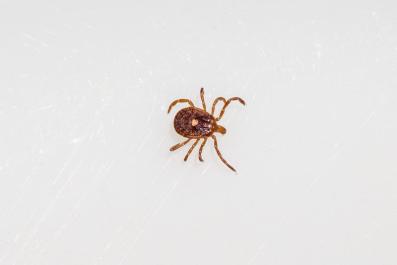
The lone star tick, pictured here, gets its name from the bright white spot on the back of adult female ticks.
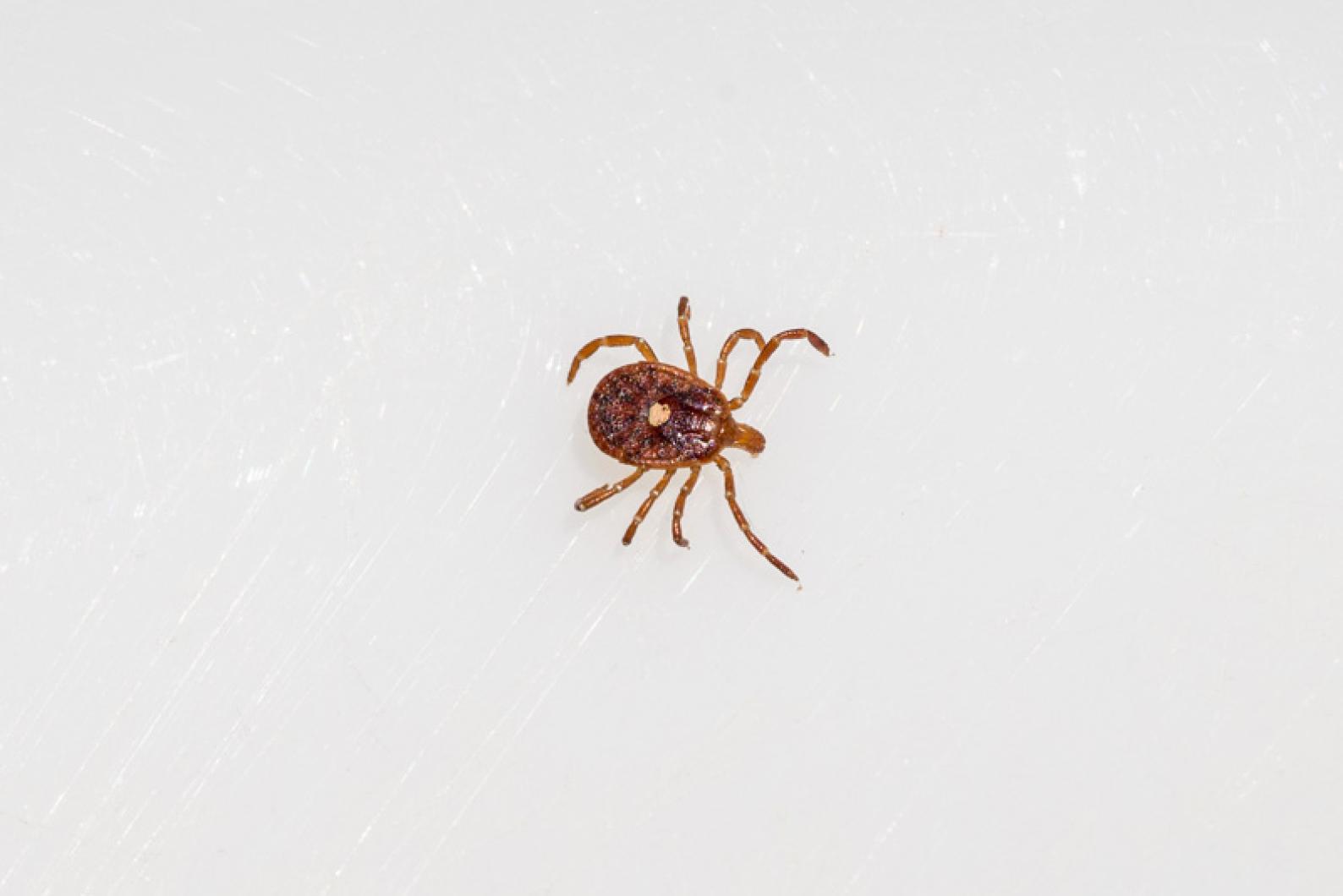
The lone star tick, pictured here, gets its name from the bright white spot on the back of adult female ticks.
Island resident Adriana Stimola, who attended the first meeting of the support group, said she heard about the support group from a family friend. She, her husband, and her two children all have been diagnosed with alpha-gal, she said.
“The organizers are really committed to figuring out what the group needs to be to serve the community,” Ms. Stimola said. “That was the most exciting aspect of it for me.”
Ms. Stimola hoped that future meetings could continue to discuss the science of the syndrome while working to “find some camaraderie in what is otherwise a pretty isolating experience.”
“Honestly, they should do an alpha-gal pot luck,” Ms. Stimola said. “I’m going to get really bored of chicken.”
Comments
Thank you for covering this
AlissaThank you for covering this condition. It is a major health threat on the island and in much of the U.S. Awareness is key in prevention and living with it. It is so much more than "the red meat allergy". Many people with this condition cannot eat in most restaurants, take most mass produced medications and supplements, or use common laundry, household, and personal care products. Mammal products, byproducts, and the alpha-gal containing seaweed called carageenan, are added to so many common things we use and eat every day. Living with this condition is a major hassle. I see a family member struggle with the hassles and added costs and lack of spontaneity this condition causes. Widespread awareness will help everyone.
Many restaurants are using
Sandra K. Rodkey, DVM PennsylvaniaMany restaurants are using the deep fryer to cook pork ribs, bacon, hotdogs and other pork products with the french fries. It used to be that the deep fried foods were safer to eat. In recent years I would have a reaction after eating out only to learn later of this unsafe practice was the source. Is there anyway to let the restaurant industry know that this is just as dangerous as throwing shellfish into the basket of fries? Also, make sure that the pie that you eat for desert is not made from lard. Thank you for helping to let the public know about this condition. It is life altering when it comes to dining out and with certain medications. Always let your doctor know that if the medication is in capsule form and you have alpha gal syndrome that you will need vegetarian/vegan capsules. Regular capsules can be made with animal gelatin.
Terrific article. Is there a
Betsy Oak BluffsTerrific article. Is there a emailing list we can get on to be notified of these meetings? I would have liked to attend but it never got on my radar.
I was one of the two in 2020.
Andrew Keenan EdgartownI was one of the two in 2020. I'm glad this is finally getting the attention it deserves. This allergy truly changed my life and the life's in my family as they have to be diligent about cross contamination within the house. Although my reactions aren't as severe as they were initially, I am still reactive 4 years later. As the article stated, this is not an illness and there is no treatment other than knowledge and awareness of what you are eating. Your best bet is not being bitten which is difficult, especially if you work outdoors like I do. Hopefully as awareness of the public and medical professionals increases, and more people unfortunately contracting this allergy, money and research will follow and some treatments will come about. Until then, beware and take precautions. Thank you for covering this public health crisis and please continue to do so.
I am recently diagnosed with
Christine Napolitan West TisburyI am recently diagnosed with alpha- gal, and I would love to be on a mailing list for new information, or new meetings. It’s hard to live with, and I’m a trained chef, but one wants to be able to dine out, as well. Shocking to hear that you could go out and order ( safe) sushi and end up sick from the fumes from cooking a hamburger or pork chop.
About 10 years in..,please
Sharlene smith Norton maAbout 10 years in..,please help spread awareness—- thank you!!!
Add new comment