


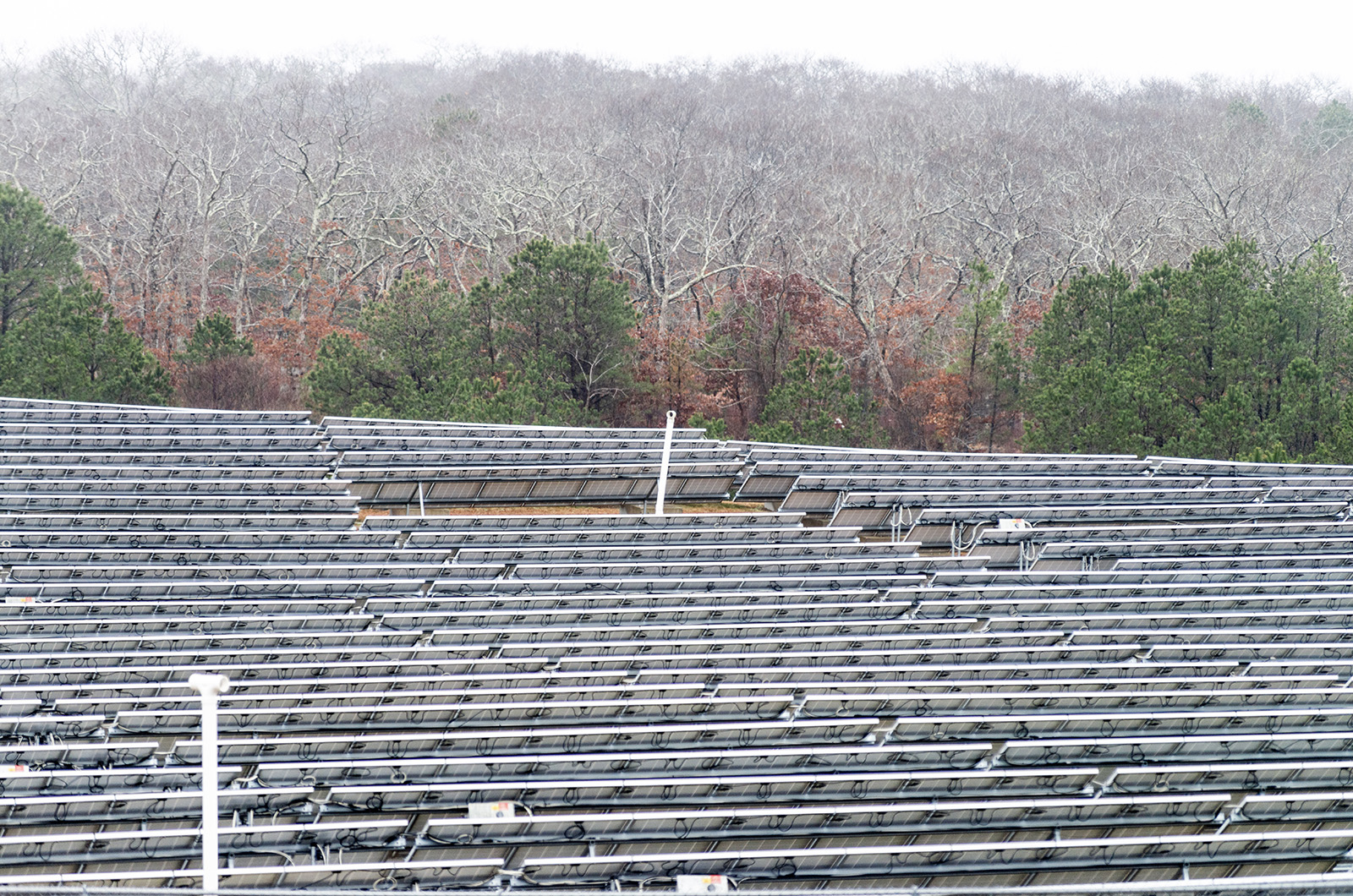
Since 2022, Eversource has been telling customers on the Vineyard that the utility company cannot take on any solar projects larger than 15 kilowatts — and in some instances 25 kilowatts — while it plans to beef up a Falmouth substation that services the Island.
When Island Housing Trust planned its Kuehn’s Way affordable housing neighborhood in Vineyard Haven, the nonprofit developer designed the homes to be able to have solar panels to offset residents’ electric bills.
The development was completed in 2022 but two years later the roofs in the neighborhood are still without the proposed 140-kilowatt system. It is just one of many commercial and residential solar projects on Martha’s Vineyard caught in a holding pattern as Eversource and the state Department of Public Utilities consider upgrades to the region’s electric infrastructure.
Since 2022, Eversource has been telling customers on the Vineyard that the utility company cannot take on any solar projects larger than 15 kilowatts — and in some instances 25 kilowatts — while it plans to beef up a Falmouth substation that services the Island, as well as other stations across southeastern Massachusetts.

Solar is seen as essential to meeting state climate goals.
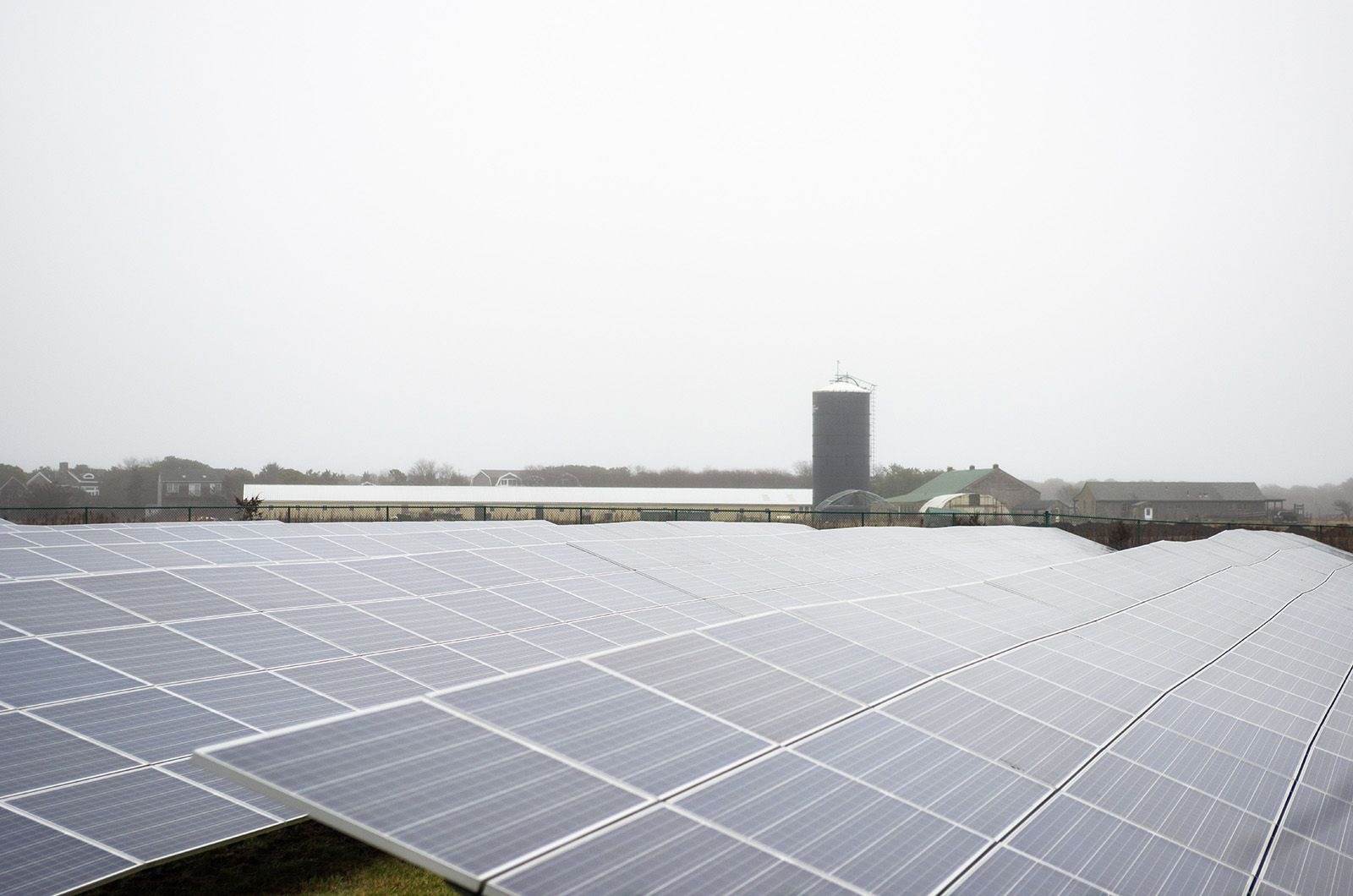
Solar is seen as essential to meeting state climate goals.
Eversource initially pitched upgrades to distribution lines and transformers across the Cape to the Department of Public Utilities in April 2022 and they continue to be reviewed with no deadline in sight.
For Vineyarders hoping to generate solar power and send it back to the grid, the wait has been frustrating. It has also made it harder for the Island to meet local and state renewable energy and climate goals.
“It’s been disappointing,” said Philippe Jordi, executive director of Island Housing Trust. “I suspect it’s still going to happen, but my understanding is there’s no timeline.”
In addition to the Kuehn’s Way project, Edgartown’s plans for a massive solar farm at the Meshacket landfill are on hold in Eversource’s unmoving queue, as well as several private projects.
“Until those [upgrades] happen, we can’t put in any substantial solar arrays,” said Kate Warner, regional energy planner at the Martha’s Vineyard Commission.
The underlying cause of the backup, according to Eversource, is the Cape’s current inability to handle any more power from projects that want to send electricity into the grid. The grid was designed initially for a one-way flow of power to customers.
To increase capacity for bi-directional power, Eversource wants to do hundreds of millions of dollars of upgrades across southeastern Massachusetts, triggering a broad review from the DPU and potential changes to how those improvements are paid for.
Currently, if a person wants to build a solar array, they also have to pay for any upgrades to the electric infrastructure that are needed. For instance, if a new transformer was needed to handle a solar array, the person behind the project would be on the hook for the cost.
Instead of project developers shouldering all the initial costs, Eversource is now proposing shifting some of it onto the region’s ratepayers. The utility’s predictions for the Cape Cod improvements would add about 26 cents onto a ratepayer’s monthly bill, or about .11 per cent, and cost solar developers $357 per kilowatt.
Both the infrastructure upgrades and the new cost equation proposals need to be approved before the queue can get moving again.
“This work will take significant time, but it is required to ensure that the electric system can handle solar project interconnections and meet the electrification and clean energy development goals set by the state,” Eversource spokesperson William Hinkle said in a statement.

The roofs at Kuehn's Way were planned to have solar panels, but an extended review with the DPU has the project on hold.
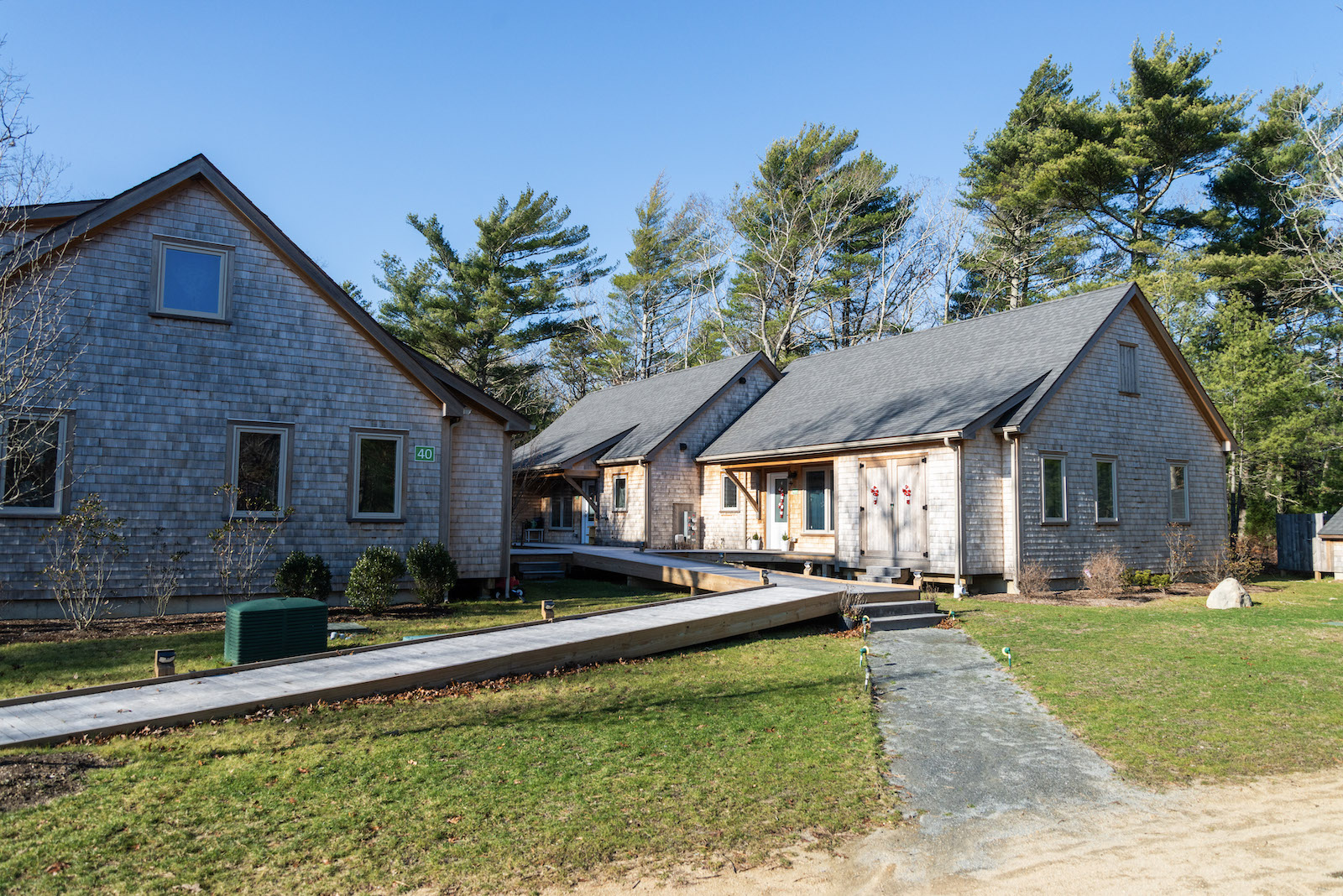
The roofs at Kuehn's Way were planned to have solar panels, but an extended review with the DPU has the project on hold.
In a statement to the Gazette, the DPU said it is carefully reviewing Eversource’s plans, in part, because of the change in how upgrades are paid. The extensive review is done to ensure greenhouse gas reductions are carried out in an equitable, safe and affordable way.
The DPU could not give an estimated length of time for its decision-making process.
“The DPU remains committed to moving the process forward to issue orders for [capital investment project] currently pending before the DPU — including the Cape Cod proposal — as soon as possible,” a spokesperson said.
Several solar installers on the Island said the ongoing backup has been an annoyance, and even larger residential projects are affected as the Island waits for the DPU’s decision. The 15-kilowatt threshold was once deemed large, but the rising prevalence of electric heat pumps and vehicles means it’s not unheard of for private citizens to need such a system.
“Effectively any town, commercial and many residential systems can’t be installed right now,” said Rob Meyers, director of energy technology at South Mountain Company, an Island-based developer. “It’s a big drag.”
To get some customers up and running, Mr. Meyers has had people decrease their system size to under 15 kilowatts, or set up systems that don’t send electricity back into the grid. Those systems can later be expanded and changed to export energy at some point in the future when the de facto moratorium is lifted.
“It’s definitely not ideal,” he said. “It’s not a value to the system or the grid.”
David Smith, director of operations at Fullers Energy, has had about five projects held up for more than a year.
“It’s almost like they are holding us hostage,” he said.
Mr. Smith has reached out to Eversource, the government and others to get a sense of when things might get moving.
“Unfortunately, there is no real course of action for us other than waiting,” he said. “We’ve actually designed systems just under that number to get people going.”
Other entities have weighed in on Eversource’s proposal, including the advocate Cape Light Compact, Cape & Vineyard Electric Cooperative and the state’s attorney general’s office.
The attorney general’s office argued for changes to Eversource’s proposed capital investment project, saying the utility’s cost allocation doesn’t assign costs based on expected benefits, producing inequity.
Both the state Department of Energy Resources and Cape Light Compact urged the Eversource plans to be approved, saying it could hurt customers on the Cape and Vineyard.
Getting solar projects that can send energy back to the grid, known as distributed energy resources, is a huge piece of moving towards the state’s climate goals. Without approving the plan, getting those systems on Cape Cod and Martha’s Vineyard “will screech to a halt,” Cape Light Compact wrote in testimony to the DPU.
Massachusetts has committed to reducing its greenhouse gas emissions by 85 per cent in 2050, and Cape Light Compact power supply planner Mariel Marchand said Eversource was banking on the Cape Cod substation improvements as part of that.
“We’re going to need solar to get interconnected,” she said. “If not, what’s the alternative?”
Comments
We have a Governor who's very
Carol Lampson Yarmouth PortWe have a Governor who's very interested in meeting our climate goals. That's who everyone should be complaining to. The DPU is almost entirely appointed by Charlie Baker - less friendly to distributed solar generation. They need to be pushed.
Yes, I'm sure it will require
Chappy Guy ChappyYes, I'm sure it will require utility Capex to handle the increasing amount of energy coming into the grid from distributed PV systems, but I believe a sizable amount, if not the majority, of historic utility Capex has been dedicated to expanding peak hour demand needs, which distributed solar directly offsets. The point is that continued growth in distributed solar does require infrastructure investment by the utilities, but it's an entirely different - and potentially wildly inaccurate - thing to say that this is incremental spend by the utilities. Viewed in this light, the apparent conflict in play here should not exist to such a degree. In fact, my experience has been that municipal utilities do not have these issues, as there is 100% alignment of incentives among the owners and users of the grid. The island's hyper-seasonal demand patterns would seem to make a MVY municipal utility more difficult to establish, but it's something to consider. There's a LOT of state forest that could support a LOT of MW of PV arrays.
OMG...here we go!
SN MvOMG...here we go!
There is so much wrong that
Bob EdgartownThere is so much wrong that goes on with these solar projects. If you are wealthy enough to be able to afford solar panels, and then you are entitled to tax credits and rebates that’s all good for you. But as you can see everyone utility bill pays for this And something is wrong with me having to pay higher utility bills so that My Neighbour can have lower utility bills.
41 Massachusetts communities
Mary Chilmark41 Massachusetts communities have municipally owned electric companies and we could too.
Add new comment