

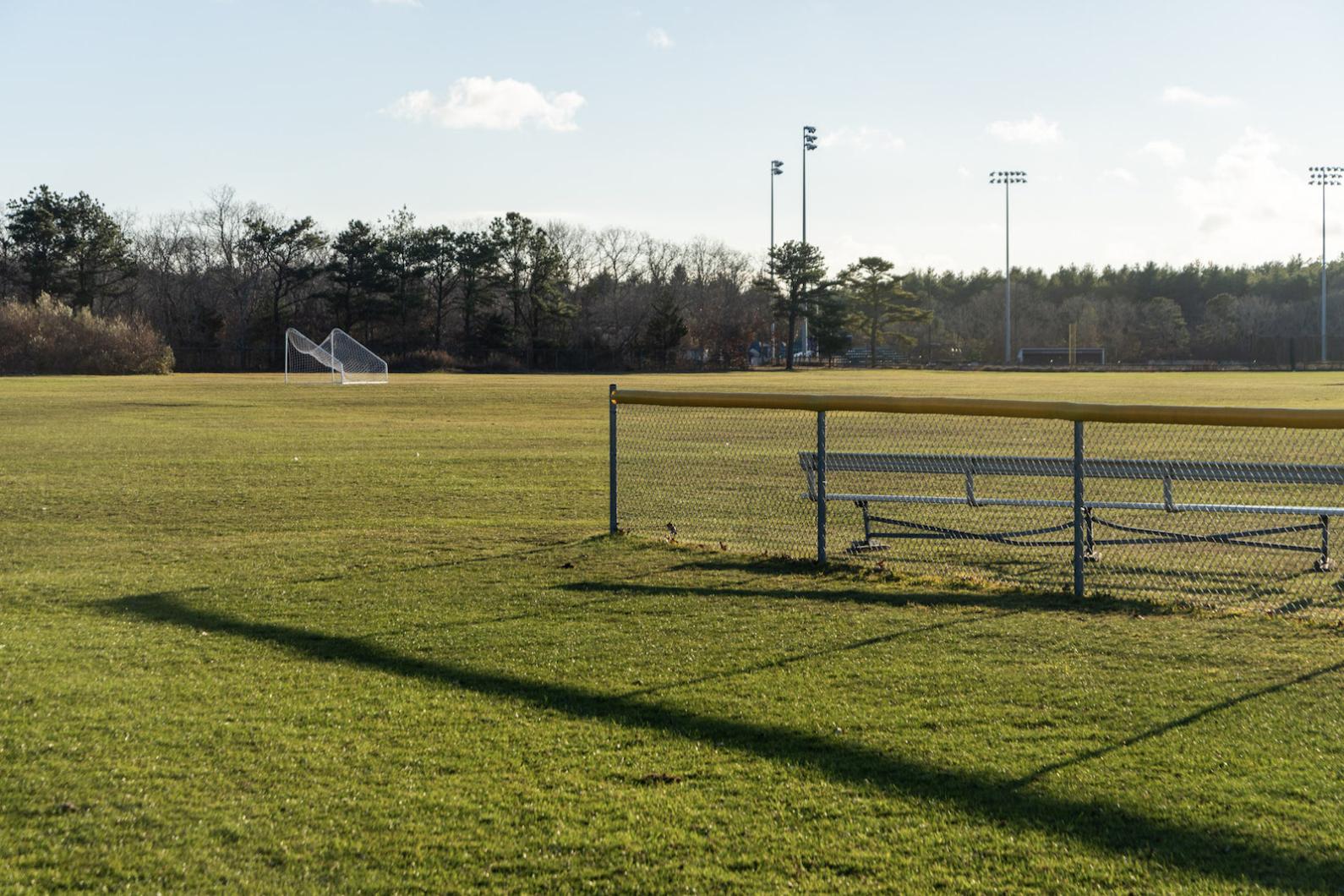
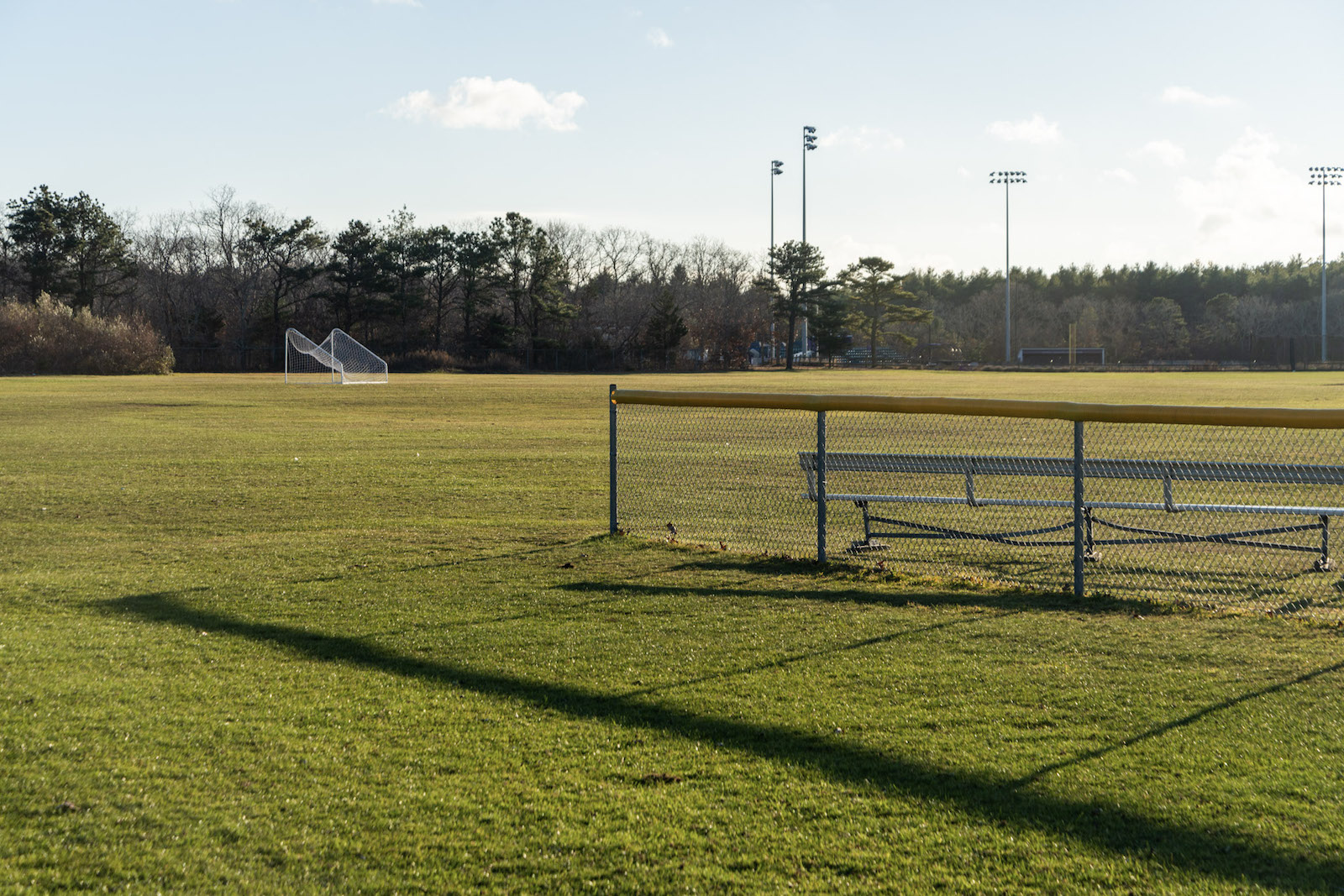
The West Tisbury select board voted to put a non-binding referendum question about the playing field surface at the regional high school on the ballot for the town’s spring election.
Voters across the Island may have a chance to weigh in on their preferred playing field surface at the planned new regional high school athletic facility.
The regional high school committee last month voted in favor of asking the six Island towns to put a non-binding referendum question on the annual ballots this year. On Wednesday, the West Tisbury select board was the first board to place the questions on the ballot for the town’s spring election.
The proposal was floated by Jeffrey (Skipper) Manter, a member of the high school committee and a West Tisbury select board member.
“It gives people the opportunity to express their opinion,” Mr. Manter said at Wednesday’s select board meeting.
West Tisbury put two questions on the ballot. One asks if the athletic surface of the track and field project should be made of synthetic turf. The other asks if it should be natural grass.
Town administrator Jen Rand said the language would be tweaked slightly on the final ballot, but the gist would remain the same.
The planned turf field at the high school has been divisive, but was approved by the Martha’s Vineyard Commission in 2021. The Oak Bluffs planning board denied the school committee’s application in 2022 over water quality concerns, but a judge later ruled that the planning board did not have jurisdiction over the project.
The non-binding questions on the West Tisbury ballot will only poll voters about their preferences. Non-binding questions do not require officials to act and in this case could not mandate a change to the planned new artificial turf field at the high school.
Mr. Manter reasoned that getting people’s thoughts on the project could only help school leaders, and there had never been an official Island referendum on the controversial field.
But other school committee members questioned the need to poll people on plans that had already been approved by the Martha’s Vineyard Commission, an elected Islandwide body.
“This has been debated to death....We’re in the permitting process, when the funding comes in it’s time to build,” said Louis Paciello.
So far, only West Tisbury has placed the non-binding questions on its ballot.
School officials got the wheels turning on the project, submitted an application to the Oak Bluffs building department in December to begin preliminary work at the high school field. The school will also need to get a renewed approval for the field from the Martha’s Vineyard Commission, because their previous approval has expired.
Comments
Maybe the considerations of
Rex Jarrell West TisburyMaybe the considerations of this project have not been complete, and consensus or something respectfully approaching a consensus can be had by polling our island community.
Many factors have played into the delays.
We live in a community that isn’t easily managed at the regional level - though previously we have agreed that there’s good reason to conserve the lands and waters, and community; as the responsibility of one island-wide population, plus Cuttyhunk Island whose students have attended MVRHS.
The MVC does have jurisdiction in this matter. It has been better informed through community engagement and feedback over time, and, as noted in the final line of this article, “approval has expired.”
A great community asset we can continue to endow is a non-partisan respect for the basics of island life we all hold dear.
Perhaps the benefit of this protracted debate and process around the MVRHS Fields Development is a movement towards whole community awareness in our perspectives: as potentially compiled for consideration at the Commission, i.e. facilitated democracy.
From the MVC website:
“The Martha's Vineyard Commission Act, Chapter 831 of the Acts of 1977 – officially An Act Further Regulating the Protection of Land and Waters of the Island of Martha's Vineyard – was adopted on December 21, 1977, outlining the Commission’s planning and regulatory functions.
Planning: The MVC’s planning jurisdiction extends to all seven towns of Dukes County. (The Commission's planning jurisdiction includes the Town of Gosnold.) The Commission is one of Massachusetts’ fourteen regional planning agencies, which help the communities within their jurisdictions plan and implement short- and long-range improvements with respect to transportation, economic development, the environment, land use, and community development.”
Add new comment