

Three bad storms, back-to-back. Severe erosion. Major flooding. It’s time to start talking about managed retreat from the coast.
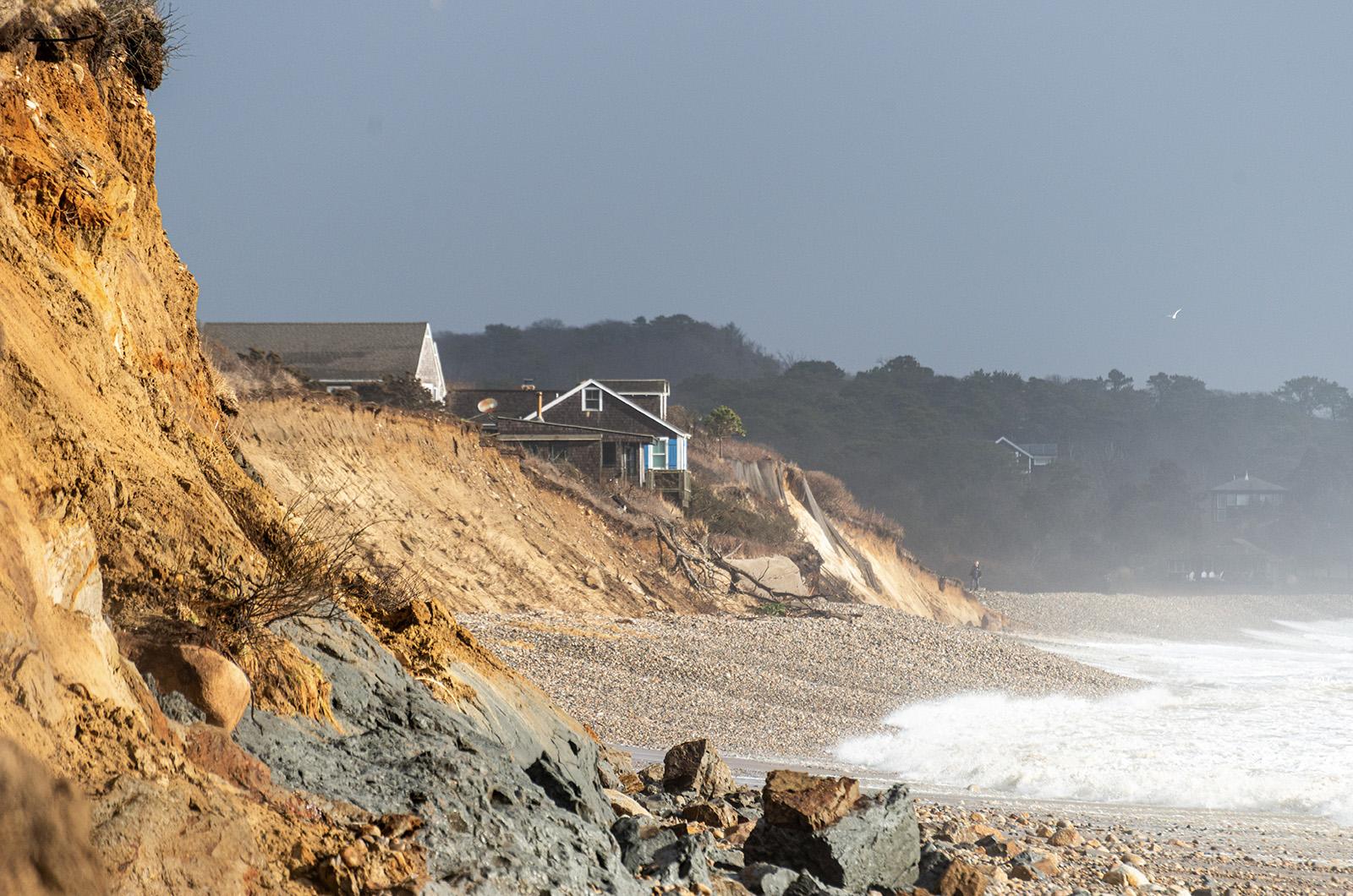
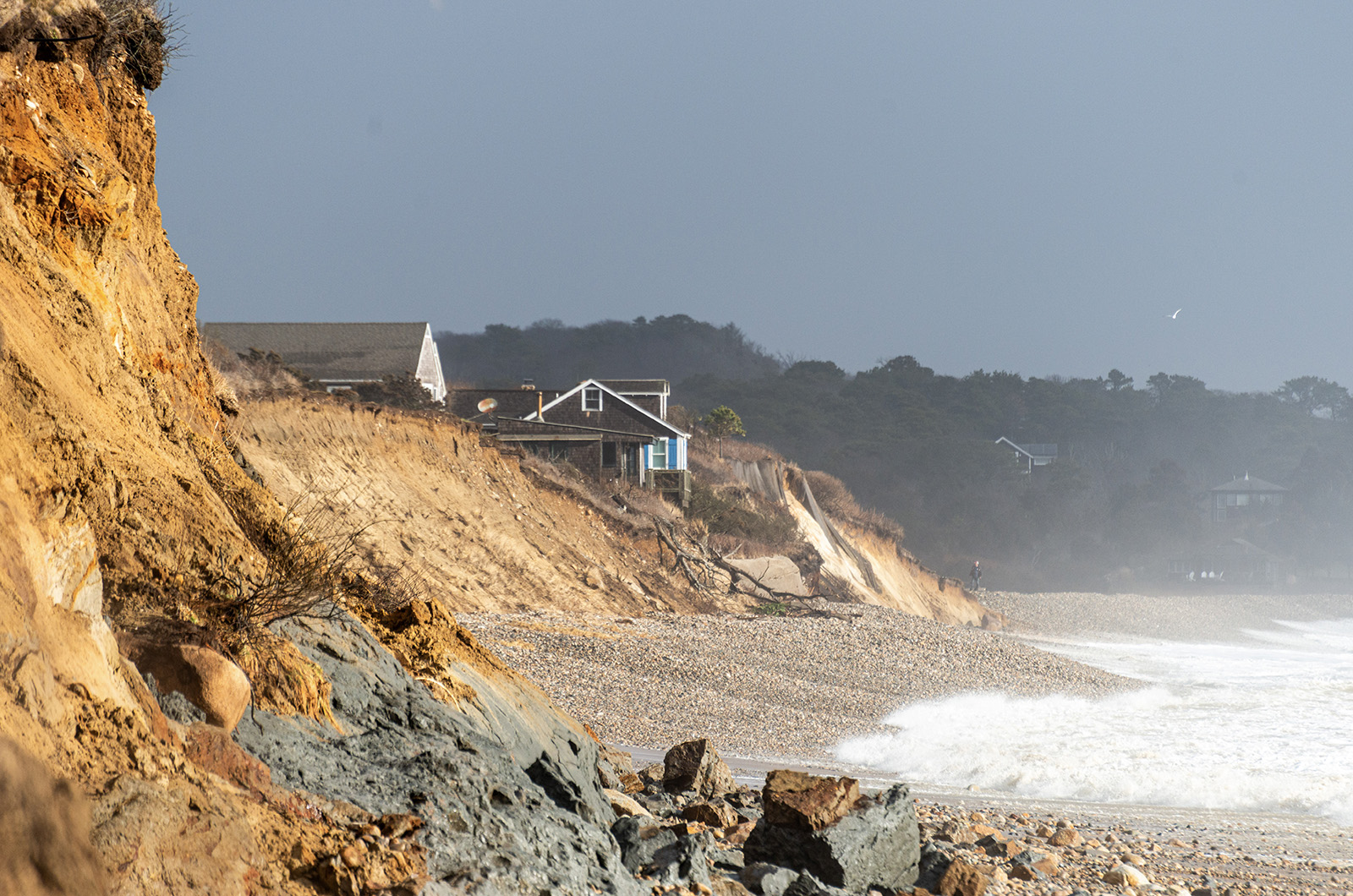
Three bad storms, back-to-back. Severe erosion. Major flooding. It’s time to start talking about managed retreat from the coast. Retreat is not a dirty word. It’s not a form of defeat, a word Americans tend to associate it with. Rather, as an Island community faced with a rising sea, retreat from the coast is the smart thing to do.
Someone once observed that when land and water wrestle, the water always wins. Managed retreat means getting out of harm’s way.
It means different things in different locations. Moving the Gay Head Lighthouse back from an eroding bluff is an example of managed retreat.
Saying goodbye to damaged or threatened buildings, sadly, is another form of retreat. Yet building close to the ever-shifting shore was never a good idea. It puts property owners, the public and first responders at risk, especially as we experience more extreme weather.
Flood zones are so named for a very good reason — they flood. We are seeing increased flooding as storms become more frequent and, as the sea rises, storm surges get bigger and cause more water to wash ashore.
Raising low-lying buildings to protect them against flooding is a common practice, but what happens when you’re stuck in your home or business, sick, in need of an ambulance, and the road below you is flooded? It’s time to think about moving out of the flood zone.
Matthijs Bouw is the founder of One Architecture and Urbanism, an Amsterdam and New York-based design and planning firm that is a leader in design for climate change adaptation. Mr. Bouw is from the Netherlands, a low-lying country with centuries of flooding experience.
Mr. Bouw spoke on the Island a few years ago and had this to say about stormwater and flooding: channel the water where you want it to go, involve people in the solution and improve the economic value of the site.
Imagine low-lying, flood-prone areas free of buildings. In their place are public parks, open to all, that act as stormwater retention areas during storms. The rest of the time, for now, the public has increased access to the coast. This will draw people to the towns and once there, they will spend money.
Ah, money; it always comes down to that. The local economy will be affected whether we plan for coastal retreat or not. Towns will lose property tax income when coastal buildings are lost. Yet moving away from the shore will decrease the growing cost of emergency response and storm damage repair. It will protect all of our health and safety.
How do we start planning for retreat from a shrinking coast? A StormTide Pathways mapping project shows where flooding will occur now, and in the future, based on total water levels. Flooding is predicted in real time on the maps by the National Weather Service at stormtides.org. Funded by a MA Coastal Zone Management grant, StormTide Pathways is a valuable tool both for first responders and the public during storms and for longer-term coastal planning.
Right away, we should stop allowing new development in the flood zone. Why make a bad situation worse? And we should talk about managed retreat, get it out in the open. It’s about all of us, together, seeking a sustainable future.
Liz Durkee is the climate change coordinator for the Martha’s Vineyard Commission. She lives in Oak Bluffs.
Comments
Well said, Liz. All of us
Chris Kennedy Provincetown, MassWell said, Liz. All of us who live on the coast, whether its an island or a peninsula, need to realize that sea level rise is real, sand and stones will only delay the inevitable and the only answer is to plan ahead. What parts of our communities are a priority? If we lose a road to the sea, what is the alternative route and for our downtown economic areas how can we mitigate the inevitable rise of our harbors? We don't have a lot more time to debate the issues. The tides are rising. Thanks again Liz for this reminder.
This makes so much sense.
Rex Jarrell West TisburyThis makes so much sense.
I agree.
Thank you.
The old whaling captains had
Adelaide Kent New York CityThe old whaling captains had it right. Those beautiful houses in Edgartown are well away from the water.
Thank you, Liz.
Bill McGrath Oak BluffsThank you, Liz.
We'll need a tsunami to stem the tide and effect change.
Retreating, regrouping, and recasting the narrative are huge challenges.
We'll need voices like yours in every sector, and as importantly, courage to support new perspectives with dollars and action.
Bless you
There is no need to retreat
Aaron EdgartownThere is no need to retreat when we have the engineering skills and resources to build higher and better in the same locations. Those with the resources to do so should be free to do so, and towns should gladly rebuilt their beaches because if the public waterfront land erodes away the shore will be all private. For example, the county and state owned beaches at Wasque have eroded away and the beach front is now owned by the Trustees.
"Edgartown will be a swamp in
Enough Already Oak Bluffs"Edgartown will be a swamp in 50 years — even if the most conservative projections about rising sea levels are correct." So states a study from 1998 and reported on by this newspaper. Twenty six years in and look at all the properties downtown that are under water and rapidly becoming a swamp! Remember the old Harborview Hotel, just a few sticks popping above the waterline now. So far Town Hall has been saved by the new breakwater but honestly how long can we expect that to last.
https://vineyardgazette.com/news/1998/08/28/study-global-warming-predic…
Well said. And yet weekly, as
Amy EdgartownWell said. And yet weekly, as we look at the different town legal notices in this very paper, there are constant requests, and usually approvals, to construct pools/ guest houses etc within the inland zone of the coastal district.
There is nothing singular in
Edwin Fry NY / Chappy visitorThere is nothing singular in what you face, but a thoughtful and forthright approach would be singular since not many seem capable of such. None of us, no matter where we live, are immune from the effects of this climate revolution. Ms Durkee is proactive, impelled to use what time we have productively. That's leadership, the difference between success and calamity. I hope folks are listening.
Add new comment