


Dry conditions, flammable native plants and encroaching development make the state forest at the heart of Martha’s Vineyard highly susceptible to wildfire, and officials are urging homeowners to help mitigate the risks.
Dry conditions, flammable native plants and encroaching development make the state forest at the heart of Martha’s Vineyard highly susceptible to wildfire, and officials are urging homeowners to help mitigate the risks.
Following recent wildfires in Hawaii and across the continent, the Island is now ramping up fire planning and prevention efforts aimed at decreasing the chance of an out-of-control wildfire here.
“These catastrophic fires . . . happened in areas where we don’t typically see them making the headlines every year,” said David Celino, chief fire warden for the state Department of Conservation and Recreation, which manages the 5,200-acre Manuel C. Corellus state forest. “It really is a reminder that it can happen anywhere.”
A countywide wildfire prevention plan adopted by the Martha’s Vineyard Commission gives local firefighters and planners a blueprint for the path ahead. State officials, in collaboration with local fire departments, have also doubled down on mitigation measures, increasing prescribed burns and brush-cutting to prevent forest-fires, and upping public outreach efforts.
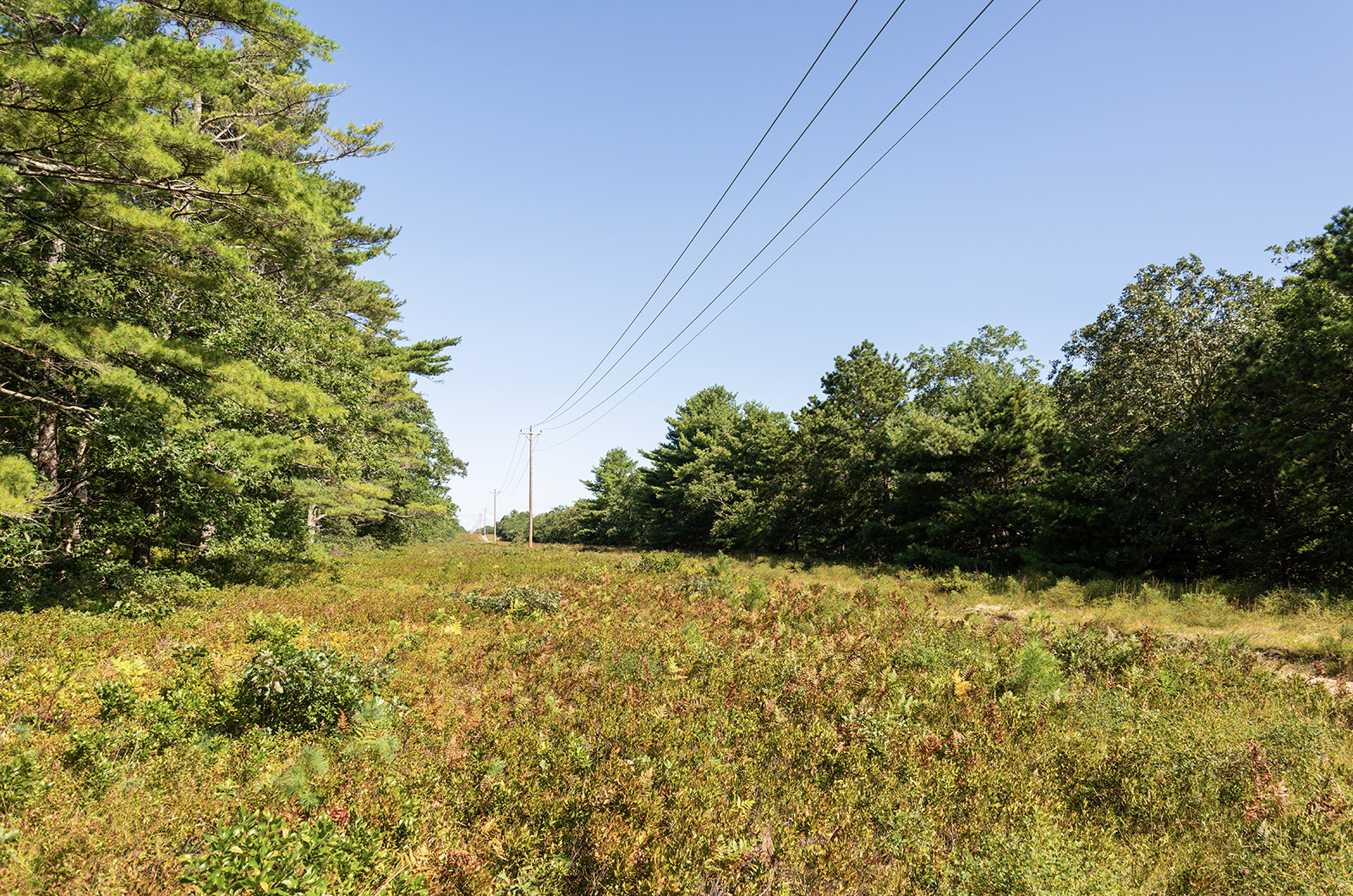
Though Martha’s Vineyard has largely steered clear of major wildfires in recent decades, much of the Island’s natural landscape is flammable. Most volatile are the sandplain barrens filled with scrub oak and pitch pine, constituting much of the state forest, as well as other areas to its south.
Wildfire is built into the ecology of some Island ecosystems, which depend on periodic burning to create habitat for rare, sandplain-adapted species.
Native shrubs like blueberry and huckleberry produce resins which encourage fire, while the scrub oak grows drier, more flammable foliage that contributes to higher, more aggressive flames.
Fire officials have ramped up prevention efforts.
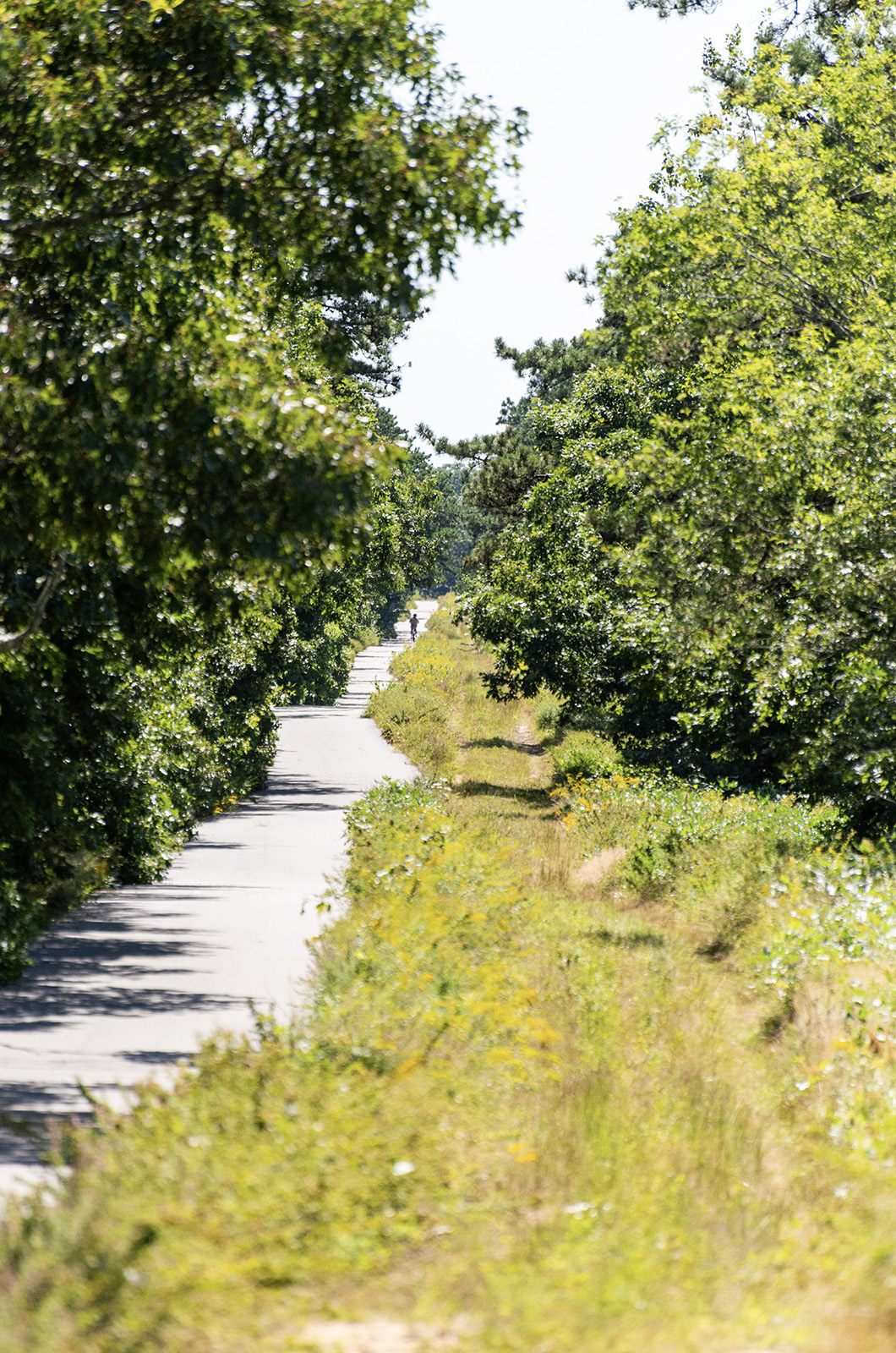
Fire officials have ramped up prevention efforts.
“Indigenous people use burning to maintain habitats for food and other reasons,” said Karen Lombard, the state director of stewardship & restoration for the Nature Conservancy, which conducts controlled burns on-Island. “But as we’ve gotten more and more people across the landscape, it’s hard to have that occur.”
In the early 20th century, the Island was no stranger to uncontrolled wildfires. In 1916, somewhere between 11,000 and 13,000 acres of habitat was burned, possibly contributing to the extinction of the heath hen. Two fires in 1930 and 1935 burned 9,000 acres in Oak Bluffs and Edgartown.
By the 1930s, efforts were underway to make the state forest more fire resilient. The first fire lanes were cut to provide better emergency access and create breaks in the vegetation to prevent the unmitigated spread of fire.
Those lanes have expanded considerably over the years, requiring frequent maintenance.
In the last two decades, climatic and environmental trends have further increased the risk of wildfire on-Island, and increased the burden on state and local officials to prevent them, said MVC special projects planner Dan Doyle.
A recent study from the Woodwell Climate Research Center in Woods Hole that looked at Island precipitation patterns since the 1970s, found that drought risk in the last 20 years was significantly higher than decades prior.
“Having more extended stretches of drought in between precipitation events obviously is going to dial up our fire risk,” said Mr. Doyle.
It is a trend that Mr. Celino said he has been reckoning with across the state over the last decade, with a few close calls on wildfires in northeastern Massachusetts.
“All you would have needed was an event that lined up with 30 or 40 mile an hour winds, and we would have been really hard pressed to hold those drought driven fires last year,” he said.
Drought risks are further elevated on-Island, where sandy soils struggle to retain moisture. An infestation of southern pine beetles in the state forest might also increase the amount of flammable deadwood, Mr. Doyle said.
The result is a high-risk natural environment which requires human intervention to manage. But management has become tougher because of the homes built around the perimeter of the forest over the years.
“We don’t have to have 5,000 acres to call it a huge catastrophic event,” Mr. Celino said. “Some of our close call fires are not even five acres.”
The DCR is the primary body responsible for managing the state forest, which has not always sat well with local fire departments. Past Island fire chiefs have been critical of the state’s management.
Things have been getting better, though. West Tisbury fire chief Gregory Pachico said the state and local departments have been working closely together on mitigating fire risk.
“We’ve been working hard the last few years with the DCR State Forest representatives,” he said. “It’s baby steps but we’re getting there.”
Mr. Pachico attributed some of the historic, and current, issues with management to the difficulty of staffing on-Island.
DCR currently has a full-time supervisor and firefighter at the forest, both of whom commute every day. Legislation to allow state employees to live in that house at the state forest has repeatedly failed in the legislature.
“The state needs to step back and realize where we’re a unique situation over here,” Mr. Pachico said.
Mr. Celino said that DCR has increased the frequency of controlled burns in the forest, one of the best ways to mitigate wildfire risk, as well as mowing around the border of the forest to prevent spread to the neighborhoods.
But the state agency has also run into challenges in managing operations on-Island. Burns are expensive to conduct because most of the personnel trained need to be ferried in from off-Island. There’s also a shortage of qualified staff and there can be tight timeframes on when burns can be conducted.
“It’s a huge challenge for us. It’s very expensive . . . for us to pull off one single burn operation,” Mr. Celino said.
Despite that, though, Mr. Pachico lauded the recent uptick in controlled burns.
“Putting fire on the ground is one of the best ways for controlling it, because once you burn an area, you’re pretty good for five years,” he said.
There are also efforts underway to train Islanders to do burns, potentially easing the burden.
The Martha’s Vineyard Commission has been planning for increased wildfire risk, adopting a county-wide fire plan that could lead to grant funding for improved water access in remote areas, along with a host of other management suggestions.
Mr. Doyle, who spearheaded that plan, also emphasized that homeowners can help reduce the risk of fires by removing undergrowth and deadwood from nearby forests, and ensuring there is a sufficient wildfire buffer around their home.
“We have pretty densely populated neighborhoods right on the periphery of forest,” he said. “This type of issue is something you have to be pretty vigilant about.”
Comments
Our elected state officials
Rational Person OAK BLUFFSOur elected state officials Fernandes and Cyr have failed us in not assuring the island can use an existing home in the state forest to accommodate firefighting staff. This is a no brainer but well, ya, these two are as powerless as can be. They don't know the island, they don't know the history of wildfires here and to be honest , they don't know much about anything.
Totally false. Rep Fernandes
DownislanderTotally false. Rep Fernandes has been trying to get this through the legislature for years. What have you done?
You can also get grants to do
Margot Lane MenemshaYou can also get grants to do free chipping programs…chips are great for tamping down weeds around flower boxes & playgrounds. Goats are good(and charming!) fire mitigators as well.
Anyone know about biochar?
Harriet West TisburyAnyone know about biochar?
It’s a Native American fire prevention practice that is being introduced on Island .
Isn't part of the problem
Peter Jones EdgaartownIsn't part of the problem that during the Depression the CCC planted red pines, and MV was at the southern end of the red pine's range and as weather got warmer, they died. Probably 20 years ago (?) there was a fire in the state forest east of Barnes road. Truly scary: as the fire reached each dead pine they would explode like a bomb. Thankfully, it was a west wind. If the wind had turned towards the south it was clear that the fire would have jumped Edgartown-West Tisbury road and continued on to the ocean. This threat is a serious matter.
I believe the red pines had
Katherine Scott TisburyI believe the red pines had already died by the 1950s. The State Forest was full of dead trunks by then.
If our reps are truly working on getting approval for staff housing that would include firefighting capabilities, why has this stalled?
Maybe they are not working hard enough on this local issue? Maybe we need to get them down here to report back to us.
"Most of the personnel
JS On the Rock"Most of the personnel trained need to be ferried in from off-Island...There are efforts underway to train Islanders to do burns, potentially easing the burden."
What efforts are underway? I am an island resident who would love to get certified to do prescribed burns. How can I get involved? Would it be feasible to partner with ACE MV or another local organization to offer the S130/S190 course here?
Controlled burns are the best
Charlie Callahan So Boston/EdgartownControlled burns are the best and easiest way. And u don't need a HAVID degree to do it,just some common sense and u don't need a $1,000,000 useless research study that does nothing but tell u that u need to control dead wood
The state pulled the full
IN the knowThe state pulled the full time supervisor/firefighter from the forest last year. There are no DCR firefighters here, they do not come over anymore. Check your facts.
Now that the homeless are
Marie EdgartownNow that the homeless are using the state forest we have to be vigilant, as many nights require heat…..if you are not scared by the Maui fires,look again and read, “stars are fire,” by Anita Shreve. It’s fiction based on fact about the massive fire that destroyed Arcadia, Maine…..We need to take action and watch carefully….In reality we may need to take some land from the forest to provide housing. Sorry, dad but true….
What should we do about the
Albert GosnoldWhat should we do about the homeless?
Arrest them for trespassing?
Arcadia, Maine was not destroyed by fire, less than 30% burned.
Please do not exaggerate.
It smells like Fake News.
it has been raining all
Michael EDGARTOWNit has been raining all summer? the risk has to be lower, dont you think?
In the meantime do we even
Inde West tisburyIn the meantime do we even have a ban on fire pits in and near our woods? If so, is it at all enforced? I’m aware of people on island who have put up platform tents paired with large fire pits and latrines, for rent (part of a national business — they sell you the tent and accessories and you use their “ for rent” website) — in the WT woods. Apparently everyone is looking the other way. It’s a local cultural issue that may come back to bite us good and hard.
Add new comment