

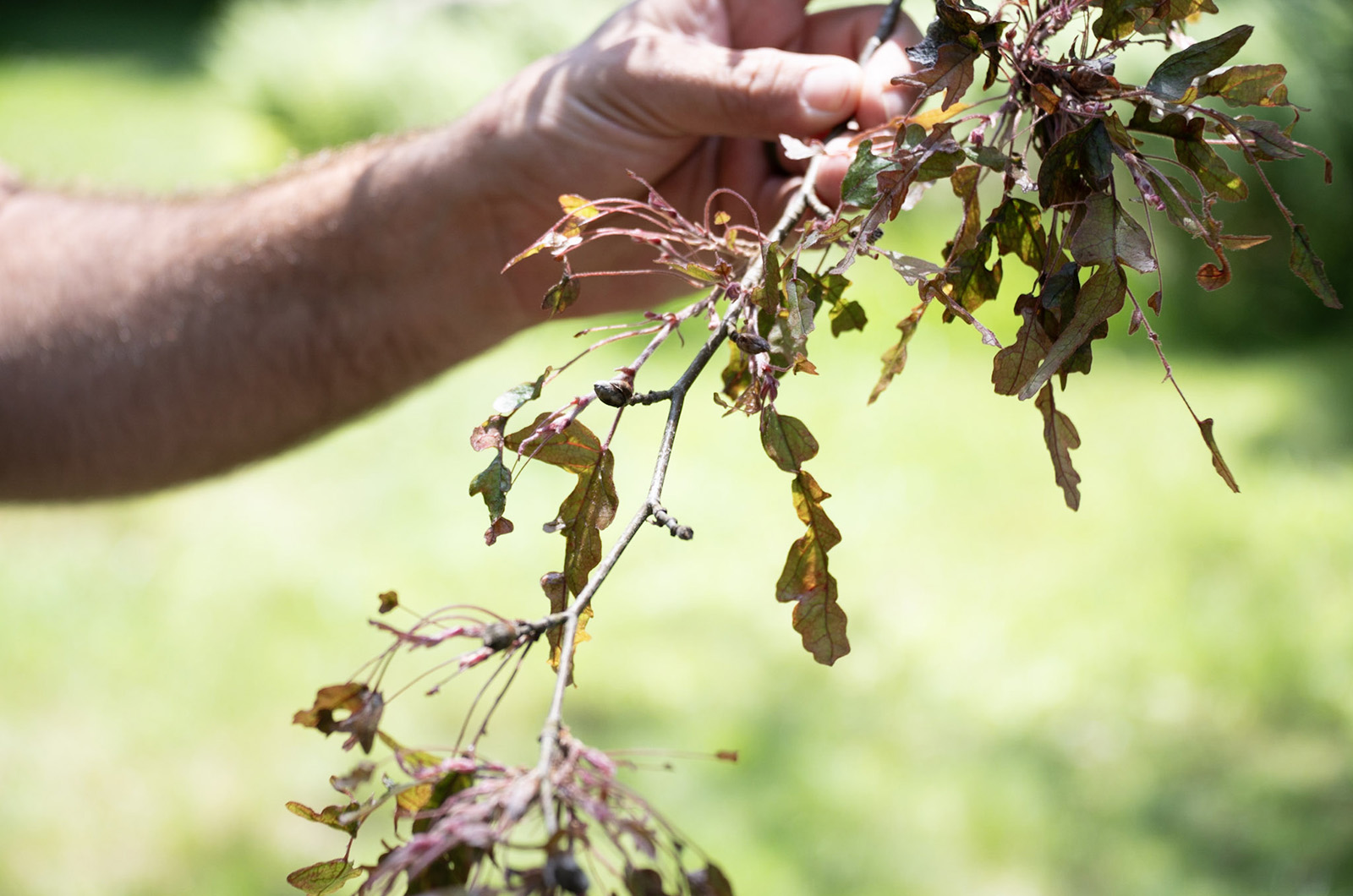
Beech leaf disease has made its way to the Island and its devastation to the Vineyard's abundant beech tree population is starting to show.
The sun shines brighter this summer on many up-Island forest trails. Hikers wondering where their shade has gone need only look up at the trees.
The American beech tree, which normally produces lush and vibrantly green foliage that decorates Island forest canopies, is covered in brittle, striped and darkened leaves this year.
The culprit? A microscopic worm.

Ian Jochems and Emily Ellingson at Polly Hill Arboretum look at a tree suffering from the disease.
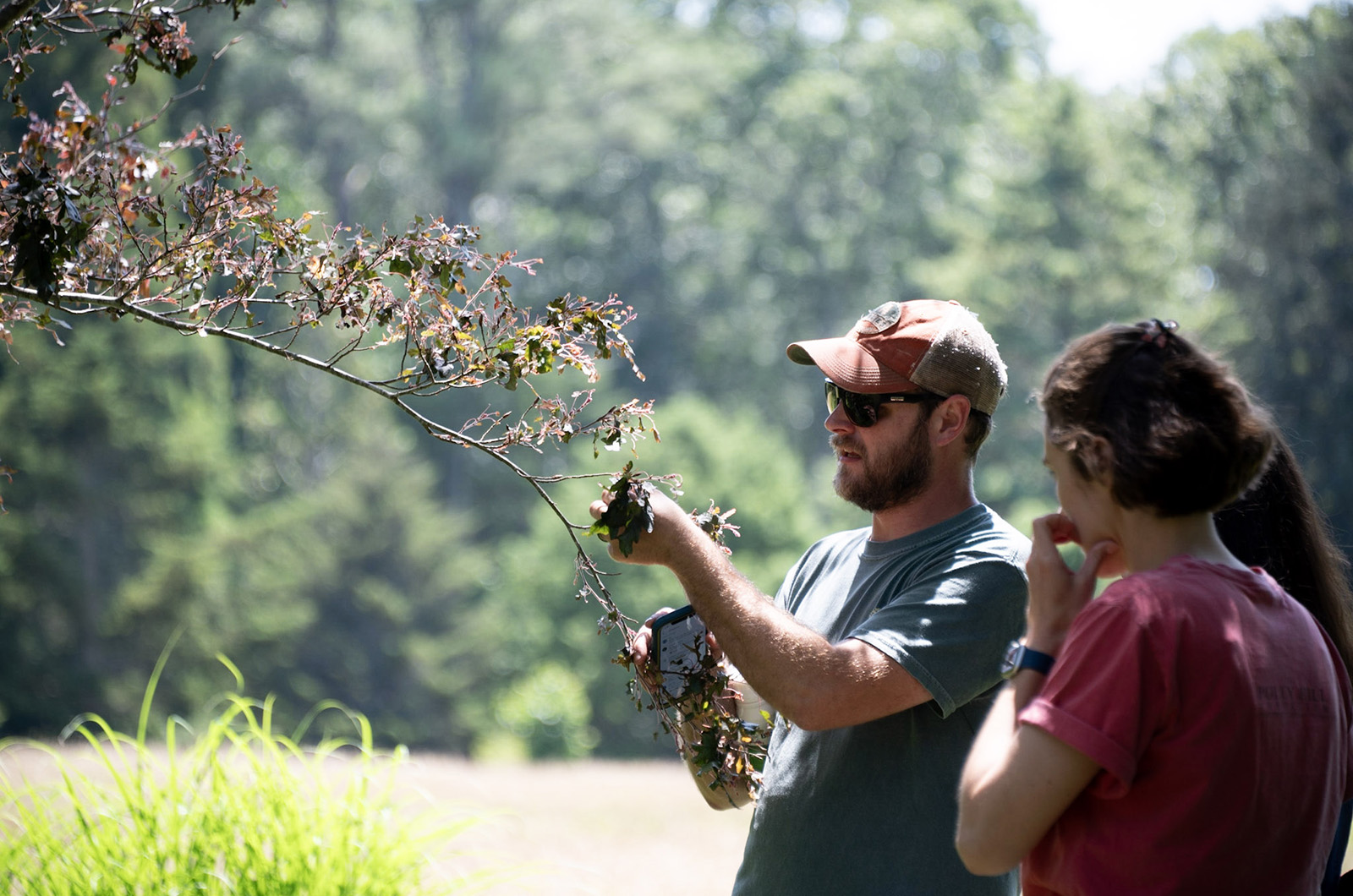
Ian Jochems and Emily Ellingson at Polly Hill Arboretum look at a tree suffering from the disease.
Many of the Island’s trees are infected with beech leaf disease, caused by a nematode species called Litylenchus crenatae that burrows inside of the trees’ buds and damages or kills the leaf as it unfurls. The disease was discovered 11 years ago in Ohio, and has since spread rapidly across the northeast.
Beech leaf disease made its way to the Island in 2022, and this summer, its devastation to the Vineyard’s abundant beech tree population is starting to show.
“We often found that the leaves came out rather late [this year],” said Emily Ellingson, assistant director and curator at Polly Hill Arboretum in West Tisbury. “And then when they do come out, they’ll have the striping already.”
Dark striping on the leaves is a clear sign that a tree is infected with the disease, said Ms. Ellingson. The stripes make it difficult for the tree to photosynthesize, and each season, the tree will produce fewer leaves until it eventually dies.
“If it’s really, really bad, it’ll just kill the whole leaf before it’s even out,” said Ian Jochems, Polly Hill’s arborist and grounds manager. “The bud basically dies, and then the tree keeps trying to put out more leaves.”
American beech is the only beech tree native to the Island, but Polly Hill is home to 10 different varieties of beeches. Beech leaf disease can infect them all.

The disease is associated with microscopic worms.
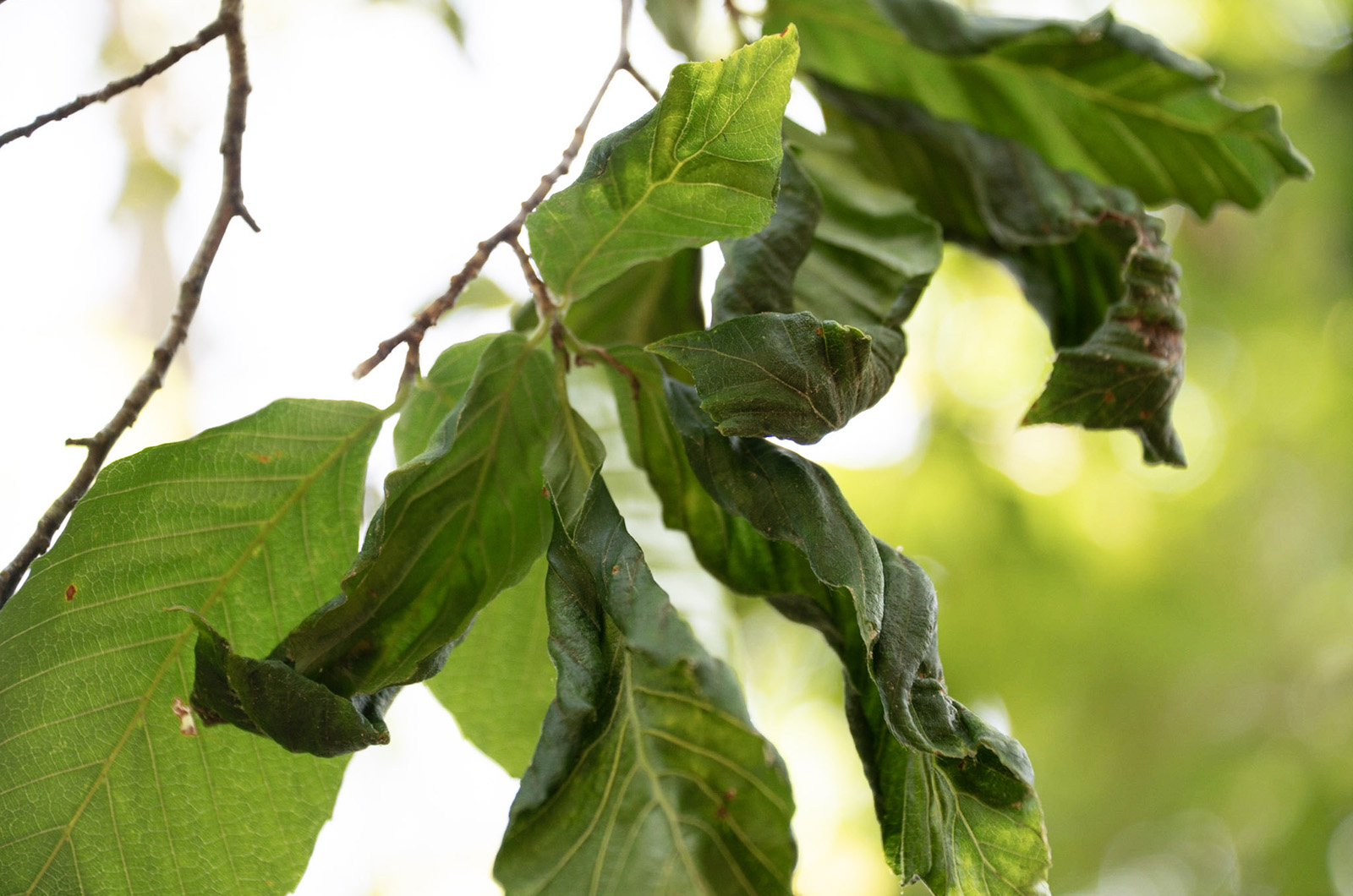
The disease is associated with microscopic worms.
One type of tree, the Japanese beech, has proven slightly more resilient than the others, producing fewer damaged leaves. Ms. Ellingson and Mr. Jochems speculate that it’s due to the nematode’s origins.
“They’re actually from Japan,” said Ms. Ellingson. “And in Japan, it’s a very mild disease.”
Mr. Jochems said it is possible that there is a beneficial species in Japan, such as an insect or fungus, that preys on the nematode, controlling the spread and severity of the disease. But nothing like that exists here yet, and bringing a Japanese species to North America would require years of research and highly controlled testing.
For now, researchers are focusing on finding ways to treat beech leaf disease. Bartlett Tree Experts, a nationwide tree care service with a location in Vineyard Haven, is at the forefront of the investigation.
“We’ve got [three] Ph.D. doctors working on this,” said David Chalker, local manager at Bartlett. “To test for the nematodes, they take leaf samples, put them in a blender and then put it in a petri dish with water and watch the nematodes wiggle around.”
Mr. Chalker said that the researchers recently found hope in a chemical treatment called Broadform, a nematicide spray that targets and kills adult nematodes. Adults are most active during early and mid-summer, so now is likely the optimal time to treat the beech trees, said Mr. Chalker.
“We’re really trying, but we’ll find out more about [its efficacy] as time goes on,” he said. “There’s millions of these worms, and we have to spray all of the leaves.”
Unfortunately, Broadform is not cheap and in limited supply. Mr. Jochems said that one bottle of the spray runs around $220 and can treat only 2 to 3 large trees.

David Chalker, left, and Mark DiBiase at Bartlett Tree Experts. The company has been investigating ways to combat the disease.

David Chalker, left, and Mark DiBiase at Bartlett Tree Experts. The company has been investigating ways to combat the disease.
Bartlett’s arborist representative, Mark DiBiase, said that the company receives calls daily from clients asking about beech leaf disease and possible treatments. In his 40 years in the tree service industry, this is the worst and most puzzling case of diseased trees he has seen.
“This one came fast,” he said. “And it’s hard, you know, because I don’t want to see the Island landscape and the forest change. But it’s going to.”
Adam Moore, president of the Sheriff’s Meadow Foundation, which owns and conserves land in all six Island towns, is grappling with the same grief.
Last year, he started noticing signs of the disease around a property in West Tisbury. Now, the disease is plaguing American beeches in all of the land conservancy’s up-Island forests, and is creeping quickly toward down-Island territory.
Treatment is not practical for wild forests, he said, so nature will have to take its course.
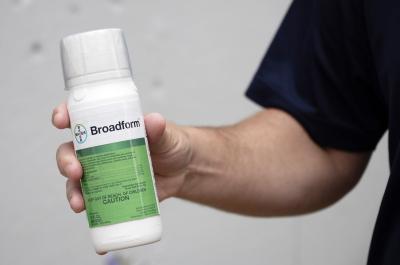
Broadform, a nematicide spray that targets and kills adult nematodes, is seen as a potential solution.
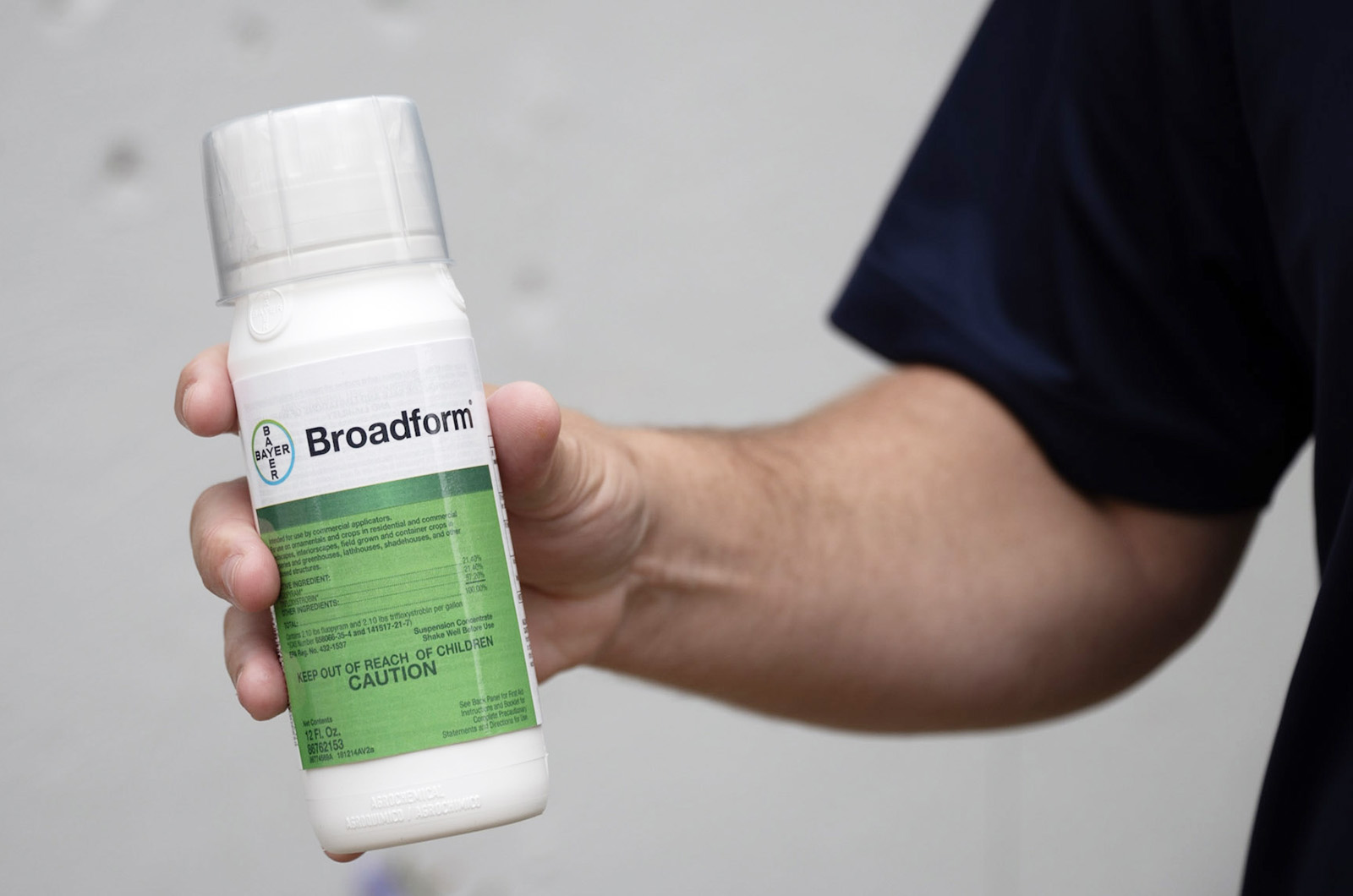
Broadform, a nematicide spray that targets and kills adult nematodes, is seen as a potential solution.
As the American beech dies off, it is likely that other species of trees and shrubs will take advantage of the new space.
“More oak trees will sprout, and more holly is already starting to show,” he said. “And depending on what’s left around, we could also see more invasive [species] take this opportunity.”
Mr. Moore tries not to get too emotionally attached to trees, but fears that beech leaf disease will fundamentally disrupt the structure of the Island’s forests. At times, he cannot help but mourn the loss.
“I’d say right now, to just get out and take a walk and spend some time by yourself in the woods,” he said. “It’s very sad to say that, but I think that’s the best advice I could give anybody.”
Comments
This is breaking my heart. We
Carla A Cooper EdgartownThis is breaking my heart. We planted a beech 20 years ago and it’s the feature tree on our property. It provides cooling shade and the birds love it. Watching it die is terribly sad.
I’ve noticed the demise of a
Tom Engley West TisburyI’ve noticed the demise of a massive copper beech behind the house the play house just bought on main st This old beech must be 175 years old. It’s VERY VERY sad
Thank you for this article.
Peter Neilley ChilmarkThank you for this article. I was wondering what was going on with the dozens of beech in the woods on our property. I guess I was hoping it was a one time thing perhaps from the cold snap this past winter. But alas not. Quite sad. The beech is such a beautiful tree.
Sad to see the beech go. Let
Jo HSad to see the beech go. Let this be a wake up call to value and protect our trees while we still can / especially in Katama where the pitch pine and scrub oak along the bike bath are being cleared by the day for ‘private ways’ and better view channels The stripping of Faulkner Drive and it’s abutting lots is a prime example of this total disregard for priority habitat.
Does this also affect the
Will R EdgartownDoes this also affect the copper beech?
So sad, indeed. I'm reminded
Jean Oak BluffsSo sad, indeed. I'm reminded of how we lost the elms.
But, er, the top two photos are not beech trees. They look more like oaks (with a witch's broom pathogen). The third photo is a diseased beech.
Beetlebung Trees is actively
Susan S N TisBeetlebung Trees is actively working with me to save my 300 year old tree on State Rd we are doing everything we can to save our copper beech. It is heartbreaking.
Beetlebung Trees is actively
Susan S N TisBeetlebung Trees is actively working with me to save my 300 year old tree on State Rd we are doing everything we can to save our copper beech. It is heartbreaking.
I had a friend in the 60's
Charlie Callahan So Boston/EdgartownI had a friend in the 60's who had a huge Beech tree in Dorchester they said it was over 200 years old and it was 4feet in diameter. It had aphids and it was treated with Chlordane,but it is illegal to use it if you can even get it. It killed all the carpenter ants in the tree also.It was sold as Ortho Chlor
Up Island Tree has been
Michael W TisUp Island Tree has been working on treating our beech trees throughout our property since last fall. Both soil injection and foliage sprays (Broadform). We have seen positive results, praying it continues
Right now anyone can clear
Mark Acker VHRight now anyone can clear cut their entire property killing every tree and no one can stop them. There are some special habitat areas marked and wetland protection areas, but most of the Island can be clear cut. Amazing there is no regard or protection for trees that are here.
In many situations,
Thomas S Hodgson West TisburyIn many situations, replacements are ready and willing to grow...in the smaller beech groves, there are usually other trees "waiting in the wings" to emerge when overshadowing larger trees die. But now is also good time to start thinking about what might be planted to help reoccupy the ecological niche of the beech. Beech is a nut tree, so other nut trees would be good candidates. Hickories, walnuts, butternuts, chinese chestnuts, and others are trees to think about trying.
Add new comment