

While many have touted the arrival of offshore wind, there are also concerns about the scope of the effort and the potential for irreparable damage to species that live and migrate through the area.
From the Aquinnah Cliffs, designated a National Natural Landmark in 1965, the horizon stretches east and west offering stunning views of both sunrise and sunset.
To Cheryl Andrews-Maltais, chairwoman of the Wampanoag Tribe of Gay Head (Aquinnah), those views are sacred, one of several reasons the tribe is continuing to seek a moratorium on offshore wind development.
“We’re not against renewable energy. There’s nobody more in line with renewable energy than indigenous native peoples,” she said last week following a visit to the Island from secretary of interior Deb Haaland. “But the challenge is finding that delicate balance, where the need to find alternative renewable energy resources does not get outweighed by the long-term damages that can be created by moving too quickly in an industry that is still unknown.”
Construction of Vineyard Wind, the nation’s first commercial wind farm is already well underway, with approval from the Bureau of Ocean Energy Management, an agency that falls under Ms. Haaland’s purview.

Cheryl Andrews-Maltais, the chairwoman of Wampanoag Tribe of Gay Head (Aquinnah).

Cheryl Andrews-Maltais, the chairwoman of Wampanoag Tribe of Gay Head (Aquinnah).
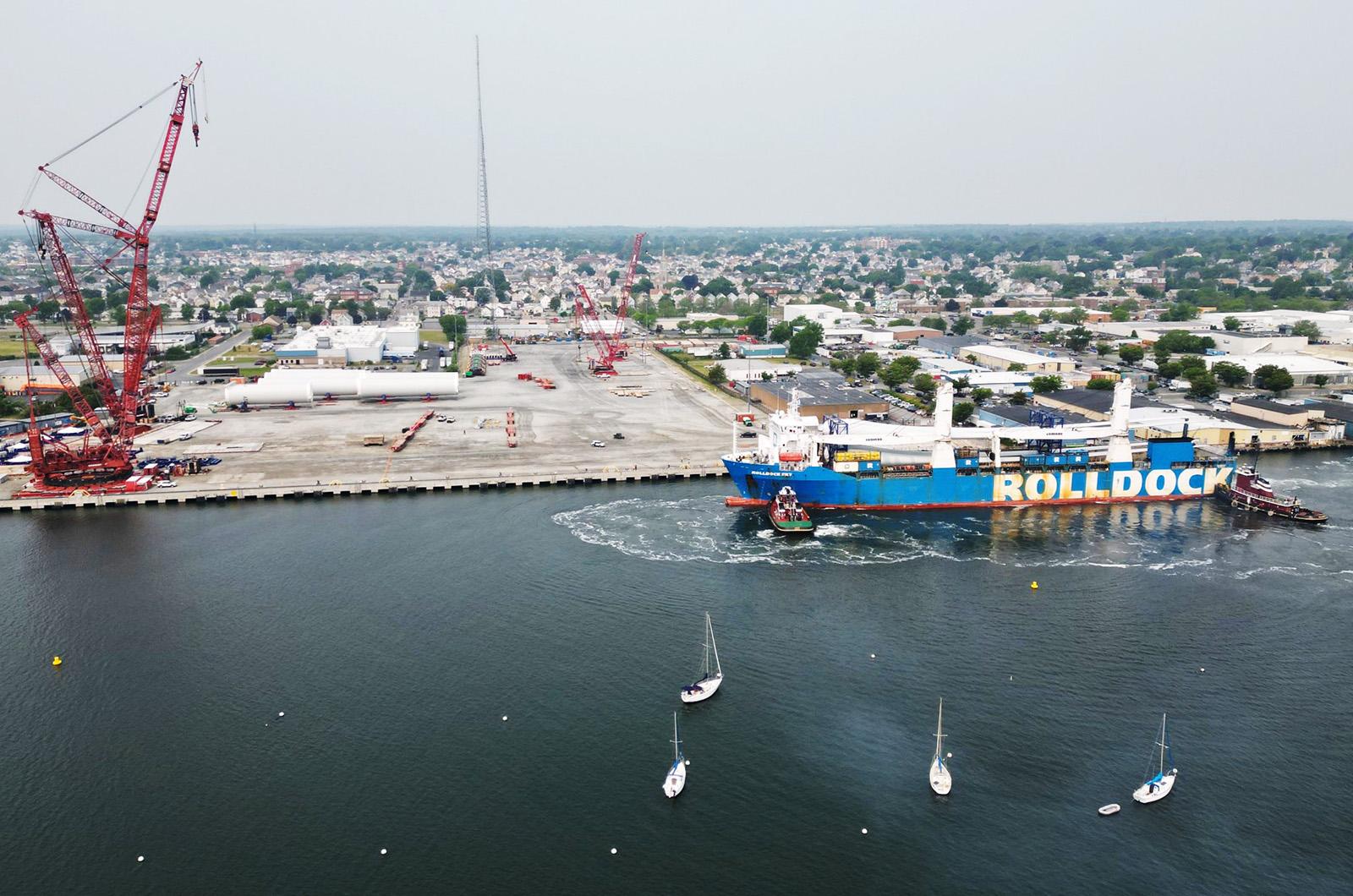
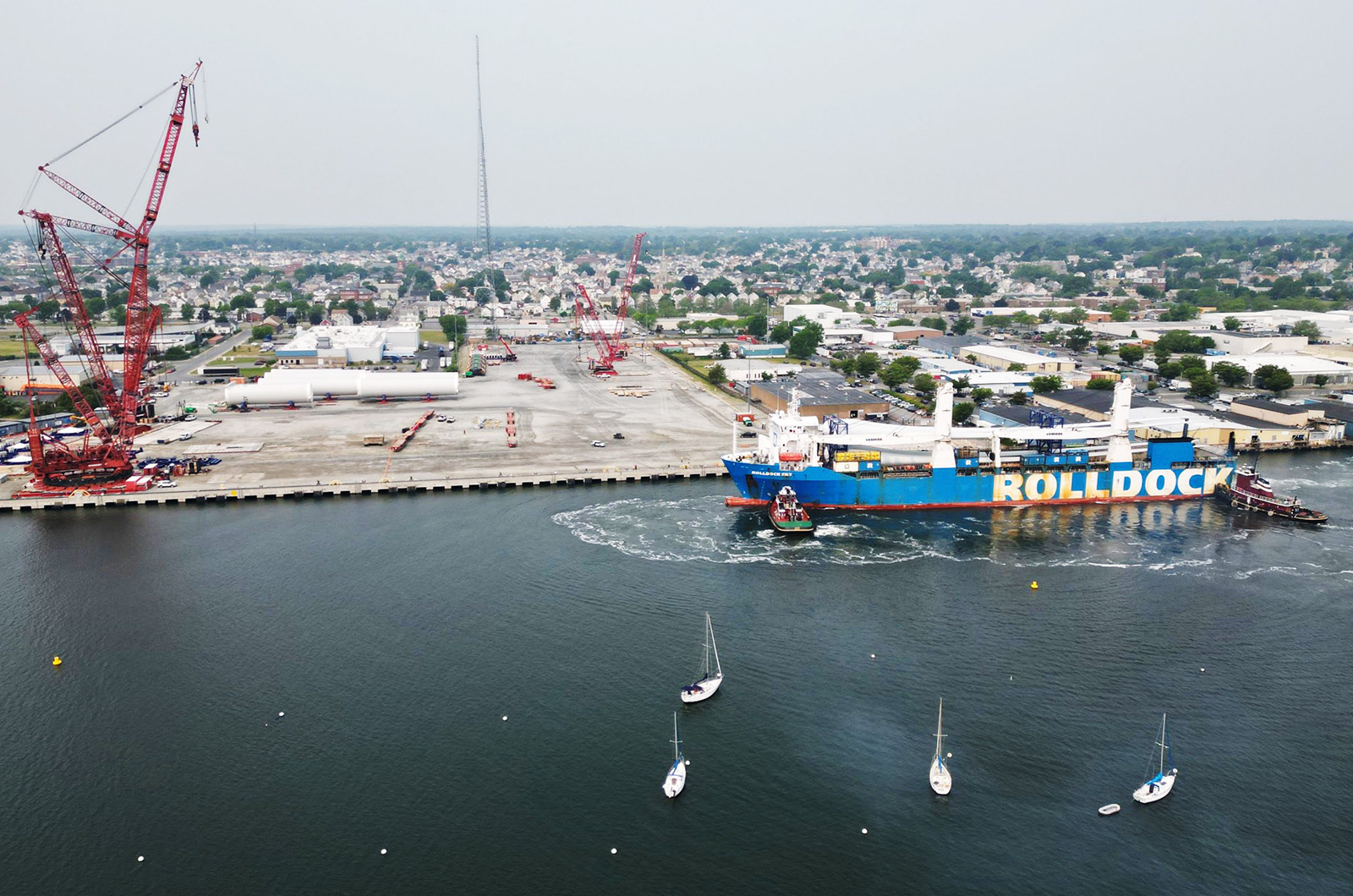
Earlier this month, Vineyard Wind started putting in monopiles for 62 giant turbines, which will stand nearly three times the height of the Statue of Liberty with blades as long as a football field. No other project in the U.S. has come close to its size. By way of comparison, the Block Island wind turbines are 328 feet tall; the Vineyard Wind turbines will top 800 feet.
While many have touted the arrival of offshore wind to reduce dependence on fossil fuels and take advantage of New England’s strong, consistent winds, there are also concerns – even among its staunch supporters – about the scope of the effort and the potential for irreparable damage to species that live and migrate through the area.
Dr. Jessica Redfern, a senior scientist at the New England Aquarium’s Anderson Cabot Center for Ocean Life, sees offshore wind playing a critical role in the fight against climate change.
But she and other scientists at the aquarium wrote a letter to fishery regulators in December 2022 calling for stronger ocean monitoring around offshore wind projects in order to keep the critically endangered right whale and other species safe.
“I know there’s a lot of really strong feelings about [offshore wind] and concerns,” she said. “I certainly share the concerns and that’s why my focus is on monitoring.”
Last year, a scientist at the National Oceanic and Atmospheric Administration wrote in a letter that right whales are found throughout the southern New England waters in and around offshore wind energy lease areas.
“The development of offshore wind poses risks to these species, which is magnified in southern New England waters due to species abundance and distribution,” wrote Sean Hayes, a senior scientist with National Oceanic and Atmospheric Administration.
These risks could occur during construction, due to increased noise, vessel traffic, changes in habitat, and oceanographic changes that could disrupt the patterns of the whales’ food.
Mainland fishing groups have been among the loudest voices of opposition to turbines, but John Osmers, a Vineyard conch fisherman, also fears it could affect his livelihood.
He worries about the 35 miles of transmission lines connecting the turbines to the power grid on the Cape. They will run through a conch fishing area on the seabed.
“I fully support green energy and us becoming wiser in our choices for our energy supply,” he said. “They’ve been doing a lot of research, but at the same time, nothing on this large of a scale has been done before.”
As work on the turbines starts, several lawsuits have been hurled at Vineyard Wind, the first project to make it through the regulatory pipeline. But, so far, the protections put in place have stood up to the court challenges.
A federal court judge ruled in May against a group of Nantucket residents who claimed the project threatened the right whale species.
Later in May, another judge denied several fishing group’s requests to halt construction of the project over several claims, including that it would violate the Marine Mammal Protection Act and the Endangered Species Act.
Thomas Melone, a part-time Edgartown resident and the president of a solar energy company, has also filed a lawsuit against the project, flagging concerns about the safety of turbines in extreme conditions and their potential to harm endangered species. That case is ongoing.
For its part, Vineyard Wind has taken a variety of steps to address the many environmental concerns. In an interview with the Gazette earlier in June, Vineyard Wind CEO Klaus Moeller said the company has gone beyond what has been required to protect whales.

Construction of the Vineyard Wind terminal continues on Vineyard Haven harbor.
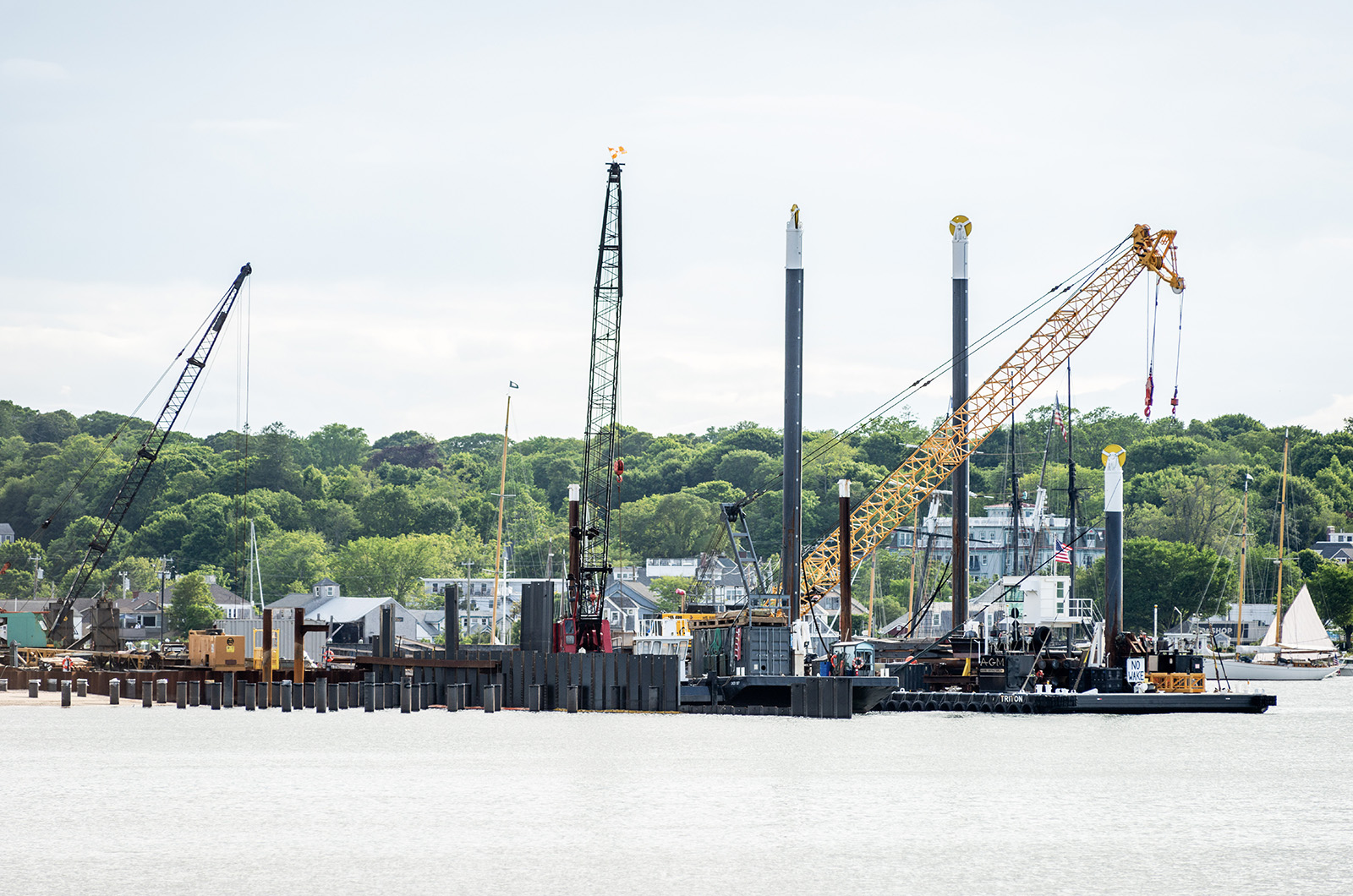
Construction of the Vineyard Wind terminal continues on Vineyard Haven harbor.
As part of its approvals, Vineyard Wind must have observers looking and listening for protected species, including right whales. Vessels in the area are also restricted to 10 knots or less from November to mid-May. Pile driving can’t occur between January and May, and there can be no pile driving at night or when animals are in the area.
Mr. Moeller said the company is doing acoustic monitoring for whale calls under the water, as well as using a special noise-reducing hammer to stifle the noise from driving monopiles into the sea bed. A bubble curtain, a contraption that uses hoses to create a sound barrier of bubbles around the construction, has also been enlisted to try and quiet the waters.
While no whale deaths have been tied to wind farm work along the east coast, local speculation kicked into high gear earlier this month when two dead humpbacks washed ashore on the Island, days after Vineyard Wind construction had started.
Mr. Moeller said no whales were seen nearby as the first monopiles went into the seafloor, and that the washed up whales have not been linked to the project. A NOAA spokesperson said that both carcasses had refloated and washed back out to sea, eliminating the opportunity to conduct necropsies and figure out the cause of death.
And though the turbines will stand taller than the Prudential building in Boston, the company says only a few of them will be marginally visible from the Island. They’ll all be painted a specific shade of light gray to try and blend in with the horizon.
Still, concerns persist. Ms. Redfern and other aquarium scientists were critical of a requirement that acoustic monitoring for marine mammal activity occur for just an hour before pile driving starts.
“Passive acoustic monitoring must be conducted for a minimum of 24 hours before pile driving begins,” Ms. Redfern and two other scientists wrote last year. “The current one-hour monitoring period does not conform to the best available scientific information…”
And she said she wanted to see more data collection around wind projects in general so researchers could see if any patterns develop.
“We need to be learning from these early developments as much as we can,” she said. “If we see something concerning, we need to document it.”
Comments
Putting aside the merits of
Resident MVPutting aside the merits of wind energy, these projects will be devastating for the Vineyard. When completed, there will be a wall of highly visible wind turbines from Chappy to Aquinnah. The Vineyard is a summer tourist economy, not an energy economy, and tourists will choose more scenic destinations. We should be fighting to put these projects farther offshore and out of sight.
They will not be visible from
Harry Schwartz EdgartownThey will not be visible from Chappy. In fact because they're 14 miles out to sea the tops of them might be visible from about Lucy Vincent to The Cliffs. That's only the most northern of the turbines will be visible. The rest will be over the horizon.
Silliness, you can handle a
R Scott Patterson EdgartownSilliness, you can handle a few windmills on the horizon. If you can’t I suggest you get some professional help.
You are correct, the wind
Darrel OBYou are correct, the wind turbines will be a eye sore, and very visible! They will soon regret this!
We need the Gazette to do
Quitsa ChilmarkWe need the Gazette to do more objective reporting as in this story. Vineyard Wind has crowded out all real information with its "party line" of everything is wonderful. Many thanks to the Wampanoag Tribe for keeping a focus on the extremely valid concerns associated with these massive industrial developments.
I saw one of the humpback
LC VHI saw one of the humpback corpses on south beach, not 20-30’ off shore and called it to local and NOAA immediately. This was about a week ago. It was a juvenile. Reports had been coming in for more than two days, I was told. IMO there was opportunity for corpse observation by drone, sampling of the corpse from the water/ground if there had been a local response team in place seeing as there were sighting over three days. Perhaps Vineyard Wind could be “encouraged” to fund a specific Woods Hole Oceanographic/NOAA team to respond 7/24 despite that it’s recovery not rescue since the information is critical or, better yet, is there an opportunity to train a LOCAL MV team to respond. Carcasses could be tagged potentially ?? so if moving in the tides they might still be located for recovery so we actually get necropsy data. Dragging one’s feet then publishing “unexpected negative outcomes” years later is, again IMO, poor form. I applaud the steps Vineyard Wind has taken. I am suggesting they do could do more.
While the Developers so far
gina Menemsha/NYCWhile the Developers so far have the highly subsidized funds @ the moment to build this oversized project several smaller , aka less well subsidized have dropped out of the wind race due to poor rate return on investment.. I can picture this monstrasity going bust in less than 2 yrs.. Then Martha will have to clean up the wreckage left .. Time will tell..
The overwhelming cause of
Harry Schwartz EdgartownThe overwhelming cause of death to whales is natural causes. After that it's collisions with ocean vessels. That includes fishing boats. Most of these concerns are really hysteric rhetoric. None of it is based on facts. This people are fine with taking power from oil and gas or even coal when it's not in their backyard. Shame of them for standing in the way of a good solution and a great contribution that the island can finally return to the world.
Giant wind turbines create
Cmd Lewis Ret. MenemshaGiant wind turbines create radar fog and are dangerous to low flying aviation like Coast Guard helicopters and planes. USAF shore radars could be compromised as a result.
Man kind.
LJ EdgartownMan kind.
Selfish and dumb.
Shellfish and chum.
Wow, heads in sand much?
Carol formerly ChilmarkWow, heads in sand much? With climate change and its attendant wildfires, smoke, sea level rise, extinctions, horrific storms - are those enough to count as environmental concerns worthy of discussion in this article and its comments? The whales are feeding inshore because their offshore food sources are depleted by the warming oceans, thanks to humans burning fossil fuels. The right whales are dying from entanglement with fishing lines (primarily lobster trap lines) and being hit by boats. Want to save right whales? Stop eating lobster and call your Congressional rep and state legislators, make them enforce slow maritime speeds. Including for the ferries. THAT'S how you save right whales.
Given the accelerating catastrophe of climate change, I just don't care about people whining about their water views.
Add new comment