

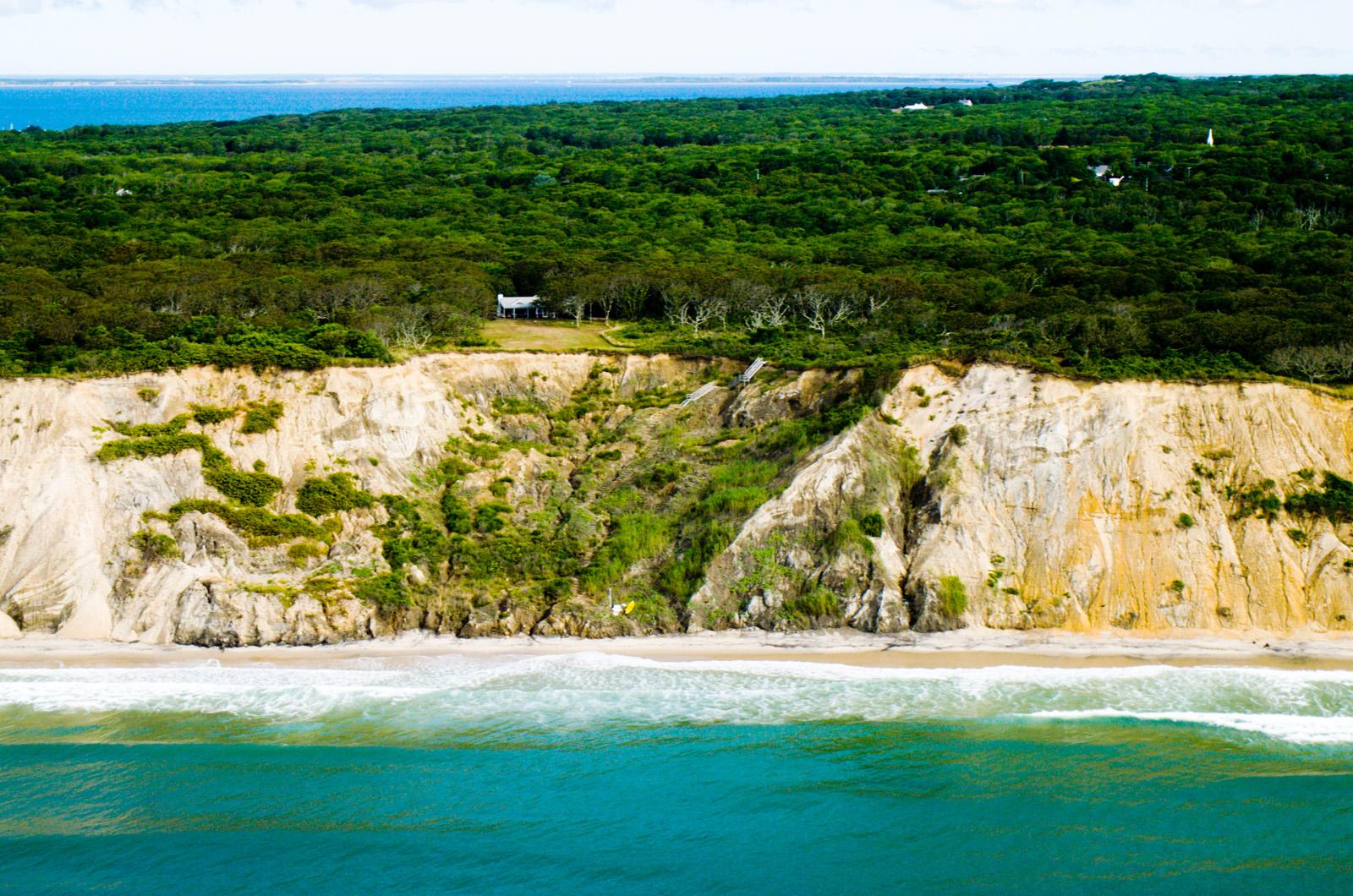
In a climate change panel hosted by MVY Monday, experts discussed how to strategically plan around rising tides, a concept known as managed retreat.
With sea levels projected to rise between 1 and 6 feet over the course of this century, Island planners, conservationists and coastal management experts gathered this week to brainstorm how the Vineyard can prepare itself.
In a climate change panel hosted by MVY Monday and inspired by the Martha’s Vineyard Commission’s climate action plan, experts discussed how to strategically plan around rising tides, a concept known as managed retreat. In addition to Islanders, Rob Young, the director of the program for the study of developed shorelines at Western Carolina University, spoke about the potential for managed retreat and its application on the Vineyard.
“[Managed retreat] doesn’t mean abandoning the coast, it doesn’t mean the end of coastal economies and it doesn’t mean the end of coastal communities,” Mr. Young explained, “But we do need to be able to take baby steps back from these areas.”
Mr. Young has been involved in managed retreat planning across the country and came to the Island as part of an commission initiative to look at the effects of rising sea levels on the salt marsh around Sengekontacket Pond.
“Salt marshes are amazing, they are these little squishy areas between land and sea,” said commission climate change coordinator Liz Durkee. Salt marshes, she said, benefit both natural ecosystems and human communities, providing a critical habitat for many species while also mitigating flooding.
As the sea level rises, existing salt marsh ecosystems will begin to migrate inland to escape inundation. The goal of the research with Mr. Young was to map out areas on the Sengekontacket shoreline where marshlife might be likely to migrate, and determine the owners of all those pieces of land.
Part of the plan, Mrs. Durkee said, was to begin a collaboration between the towns, the commission and the land bank to buy up private land in those areas to ensure an open path for migration. Their findings revealed only a small portion of the shoreline studied was taken up by private residences, a fact that land bank executive director James Lengyel credited to the commission’s 1977 adoption of a special coastal district.
“That was a remarkable bit of regulation,” Mr. Lengyel said. The designation allowed the regulation of development in areas within 500 feet of the shoreline. “It was controversial at the time…but that was a very prescient act.”
Mr. Lengyel also spoke about the land bank’s own managed retreat initiatives, which include removing houses from shoreline land and restoring other coastal lands to sandplain habitats that can better adapt to rising waters.
Commission member Ben Robinson was also on the panel and spoke to the process of managed retreat in the busy waterfront areas in Tisbury.
“It will have to be an Island-wide project,” he said, noting how the Steamship dock, bulk freight terminal and several main roads to the hospital are all located in the town’s coastal flooding zone.
Though solutions are far from easy, Mr. Young urged cautious optimism about the efforts, saying that the Vineyard is better situated to plan for these changes than many other coastal communities.
“You guys have a chance,” he said. “You cannot keep the shoreline in the same place…but you can keep the community.
Comments
Well there are so many things
Nathan ChilmarkWell there are so many things we can do.
Get rid of the gas guzzling Suvs
Get an Electric car or walk
Solar panels
Reduce your carbon foot print
Recycling
Nobody want to be inconvenienced.
#1 don’t let houses build to
Jon Katama#1 don’t let houses build to close to the water! Septics are already to close and will be polluting the ocean like crazy! How are we better positioned with all these mansions going up right on the water?!!!!!
I think the Steamship dock
donald edgar oak bluffsI think the Steamship dock will always be in a flood zone. Boats float.
Complicated issue. First of
Frank Brunelle Vineyard HavenComplicated issue. First of all Co2 will continue to rise despite efforts. Do your research. Even though the MVC claims it can and will reduce Co2 on the Vineyard by 45% by 2030, the reality is that this is pure wishful thinking. Secondly we need to be concerned about the next 30 years for starters. Estimates are of 5 to 11 inches by then. Currently there are regulations preventing adaptation to sea level rise. That is step 1.
It is bad, but it is what it is. We will need to adapt.
My vessel moored next to the seawall was struck by a water spout some years ago at its mooring. A water spout is a tornado over the water. It pulled the mast up and shattered all of the stainless steel shrouds and it exploded with the sound of a bomb going off. We dismantled her and shipped to New Bedford junkyard.
Sea level rise is only one issue.
Intelligent, creative, cost effective gradual solutions are possible. This is all predictable and is completely defensible at some level and at some cost. We need to concentrate on this and stop our wars. The Co2 from Ukraine war is unbelievable. We need to focus.
By focusing on the end of the century, you are just kicking the can down the road.
Add new comment