


More than half the nitrogen polluting Great Ponds along the south shore is coming from wastewater, a newly released report has found.
More than half the nitrogen polluting Great Ponds along the south shore of Martha’s Vineyard is coming from wastewater, a newly released report by a team of Woods Hole scientists has found.
Commissioned by the nonprofit Great Pond Foundation, the study by the team at the Marine Biological Laboratory was able to pinpoint sources of nitrogen for the first time, using stable isotope-tracking technology to analyze water and benthic (bottom sediment) samples taken last year.
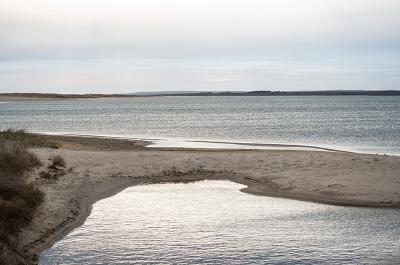
In Edgartown Great Pond, 55 per cent of the nitrogen is coming from septic systems, scientists found.
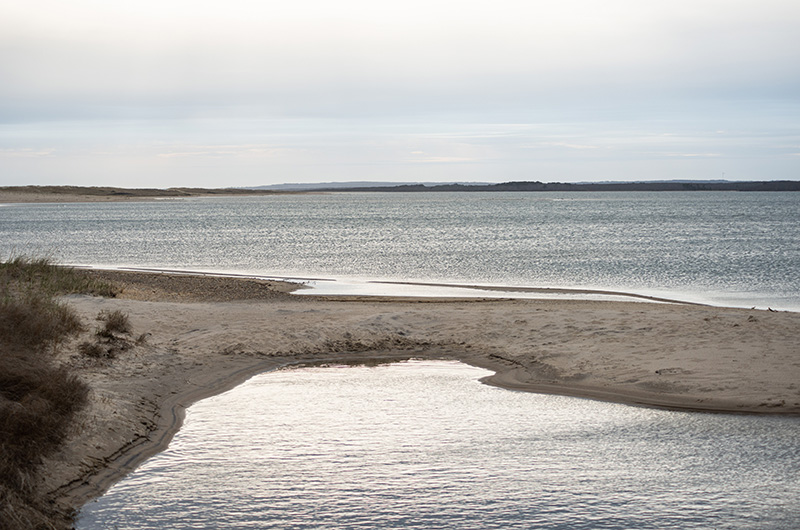
In Edgartown Great Pond, 55 per cent of the nitrogen is coming from septic systems, scientists found.
The study analyzed wastewater, fertilizer and naturally occurring atmospheric deposits — three major external sources of nitrogen — in Edgartown Great Pond, Crackatuxet Cove, Chilmark Pond and Tisbury Great Pond.
Sampling was done between June and October 2021. In every pond, well over half the nitrogen in the samples was coming from wastewater, likely traced to septic systems, the isotope study found.
While the three down Island towns have municipal sewer systems that connect some businesses and residences to a central wastewater treatment plant, most Island homes outside the main population centers rely on individual septic systems.
In Edgartown Great Pond 55 per cent of the nitrogen was tracked to wastewater. In Chilmark Pond 58 per cent of the nitrogen was coming from wastewater. In Tisbury Great Pond the number was 53 per cent. In Crackatuxet, a closed cove adjacent to the Edgartown Great Pond, the number was 51 per cent. The remainder was split between fertilizer and atmospheric deposits, with fertilizer accounting for roughly 24 per cent of nitrogen in Chilmark Pond, and 27 per cent in Tisbury Great Pond, for example.
The results begin to bring new clarity to what until now has mainly been a subject for speculation: the source of nitrogen in the ponds.
“Is it wastewater? Is it fertilizer? Is it atmospheric?” said Emily Reddington, executive director of the Great Pond Foundation, a privately funded nonprofit based in Edgartown. “These ponds are an essential way of life on Martha’s Vineyard. We know nitrogen is an issue . . . now we have learned that more than half the nitrogen is coming from wastewater. Which means if we reduce the nitrogen we’re going to be able to save our ponds.”
The study was published Wednesday on the Great Pond Foundation’s website. The authors are Javier Lloret, Anne Giblin and Rich McHorney, research scientists at The Ecosystems Center for the Marine Biological Laboratory.
“This all stems from the interest of the Great Pond Foundation trying to figure out what’s going on with the Island ponds and how to improve some of the conditions,” Mr. Lloret said, speaking to the Gazette by phone.
Explaining the technology used in the study, he said the stable isotopes act as tracers on plankton, invertebrates and other marine organisms that live in the ponds. “This is very important in terms of management,” Mr. Lloret said. “We can try to model things and quantify how much is entering the ponds, but . . . with these tools you have a direct measurement that you can link to the sources.”
Atmospheric nitrogen occurs naturally in the environment, he said.
“Wastewater nitrogen is coming from septic mostly. Fertilizer is coming from agriculture and also our lawns,” he added. “These three sources have very different and distinct isotopic signatures.”
The isotope technology is not new, Mr. Lloret said. “It is widely used, but not something you would find every time you are in a location that has a problem with nitrogen pollution,” he said. He continued:
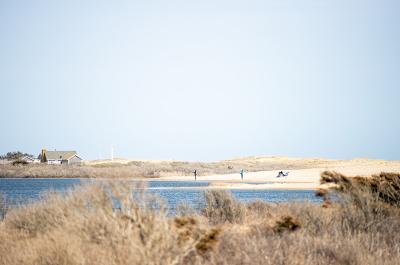
Crackatuxet Cove, a closed pond adjacent to the Edgartown Great Pond, is included in the study.

Crackatuxet Cove, a closed pond adjacent to the Edgartown Great Pond, is included in the study.
“According to the calculations we performed, you can conclude that more than half the nitrogen that is entering the pond and being used by the biological community . . . is from wastewater. And it’s not just nitrogen traveling through — it is entering the ecosystem.”
He said in some of the samples that were analyzed the number was as high as 80 per cent.
The study comes at a pivotal time on the Vineyard, with water quality research and planning actively taking place on a number of fronts amid heightened concern about the polluting effects of overdevelopment, especially from subsurface sewage disposal.
Edgartown, Tisbury and Oak Bluffs are all in various stages of completing comprehensive wastewater management plans, aimed at upgrading sewage treatment plants that are at or near capacity. The Martha’s Vineyard Commission is using grant money to develop a watershed management plan for the up-Island towns, which have no sewage treatment facilities. An MVC report on the Tisbury Great Pond was recently released; the Great Pond Foundation plans to release its own report for the same pond in June. Privately-funded collaborative pond associations have also formed for Tisbury and Chilmark ponds. Even farther back in time, the Massachusetts Estuaries Project — a public-private effort involving scientists at the University of Massachusetts at Dartmouth and the state Department of Environmental Protection — has been collecting data and analyzing water quality in ponds and embayments here since the early 2000s.
With such a large volume of information amassed — and more coming — and so much work crossing government and private sectors, enacting policy has been more difficult. But Ms. Reddington said the outlook is positive, especially because while the ponds are impaired by nitrogen to varying degrees, most still host healthy ecosystems.
“There is still hope. We have this incredible opportunity to preserve the ponds,” Ms. Reddington said. “And there is more science and technology emerging on how to fix them.”
The Edgartown Great Pond is one example of a partial success story that she believes is a direct result of active management that includes regular dredging in concert with cutting the pond open to the sea.

Sampling in Chilmark Pond traced 58 per cent of the nitrogen to wastewater.

Sampling in Chilmark Pond traced 58 per cent of the nitrogen to wastewater.
Today the pond hosts some five acres of eelgrass, an aquatic plant essential to a healthy ecosystem for bay scallops and other shellfish populations. Once found in abundance in all the Island ponds, in recent decades eelgrass, which is sensitive to pollution, has been dying off at a rapid rate, alarming biologists.
Just this week the Edgartown select board approved a commercial softshell clam season for the Edgartown Great Pond, a cottage shellfish industry that has seen a revival only in the last two years.
Ms. Reddington said records kept by the state Division of Marine Fisheries show an encouraging pattern of increasing salinity in the pond in recent years.
The MBL isotope study appears to validate the benefits of pond openings for reducing nitrogen. “Wastewater contributions were larger during June and July, high in August, but decreased substantially in October,” scientists wrote. “This decrease could potentially be linked to the opening of the inlet on August 7, and the re-establishment of the connection with the sea that could have helped flush away some of the excess nitrogen in the pond.” They continued: “Our samples from August 10, only three days after the reopening of the inlet, did not seem to reflect much of an effect . . . indicating that the flushing of nutrients and subsequent measurable response . . . could take several days or even weeks.”
The practice of opening Great Ponds to the sea is in fact more than a century old and rooted in an arcane state statute enacted in 1904. The law allows “the proprietors of low lands and meadows around any great pond in the county of Dukes County . . . to organize . . . [and] do or cause to be done whatever may be necessary to properly drain the low lands and meadows . . .”
The old law makes an explicit exception for the Edgartown Great Pond. As a result, today that pond is managed by the town, while other ponds are managed by riparian owners.
Ms. Reddington said some believe the exception was due to the lucrative herring fishery at Mattakesett Creek, which had economic importance for the commonwealth at the time.
The isotope study also did some limited sampling of the Mill Brook, a freshwater river system that flows into the Tisbury Great Pond at its northern end. That analysis found fertilizer, not wastewater, was the primary contributor of nitrogen.

Mattakessett Creek in Edgartown hosted a lucrative herring fishery in the early 1900s.
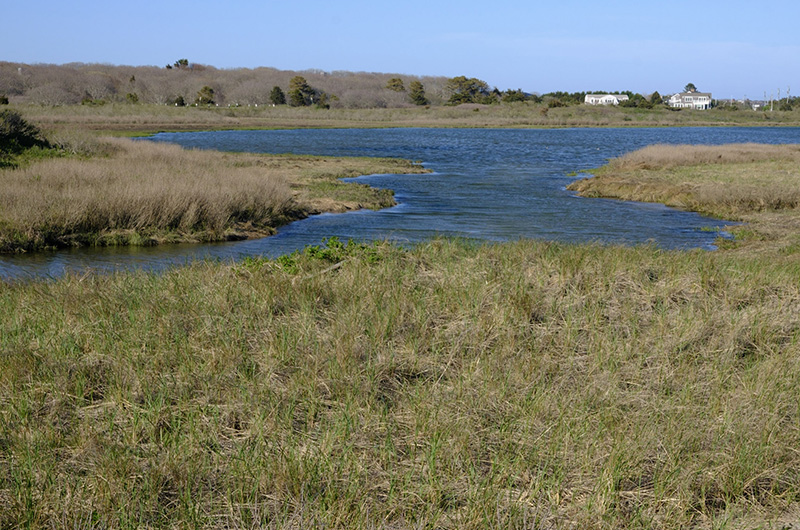
Mattakessett Creek in Edgartown hosted a lucrative herring fishery in the early 1900s.
“This fact probably confirms that this stream is not a major source of wastewater nitrogen to the Tisbury Great Pond,” scientists wrote, adding: “The low wastewater and relatively high fertilizer contributions [are] consistent with the relatively undeveloped land and presences of small farms.”
The study did only limited analysis of nitrogen from birds, Mr. Lloret said. He explained further that despite widespread perception that migratory waterfowl are large contributors to nitrogen in ponds, more than one credible study has found that waterfowl contribute only trace amounts of nitrogen to saltwater estuaries, for various reasons.
The privately-funded isotope study cost betwen $50,000 and $100,000, Ms. Reddington said.
A second phase of the study is now planned that will aim to more closely identify locations of origin for the wastewater.
“The first year was almost like a pilot project to see the potential there for future ongoing work,” Mr. Lloret said. “Now we have increased our efforts — we are going to not only continue to collect samples and do isotopic analysis, we are also going to try to pinpoint the location of where the nitrogen is coming from.” Among other things, that work will involve sampling groundwater at the edge of the pond where it enters the estuary.
It’s like detective work, he agreed.
“You just need to follow the clues. The isotopes will be like the fingerprints, and that’s how we use them.”
Comments
So exactly what most of us
Slater MVSo exactly what most of us have know for years…
All septic systems should
Carol EdgartownAll septic systems should have to be inspected every so many years. Then the newer technologies can be used where failures have occurred. If we can afford to do this in working class neighborhoods downtown, the up islanders can and should be held to the same standards.
What about the Up-Island salt
Chris Daly Nomans Watch, AquinnahWhat about the Up-Island salt ponds (Menemsha, Quitsa, Stonewall)? Have they been studied?
They are programs in both
Doug WTThey are programs in both Rhode Island and Florida to upgrade highest risk septic systems with higher performing technology to increase the nutrient in pathogen removal efficiency. That includes converting traditional septic tanks to advance treatment units. This involves installing specialized tanks designed to reduce nitrogen before draining to drainfield. These are commonly referred to as aerobic systems because they incorporate air into the treatment system to help oxygen hungry bacteria is a burn off excess nitrogen. Perhaps this is already been looked into for the island communities but it’s worth exploring further. Financial subsidies may be needing incentivize property owners to make the upgrades.
Yeah, someone has to say it.
Islander61 OBYeah, someone has to say it. Let's see if this gets past the editor, it seems some of my other posts get lost somewhere. So, here we have an actually known problem, a problem that has been known for years and has been pointed out several times during the high schools field project testimony. Nitrogen from fertilizers from grass fields will affect our ponds. Now we see that 25% of the nitrogen being deposited into our ponds is from fertilizers. Here we believe this science, BUT, the science associated with the high school field project that tells us that it is safe. The PFAS that MAY be present is listed as "de minimus" by firms who tested the components of the field and that it won't leach into the aquifer and that the minuscule amount of these PFAS are inert and not water soluble. However, that science is ignored by the OB boards that are not allowing the turf field. This is the worst news possible for the field opponents who want to install 3 more grass fields at the school. Hmmm, a field where the "science" says it is safe, or 3 fields where the "science" says that nitrogen will leach into our ponds from said fertilizers. Let's not forget the septic systems that OB wants to install over this same aquifer. Might the BOH reconsider it's moratorium? I certainly hope so, our shellfish industry is in jeopardy. Trust the science, I believe I have heard that before.
The MVC water quality policy
William Cumming CHILMARKThe MVC water quality policy should be applied equally on all properties across the island by each towns B.O.H. This is a problem that could be solved but for, politics and $$$$.
As a result of the uneven application of these rules, it will get challenged as just another planning tool by the MVC
So I guess the solution is to
Mark Acker VhSo I guess the solution is to push affordable housing so we have 5000 more septic systems.
Well, from what I read it
Ken Edg.Well, from what I read it says septic systems not fertilizers. We need regional planning on this.
Sewers. That is what is
Carol formerly ChilmarkSewers. That is what is needed - a sewer system. The Island needs to stop pretending it still only has 25,000 people. Sewers now.
Urine diversion can reduce
JohnUrine diversion can reduce septic nitrogen loading by 85%. spraying it to fertilize hayfields reduces fertilizer use, providing healthy grass for livestock. its being done in Vermont right now with subsidies from a Connecticut river watershed alliance.
Add new comment