

Over the past year, it has become increasingly clear that climate change is accelerating.
Over the past year, it has become increasingly clear that climate change is accelerating. Here in coastal New England, annual temperatures and precipitation have risen more quickly than expected, tidal flooding is now commonplace, and storms have increased in frequency and intensity. The window for avoiding the worst consequences of a climate-changed planet is closing.
At their recent special town meeting, Oak Bluffs citizens voted to approve the 100 per cent renewable Martha’s Vineyard warrant article; now, all six towns have adopted the same goals for fossil fuel reduction and green electricity over the next two decades. Establishing these targets for the adoption of renewable energy, though, is only an initial step. Town and regional master plans for energy transformation are being developed, but this is a whole-community effort as well. Now is the time for action.
There is much to do to combat climate change, but our most important task is to transition our energy system from one heavily dependent on fossil fuels to one that is based on clean electricity. The good news is that this can be accomplished with currently available technology, and can be done in an economically efficient manner.
Electrification not only significantly lowers greenhouse gas emissions, but also is a powerful energy efficiency measure. So even though our detailed Island energy model indicates that eliminating all (or almost all) fossil fuel use will mean our electricity use will more than double, our overall annual energy consumption will be significantly lower.
So what do we specifically need to do?
The primary targets for electrification are transportation (roughly 60 per cent of current fossil fuel use on Martha’s Vineyard) and building heating and cooling (40 per cent).
Over the past two years, the increase in the number of electric vehicle models available across a wide range of price points has been remarkable — sedans, SUVs, crossovers, pickup trucks, even transit vans. When rebates and tax credits are considered, they are affordable. Range anxiety is being addressed both by increases in vehicle performance and the growing availability of charging locations (other than at home, which will be the predominant place for Islanders to refuel). An EV purchase should be something everyone should seriously consider when replacing a current fossil vehicle.
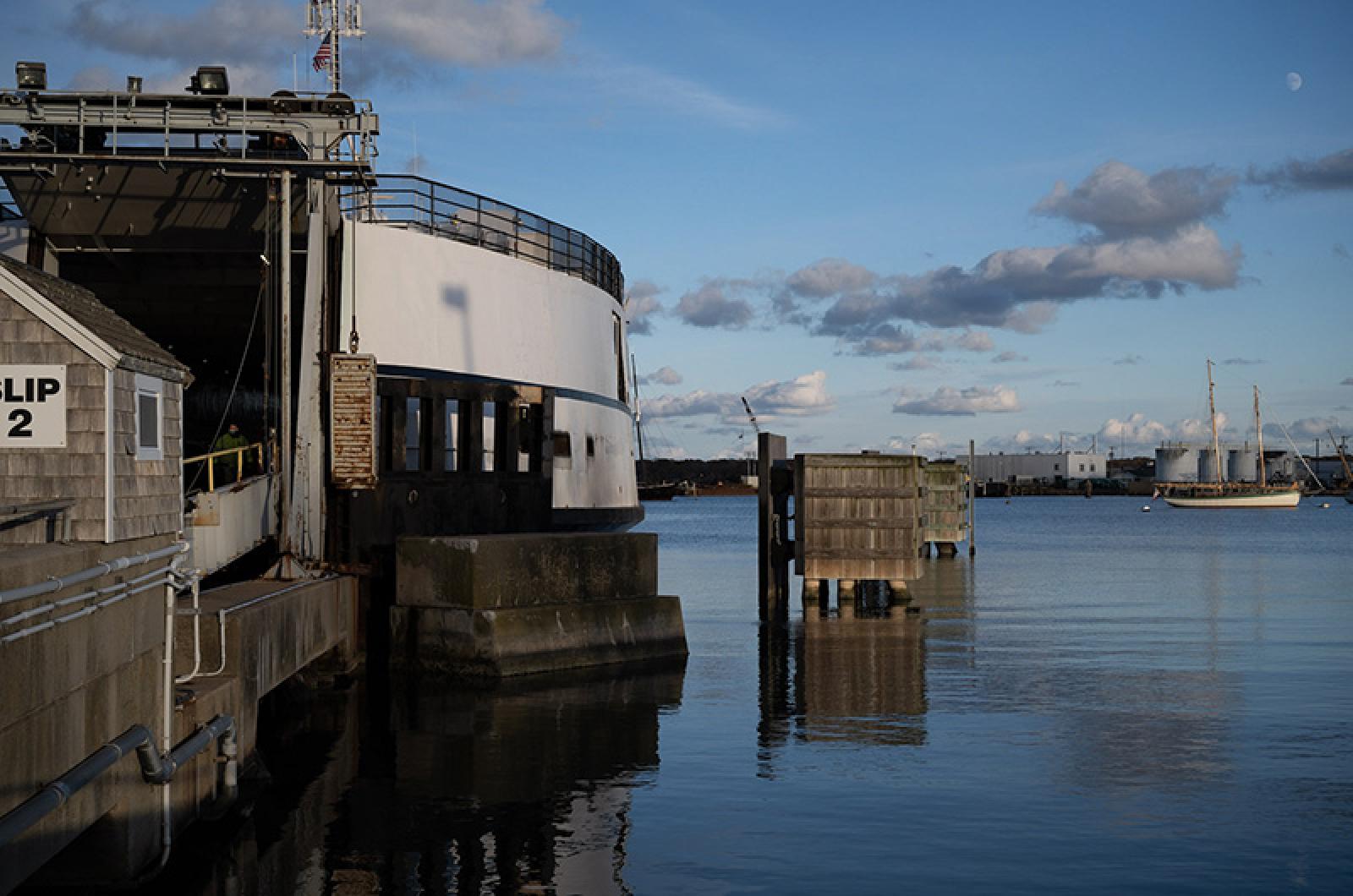
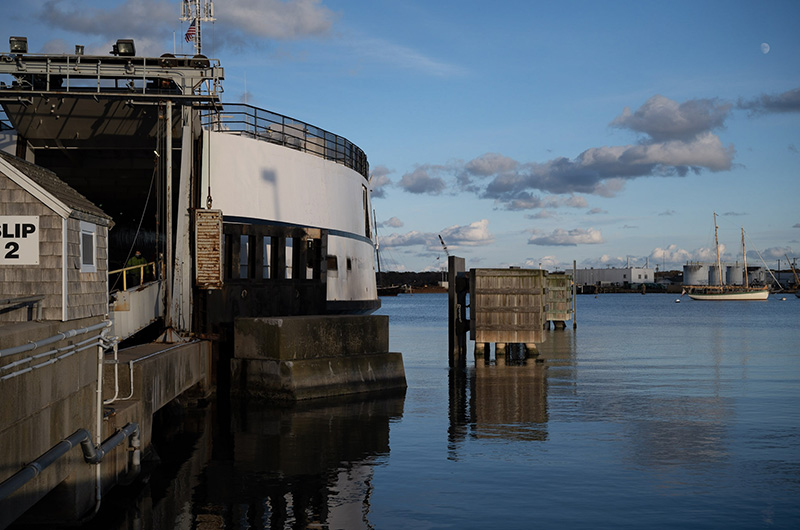
The elephant in the transportation sector room is the Steamship Authority. The SSA today uses roughly 10 per cent of the fossil fuel attributable to Martha’s Vineyard, largely but not totally in the ferries. The technology needed for fully electric short-haul vessels has been under development in Scandinavia for a number of years and fully electric ferries are in operation there. A conservative approach for the SSA would be to design new boats to be hybrid diesel-electric, retrofittable to plug-in hybrids to allow for shoreside charging infrastructure to be planned and deployed. Plug-in hybrid propulsion could result in a significant reduction in emissions — perhaps as much as 95 per cent, per the long-range plan for the Washington State ferries. While the SSA has contracted for an alternative fuel study for its next boat, given the long life of the vessels, an electrification master plan is needed soon.
For building heating and cooling, the answer for electrification is heat pumps, both for new construction and retrofits. These devices move heat from outside to inside (in the winter) or inside to outside (summer). They are also remarkably efficient (at least three times more efficient than burning oil or propane), and today’s technology allows their operation even in sub-zero outside temperatures. Energy costs for electric heating via heat pumps on the Vineyard are significantly below either oil or propane, and up-front costs are comparable for new construction. For new construction and when replacing an existing system, heat pumps are the smart choice, and air conditioning for the increasingly hot summers comes with the package.
A frequent objection to electrification is that fossil-fueled power plants emit greenhouse gases — thus a so-called green grid is required in order to meet our targets. The renewable energy fraction of our grid-supplied electricity is today about 30 per cent; by 2030, under current legislation that fraction will reach 54 per cent, and by 2040, 77 per cent. Proposed legislation will bring us even closer to our 2040 goals. The Vineyard Wind project will strongly contribute to the greening of our electricity supply, and our local solar generation (almost 10 per cent of our overall electricity use at this point) is non-negligible.
A final important facet of our energy system transformation is resilience. We are dependent today on our electricity supply, and this dependence will grow. As we navigate the challenges of climate change, with increasingly more frequent and more serious storms, resilience of electricity supply is of paramount importance. In many ways, today’s electricity distribution system is basically the same approach developed by Edison in the late 19th century. In partnership with our electric utility, we need to modernize the grid to achieve our resiliency goals.
While the full scope of this modernization effort is still being developed, the outline is clear. First, we need to increase the amount of energy generated on-Island — to perhaps 25 per cent of our total electricity use. This will be via distributed energy resources (in the form of distributed solar and battery installations as well as community solar projects) and the application of advanced grid control systems. For emergency critical needs, the concept of local microgrids that are detachable from the main grid when that grid suffers an outage are an approach that is technically sound and being deployed elsewhere. Localized management of distributed resources by the utility allows for handling of peak power demand; in the early 2030s this could result in what is known as a virtual power plant on the Island.
The adoption of the 100 renewable Martha’s Vineyard warrant articles is an important milestone for our community. While the global and national efforts in the climate crisis may sometimes seem fraught, we can take some considerable pride in what we have accomplished so far and will accomplish in coming years. As with many change efforts, the old catch-phrase applies: think globally, act locally.
Rob Hannemann is chairman of the Chilmark energy committee and a member of the Martha’s Vineyard Commission climate action task force.
Comments
Yes, The electrification of
Daniel Phelan VHYes, The electrification of motive power is a huge component to getting to Net-Zero. Larger than you think. Rules from the NFPA (specifically NFPA 855) are going to limit to a large degree what each individual building is allow to have as energy storage in battery form (20kWHrs with lithium for example). Those EV's being sold with the ability to power a house from their batteries are the ones that are going to push the paradigm(like the Ford Lightning and Nissan Leaf to name a couple). Ev's can have 100 kWhrs or more installed in them and don't fall under the NFPA 855.
Also, serious changes in Zoning Laws need to happen. In too many places on this Island zoning rules restrict where ground mounted PV arrays can be sited or require laborious reviews from historical districts or conservation boards. It would be worth it to consider automatic setback relief for ground mounted PV arrays and provide an expedited path for homeowner to install roof mounted PV systems.
The power system on this Island is of growing importance. Heat pumps are replacing gas fired heat and oil. Electric cars are growing in use and are an added load that we need to be prepared for. We need the democratization of energy, we are vulnerable without it. We live in fact, on an actual Island. If where we live is not the ideal place to experiment to develop a power system economic model of the future, than where is? From the citizens and select boards to the town administrators, everyone is going to have to hunker down and make some compromises. Let's get to work.
Setback relief and zoning
Jan Galkowski Westwood, MASetback relief and zoning reforms will be essential if Massachusetts residents do not want sprawling solar farms over scenic lands. Either way, wind and solar generation are coming, because the costs are compelling compared with pure grid connections. The number to remember is that CAPITAL COSTS of land-based wind, solar, and storage in the early 2030s are projected to be 1/6 of the OPERATING COSTS of (just) grid transmission. With those economies, why wouldn't ANYONE insist upon generating at the point of consumption?
Yes - Set back regulations
mike SomewhereYes - Set back regulations need to change for wind generation. I have tried several times in WT and am told that I need the ht of the tower plus 10'.
Many lots are not 120" wide, so if you want a 50' tower with a turbine on it you are out of luck.
You forgot to mention that
BCS OAK BLUFFSYou forgot to mention that the Scandinavian ferries you reference are about the size of a freight boat. Compared to the Island home they carry less than half the number of vehicles and more than 1,000 less passengers per trip. How is this a viable solution?
Electric ferries don't come
Jan Galkowski Westwood, MAElectric ferries don't come in a single size. See links below. The Norwegian ferries may be smaller, but their cost of operation is 80% less than conventional and, so their payback period is shorter than conventional. With the savings you can buy two.
https://electrek.co/2018/02/03/all-electric-ferry-cuts-emission-cost/
https://electrek.co/2017/08/24/all-electric-ferries-abb/
He’s offering suggestions,
John Christensen Dining roomHe’s offering suggestions, not solutions. The perfect is the enemy of the good.
For those of you who are
Darrell King EdgartownFor those of you who are still a bit hesitant about EVs, consider leasing one as I first did. Range for these vehicles now is commonly 250 miles or better, and the federal tax incentives will bring the monthly payments down significantly. The State will send you a check. Charging is simple; even just plugging into a 120V outlet overnight will add about 60 miles to the battery, and a home charging station will do 4 to 5 times that. The cost for this energy is 1/3 to 1/4 that for buying gasoline. Maintenance costs almost nothing.
Performance is impressive. After driving one even for a short period you will never want to go back to a gas powered car. And for those of you who still use gasoline, stop idling! I was once told, "That's a Vineyard thing". We can't afford to do that any longer.
Most might believe that a
Darrell King EdgartownMost might believe that a solar panel installation is not affordable. Not necessarily true. If you have the proper site and roof, you can get a 10-year, low-interest-rate loan from a State-approved bank for $0 down; the State will also send you a cash payment (if primary residence) and the IRS will give you a tax credit worth 30% of the cost. In other words, you will actually get paid to do this! Then an additional incentive from the State will pay you for all of the electricity you produce over the next 10 years, worth about another 10%. Finally, with a properly sized system, you will no longer have an electric bill. The excess energy you produce on sunny days is purchased by the power company for approximately the same price you pay them when you buy it back at night. Contact any of the solar providers for payment options (buy, lease, purchase-power agreement, etc.) and they will run the numbers for you.
This was all true when I got my system 4 years ago, and the subsidies change as more and more systems come on-line; so don't hesitate.
SSA/Ferries < 10% of MV
Eyes on the Prize OBSSA/Ferries < 10% of MV fossil fuel use. Maybe focus on & resolve the other 90%, while the EV ferry tech catches up.
Better to tackle the immediate and practical solutions (like EVs & heat pumps) than to bog down in aspirational discussions of ferries.
This is a very good, well
Carol formerly ChilmarkThis is a very good, well written piece. Thank you. Two minor additions: 1. When we site solar, I hope home and business roofs, as well as parking lot awnings, are the first places considered - don't ruin meadows when perfectly good roofs & parking lots are available; 2. excellent point on the ferries. We need to push ahead on water transportation, too.
The MV Commission task force
Frank Brunelle Vineyard HavenThe MV Commission task force should look at the whole picture. Yes, electric vehicles are beneficial but population is growing as are vehicles. There will be, it is projected, from 30% to 50% of all vehicles becoming electrical powered. But there is this... "By 2050, there will be about 3 billion light-duty vehicles on the road worldwide, up from 1 billion now. At least half of them will be powered by internal combustion engines (ICE), using petroleum-based fuels." which is easy to find if one does the research. And so we will have 1 to 1 1/2 billion fossil fuel vehicles or as many or more than we have now, PLUS a similar or equal number of electric vehicles. This is not an overall reduction in Co2. Offshore wind is another story, more complicated, but basically the task force needs to dig deeper. One issue being glossed over is Beach Road flooding. No matter what action we take as a society what is already in the works is a steady increase in Co2 and sea level rise. Perhaps the most urgent real task ahead is how to raise Beach Road in the future and how it will be paid for how it will be managed, and of course, the Steamship Authority location is ground zero. World leaders just completely failed in climate talks, coal is scheduled to be around for another 50 years, and Co2 is increasing and will continue to increase. The rate of increase is also increasing. https://www.co2.earth/daily-co2 The MVC task force does not have the ability to stop it, even here.
Rather than the elephant in
Robert Morris Woods HoleRather than the elephant in the room, Steamship is the dinosaur. All communities, but especially the islands, will miss the opportunity of the millennium ,.There is so much federal money about to become available to the transportation sector that SSA should be running electric busses and many electric ferries in 2-4 years. BUT THEY WONT, Because accepting federal money might open the window for the public to get a clear look at their finances. So the islands will continue to get inferior service, on environmentally dirty ferries with ticket prices double what they could be.
"Concepting" is lots of fun,
Benjamin Reeve West Tisbury"Concepting" is lots of fun, but the present realities of energy density and charge rate work for light catamarans with no freight and a couple hundred people, not the Island Home (6000 horsepower). This is true to the extent that planning for a scheme that does not exist even in potential design (even in terms of understood and applicable Chemistry/Physics) will tend to lead more readily to planning mistakes than useful planning. It is probably more interesting collectively to consider and discuss living happily with one third the total power/energy being used to haul stuff to the Island (and one tenth or less the btus now used in jet fuel in the air) than to "plan" for electrical storage on a boat that runs all day carrying the weight we now expect.
From Scandinavia:
"For now, Norway’s faster, long-distance ferries... still run on diesel. The energy density of even the most advanced batteries simply isn't enough. On the Rygerelektra, an entire room, like some kind of science fiction walk-in closet, is filled with batteries hidden behind white metal doors marked with high voltage warnings. Inside a series of fans whirred along at high speed to keep everything cool, drowning out most other sound. All to power a motor not much bigger than a large suitcase."
I'd like to add that adding
Christian Lecorps Somerville, MAI'd like to add that adding waste heat recovery to the diesel generators on the island is a great first step. Doing this with the right technology would boost electrical energy production by at most 27% in a relatively short amount of time while reducing fuel consumption and emissions by 9%-4% and 12%-24% respectively. It may seem counter-intuitive but the saving from a lower fuel cost and avoided carbon tax could be used for onshore wind and other grid resiliency projects while ensuring we hit the energy goals early.
Add new comment