

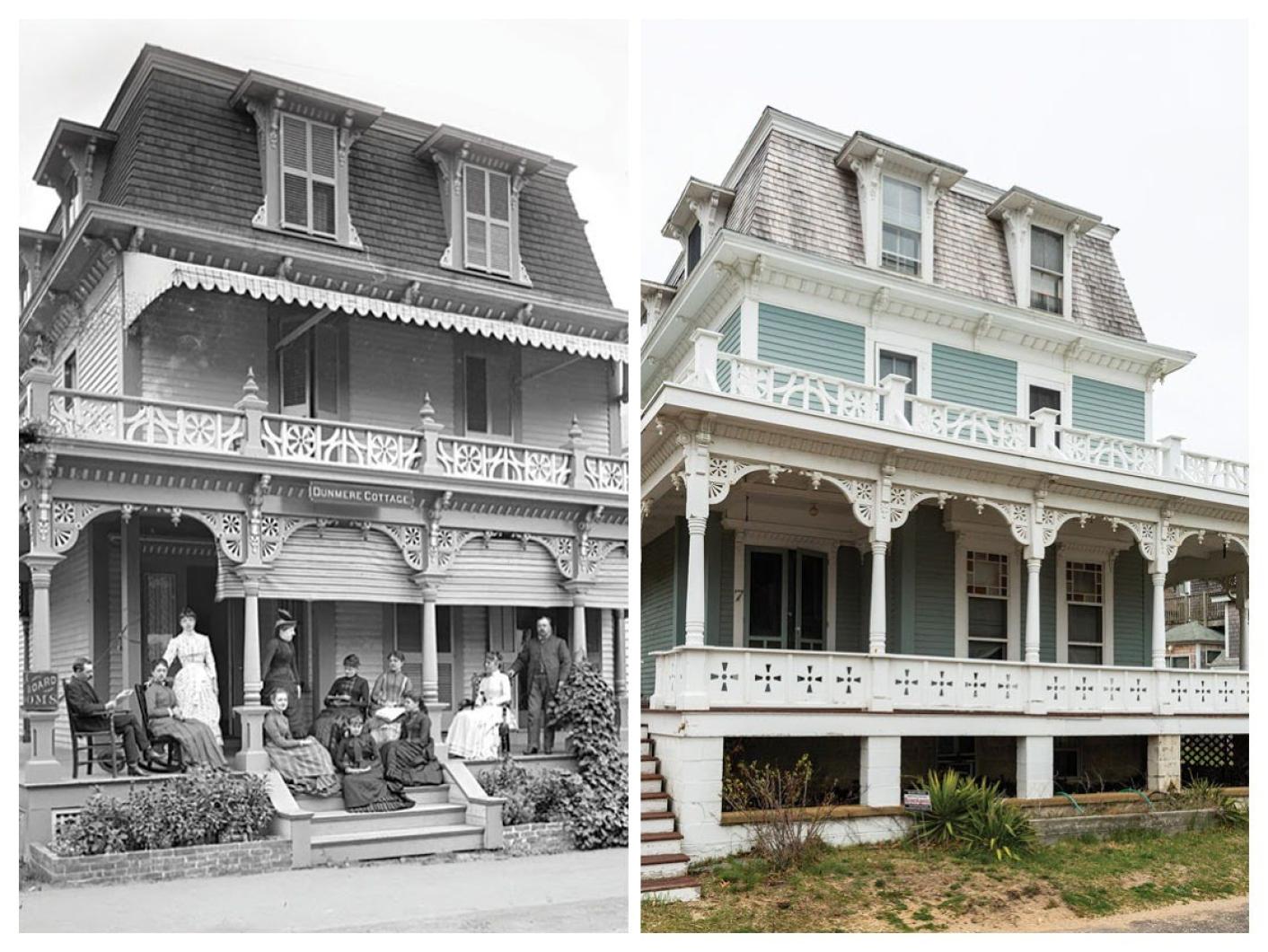
Then and Now: Dunmere by-the-Sea
Here's the story of how one notable cottage has offered an inclusive welcome in Oak Bluffs since 1880.
As the Vineyard Gazette turns 175 this year, the Vine takes a look back at the remarkable ways Island life has endured through change and the passage of time. We begin with the story of one notable cottage that has offered an inclusive welcome in Oak Bluffs since it opened in 1880.
In the circle of life, nature typically gives and takes. Often what is lost is gone forever, replaced by something shiny and new. But on the Island, thanks to our historic districts, we’ve found a way to keep the circle going by preserving otherwise temporary structures to tell the unique stories of our past.
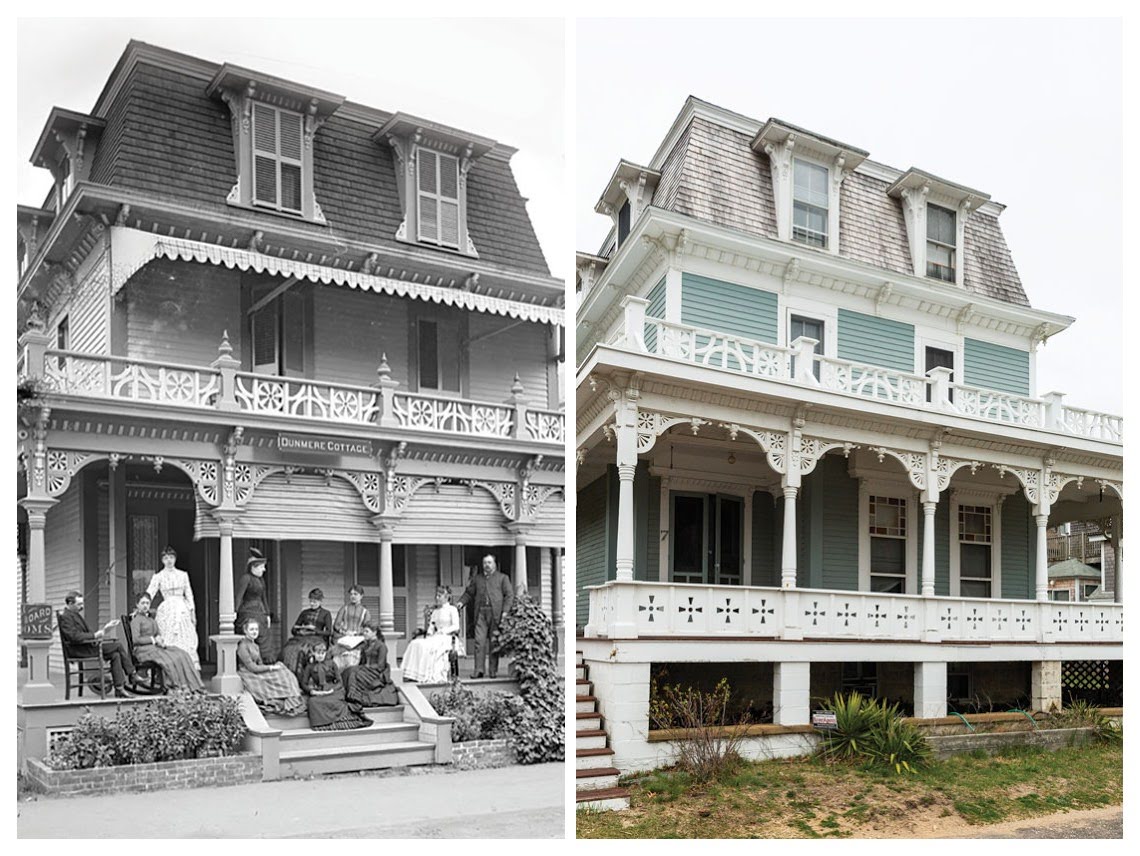
In Oak Bluffs, Dunmere-by-the-Sea (né the Dunmere Cottage) has endured the test of time in the best possible way, shepherded from decade to decade by responsible owners. The story begins at 149 Circuit avenue in 1880 (when Oak Bluffs was still Cottage City) and continues today at 7 Pennacook avenue, where the cottage was moved in 1910. The three-story mansard-roofed Dunmere Cottage was built on the Circuit avenue site (where Tangerine and The Lazy Frog are now) by Hamilton J. and Katherine Greene to be a boarding house.
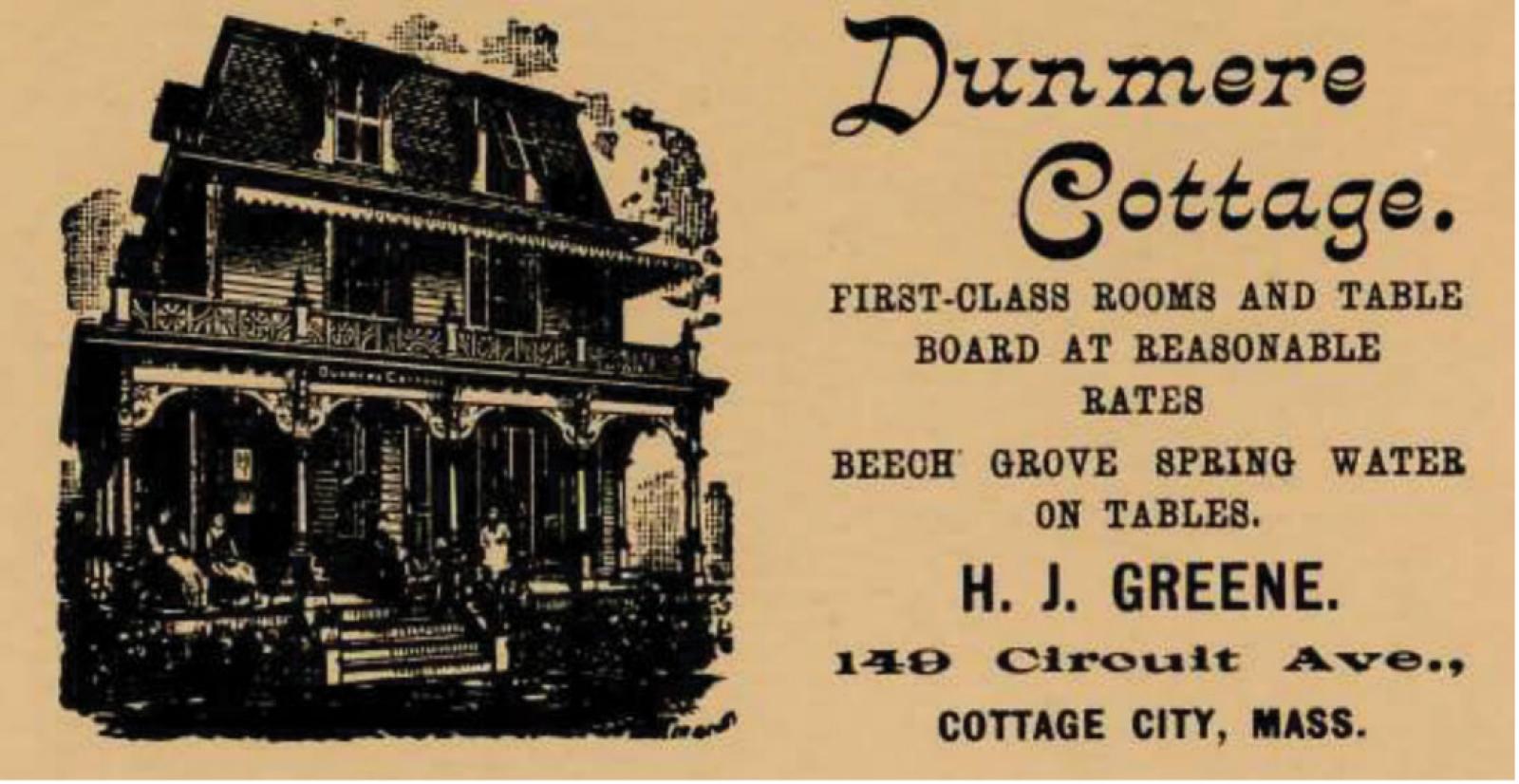
When the building was lifted and moved in its entirety to Pennacook, a new foundation was added, raising up the building and allowing a partly aboveground basement with windows. Fortunately, all the charming Victorian details of the “wedding cake” design stayed firmly in place through the move and over the years following. The new location was only a stone’s throw from the Inkwell.
Before the move, Oak Bluffs Land and Wharf Company president Erastus P. Carpenter had sold the land on Pennacook to one R. Flanders for $125 on September 20, 1871. It was Flanders who sold the land to the Greene family. In later years, the building changed hands almost a dozen more times. Perhaps one of the more notable owners was Joseph A. Sylvia – of Joseph Sylvia State Beach fame – who owned the establishment from 1925 to 1946.
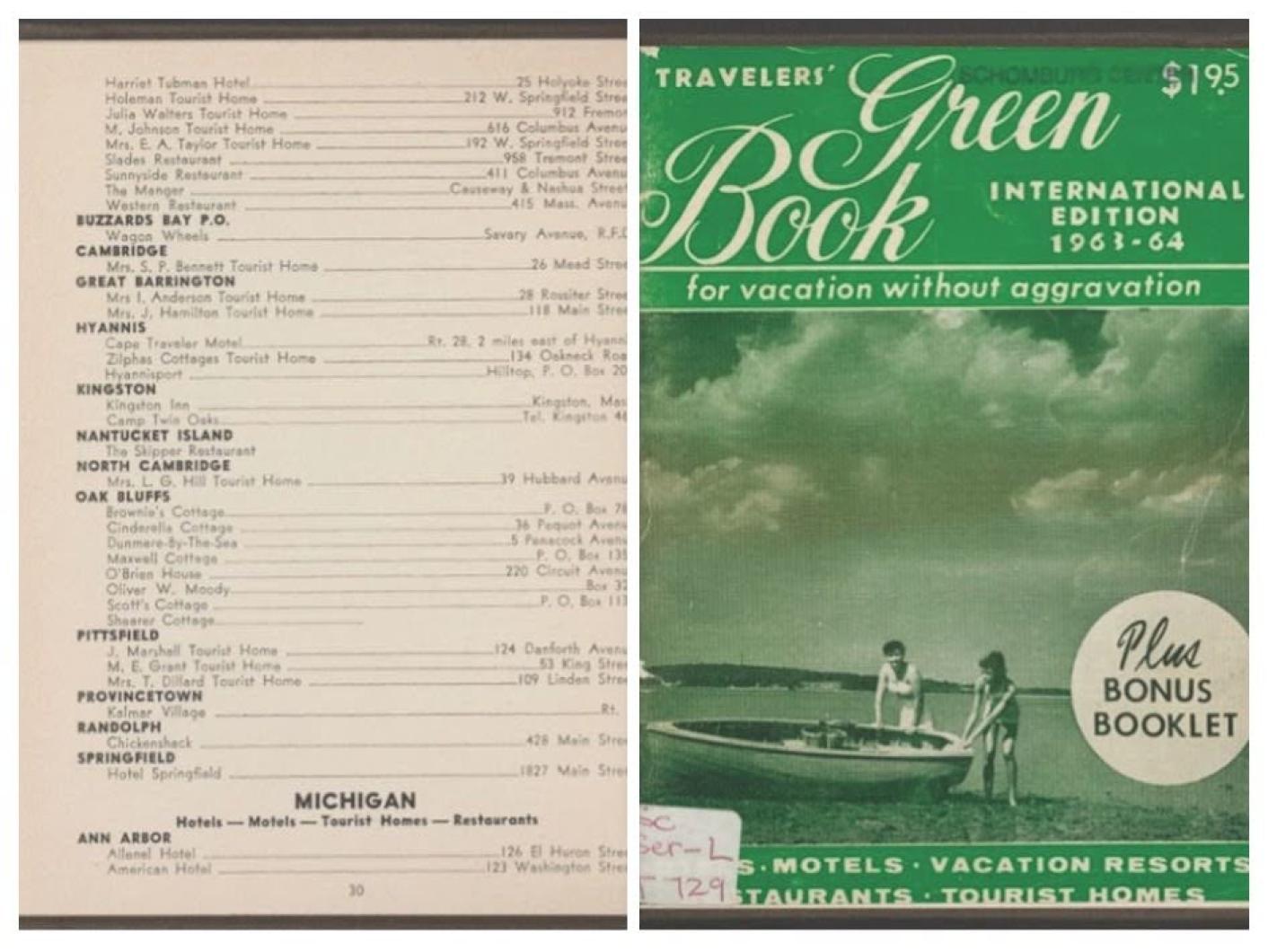
A poignant part of the Dunmere Cottage history was its listing in the (coincidentally named) Green Book . Published for more than 30 years starting in 1936, this was the travel guide (also called The Negro Motorist Green Book and later the Travelers' Green Book ) that provided marginalized Black people with advice on safe places to eat and sleep when they traveled through the United States. The 1963-64 edition of the Green Book listed eight establishments in Oak Bluffs where rentals were acceptable, one of which was Dunmere-by-the-Sea. In the 1960s the cottage was also advertised in Ebony magazine.
In 1970, the Dunmere was converted to four apartments, one on each of the four floors. Operated continuously as a hotel/guest house (most recently by the Haney family from 1977 to 2020), the Dunmere became a second home for several Vineyard families who rented summer after summer for decades, among them Dennis and Maureen Jackson, Janice Benson and husband Barry Mizock, and sisters Doris Pinn and Eleanor Hughes. They all became friends at the Dunmere, sharing views of the beach and fireworks, food, libations and a camaraderie typical of Oak Bluffs and its history of inclusion.
Adding a ‘way cool!’ element to the story is an unconfirmed rumor shared by one of the guests that Led Zeppelin lead guitarist Jimmy Page once stayed at the Dunmere overnight with a paramour.
In late 2020, Kahina Van Dyke acquired the Dunmere with an eye to the future. No strangers to Victorian houses – or Oak Bluffs – Kahina and her husband, Claudio Casarotti, purchased the Narragansett House in 2018, another historic guest house built in 1880, which they are now operating as a bed and breakfast. It was their intention, Kahina said, to help “preserve the special character of the neighborhood and to welcome people to a place that can strengthen, connect and restore.” They have the same intention for the Dunmere.
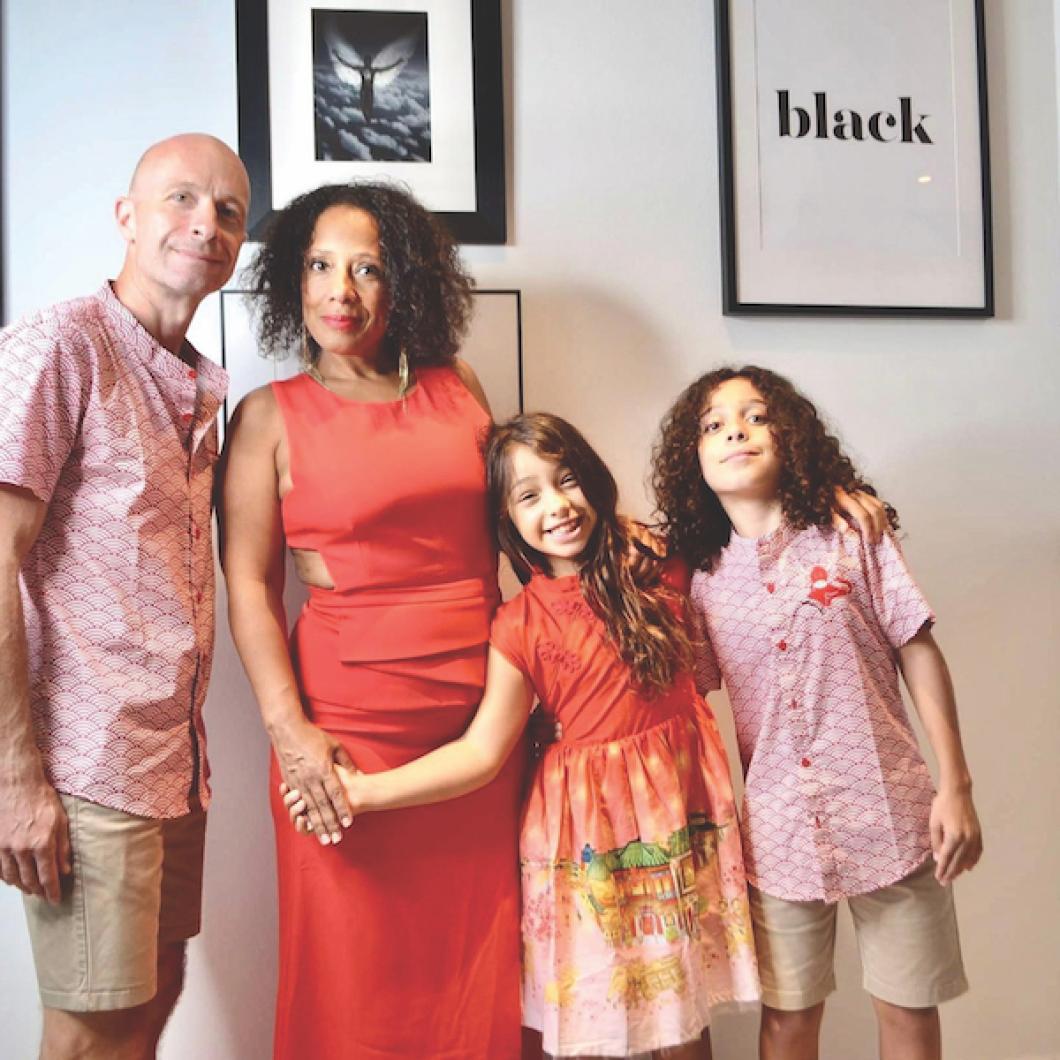
She is wasting no time in readying the Dunmere to open for weekly rentals this summer, which will begin on June 19. In an April Facebook announcement, Kahina wrote, “My mission is to honor and preserve this property and this community by creating a place that all feel welcome to gather, connect and restore. A place of kindness. A place of inspiration. A haven.”
The Green Book predicted, “There will be a day some time in the near future when this guide will not have to be published. That is when we as a race will have equal opportunities and privileges in the United States. It will be a great day for us to suspend this publication for then we can go wherever we please, and without embarrassment.”
Dunmere-by-the-Sea’s history exemplified that prediction – and now new owners will extend the circle of its life.
Skip Finley lives in Oak Bluffs and is the author of Whaling Captains of Color: American’s First Meritocracy.
Photo and graphic credits: Old Dunmere ad, courtesy Kahina Van Dyke; Green Book, The New York Public Library Schomberg Center for Research in Black Culture; family photo courtesy Kahina Van Dyke.
Comments
What a wonderful story of a
Harry Seymour Oak BluffsWhat a wonderful story of a place in history, highlighting the significance of Oak Bluffs as a vacation retreat for all manner of folks regardless of race. Glad to know the Dunmere is in safe hands to continue the tradition. Beautifully written piece.
Thanks so much for writing
Thomas McMahon Oak Bluffs and Lynn, MAThanks so much for writing this article and explaining the history of the Dunmere. My grandfather was Joseph A Sylvia and my mother told me that her parents owned and operated the Dunmere before my grandfather sold it to purchase the Ocean View Hotel. I was amazed to learn that the building was originally on Circuit Avenue. It seems extraordinary that buildings were more commonly moved back than since it doesn’t seem to happen that often anymore.
Add new comment