

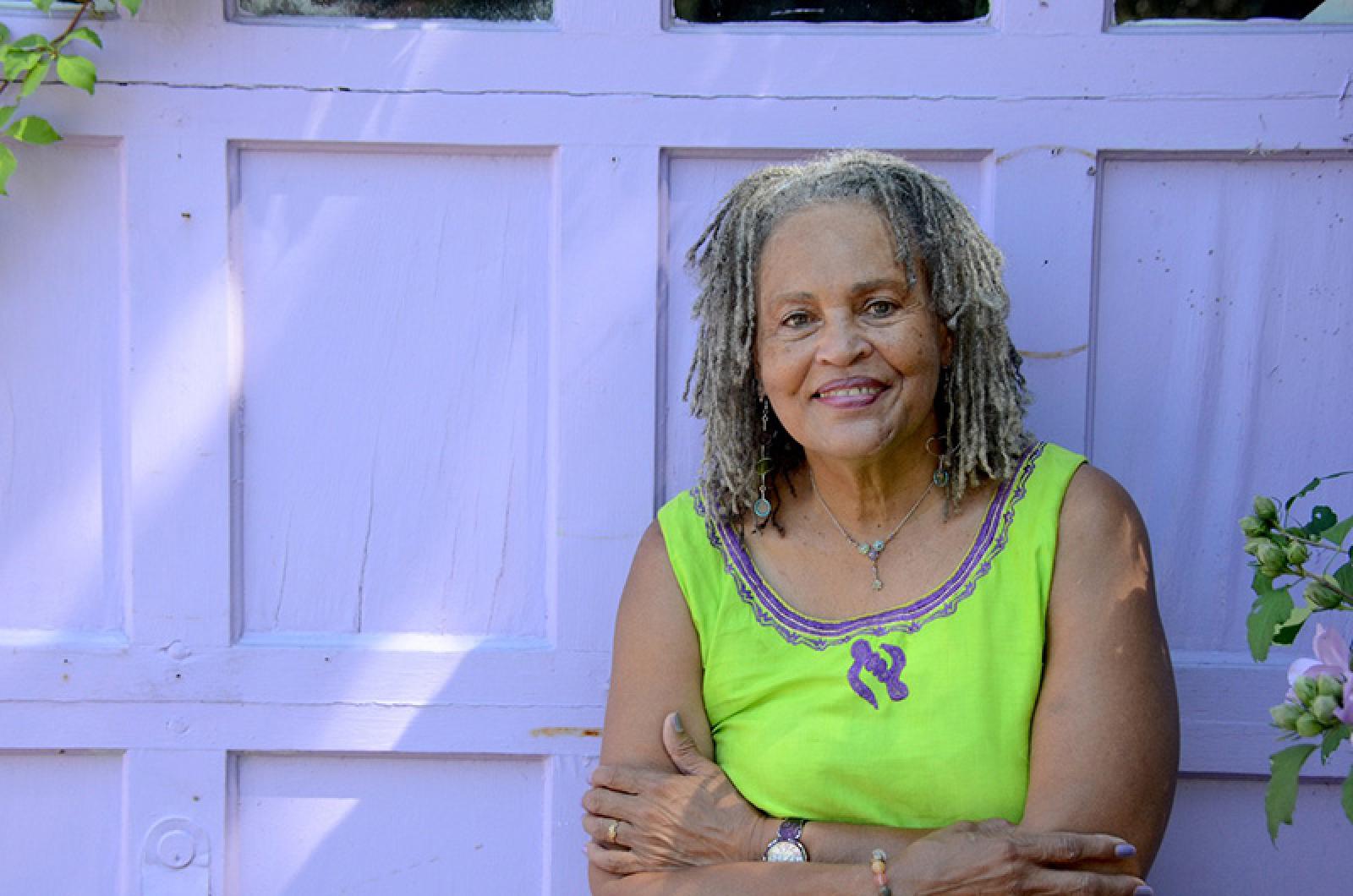
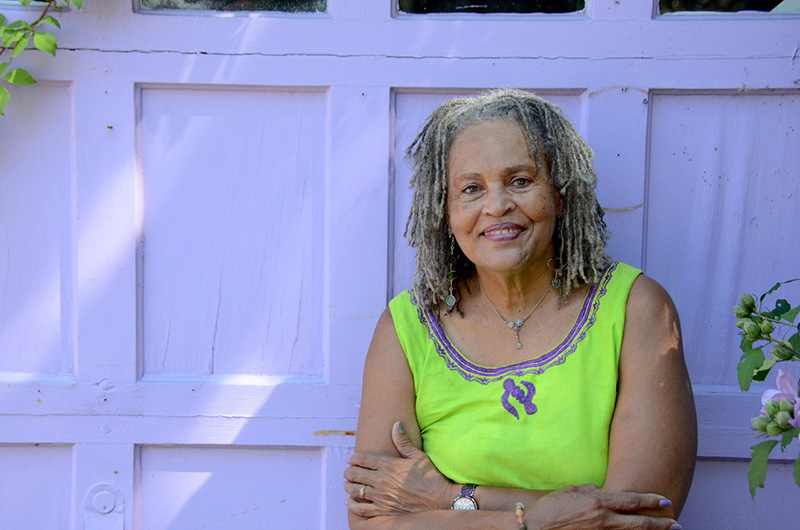
This year marks the 60th anniversary of Charlayne Hunter Gault’s arrival at the historically segregated University of Georgia in Athens.
Charlayne Hunter-Gault is bothered by black history month.
“I’m noticing all of the attention people are focusing on black history month, and that bothers me,” the prize-winning journalist told the Gazette in a Zoom interview last week.
“I am delighted that people are finding things to celebrate and sharing them, but . . . we spend one month being very intense in our coverage and acknowledgement of black history, and then it goes away until next February.”
Black culture and history should be taught in schools regularly, not just in February, she said.
Ms. Hunter-Gault’s own contribution to black history is in the spotlight this year, which marks the 60th anniversary of her arrival at the University of Georgia in Athens.
In January, 1961, following a court order, she and Hamilton Holmes became the first African Americans admitted to the historically segregated state university, where the two transfer students — Ms. Hunter-Gault seeking a journalism degree, Mr. Holmes a pre-med — were almost universally unwelcome.
Isolated on the ground story of a girls’ dorm, Ms. Hunter-Gault endured bullying from her upstairs neighbors, who banged on the floor above her room to annoy her.
“They took turns, so they would be beating half the night,” recalled Ms. Hunter-Gault, who blocked out the noise by listening to music LPs on her record player.
“It didn’t bother me . . . I used to play Nina Simone. She reached all the way down to me at the University of Georgia in my solitude, and helped keep me company.”
Not everyone at the university was hostile to African Americans. Ms. Hunter-Gault went on to make some friends on campus, both professors and students.
One night in her first year at the university, which barred her from eating in the cafeteria, Ms. Hunter-Gault was surprised by a knock on her door. A group of Jewish co-eds, toting groceries, had come to cook dinner for her in the dorm kitchenette.
“They started to tell me about how and why they identified in some ways with what was going on with me,” she recalled.
“I learned that night about Jewish people and what we had in common, in terms of the awful things that can happen when people don’t think of you as fully human.”
Faculty allies included art professor Joseph Schwarz, whose painting of Ms. Hunter-Gault as an undergraduate is now part of the collection at the National Portrait Gallery in Washington, D.C.. And there was an English professor who would invite her for “tea and Salinger,” she said.
But the black students remained excluded from most campus activities.
“They didn’t really let me participate in extracurriculars, which was fine with me because I didn’t want to take phys-ed anyway,” Ms. Hunter-Gault said.
“I knew they didn’t want my black body in the swimming pool with the other girls . . . I think I finally took archery.”
On weekends, she drove home to Atlanta to stay with her family and report on the city’s student civil rights movement.
“One of the professors [Carl Holman of Clark College, now Clark Atlanta University] and Julian Bond started a newspaper [the Atlanta Inquirer], specifically aimed at covering the students because the other papers weren’t doing it,” she said.
“The students would demonstrate in the morning, get arrested in the afternoon, get bailed out later, then come to [Mr. Holman’s] basement and tell me their stories and I would write them up.”
She also reported on unequal facilities in the city’s segregated public schools and witnessed the aftermath of weekend violence — including the inside of a gunshot victim’s fatal head wound — at a crowded public hospital serving the black community.
“It was good training,” said Ms. Hunter-Gault, who would go on to cover wars, apartheid and the Ebola crisis while reporting from Africa for public television, National Public Radio and CNN. “I was prepared from an early age for . . . challenging stories,” she said.
After graduating in 1963 with her degree in journalism, Ms. Hunter-Gault wrote for the New Yorker magazine and anchored an evening news team on Washington, D.C. television. In 1968, she became a New York Times reporter.
A decade later, she joined public television’s MacNeil/Lehrer Report, now known as the Newshour, where she earned awards including two Emmys and a Peabody for her reporting on apartheid in South Africa.
The 1970s was also when Ms. Hunter-Gault discovered the Vineyard. After many years of renting every August, she and her husband Ronald Gault became Oak Bluffs homeowners in 2012, and now spend June through November on the Island.
“We visited, and we came back to live,” she said.
Ms. Hunter-Gault, who turns 79 on Saturday, remains a special correspondent for the Newshour, which last month aired her interview with Ruby Bridges, who as a Louisiana six-year-old in 1960 became the first black child to desegregate a Southern elementary school.
Her opinion piece I Made History, But it Didn’t End There, was published in the New York Times last month.
On the campus where she and Mr. Holmes were received so coldly 60 years ago, the Holmes-Hunter Academic Building — named in 2001 — and the annual Holmes-Hunter Lecture pay tribute to the University of Georgia’s first black graduates.
This month’s 2021 Holmes-Hunter lecture featured Ms. Hunter-Gault in an online conversation with fellow seasonal Islander Henry Louis Gates Jr.
She and Mr. Holmes are also celebrated in a new documentary by students at the university’s Grady School of Journalism and Mass Communications, where an endowed chair is named for Ms. Hunter-Gault.
Titled UGA 60th Anniversary of Desegregation Special, the hourlong video includes archival images and footage as well as recent interviews. (It is posted on the journalism school’s YouTube channel, @UGAGradyCollege).
Despite official desegregation, racial inequality persists in America, Ms. Hunter-Gault said, citing as an immediate example the far greater toll of Covid-19 on communities of color that also have had less access to testing and vaccinations.
“As a journalist, I pursue this, because I’ve heard people have problems with the phrase black lives matter, and yet . . . the people who are most disproportionately affected by the virus are people of color, and when you look at the other aspects — the fact that people are losing their jobs, they don’t have work, they don’t have health care — by every measure, it’s people of color who are the most severely affected,” she said.
“How can you process differences of opinion, and help people understand why there is an emphasis in some quarters — a growing number of quarters — on black lives, and why people feel that they have to make the point that black lives matter?” she asked.
“I can understand how some people might not understand it, but I would also hope that rather than just dismiss it, they would listen to those who say black lives matter and listen to why they feel that way.”
Comments
Several years ago, I painted
Harry SeymourSeveral years ago, I painted a portrait entitled “Freedom Fighter.” It was done in honor of Charlayne Hunter-Gault, who has been fighting the good fight for over 60 years. Her contributions and dedication have never wavered from a clarion call heard loud and clear, that the civil rights struggle is an on-going one, and that she is in it to win it. Thank you Charlayne.
Awww, how beautiful this
Mercedes Harrington Charlotte, NCAwww, how beautiful this story (her legacy) is. Harry Seymour thank you too for honoring this wonderful woman‼️
I am so grateful for Mrs.
Christine M. Bond Boston, MAI am so grateful for Mrs. Hunter-Gault for paving the way and continuing to light the path. I lift her up in praise and celebration. Thank you!
An excellent interview that
Bobbie Harwich PortAn excellent interview that reminds us of a time that should not be forgotten. Another excellent interview was when Mrs. Hunter-Gault interviewed fellow Oak Bluffs resident artist Loïs Mailou Jones in 1989 on MacNeil/Lehrer Hour. It highlights what Loïs, born in 1905, went through as an artist. She used to say, "At 90, I arrived!"
Here is that segment to copy and paste in your browser. Click on the arrow in the image; you may have to wait a moment or two but it's worth it to see these two outstanding women who made history.
https://americanarchive.org/catalog/cpb-aacip-507-bn9x05xx7g?start=2749…
Black history is American
Libby Gozansky AtlantaBlack history is American history. If American history were properly taught, it would cover America's original sin of stealing land from indigenous people, transferring ownership to European white people, and then developing much of that land and associated commerce using stolen slave labor. It also would cover the unpaid debt for those thefts represented by hundreds of promises broken by local, state, and federal governments. This is not a 30-day undertaking.
Many moons ago when we met ,
Dianne Ngoasheng JohannesburgMany moons ago when we met , you related your story of being one of the two first black students at the University of Georgia . Thank you for the courage to stick through the intimidation . Thanks for being a torch bearer . I salute you
It has been my blessing to
Carleen Cordwell Martha's VineyardIt has been my blessing to have met and then become a friend of Charlayne's daughter Susan Stovall. It has given me the opportunity to have a relationship with Charlayne, a national treasure that I treasure. I have and continue to ask her presence in sharing her life and time in my home of New Bedford that is also rich in our history there and in Cabo Verde, her knowledge of international struggle is endless and I will love and cherish her forever! And what a blast to send time with, laughter that fills you with joy and great hopefor the future!
Thank you.for featuring this
Dominique Milton Oak BluffsThank you.for featuring this trailblazer.
We can have Black History month every day with historic stories of our Vineyard legends.
Dear Charlayne, Happy,Happy
Al & Cindy SarasotaDear Charlayne, Happy,Happy Birthday. Ron just celebrated his 80th. Al's coming up his 80th. Hey
my brother, that's 80 down, 20 to go
Charlayne, I was privileged
Darrell King Belmont/EdgartownCharlayne, I was privileged and honored to share a conversation with you on the bus from Vineyard Haven to Oak Bluffs a couple of years ago. I remembered watching you on PBS decades ago but was not aware of your role in history at that time. I also wish to add to the voices praising you for your leadership in promoting a more just society, by your example and subsequent achievements. I am so pleased you landed on the Vineyard!
Charlayne Hunter-Gault is/has
adeCharlayne Hunter-Gault is/has always been top standard in the field of Communications! Since first seeing her on PBS decades ago, she is an intellectual icon, a demonstration of quality, a representation of possibilities! I greatly appreciate her perspective and speaking toward education and better balance. peace.
It is such a blessing and
Alvin Johnson Naples FlIt is such a blessing and pleasure to have Charlayne and Ron as friends and OB neighbors. I have followed her beginning with the news reports of her entering the University of Georgia. Never thought I would be blessed to come to know her personally. My wife and I have the highest regard for her great works and her continued spirit of keeping the struggle moving for the benefit of others.
As I like others have experienced incidents of life as a black man in America including the civil rights movement period, I find it difficult to even imagine what her life and so many of the others who suffered through breaking some of the chains of our bondage. I salute Charlayne and each of those who lead the way.
My memories of Charlayne and
Samuel Bacote AtlantaMy memories of Charlayne and Hamliton Holmes go back to when they were top students at Henry McNeil Turner High School here in Atlanta. They were quiet, studious and easy to "look at" persons with high aspirations.
What a trailblazer she is. I
Ndu Makutoane JohannesburgWhat a trailblazer she is. I salute her for standing up for injustices, inequality and discrimination.
I met her in South Africa when she was working for CNN.
Add new comment