

With some five million acres aflame on the West Coast, one would expect the danger of wildfire to be top of mind for those responsible for caring for Massachusetts forests.
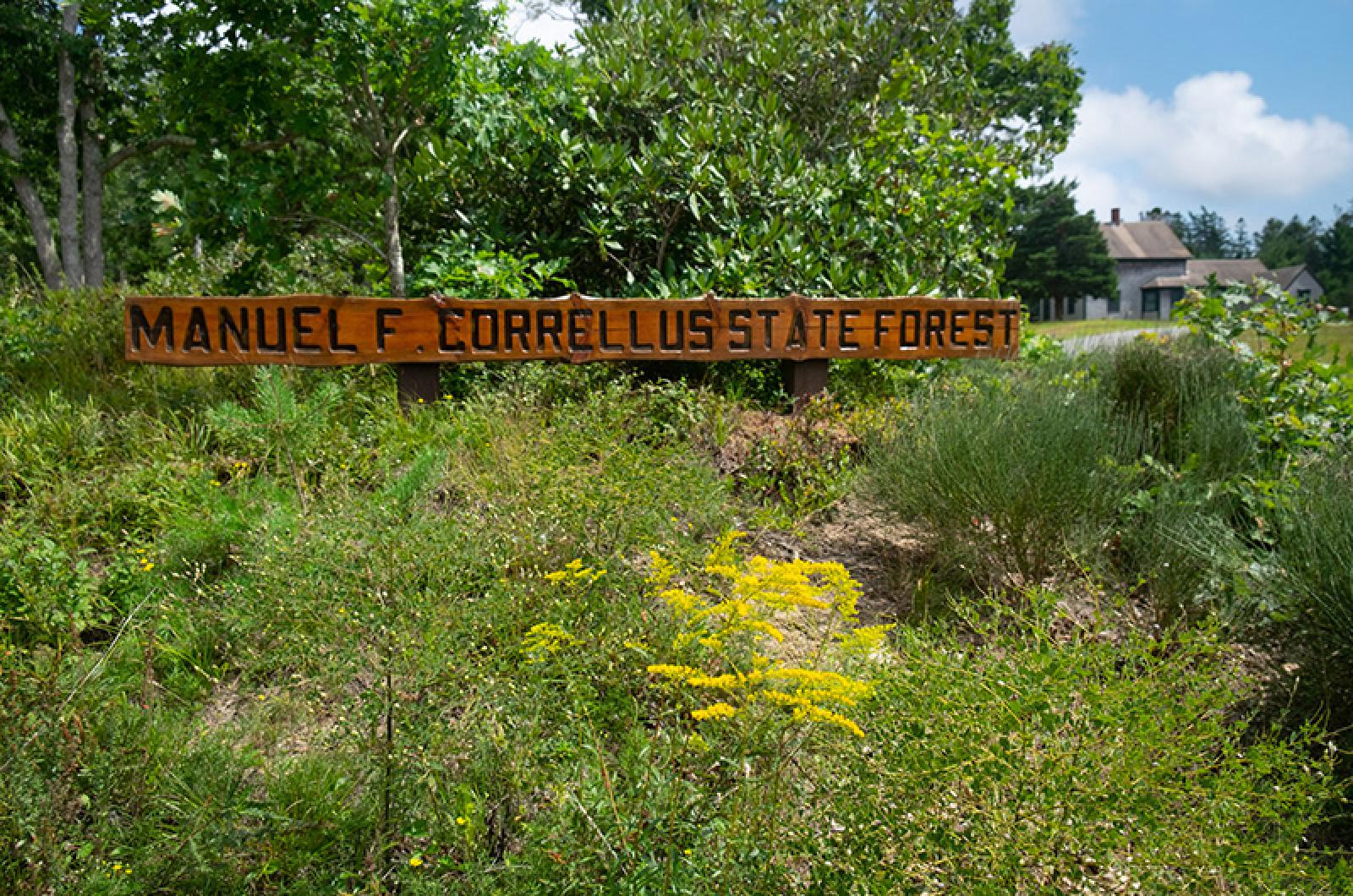
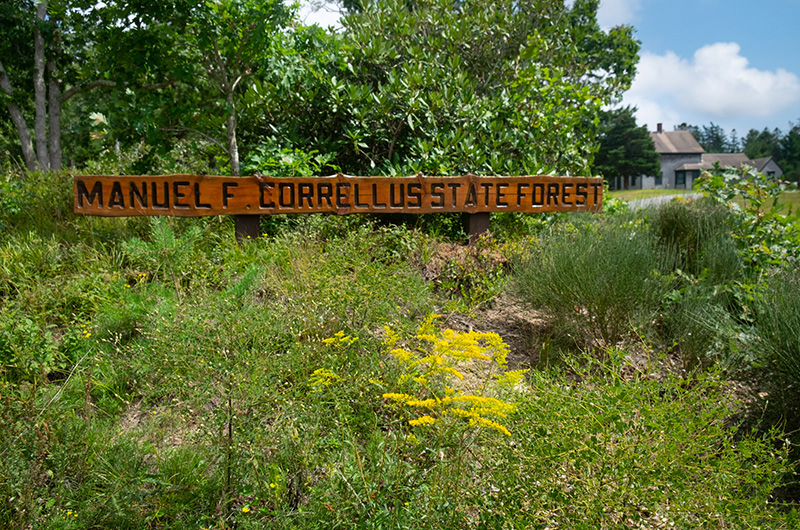
With some five million acres aflame on the West Coast, one would expect the danger of wildfire to be top of mind for those responsible for caring for Massachusetts forests. Why then, in the midst of a significant drought, is the state Department of Conservation and Recreation dragging its feet on finding a superintendent to oversee the Island’s Manuel F. Correllus State Forest?
The 5,300-acre state-owned forest has been without a resident manager since March, when superintendent Chris Bruno left to take a job in the South. Since then, most of the work that has been done on the forest has been undertaken by a single state employee commuting from the Cape.
Located smack in the middle of Martha’s Vineyard, the forest also holds a central place in the Island’s ecology. Home to many rare species including the now-extinct heath hen, the forest also protects the Island’s sole-source aquifer, which provides safe drinking water for residents.
The forest itself is a mix of scrub oak, pitch pine and oak woodland and was prone to frequent large fires in the years before it came under active management. Bordering the airport and several populous neighborhoods, it is critically in need of regular maintenance including prescribed burns to keep it in check.
At a meeting of the Martha’s Vineyard Commission last week, commissioners sounded the alarm about the lack of a full-time manager for the forest, noting the risk of fire has been exacerbated by a prolonged period of drought and the presence of informal campsites.
For 26 years until his untimely death in 2013, John Varkonda was the Island-based forest superintendent, and his tenure underscored the value of a manager who lives and works on Island.In addition to maintaining fire trails, inspecting and staffing fire towers, and managing periodic burns to improve the forest habitat, he worked with conservation groups and researchers concerned with rare species, coordinated with town fire officials and helped oversee the hunting season.
The job also included maintaining many miles of bike paths and walking trails that crisscross the forest and for ensuring that recreational users, including hunters, were following the rules.
In addition, the position historically played a key role as liaison between the state, which owns South Beach and State Beach, and the town of Edgartown and the county, which manage each of those respectively.
For most of his tenure, Mr. Varkonda and his family lived in a state-owned house located in forest grounds. Though the house has since been renovated, it was not made available to Mr. Bruno for reasons that are not entirely clear. Given the dire shortage of affordable housing on the Island, access to a home could be an important element in attracting and keeping a resident superintendent.
But in successive email statements since Mr. Bruno’s resignation, the DCR has been vague about whether it plans to hire a full-time superintendent at all.
“At this time, DCR is reviewing forest management options at Manuel F. Correllus State Forest; in the interim, the agency is working with existing DCR South Region staff, including a DCR Wildland Firefighter, to maintain the forest, authorized trails, and the fire tower,” the latest statement said.
In trying to maintain the property with off-Island employees, the state is doing Martha’s Vineyard a grave disservice by seriously underestimating the need for full-time, Island-based oversight. The danger of fire, perhaps caused by stray lightning or a careless camper, is not limited to a 40-hour work week. Moreover, there is a large if undefinable value to both the Island and the state in having an on-site liaison like Mr. Varkonda who was able to develop strong relationships with town employees, conservation groups and residents.
The MVC’s decision to write to the DCR and form a working group to address the state’s inaction is a good first step. Our legislative representatives, Sen. Julian Cyr and Rep. Dylan Fernandes, should also be enlisted in the cause.
If the issue is money, whatever small savings the state hopes to achieve by eliminating the position is surely not worth the potential cost.
Comments
Lots of food for thought in
Bob OBLots of food for thought in this article, including reference to "the dire shortage of affordable housing" for one person who might serve as Superintendent.
But what about affordable housing for many, situated appropriately, within the State Forest? I could be wrong, but if memory serves the forest was deemed unacceptable for any development and thus has served forever as a beautiful forest susceptible to fire risk, rather than providing a carve-out for the construction of a small local residential community which it seems to me would solve two problems at once if the Superintendent also plays a role in socialization within that community. Such a community could also serve as a harbinger (or at least a pilot) of things to come if it "works" successfully.
I know that I have left out any discussion of practicalities.I don't minimize these challenges at all. But why not seek to try it and eventually create a transferable model for other parts of the island?
The State Forest is a major
Katherine ScottThe State Forest is a major ecological asset to the Vineyard. That is the contemporary jargon. And it is true. But before the word "ecological" appeared in our lexicon the State Forest was already something special. I recall making the occasional visit with my father to chew the fat in a small cabin that Manny Correllus used as his "office." A potbelly stove kept the little cabin warm. Although the forest covers a large area, it seemed tucked away, far from the beaten track.
The State Forest had been decimated by fire only a few decades before and in the fifties was still full of the black spear-like skeletons of trees.
One aspect of the forest that makes it of value to researchers and "eco-historians" is that it is just about the only area of the Island whose sod has never been broken by a plow or dug up for any other reason.
The State Forest needs a full-time Island-based manager. That manager should, obviously, have the use of the housing provided for the person holding this position. I believe that that dwelling is close to the main vehicle entry to the forest.
The State Forest is not an appropriate location for affordable housing. Or any housing, other than the house intended for the forester.
Add new comment