

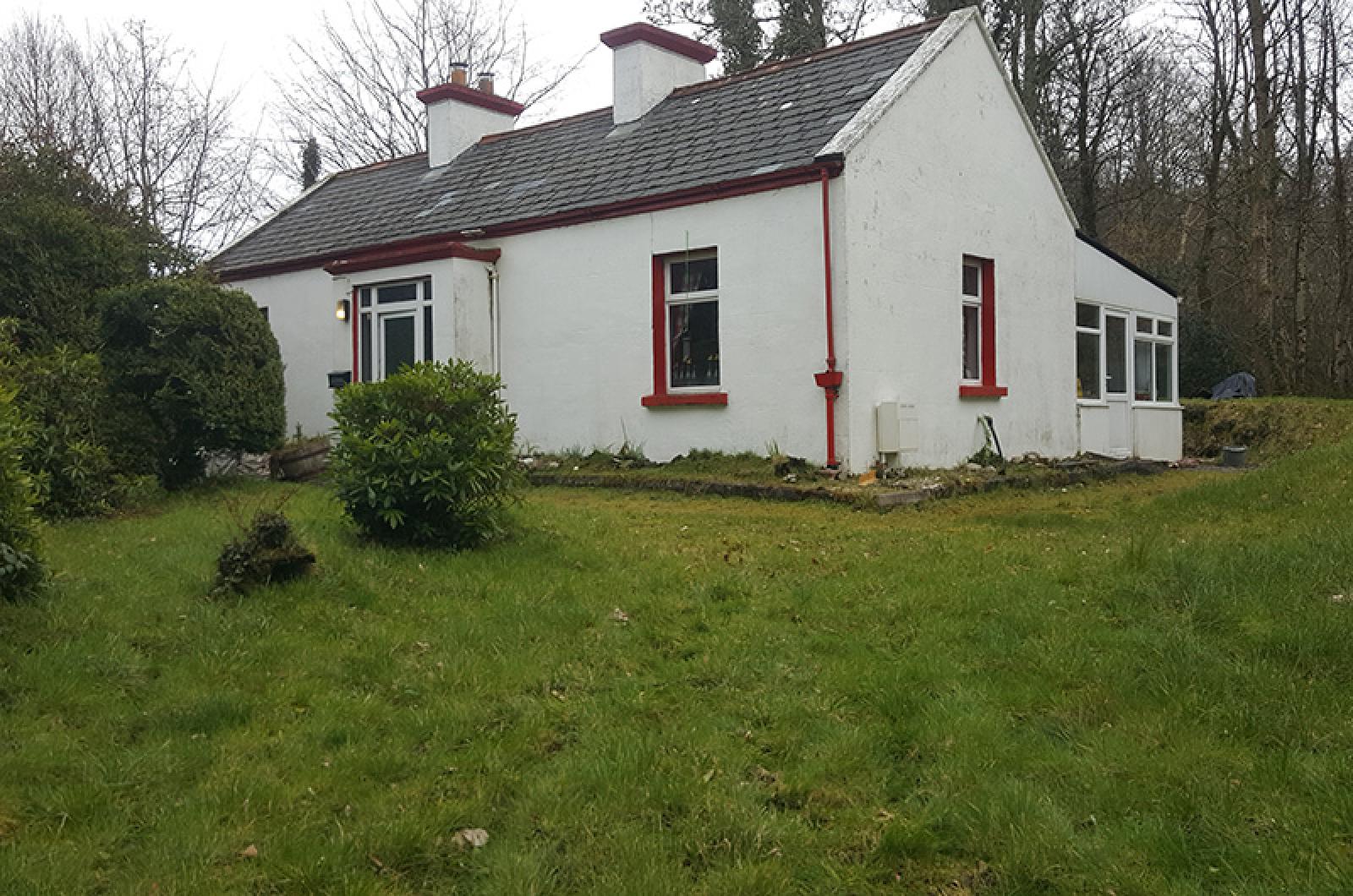
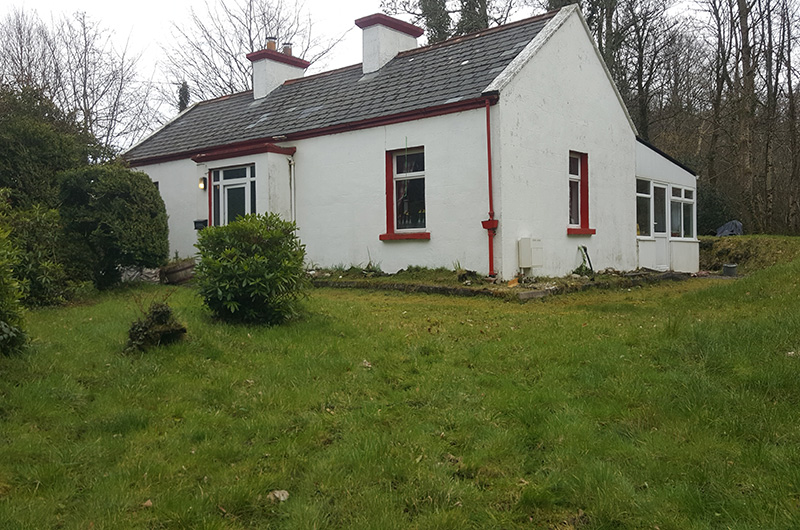
I traveled from the Vineyard to Ireland on March 1, to my village of Crossmolina in County Mayo.
I traveled from the Vineyard to Ireland on March 1, to my village of Crossmolina in County Mayo, ready to enjoy life in a beautiful place with good friends and neighbors. The first few days were passed in great company and as it is said here, “the craic was mighty,” meaning a very good time was had by all.
But a few days after I arrived so did Covid-19 and on March 13 the government announced a policy of social isolation and distancing. The schools and all public buildings were to be closed until March 29 when the situation would be reviewed. This meant that parades, concerts, plays and cultural activities intended to celebrate the patron saint of Ireland, Patrick, were cancelled.
It is a public holiday in Ireland and a holy day of obligation but the churches were closed.
“Somehow without the mass and everyone singing Hail Glorious St. Patrick and wearing the Shamrock there was no shape to it. It could have been any day,” observed my neighbor, Anthony Walshe.
There was an election here in February and the government did not receive a mandate. Unfortunately, no other party did either so as of now there is no new government. There was a considerable amount of resentment of the governing Fine Gael party in the rural areas where people felt ignored. Development and economic opportunity is focused very much on the greater Dublin area and there is definitely a feeling among the small farmers in the rural areas that their needs and concerns were not valued.
A few weeks before the election, the government made a serious misstep with their proposal to honor the memory of the British forces who had fought the Irish in the War of Independence.
Ireland has a proportional representation system of voting which is incredibly democratic but it is impossible for any one party to get the 80 seats they need to form a government. Hence, all governments are coalitions. In the election, Sinn Fein, a party focused on working peoples’ concerns, did very well but they did not field 80 candidates and they could not form a government.
So, when Covid-19 hit Ireland, it was an unpopular government that faced the challenge. They have done much to rehabilitate themselves in the handling of the crisis. On March 13, their projection was that 15,000 people would be infected by the end of March. Their focus has been on strict social isolation and since March 29 the country has been in virtual lockdown. Only those in essential jobs may work and everyone has been told that they cannot travel more than two kilometers from their homes.
For those who are immune suppressed and those over 70 years old, the government’s order is to remain in their homes, a process known as cocooning. People who lose their jobs because of the social isolation policy, receive a weekly payment of $386 and $488 wage subsidy from a government-financed employment protection program. All rents and mortgages are frozen for the next four months.
One of the problems for Ireland is the fact that the northern part of the country is part of the United Kingdom and subject to UK law. The response of the UK government to the crisis was initially to continue to function to preserve the economy and ultimately the people would acquire “herd immunity.”
This was obviously difficult for the Irish government as the Covid-19 virus was no respecter of borders, nationalities or religions and free passage around border areas meant that the infection could gain a hold in those communities. Fortunately, there is now an agreement between the Northern Ireland Authority, the UK and Ireland to introduce complete “lockdown” and observe the same practices of social isolation, testing and cocooning.
In dealing with this national crisis, the Irish people have drawn on their own strengths: love of community and a deep sense of humanity. The government sent out an appeal to all Irish doctors and nurses working in other countries to return home. In response to Ireland’s call, 60 doctors returned from Australia and went into two weeks’ quarantine ready to provide relief when they will be most needed. The Irish people had educated them and they felt a sense of gratitude and commitment.
The national postal service sent four postcards to every socially isolated person so that they can maintain contact. The local radio provides vital community information and the national radio provides entertainment, opportunities for listeners to discuss their concerns, enter writing competitions and receive a 24-hour information service.
In a small country with a centralized government, the response to a pandemic can be very well coordinated and the people of Ireland are greatly relieved that the projected figure of 15,000 infected people by the end of March has not materialized. On March 31, the total number of confirmed cases was 3,235 and the number of deaths from the virus stood at 71. Though the figures are lower than feared, there is a sense of mourning for all those who would still be with us today if it were not for the virus.
A great challenge for the Irish people across the country is that social isolation makes it impossible to attend funerals and wakes, a fundamental part of Irish culture. To not be able to shake hands and say, “I am sorry for your trouble” to your neighbors and friends is a great loss. Irish wakes are famous the world over, but their nature is often not understood. They are the cultural binding of a people who traditionally have seen death as a part of life and a path to what we hope will be a better world. In recognition of that, the number of people allowed to attend a funeral has been increased from two to ten.
In our own town of Crossmolina, neighbors are reaching out to support one another and all the local food stores and pharmacies are making deliveries to peoples’ homes. But the greatest challenge may well be that social isolation strikes a blow at the Irish love of community. For now, there can be no more gatherings to sing or share poems and no more of the perennial festivals and celebrations.
In the meantime, the local Gaelic Athletic Association has enlisted all its footballers, hurlers and camogie players to deliver supplies and provide a lifeline for those who need it most. The local Festival Committee has joined that effort and life goes on for the farmers who are designated essential workers.
Life is slower and quieter. The words of Irish poet, John O’Donohue, speak to that: “When you cease to fear your solitude, a new creativity awakens in you. Your forgotten or neglected wealth begins to reveal itself. You come home to yourself and learn to rest within. Thoughts are our inner senses. Infused with silence and solitude, they bring out the mystery of inner landscape.”
Elaine Weintraub lives in Ireland and West Tisbury. She was the longtime chair of the history department at the Martha’s Vineyard Regional High School.
Comments
Thank you for this Elaine. I
Steve Ewing EdgartownThank you for this Elaine. I think O'Donohue puts well what we are all feeling these days. This is one of the gifts we can glean from this tragedy. I hope that folks who have lost loved ones and the doctors and nurses putting their lives on the line can also feel some peace from his words.
Thank you Steve. I found
Elaine West Tisbury & IrelandThank you Steve. I found John O Donohue's words summed up for me what I was feeling and I do hope that once this horror has passed we will have been able to draw on our inner strengths. I hope you are well and my heart goes out to all those who face such danger. Take care of yourself or as they say in Ireland "mind yourself now."
Beautifully written Elaine.
Annemarie Reid Oak Bluffs, Ma.Beautifully written Elaine. Things are similar here on MV. Everyone for the most part is complying with social distancing. Many businesses have announced closing throughout summer. Not sure if people will still be coming and how that will impact our hospital and food supply chain. Right now there is plenty of food. Our hospital is in lockdown. People are planting gardens. I love all your pictures of Ireland on social media. You have leaves on your trees there already! So sad not to be able to visit Ireland this year. Playing “Rave On John Donne”. Thank you for writing this article. Happy Easter
Thank for your wonderfull
JOHN C. SEATTLEThank for your wonderfull commentary
Being foom Ireland and used to live in OB THIS WAS A GEM
Thankyou, Elaine, for sharing
Tim&Helen Walsh Plymouth (formerly West Tisbury)Thankyou, Elaine, for sharing this. You know of our love of Ireland. O'Donohue did write it well. You couldnt be cocooned in a better place.❤
My parents were from the West
Barbara carney ashe Longmeadow maMy parents were from the West coast, namely Great Blasket and Dunquin. Very beautifully written article. That area would seem like a great place to cocoon right about now!
Elaine, thank you for this
Tim Boland West TisburyElaine, thank you for this lovely message. You have transported me to the very village my ancestors came from, Crossmolina. When my father past away in 2012, and I had the sorrowful duty to empty the house where I found an old photograph of Christopher Boland. He had started the migration of my father's family from Ireland during the famine to Ottawa, Canada. On the back of the photograph was the location name, Crossmolina, County Mayo. My wife and I had a scheduled walk through the Wicklow Mountains planned for June, now canceled. At some point, I will get to Crossmolina. Through a genealogy site I made a friend named Ashling Boland who lives in the village. It's nice to know I have two acquaintances from a place both distant but soulful for me. Be well, Tim.
That’s really interesting Tim
Elaine Cawley WeintraubThat’s really interesting Tim. I will talk to Aisling Boland and see if we can find any good connections for you. I will also send some photographs of Crossmolina to you. It’s looking very beautiful here in the spring with beautiful warm weather. Does Aisling have your email? I am glad you liked the piece. The world is small after all. ☘️
I was born and raised in
Catherine Terri Hollis (née: McNamara) ConnecticutI was born and raised in Crossmolina, lovely town miss it and my friends there!
I also enjoyed reading this
Dean BostonI also enjoyed reading this on a very rainy day here. I needed to look up "camogie" and a bit of humor occurred as I previously assumed that Hurling was a sport that involved temporarily imbibing huge amounts of beer on St. Patty's day.
Brava Elaine! The Prosecco is
Wilde A Whitcomb ModenaBrava Elaine! The Prosecco is waiting in the fridge for you, whenever you can come.
I tried to find your cottage
Brian Fahy Stirling ScotlandI tried to find your cottage in Crossmolina on the net and came across this article, cottage and all. A lovely piece, Elaine and very informative. A few years now since we sang Danny Boy together at your mammy's funeral. I wish you well.
Your cousin, Brian.
Add new comment