

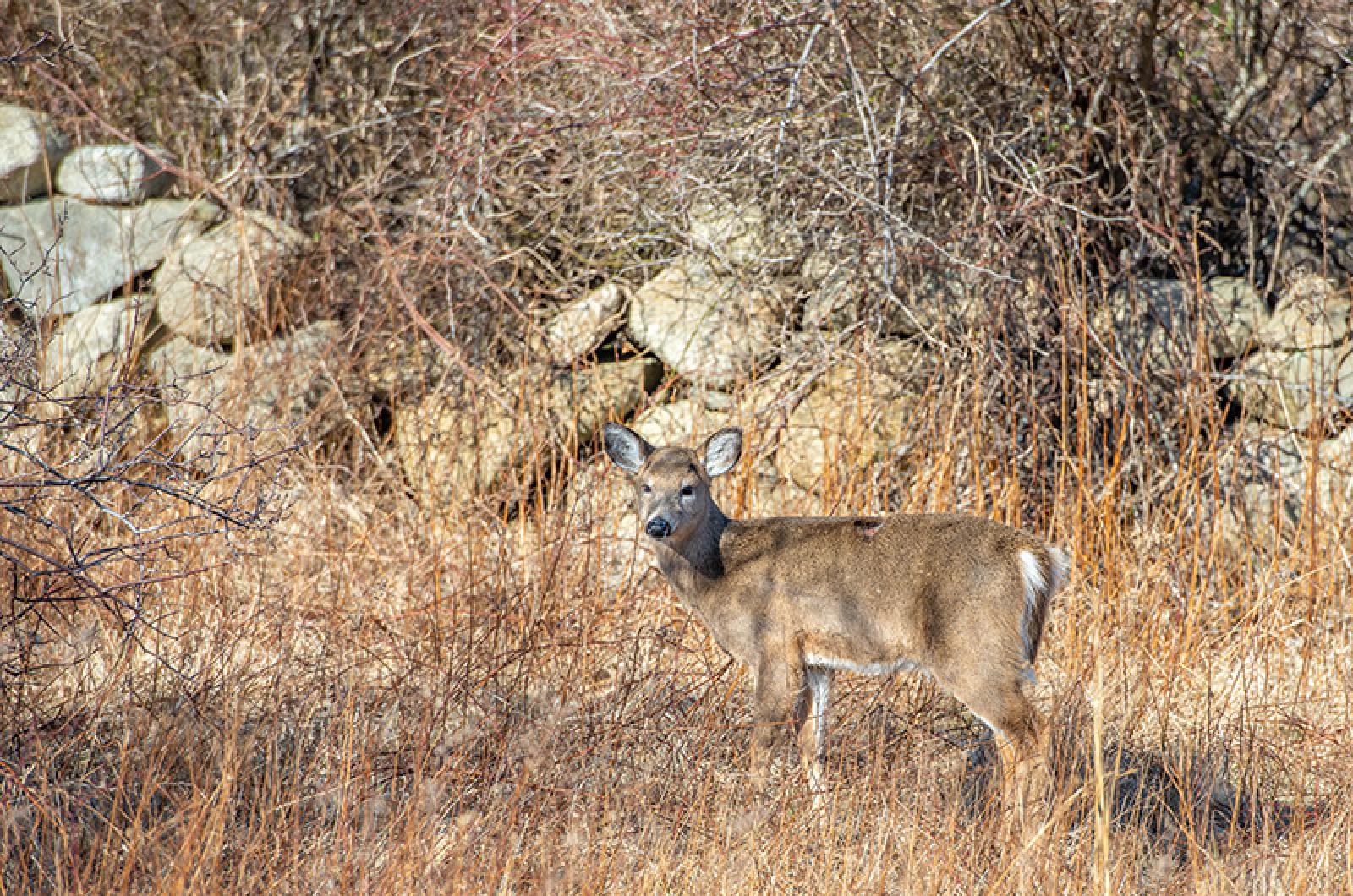
Marking a record year, Martha’s Vineyard hunters took 1,132 deer in 2019, according to state numbers released this week.
Marking a record year, Martha’s Vineyard hunters took 1,132 deer in 2019, according to state numbers released this week. The numbers reflect both the growing popularity of bow hunting and steady inroads made by Island groups working to combat tick-borne illness through reductions in the herd, officials said.
Between 2005 and 2015, the average number of deer taken annually on the Island was 624. In 2016, 764 deer were taken. In 2018, 900 deer were taken.
The 2019 hunting season stands as an “all-time record harvest for zone 13,” said David Stainbrook, a deer biologist with the state Department of Fish and Wildlife. Zone 13 includes Martha’s Vineyard and the Elizabeth islands.
Mr. Stainbrook said the numbers also reflect a statewide trend over the past decade, especially in southeastern Massachusetts. The total deer take statewide last year was 13,921, the second highest on record.
“It’s hard to tease out the driving factors [in the zone 13 numbers], it’s likely a combination of many things,” Mr. Stainbrook said this week, speaking to the Gazette by phone from his office in Westborough. A burgeoning deer population and an increased popularity of bow hunting as a sport are two clear factors, he said.
“The archery [bow] hunting component has been steadily increasing over the last few years,” Mr. Stainbrook said. “I would say that is the most significant increase we are seeing.”
The bow hunting season was extended by two weeks this year in some areas of Massachusetts, including the Island.
On the Vineyard, an incentive program for bow hunters begun two years ago also appears to be gaining a toehold. Sponsored by the Island Grown Initiative, Martha’s Vineyard Agricultural Society, Island boards of health and a private donor, beginning this year the program offered bow hunters $100 per deer for every doe taken after the first two. A community cooler was set up in West Tisbury for hunters to hang their deer, regardless of whether they participated in the incentive program. Free butchering was provided for donated deer, with the meat distributed to the Island Food Pantry and other Island outlets that help feed the hungry.
The deer population on the Island is believed to be at an all-time high. Although a precise scientific count has never been done, an estimate by the state for the Vineyard and Nantucket some years ago put the number at around 50 deer per square mile. Statewide management goals call for of six to 18 deer per square mile. Richard Johnson, the Island biologist who heads the boards of health-backed tick-borne illness reduction program, said he believes the number is around 40 deer per square mile, although without a precise count, the numbers are only estimates.
Mr. Johnson said 42 bow hunters participated in the incentive program in 2019, bringing in 150 deer. Of those, 21 were donated to IGI for meat distribution.
“I think, based on the numbers we’re seeing, [the subsidy program] made a fairly substantial contribution to the overall numbers [of deer taken],” Mr. Johnson said.
IGI executive director Rebecca Haag said her organization was able to distribute more than 600 pounds of venison in the community, as part of its food equity mission.
“We saw a real uptick in the number of deer donated,” Ms. Haag said. “One of the barriers for hunters to take more deer is they didn’t want to waste the meat . . . We helped solve that, putting the meat to good use. It’s been a great partnership.”
Funding for the program was provided by an anonymous donor.
The program is not without its critics, and has seen some pushback from animal rights groups and also sportsmen concerned about the precedent of hunting for profit.
Funding for the incentive program has been secured again for next year, and Mr. Johnson said he is “cautiously optimistic” that the program will be able to run again.
Meanwhile, there were mixed reports about the health of the herd from hunters this year.
Some hunters reported finding deer that appeared to be malnourished, noting too that there were few acorns, a staple of the deer diet.
In December, state fish and wildlife officials reported that six young deer had been found on the Island suffering from a mysterious paralysis. The deer were humanely euthanized, and state officials are still trying to determine the cause, Mr. Stainbrook said.
“We . . . think it could have been related to some sort of toxin in the landscape,” Mr. Stainbrook said, citing a lack of funding as a reason for the still-incomplete analysis.
Finally, Mr. Johnson said while the numbers this year are encouraging from a public health perspective, they could be temporary.
“I think we had kind of a perfect storm this year. There were a lot of deer, good weather and the [subsidy] program,” Mr. Johnson said. “But I don’t think that what happened this year is going to do it . . . We’ve had kind of a Dot-com bubble over the last few years. It was way inflated. . . what we might see next, if nothing is done, is [the bubble will] burst.”
Comments
Good job, Keep taking those
Bruce WTis.Good job, Keep taking those tick infested, car wrecking animals...
Good work, and
Mr. B. ChilmarkGood work, and congratulations to all hunters on this increase. Thanks, too, to the anonymous donor and all the others who worked to reduce the herd to a more manageable size and provide food to those in need. But the work is just started, and the numbers taken must increase for years if we are to have a manageable, healthy herd and begin to see a meaningful reduction in the incidence of tick-borne illness.
In addition to the 1,132 deer
June Manning AquinnahIn addition to the 1,132 deer taken during the deer season, what was the total amount recorded who met their demise with a vehicle during 2019. On a personal note, in 2019 my car was hit two successive Monday's by deer with significant damage. They are still as numerous in Aquinnah as there is a family of four that has remained even during the deer season and beyond.
Both a deer and my car were
Mr. B. ChilmarkBoth a deer and my car were "totalled" in May 2019. WT/EDG Rd. in broad daylight. Can the police provide statistics?
thanks to all who read and
Richard Johnson Oak BluffsThanks to all who read and commented on the article. I agree, we have made significant progress but still have a long way to go. Thanks to all the hunters who put in the extra effort and to those who donated deer to IGI or gave venison to family, friends and those who need the protein. Thanks to the financial donors and all the community members who have given their financial and verbal support, its what keeps me going. The next step is for more people to allow bow hunting on their land, especially in developed areas with houses on every 2 or 3 acres. Deer and ticks thrive in that edge habitat. Finally, in 2016 the Dukes County Communications Center reported over 200 deer "incidents", read known or likely deer/car collisions. I suspect the number is much higher the last 3 years, need to call and find out.
How can I get registered for
George Jeffers Windsor ct.How can I get registered for the hunt in 2020
If deer population is
Steve FalmouthIf deer population is estimated at 40/sqmile, that’s about 3,600 deer on the island. Past three years 700, 900, and over 1,100 adult deer taken each year.. should see a dent in population pretty quickly right?
Steve, leaving aside the
Mr. B. ChilmarkSteve, leaving aside the point that many people put the herd number closer to 5000, the other problem is that the things reproduce! I heard one estimate that in order to have any effect, we would always need to be removing over 1,200/year.
Add new comment