

The only unimpeded, half-mile expanse of year-round working waterfront on the Island stretches from the Steamship Authority wharf to R.M. Packer Co.
Stretching from the Steamship Authority terminal at the north end of Water street in Vineyard Haven, to the R.M. Packer Co. on the far edge of Beach Road, is the only unimpeded, half-mile expanse of year-round working waterfront on the Island. The area is rife with docks, silos, slips and sloops. For some it is ugly. For others, it is barely noticeable. For all, it is vital.
And there is nowhere else on Martha’s Vineyard like it.
“Some people drive down the road and say, oh, there’s nothing going on there,” said Nat Benjamin, who co-owns the legendary Gannon and Benjamin boat-building business, while scanning the harbor from his dock. “Well, you’ve got to get out of your car and walk down to the water. Then you’ll see, oh my gosh. Boat-building, tugs, barges, boats being hauled, and stored, and moved, and repaired. It’s teeming with activity, all year round, and that’s what really gives a town vitality. This is where it’s happening.”
While the two other down-Island towns, Oak Bluffs and Edgartown, have over time replaced their working waterfronts with trademarks of a bustling summer tourist economy, like hotels, T-shirt shops, ice cream parlors and beach clubs, an overlay of unique zoning regulations signed into law in Vineyard Haven at the turn of the millennium have preserved the horseshoe-shaped section of Beach Road as the Vineyard’s one true port. It is a salty, sea-soaked figment of the Island’s maritime past — and a conspicuous reminder that it still has a maritime present.

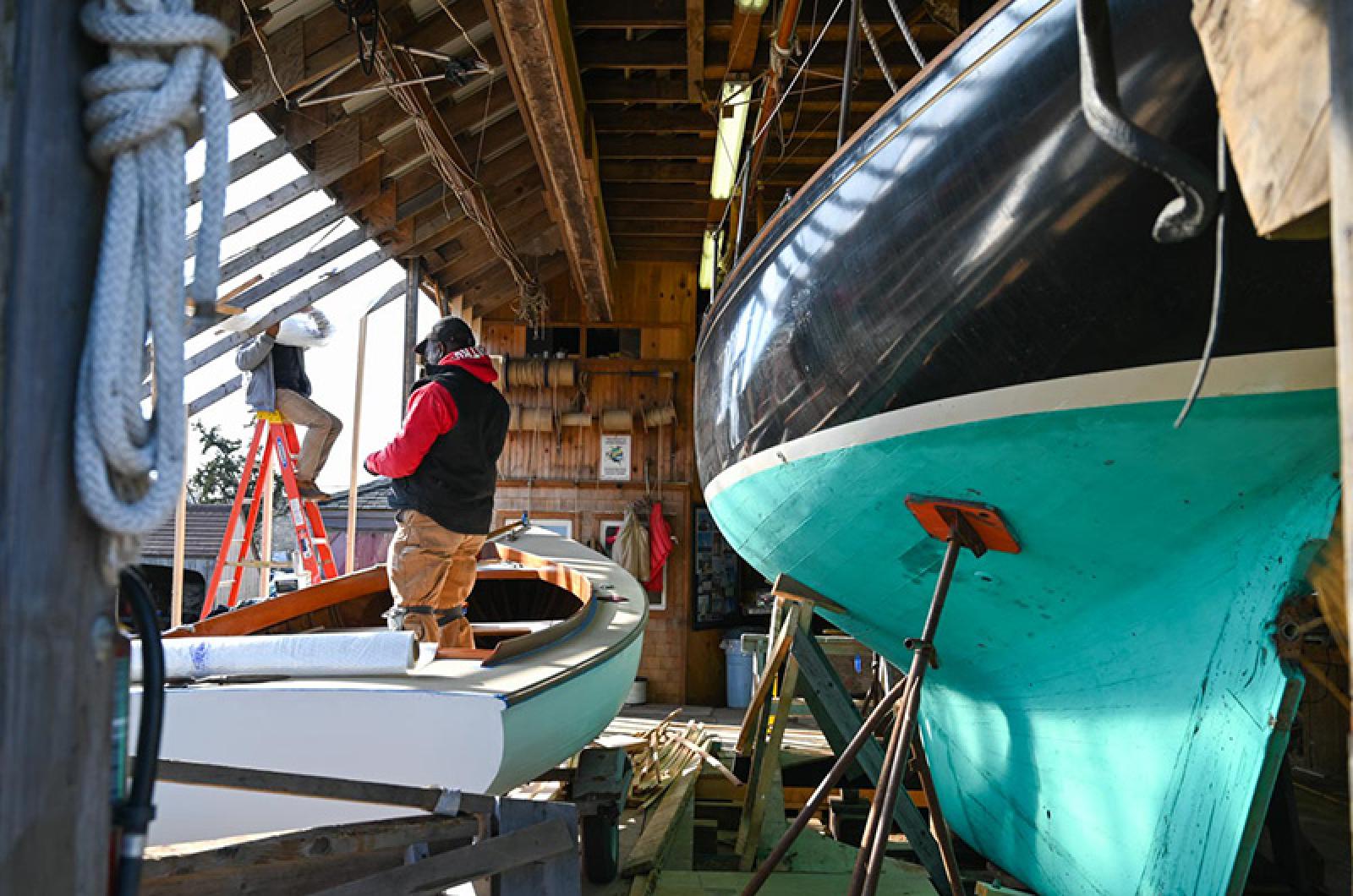
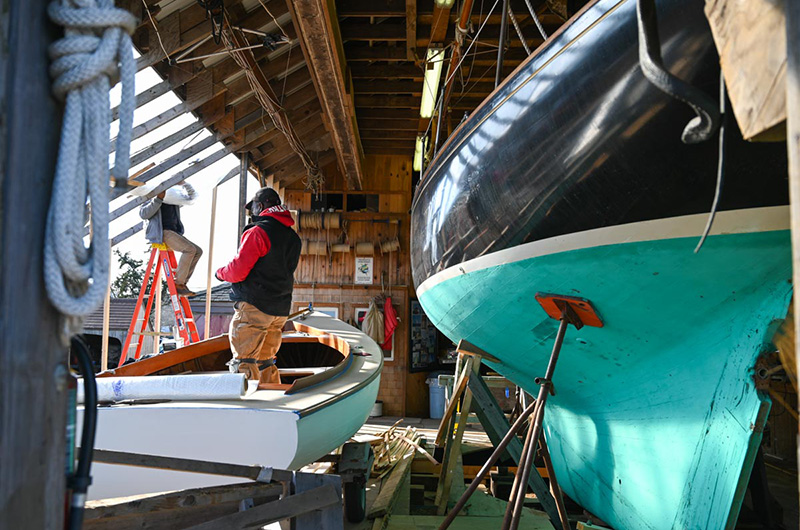
Gannon and Benjamin has anchored the Vineyard Haven waterfront for over 40 years.
Gannon and Benjamin has anchored the Vineyard Haven waterfront for over 40 years.
Now, almost 20 years later, the small yet crucial section of Vineyard Haven harbor will be forced to contend with that present, as well as its maritime future. Facing the dual threat of a changing climate and a changing economy, a series of independent development projects along Beach Road are poised to move through the town and Martha’s Vineyard Commission’s arduous review process, both proving the importance — and potentially challenging the teeth of the Tisbury working waterfront zoning regulations signed 20 years prior.
The Martha’s Vineyard Shipyard, one of the oldest continuously operating businesses on the Island, hopes to add a 48-slip marina on the Lagoon side of their property as part of a larger redesign. R.M. Packer wants to add a marine terminal to his property for the proposed offshore wind projects. The state, with the support of the town, has drawn up plans to reconfigure Beach Road from Five Corners to the drawbridge, hopefully raising it by six inches, adding a continuous bike path and removing telephone poles. Stop & Shop consistently discusses expanding its Water street store, while real estate developers are eying a 40B housing project consisting of 72 residential units on the former site of Hinckley’s Hardware.
All the projects will face scrutiny from Tisbury planning and zoning boards, federal environmental boards, local shellfish and aquaculture advocacy groups, as well as the commission. All will have to comply with the unique zoning laws that have been in place for the past two decades. None of the projects would have been possible without them.
•
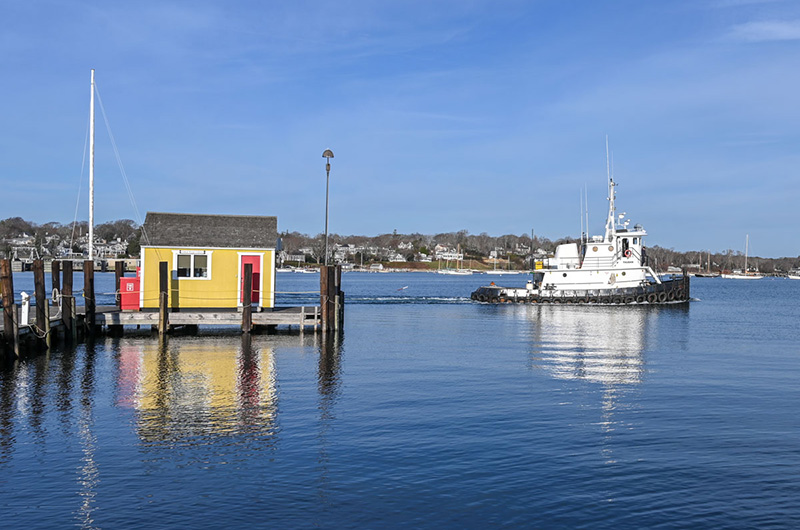
Tugs round R. M. Packer wharf.
Tugs round R. M. Packer wharf.
By 1998, historic coastal harbors across the Atlantic were disappearing. Newport, once with four or five boat building and repair operations, was down to one or two. Lobstermen in Maine and crab fishermen in the Chesapeake saw their docks replaced with small businesses that rented bicycles and kayaks to summer tourists. On the Vineyard, a particularly congested summer of jet ski rental businesses, seaplane landings and high-speed New York ferry dockings thrust the year-round working Vineyard Haven harbor into the spotlight, fostering debate about long-term growth in Tisbury.
“In simplest terms, how does the town assure that the things it wishes to happen in and around our harbor do, and the things it wishes not to happen don’t, so that Vineyard Haven Harbor will remain the jewel that it is?” asked chairman of the board of selectmen at the time, A. Kirk Briggs, in a letter to town counsel.
The letter also requested another lawyer to spearhead the effort to “develop clear, consistent, and defensible controls that will protect our harbor and the rights of those who enjoy it,” a 1998 story in the Gazette reported.
Mr. Benjamin was one of the town residents, and harborfront business owners, who hoped to preserve those rights. “A lot of us along the waterfront saw this as an endangered species,” he recalled. “We said, let’s put together some zoning regulations to preserve — to protect — the shipyards and working waterfront so they wouldn’t get squeezed out like it happens everywhere else in America.”
Throughout the summer of 1999, the town, led by selectman Ed Coogan, wrestled with ways to preserve the harbor, eventually deciding at a divided meeting to nominate the working waterfront as a district of critical planning concern — a special overlay zoning district allowed through the Martha’s Vineyard Commission. The commission unanimously adopted the nomination one year later. On Oct. 24, 2000, Tisbury voters overwhelmingly approved it at town meeting.
The special planning district was the first of its kind for a town harbor, preserving all waterfront development in perpetuity from the Eastville jetty to the Steamship Authority terminal. Today, the district is demarcated on town zoning maps with a ship’s wheel.

'Tis the season for hauling boats out of the water.
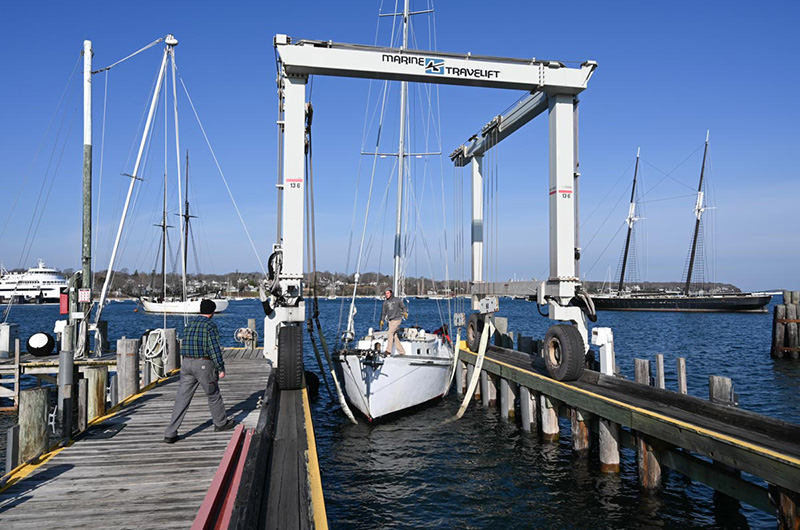
'Tis the season for hauling boats out of the water.
“The purpose of these regulations is to maintain and enhance the cultural heritage and economic vitality of the Vineyard Haven Harbor and waterfront,” the DCPC says in part. “Specifically, these regulations seek to maintain the Vineyard haven Harbor as a year-round working waterfront.”
The regulations include elegant wording about protecting the views of the waterfront, promoting maritime industry, sailing and boatbuilding, as well as shellfish and wildlife habitats, water quality, safety, navigational resources and marine recreation. The rules also allowed for a waterfront commercial district sandwiched between the harbor and Lagoon, with everything from movie theatres to restaurants to gas stations to the Pyewacks antique exotica store and tarot card reader.
Little has changed on the eclectic stretch of road in the 20 years since.
“The water dependent part of the area has survived. And that’s important,” said Ben Robinson, who currently serves on the Tisbury planning board and the MVC. “The fear was restaurants, condominiums, other sorts of seasonal economy pieces would increase the property values so that a working waterfront business would no longer be viable there. And this is what happens up and down the East Coast. But here they’ve been protected. It’s worked.”
Critics of the DCPC have focused on the extent of the restrictions, saying they prevent free-market development at the expense of niche, less profitable businesses — and forcing those businesses, like the Black Dog, to prove that their T-Shirt sales go toward things like educational charters on the schooner Shenandoah.

Docking in Vineyard Haven provides a front row seat to numerous waterfront businesses.
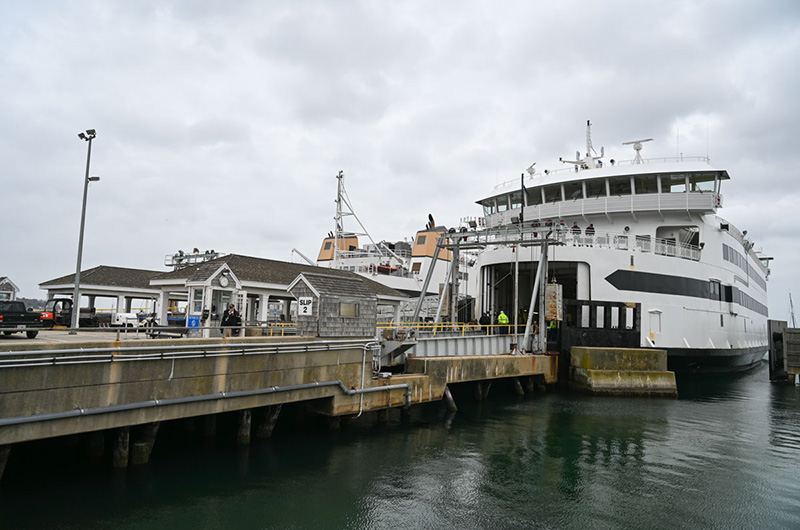
Docking in Vineyard Haven provides a front row seat to numerous waterfront businesses.
For Mr. Robinson, that was the idea from the beginning.
“Being able to balance these things that are always rubbing up against each other is difficult, that takes some careful planning,” he said. “And it shouldn’t be just arbitrary. You have to have it written down. That’s partly why that DCPC has been so successful. It has managed to protect what it set out to protect. If that means that other things weren’t allowed, then that was kind of the point.”
But with 2020 approaching, the tides are changing, both literally and figuratively. As a result, the planning board, as well as businesses and future developers in the area, are forced to prepare for new sorts of threats to the district and the shoreline that defines it.
By mid-century, most scientists predict the sea level will rise by one and a half to three feet. By 2100, the rise could be as high as 10 feet. Five Corners, one of the most consistently flooded intersections on the Island and vital to all off-season Steamship Authority traffic, is only five feet above sea level at its highest point. On average, it is between three and four feet above sea level.
“A lot of that area will be subject to tidal flooding on a daily basis,” Mr. Robinson predicted. “Everybody that develops down there will have to raise their property.”
The current developments slated for the area have listened. Philip Hale and his son James, owners of the Martha’s Vineyard Shipyard, plan to raise their property by 18 inches and add water permeable surfaces over areas that were once hardpan. And although Packer’s property represents the road’s high water point, the Tisbury marine terminal project will also include pile-supported pier structures and a wave fence to prevent storm surges.
DeSorcy property went on the market in 2018.
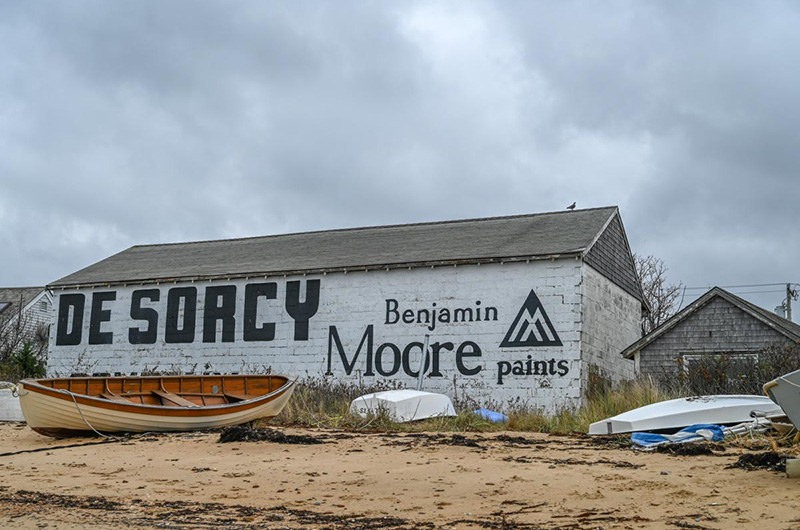
DeSorcy property went on the market in 2018.
“It’s a real puzzle. And you take sea level rise and climate change and pile it all on top of that, it’s even worse,” Mr. Robinson said. “It’ll be interesting to see how some of these projects evolve.”
The town has similar plans, and will conduct a coastal management zone study this winter to analyze the effects of sea level rise and climate change. There are visions of extending the Eastville jetty to help dampen aggressive storm tides. As oceans get higher, Mr. Robinson predicted that many businesses will have to retreat, potentially moving to the B2 business district along State Road. It is the town’s prerogative, as well as the DCPC’s, he said, to ensure that vital waterfront businesses, like the Steamship Authority, can continue operations.
“We are looking at the waterfront commercial district, first and foremost, to preserve the harbor. Because it is a vital piece of the Island infrastructure,” Mr. Robinson said. “And then, second to that, to manage the protection, accommodation and retreat because of sea level rise.”
Beyond planning for the effects of climate change, all the major developments on Beach Road will have challenges of their own to confront. The Martha’s Vineyard Shellfish Group has already submitted a letter of opposition to the state about the shipyard project, raising concerns about the Lagoon’s water quality and the impact that a dredging and marina expansion will have on vital shellfish resources. The proposed Tisbury marine terminal will have to expand over a barrier beach, causing an unknown effect on tidal flows. The former Hinckley property project represents a massive change of use, proposing 72 residential units in a commercial zone.
And of course, there remains the issue of aesthetics. When visitors arrive on the Steamship Authority, their first impression of the Vineyard is often not the stately homes of Edgartown or the cottages of Oak Bluffs — but the industrial stretch of working waterfront along Beach Road. For Mr. Robinson, though, that’s not a problem. In fact, it was something the DCPC was created to also preserve.
“A working waterfront isn’t supposed to look clean,” he said. “These marine businesses are not a house on North Water street in Edgartown . . . People get off the boat, and they are not confronted with a brand-new, Disney-fied welcome mat. They get a sense that they have arrived at a place that is authentic. They might not be fully conscious of that, but it does deliver a message to them that says, you are somewhere different. Pay attention.”
•
Nestled deep within the crook of Vineyard Haven harbor is the Gannon and Benjamin Marine Railway, a one-of-a-kind wooden boat building and repair shop that has hand crafted many of the finest vessels on the Eastern seaboard. The shop is filled with cataracts of sawdust and cabinets of curiosity, containing everything from paddle bits to plug cutters, planer knives to counter sinks, bronze nuts, brass nuts, “big nuts, weird nuts,” and “that one thing nobody can figure out,” in Mr. Benjamin’s words.
Gannon and Benjamin is the jewel of the Tisbury working waterfront. But 40 years ago, before working waterfront zoning laws even existed, it could have been a McDonald’s.
In 1978, the approximately one-acre beachfront property that now houses the boat shop was tapped as a perfect site for the fast-food chain’s first Island location. the Golden Arches saw a potential beacon for hungry tourists whose appetite — and pocketbook — may have preferred frozen Filet-O-Fish to fresh fish filets.
The Island, naturally, went apoplectic.
Scared their working waterfront would turn into “the honky-tonk Maryland or Delaware shore,” as one Gazette letter writer put it, residents fought back, organizing a Sack the Mac campaign and tirelessly opposing a town sewage amendment that would allow for development on the property. When the Tisbury board of health rejected the proposal, forcing McDonald’s to back down, Donald DeSorcy swooped in, purchasing the land one year after and leasing a waterfront portion to two washashores who wanted to build wooden boats on Martha’s Vineyard.
“We’re still here,” Mr. Benjamin said, four decades, and 93 original boat designs later.
Although the zoning bylaws went into effect 20 years after that, the battle over the McDonald’s set the tone for the preservation work to come. Mr. Benjamin felt his business wouldn’t have survived without the zoning. He described a “free-for-all” for waterfront property that would have led to unbridled congestion. Now, because of the working waterfront zoning bylaws, he isn’t going anywhere.
“Ross Gannon and I started the business on the coattails of McDonalds,” Mr. Benjamin said. “We didn’t want to see this become another moped rentals and fast food. We wanted to keep the working side of it . . . this traditional boat building, the maritime heritage, this is kind of the time warp on the waterfront here.” He added:
“It’s the only one.”
Gannon and Benjamin is also planning to expand on the harbor. When the DeSorcy property went on the market in July 2018, a community group formed with plans to raise enough money to buy it. Mr. Benjamin, who is part of the group, said he believes the effort will succeed, among other things allowing them to move their other shop, called Mugwump, to the water.
“What we’re hoping to do is lock up this section [the DeSorcy property], to preserve what we’ve started, and to expand it,” Mr. Benjamin said. “We want to put in more boat building. We want more working waterfront. That’s our hope. Our hope and our dream.”
That project too would be subject to zoning bylaws, and threatened by sea level rise.
Standing at the edge of his dock, Mr. Benjamin pointed toward all the businesses that straddle the sea. He described the Packer empire and the historic shipyard, the Black Dog marina and the hundred-foot schooners in the water. He laughed at the chain-link fencing surrounding the future Boch Park, while his workers labored over a restoring a 1932, 83-foot Alden sloop owned by a former secretary of state.
The sun was golden. The only arches in the harbor glistened on the water.
“This is the gateway,” Mr. Benjamin said. “We need it.”
Comments
Please keep the working
Lorraine EdgartownPlease keep the working waterfront. I have lived on working waterfronts in several countries, on lakes, rivers, oceans, etc....this working waterfront is the history of the island, the history of whaling, this cannot be replaced. Any concerns that various people, groups, etc may have can certainly be addressed and compromises and solutions found. The bland, uninteresting waterfronts of tee shirt shops, ice cream parlors, restaurants catering to tourists may be appealing for many and for business owners, but this type of waterfront does not honor the true identity of this fabulous island called Martha's Vineyard. Just my opinion.
Wow, great article! A lot of
Richard Toole Oak BluffsWow, great article! A lot of history and familiar names. I worked on the harbor, as my first Island job. Had a sail boat in the harbor when my kids were little,sailing between the Chops, relatively safe. Have enjoyed, for the most part my almost daily commute along Beach road,often stopping at Hinckley's for supplies on my way to a waterfront job.
Much is owed to the bold and farsighted town leaders, many of them my friends, for creating the protections we have. Now is the time to remember the fragile balance and continue to protect both the productive ecosystem mother nature has given us and the historic Maritime culture that defines the town and provides many well paying and highly skilled and rewarding jobs allowing our year economy to thrive. A lot of thoughtful decisions need to be made, the sooner the better!
Noah Asimow's article about
John Fuller Vineyard HavenNoah Asimow's article about Vineyard Haven's working waterfront is important in that it brings to light the issues confronting this vital part of the Island. It would be tragic to see this waterfront lose it's 'marine industrial' character. I was executive Director of the Schooner Adventure organization and helped foster a collaboration between the historic schooner and Maritime Gloucester, a waterfront educational institution with a mission "to inspire students and visitors to value marine science, maritime heritage, and environmental stewardship through hands-on education and experiences". Collectively, we were the catalyst for the preservation of Gloucester's maritime heritage, in the face of a declining fishing industry that was the foundation of Gloucester's history. We received grants from the Department of the Interior, the Massachusetts Cultural Council and Community Preservation Funds, to name a few, to not only preserve nationally significant artifacts ( a big boat) but to help develop a sustainable year round economy, one that started at the waterfront and extended to Main Street. Education and cultural preservation were the drivers to our success. This model is already somewhat present in Vineyard Haven however there is an opportunity for a 'Maritime Gloucester' to find a home on the waterfront that would be a catalyst for getting visitors and students to generate year round vitality on our working waterfront. Consider the success that Mystic Seaport enjoys.
John, it is impressive what
Hilary taylor Carlisle, maJohn, it is impressive what Gloucester has done with that area. I was an early supporter of the Schooner Adventure. Marty Krugman got me involved. I’m sorry I didn’t stay involved longer. It’s wonderful to go down on that pier and see the Ardell and the schooner Adventure. Congratulations on a job well done and a huge asset to the community.
As always, thanks Nat for
Mike Zoll VHAs always, thanks Nat for keeping it true!
One last place, Vineyard
Malcolm Boyd VHOne last place, Vineyard Haven, an area of critical planning as described in the article, is a resource for the future and an opportunity for local employment in a craft or community support industry that functions hand in hand with the sea. Lets not squander this resource. I endorse keeping it as a maritime related working waterfront and support those who have the vision and wherewithal to do so.
Great article. I learned a
Don CTGreat article. I learned a lot. Thank you.
Driving by the "working
T Bones Oak BluffsDriving by the "working harbor" reminds me of shop class many decades ago in school. Some of us kept neat and tidy work areas and swept up after every class. Others were pig pens, messy and half-finished chaos. I wish the harbor had fewer "pig pens". Aside from that, a nice article.
Excellent article. It is
Hilary taylor Carlisle, maExcellent article. It is always impressive to me the forward thought that others have had in the preservation of land and heritage. That waterfront area is a favorite of mine when I get off the ferry. Thanks for keeping the Maritime industry alive and visible.
We're going to have to fight
islandgirl islandWe're going to have to fight to keep the working waterfront working and that means supportive zoning (as it currently is) and a push back against what is conventional and seasonal.
The waterfront is like the lungs of the island and we can all breathe more freely seeing that our maritime heritage will be/is being respected. It is a precious resource and much more interesting than the usual coastal venue. I am thinking of Mystic, Connecticut which has lost almost all of its connections to the water (except for the Museum), or Newport which has been fancified up. Maybe some people think that the VH waterfront is a pig pen (it isn't) but at least one can see the harbor. In Edgartown the pretentious mega houses have taken over and in OB, it is all about tourist tat.
Saving the working waterfront
bs Oak BluffsSaving the working waterfront is a quaint notion but we must acknowledge the negative side effects of not using the property for it's highest and best use. We haven't been a maritime economy for many decades. The tax dollars being left on the table by not developing the waterfront is enormous. It's no wonder Tisbury has the highest tax rate on the island contributing to the affordable housing problem there. Smart development that reflects our tourist economy would provide additional jobs and ease the housing crunch for our young people.
Unfortunately "bs" (very
island girl islandUnfortunately "bs" (very appropriate) from OB has an imperfect understanding of the tax structures and housing needs of the various towns. Either that or they are joking. The tourist economy (short term low wage jobs (without benefits) which encourage and/or service very expensive rentals of sometimes mediocre houses and a digital rental economy have nothing positive to benefit island residents. The year round businesses along Beach Road provide year round jobs for long term island residents who contribute to our island and communities in many real and positive ways. All year around! This is why the Vineyard Haven Harbor working waterfront is vibrant and alive all year long and not moribund.
Visitors who see OB in the summer when it is a three ring circus of activity cannot believe it when they come back in the winter and see a place where the shutters are up (signs on the door: "thanks for your business and see you next summer") and the owners are in Costa Rica or wherever they go for the winter. Additional jobs? What would those be: the serfs packing the trunks for the departing lords? Respectfully, anyone who thinks a tourist economy is a viable economy is delusional.
So if a tourist economy is
bs Oak BluffsSo if a tourist economy is not viable then why all the complaining about increased traffic and rising home prices on the island? Seems as though the economy on the island is booming and leaving VH behind.
MV is a tourist / summer
Mark EdgartownMV is a tourist / summer economy, full stop. It is delusional to think that the waterfront can provide a year round economy that can supports the island’s population. The island economy would be decimated without tourism.
From being residents of Beach
Frank Brunelle Vineyard HavenFrom being residents of Beach Road we have a unique perspective on the issues raised in this article. For example, "The current developments slated for the area have listened. Philip Hale and his son James, owners of the Martha’s Vineyard Shipyard, plan to raise their property by 18 inches and add water permeable surfaces over areas that were once hardpan."
This is something that every property will have to contend with as Mr. Robinson correctly states. But there is a very serious problem with the matter of the Martha's Vineyard Commission's Shared Use Path taking land by eminent domain for a tourism oriented Shared Use Path. This plan takes an enormous amount of land impacting every property and with this taking they lay down impermeable concrete while eradicating foliage and by creating impermeable surfaces. The plan initially allowed some shade trees to continue to exist but now we understand they plan to cut down most of them. Now before some people start accusing us of being Nimbys - the fact of the matter is that this project will increase flooding. It will destroy the incredibly important shade trees, it will make cycling more challenging and dangerous by creating an intersection and forcing cyclists on one side of the road where they have to cross curb cuts, and it will be unprotected. All of these things are bad, but the worst part of this plan is the MVC being the agency designed to protect us from this kind of development, and being the architect of it and in addition, a very crucial point, not allowing a DRI or Development of Regional Impact study to be performed and taking input from islanders with concerns on a number of issues.
This hypocrisy is so blatant and the damage will be permanent.
The barrier beach mentioned in the article and the objection to the tidal action is valid but we would be remiss to not address the fact that this beach has been the vessel saving beach for many boats that have gotten loose from their anchorages or moorings and landed there. It is also an important aesthetic and recreational component of the harbor and would be better to preserve than destroy.
The Town of Tisbury recently has designated the Beach Road waterfront as a Harborfront Cultural District. There were substantial funds obtained for this designation and given to the town. Thus far, we have not heard anything more than the fact that the funds were used for other than the Harborfront and this is puzzling, but also consistent with Tisbury politics.
If the Martha's Vineyard Commission plan to install a Shared Use Path on Beach Road is accomplished then exactly how are we supposed to raise our land if they have taken it from us for a bike path? It's a question that perhaps Mr Robinson and Mr. Barnes, both of whom represent the town on the Commission may be able to answer. But the cannot, nor do they wish to. This is a problem.
Frank, sometimes brevity and
T Bone Oak BluffsFrank, sometimes brevity and clear messaging is best. You lose most of your readers half way through your diatribe, one you've repeated numerous times in many forums. I try to read your various rantings-- (is it about the SUP, bad people, or some other nefarious topic; I don't really know) -- but still manage to lose interest with your wordy meanderings. Suggestion -- learn what a paragraph is, and try writing a short one.
VH Harbor has the finest
Darren Lobdell Tisbury ResidentVH Harbor has the finest collection of wooden boats found anywhere on the east coast. Furthermore, Nat Benjamin's legacy as an iconic traditional boat designer will place him on the Mount Rushmore of design right next to Nat Herreshoff and John Alden. However, Nat Benjamin's artistic excellence is something that is created on paper in an office and not on the waterfront. Boats can be built and serviced elsewhere like at the airport Industrial park and transported back and forth for seasonal use. If we are to focus on the "vitality" of the harbor front, let's examine the actual jobs provided by each business. Do workers receive a "living wage;" work on a safe work site with proper tools and in conformance with environmental regulations; and does the business contribute to the Tisbury tax base? I'd like to see a follow up article which interviews the employees of the major waterfront businesses. Let's hear about their respective working conditions, wages and benefits, duration of time employed and the resulting ability to raise a family in Tisbury. Brooklin Boatyard in ME has has been wildly successful designing and building boats and has recently instituted profit sharing. What can Tisbury learn from this model? Raising Beach Road six inches is wasted money. Much more will be required. Seas rise is inevitable but we have time to bring engineering solutions to bear. The proposed Hale expansion should be seen as an opportunity to increase water flow in and out of the Lagoon, increase employment and expand the tax base. Status quo is not working well in Tisbury. Boch Liberty Park and our grammar school are two obvious examples. I'm not sure that converting more of our downtown waterfront businesses into not for profits is best for Tisbury. It should not be inevitable.
If bs of OB and Mark of Edg
island girl islandIf bs of OB and Mark of Edg think that a tourist economy is viable -- providing 12 months of income in a broad based way and with benefits and a living wage -- they obviously know something that a lot of the rest of us (who do work for more than 3 months a year) need to learn. Maybe they could clue us in to the components of that business plan. Maybe they could do some business courses as well. I am sure many of us would like to know to make enough to enable us to live here where real estate prices (fueled by summer rentals and tax advantaged asset properties) are in the stratosphere and the COL is 37 to 56 % higher than on the mainland. Both thanks to the "tourist based economy." Many seasonal business owners charge outrageous prices (check the hotel room or the rental rates and terms) for both accommodations and meals while bringing in staff from all over the world. No I am not xenophobic but our colleges don't schedule studies to suit a tourist economy. Students have to leave in the middle of August. So how can a tourist business owner make money at that kind of business? Because of a lot of hype, marketing and advertising and visitors' hopes of sighting a star.
I love the working waterfront -- there is an outstanding mix of all sorts of activity and marine oriented businesses which stay open all year round providing employment for their crews as well as services to our community. It sure beats those many establishments which close down for 8 or 9 months a year while the owners head for a warmer climate...maybe Florida where the taxes appear to be low. A question for Mark and bs: what does seasonal staff do for nine months? Some go back to their home country and others sign up for unemployment benefits? Great. That solves that problem. Except, of course, for health insurance and housing.....
Glossing over facts with
Mark EdgartownGlossing over facts with opinions and platitudes does not change the fact that Martha's Vineyard is an island and without mass connectivity to a greater metropolitan economy. It simply can't support jobs for 16k+ full time residents without the tourist economy. How many jobs can the waterfront provide? Not 16k+. With the death of the whaling industry, tourism and its ancillary businesses (construction, etc.) have become the viable means of employment for islands like MV, Nantucket, the Bahamas, etc. Can you please clue me into the tax advantaged asset properties, I would love to take part and combine that with what are already some of the most subsidized and lowest RE tax rates in the country.
The sweetest harbor on Martha
Albert Fischer West TisburyThe sweetest harbor on Martha's Vineyard is Menemsha, I say no more.
Add new comment