

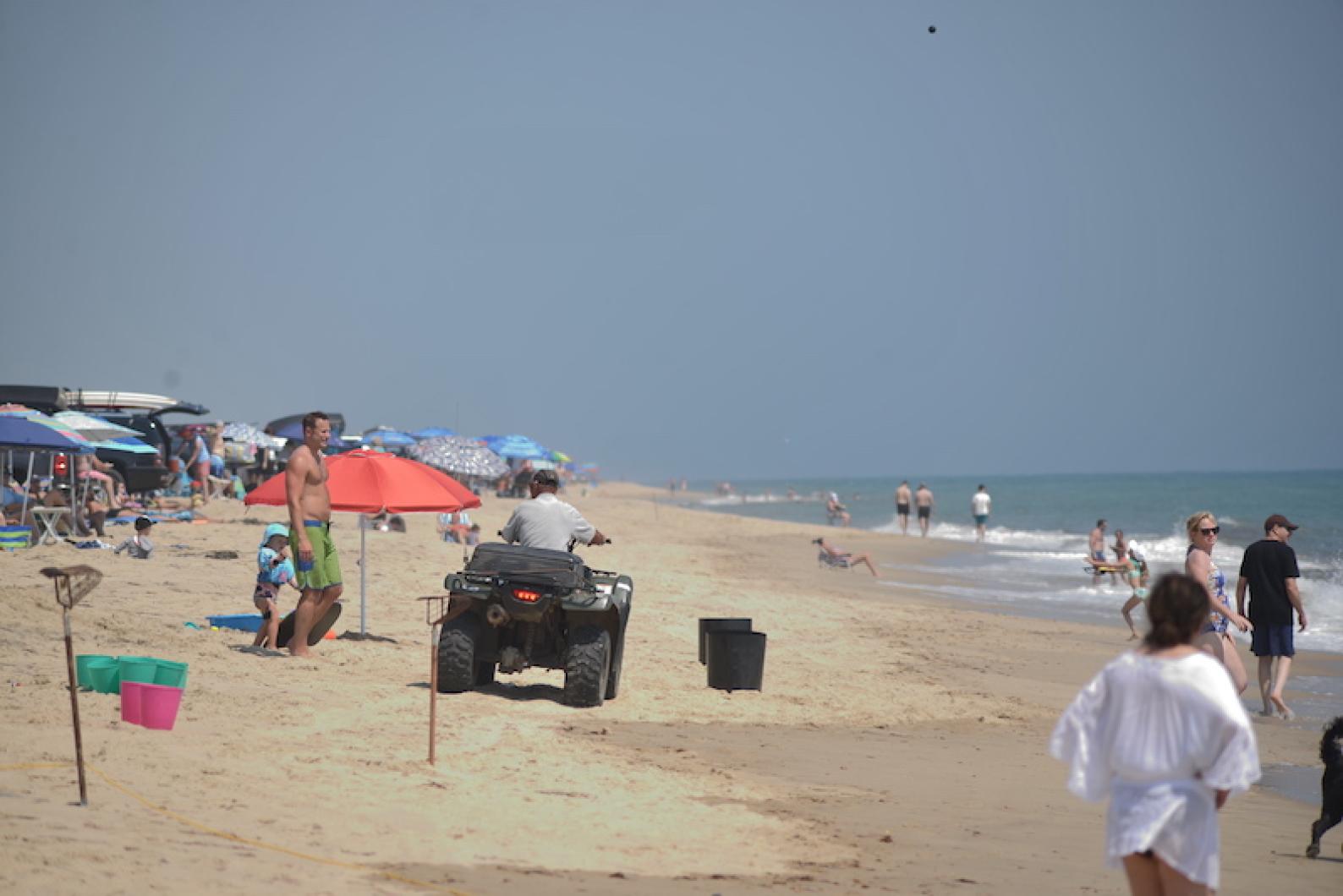
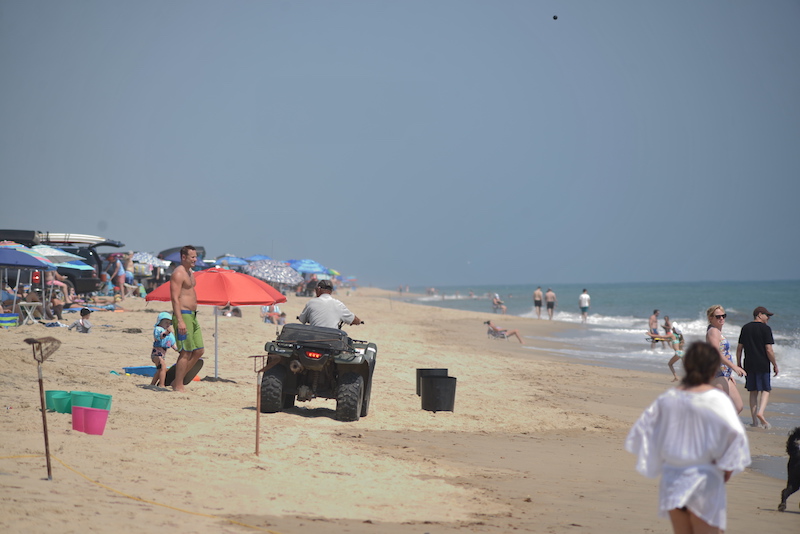
<p>A shark sighting offshore closed South Beach to swimmers Tuesday afternoon. The water was opened again for swimming by 4:20 p.m.
A shark sighting offshore closed South Beach to swimmers Tuesday afternoon. The water was opened again for swimming a few hours later.
In an email Edgartown town administrator James Hagerty said a fin was sighted about 20 yards offshore. (An early report that said the shark was sighted 60 yards offshore was later changed.)
Park administrator Jessica McGroarty said the shark was reported to the communications center at about noon. The communications center then notified South Beach life guards. She said it was sighted between Norton Point and the left fork.
Fin was spotted about 20 yards offshore.
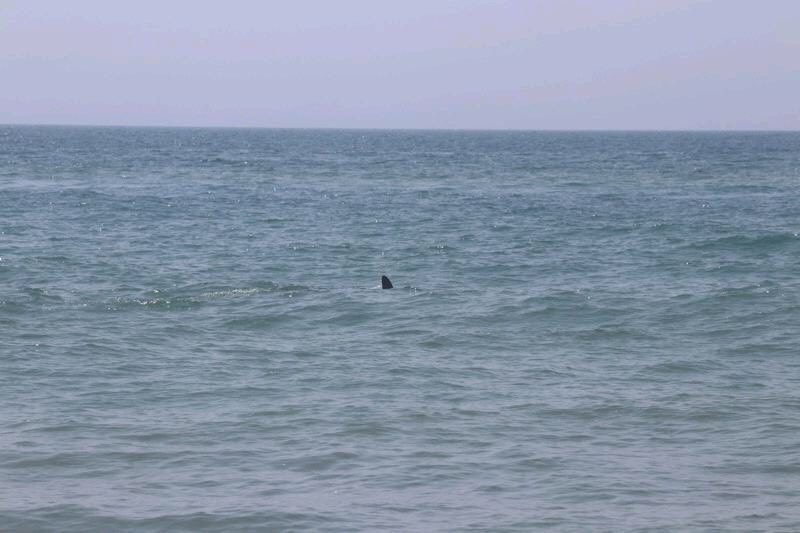
Fin was spotted about 20 yards offshore.
Officials were unable to immediately confirm what type of shark it was.
Brian Jordan, head lifeguard in Edgartown, was called in from a day off when he got the call. He said he and an assistant guard walked on the beach toward Norton Point where they were approached by a woman who had photographed the animal. After seeing the photographs, the guards decided to call swimmers out of the water.
“Just to be safe, we’re going to close the water to swimming,” Mr. Jordan said. A biplane from the Katama Airfield went up shortly after the shark was sighted and confirmed its presence, Ms. McGroarty said. The beach was briefly reopened for swimming at 2:15 p.m. but then promptly closed again at 2:27 p.m. after a second biplane sweep confirmed another sighting, according to chief ranger of the Trustees of Reservations, Rick Dwyer. The water was open again for swimming by 4:20 p.m.
Visitors to the popular South shore beach were not panicked, and many stayed ankle deep in the surf waiting to enter the water again. South Beach was crowded with beach umbrellas as temperatures topped 80 degrees. Heads turned when a biplane flew overhead, followed minutes later by a helicopter. John Marabello, a beachgoer from Lunenburg, stood along the shoreline awaiting the signal that all was safe.
“It seems like they're everywhere these days. We can't see them. We just have to trust the people in charge,” he said of sharks.
When the first horn alerted swimmers that the water was safe to swim, some eagerly plunged back in while others were more cautious.
No sharks were sighted off the beach last summer, but a hammerhead was sighted off the south shore in 2016.
“It’s stressful, but we have to make the right decision and we made a very safe decision,” head lifeguard Mr. Jordan said.
“They don't usually come this close but their territory is large,” Mr. Dwyer said. “This is all their home.”
Will Sennott and Noah Asimow contributed reporting.
Comments
Our neighbor in Edgartown was
Amanda Trayes EdgartownOur neighbor in Edgartown was a commercial fisherman. He used to say that if people knew what was just offshore at Katama, they would never swim there.
Time for surge pricing a la
Opportunist EdgartownTime for surge pricing a la Uber. Biplane operator could probably get a thousand bucks a ten minute flight right now for passengers to see the shark. If that is too crass, same scheme but donate profits to a good cause. You are welcome.
Hammerhead sharks live in
Shark Fun Facts Deep Blue SeaHammerhead sharks live in Tropical waters.
So if people think they are seeing them in MVY waters,
has Global Warming put us into the tropics?
They, along with many other
Everday citizen EdgartownThey, along with many other fish and sharks, use the gulf streams off of Marthas vineyard and Nantucket
Check out the National
Dana Smith Woods HoleCheck out the National Fisheries Aquarium in Woods Hole. The aquarium has good photos. The MBL plucked a 12 foot hammerhead out of the fish weirs, trapped off the Quissett Knob (one mile north of Gong 13 on the Buzzards Bay side of WH) around 1962.
Back when we had a commercial fishing fleet, those guys saw them all the time.
Different kinds of
Robert BostonDifferent kinds of hammerheads and although rare, not that uncommon for them to be up here (most likely south of the cape)
They absolutely visit us from
Jamie West TisburyThey absolutely visit us from the Gulf Stream, which is not that far away from the island.
does anyone know what type of
alex edgartowndoes anyone know what type of shark they think it was?
If you don't like the sharks,
Mark Lucier EdgartownIf you don't like the sharks, get rid of the seals. There must have been a hundred tons of them sunning on Skiff's Saturday last.
Mark, most of us thankfully
Robert GoldmanMark, most of us thankfully have moved beyond your thinking of killing native wildlife, in this case, seals, that are native to the ocean out of human selfishness. Seals and sharks live in the sea, humans do not. In the sea, they get first priority, not us. I’m a Mass native and grew up on a north shore beach that was sometimes closed when blue sharks were spotted. It did not make me angry because I love the natural world and that means I love sharks too. Just as I love whales and dolphins and sea birds. We all have to learn to respect this planet and the amazing native wildlife who live here, too, and co-exist with them. Sharks are so important to healthy oceans. All top predators keep ecosystems healthy, which is good for all life in the planet, including human life. I lived in the Cape for two summers and loved swimming on the Vineyard and off Chatham. Now, I’ll swim in some of the fantastic fresh water ponds that are part of Cape Cod. If that is the price of having healthy oceans, so be it.
My little sister was the
Jason Dorman EdgartownMy little sister was the closet to the to the shark
BRING THE SHARK TOURNAMENT
Vicki NelsonBRING THE SHARK TOURNAMENT BACK TO OAK BLUFFS
Do some research on the ocean
Tiffany LuzziDo some research on the ocean and life. You are ignorant for wanting to kill a species where it lives and belongs.
We ABSOLUTELY DO NOT want the
Jamie West TisburyWe ABSOLUTELY DO NOT want the shark tournament back here on our island, or anywhere for that matter. It senselessly killed dozens of sharks all for the selfish act of winning some money and gear and feeding egos.
"Sharks as apex predators can regulate species abundance, distribution and diversity, which in turn can impact the health of marine habitats. Additionally, they provide essential food sources for scavengers and remove the sick and weak from populations of prey species." Oceanaoceana.org
Removing these amazing creatures from our oceans, would lead to the collapse of marine ecosystems and our oceans. We must be reminded, that when we enter the water, we are in their habitat, and should not manipulate that habitat for our own pleasure, but rather take this as an opportunity to educate people about the importance of sharks in very fragile marine ecosystems. It would be like going skiing this winter, and colliding with a tree that paralyzes you......does that mean we should cut all of our trees down in the forest, so that you can have a safer experience on the mountain....or does it mean "ship happens".
Live your life ....swim..
Chris MVLive your life ....swim...surf...sharks are real but I bet you will never get bit and if you do and live you have experienced something real
Simple, you got seals, you
Paul MVY/SRQSimple, you got seals, you got sharks. I’ve been watching the seal population off the barrier beach off Edgartown Great Pond increase for the past forty years with a particularly notable rise in numbers over the past ten.
It is generally accepted
Bird Lover MVIt is generally accepted though mostly kept quiet that seals are the number one predator of plovers in the Northeast. Seals hunt at night when most bird observers are in their beds. Calculations by experts show that an average grey seal can consume six hundred plovers in a single meal. If we don’t get rid of these seals we will never have the number of plovers we need! This is a compromise swimmers, fishermen, and bird lovers can all agree on. With seals gone the sharks will leave and the plovers will flourish to the point we no longer need to protect them. As someone who has followed serious conservation efforts for decades, I know the golden rule. Seals are cute but plovers are cuter. Plovers win.
Time to hire Quint
John Mort EdgartownTime to hire Quint
It’s just not as simple as
Liz BarnstableIt’s just not as simple as saying, we need to leave all these animals living in nature alone, because historically, we have not left them alone and we have already affected things. Seals were a very natural source for humans, of food, fuel, and clothing. At a certain point, people became concerned about the hunting of seals, so they became protected. Now, they’re overpopulated and so we have a problem of an inordinate amount of sharks predating on them in areas where they didn’t before. The over-abundance of seals is hurting the bass population, which hurts fishermen and people who eat fish, and is also hurting the plover population which is endangered and protected. Just as governing bodies at times determine that we need to cull numbers of deer when they become overpopulated, such a determination ought to be made regarding the seals. They can be a good food source and winter clothing source. We kill cows, pigs, rabbits and deer for these things. If there are plenty of seals, in fact too many, I see no reason not to hunt them as well and bring things back into balance.
Add new comment