

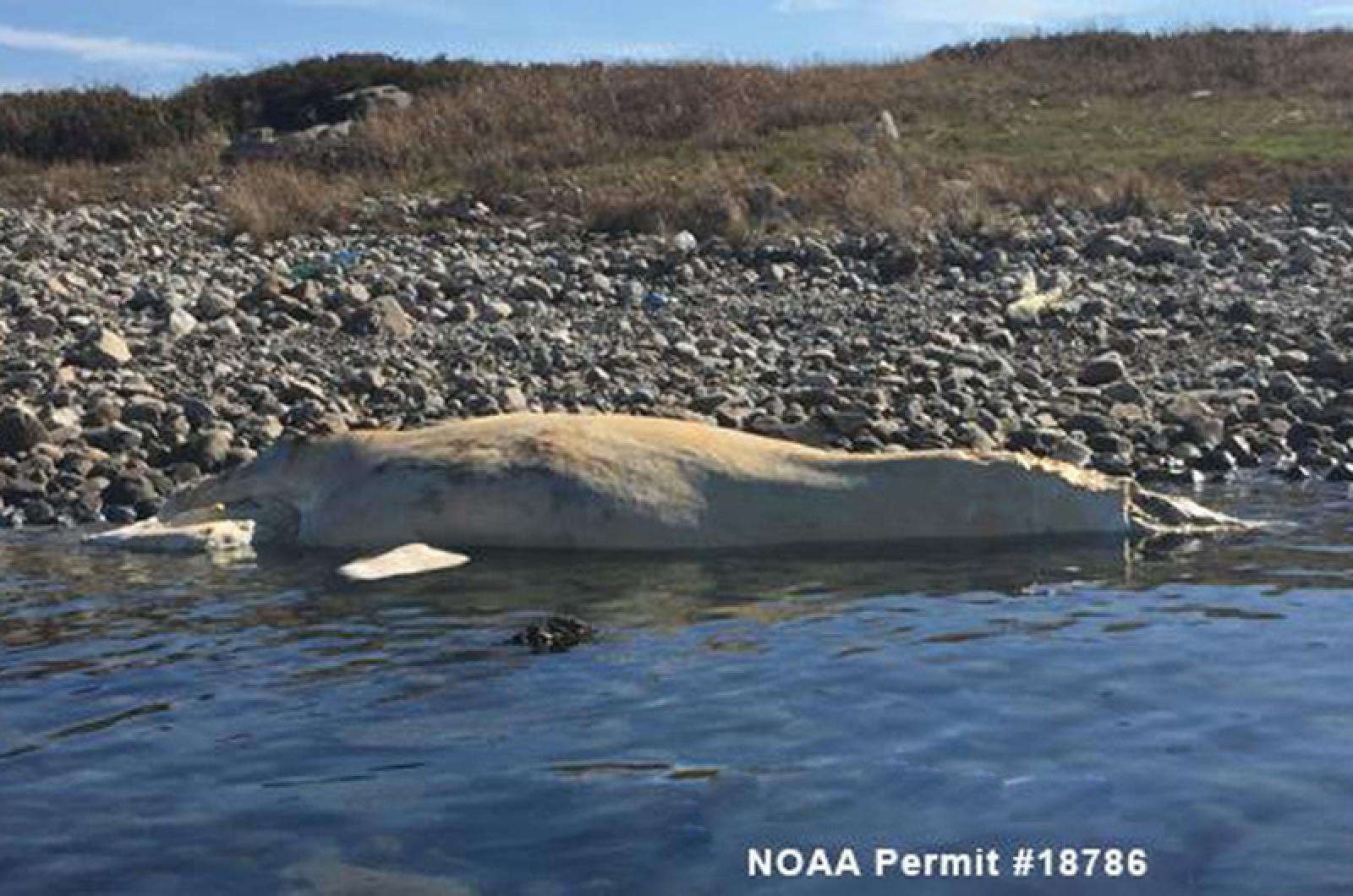
<p>A decomposing North Atlantic right whale was found this week on Nashawena island northwest of Martha’s Vineyard, fisheries experts confirmed.</p>
A decomposing North Atlantic right whale found this week on Nashawena island northwest of Martha’s Vineyard is the 16th member of the endangered species to die this year, fisheries experts have confirmed.
The discovery came as the National Marine Fisheries Service released a new five-year review calling for more resources to address the critically declining population of marine mammals, now estimated at about 450.
The review found that right whale recovery efforts have not improved since the last five-year review was completed in 2012. Collisions with cargo ships, entanglement in commercial fishing gear and a variety of environmental stressors including noise pollution are among the key threats to whale survival.
“In many ways, progress toward right whale recovery has regressed,” the report said, citing numerous scientific studies. “The population has been declining since 2010 and has exhibited changes in habitat use. During this period, right whale calving rates have remained below average and body condition of the population has worsened.”
The discovery of the dead whale on Nashawena, one of the Elizabeth Islands, was announced Monday by the International Fund for Animal Welfare,which has been working with federal fisheries officials to address what it called the alarming number of right whale deaths in 2017.
A team of scientists was on the scene this week to take pictures and conduct tests on the carcass, but no cause of death has been identified.
“It’s very decomposed and we may never get an answer but we hope to get some more information with the testing,” said Jennifer Goebel, regional public affairs officer with the National Fisheries Science Center, part of NOAA, which is working alongside the animal welfare group.
The 16 North Atlantic right whales confirmed dead represent about three per cent of the remaining population of the species. Four of the 16 were found in U.S. waters, including one found in August in Edgartown Great Pond. That whale is believed to have died from entanglement in fishing gear.
The five-year review issued by the fisheries service recommends focusing additional resources on understanding the threats facing the species and determining the best ways to mitigate them.
Comments
This is so tragic. The story
Devin Fitzgerald Reston Edgartown, MAThis is so tragic. The story is important, because the media attention along with activism helped to bring needed changes to the commercial tuna industry. This has been an awful year for this species. Thank you Mrs. Jane Seagrave, for bringing attention to this issue.
What "needed changes to the
Alex Friedman EdgartownWhat "needed changes to the commercial tuna industry" are you referring to? Atlantic tunas are caught almost exclusively with artisanal handgear (rod&steel, harpoon) that have no impact on whales or dolphins. Enough with blaming commercial fishermen for a tragic event almost certainly caused by a ship strike. Last weekend off West Chop I saw a massive Leatherback Turtle bleeding and floundering on the surface ... as the SSA boats had just crossed through the area. Let the Right Whale necropsy that IFAW and CCS determine the cause of death before casting unfounded blame on fishermen. Thanks
Read the report. It is on
Bob Oak BluffsRead the report. It is on some types of fishermen. It's sad & it's not really a secret. What are we doing about it as an island should be the next question? We should be helping the fishermen with funds to get the proper gear so we can prevent these types of incidences.
Read the necropsy reports of
Rick West TisburyRead the necropsy reports of the dead whales here:
http://www.cwhc-rcsf.ca/docs/technical_reports/Incident%20Report%20Righ…
Killed by vessel strikes and fishing gear (rope from a pot entanglement).
Curious to know how our local and regional lobstermen are responding to this and what they are doing to prevent future whale entanglements? I understand there are some mitigation efforts happening with cut away lines but how many are actually using these methods and do they work?
It is also worth noting we have lost a human life this year when an entangled whale inadvertently smacked someone who was cutting them loose with one of their fins in the head.
The lowered numbers of the
GinnyThe lowered numbers of the estimated population from 500 to 450 is incredibly sad. For some years it appeared that the numbers were very slowly increasing; not so! And with the loss of at least 16 whales, some which had not achieved sexual maturity, we are watching the end of one group of great whales. It seems that we can only mourn.
Ginny, I'm pretty sure we can
Carol formerly ChilmarkGinny, I'm pretty sure we can do more than mourn! Human activities are killing these whales - not some virus - so we need to modify those activities, pronto. I agree that we need more whale-safe pots & lines, & I for one am all for using some tax dollars to sponsor this equipment replacement for fishermen. (let's do fewer tax cuts for billionaires, & then the tiny amount of money for that won't even be noticed in the federal budget). Ship strikes are always the biggest killer - can we change shipping lanes? Outfit ships with avoidance sonar alarms? This doesn't seem like an overwhelming technical challenge, folks.
Add new comment