

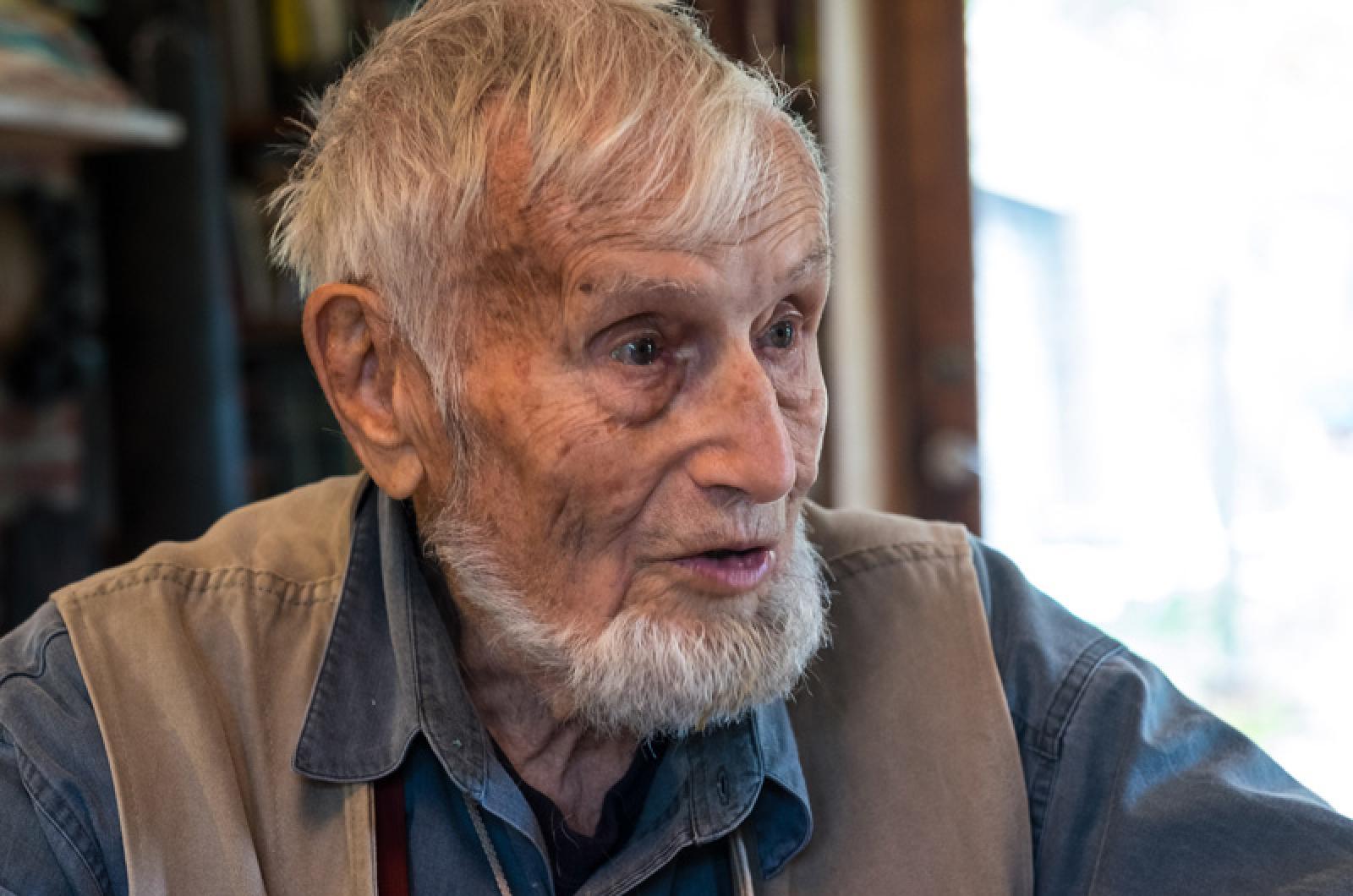
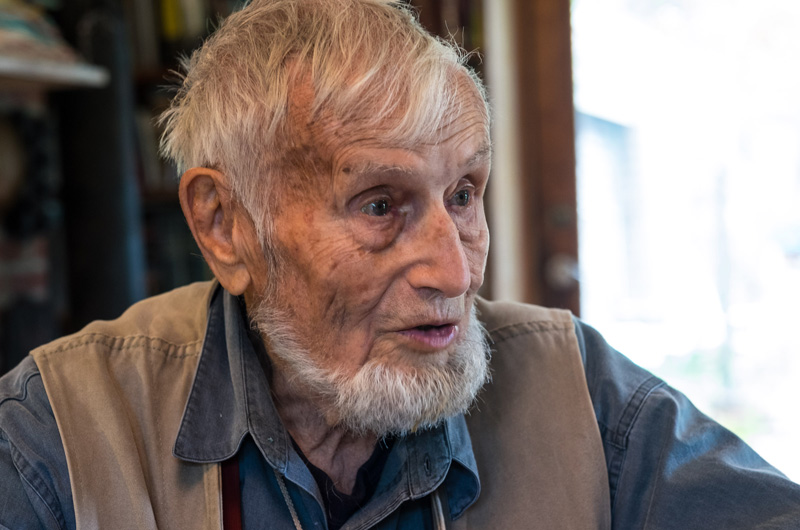
How Nelson Bryant, U.S. Army, 82nd Airborne Division, 508th parachute infantry regiment, lost his trench knife in combat is quite a story.
How Nelson Bryant, U.S. Army, 82nd Airborne Division, 508th parachute infantry regiment, lost his standard issue U.S. Army trench knife in combat is quite a story. How he got it back is an even better one.
On Sept. 17, 1944, Mr. Bryant was in a pretty tight spot. He was still recovering from a previous gunshot wound to the chest and had taken a little shrapnel in one leg as he parachuted into occupied Holland. With German soldiers firing from an uncomfortably close distance, he couldn’t get out of his parachute harness. Before the jump, it took two men to buckle the ill-fitting harness around his chest. Now he couldn’t get the buckles apart.
So he took his trench knife out of its sheath and began to cut the harness off. He finally got free, and scrambled to safety.
“There were some Germans shooting at me from about 150 yards away, and they were getting damn close,” said Mr. Bryant, reminiscing this week in the coziness of his West Tisbury home. “As near as I can tell, what happened was I was pretty excited, and a little upset. I remember I cut some of my clothes I was so nervous. I cut out of the harness. What I think I did, I simply forgot my knife and left it there on the ground in its sheath.”
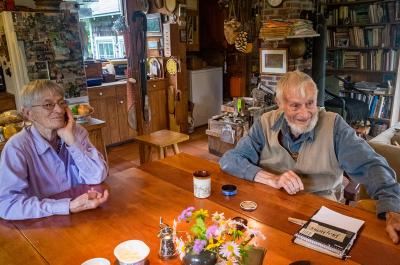
Ruth Kirchmeier and Nelson Bryant in their West Tisbury home.
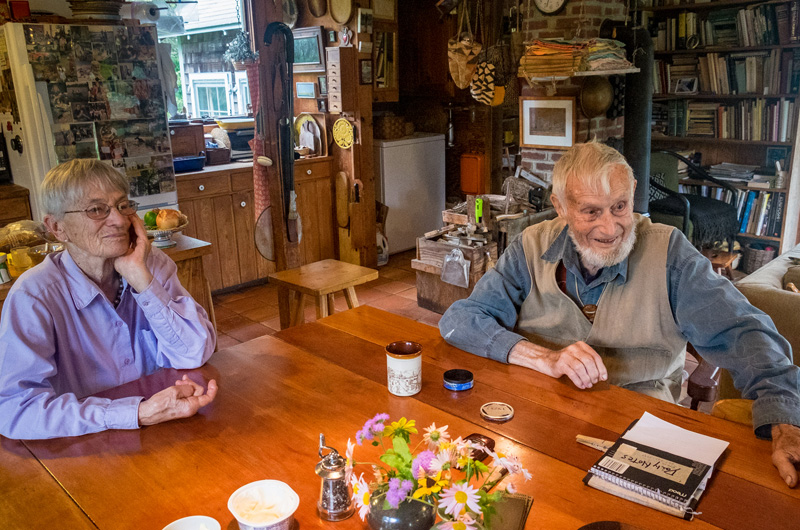
Ruth Kirchmeier and Nelson Bryant in their West Tisbury home.
More than seven decades later, thanks to some incredible Internet sleuthing by a Dutch man who admires his service in World War II, Mr. Bryant is getting his trench knife back. The former outdoor columnist for the New York Times knows a good story when he hears one.
The story begins at Dartmouth College in 1943. The transition from rural and wild West Tisbury to the Ivy League environs of Hanover, New Hampshire left Mr. Bryant restless.
“The world is torn apart, guys my age are dying, and I’m sitting here going to Dartmouth,” Mr. Bryant said. “I said the hell with it, and I volunteered for the draft.”
His first Army assignment involved handing out clothes to members of an intelligence division in Washington, D.C, and he soon became restless at that, too. He volunteered for the 82nd Airborne, and in the spring of 1944, He was in Nottingham, England for training.
He was among the first American soldiers into occupied France, parachuting behind enemy lines the night before Allied forces stormed the beaches at Normandy on D-Day. Four days later, while on a reconnaissance mission, he found himself looking death square in the eye when he was shot in the chest.
“I heard machine gun fire, the next thing I know, bam,” said Mr. Bryant. “It went in the front, came out the back, 50 caliber. I thought, is this it? I could here distant gunfire, I could hear cows mooing in the pasture.”
Now 94, Mr. Bryant doesn’t see, hear or remember as well as he used to, but he can still sling cuss words around like a soldier, and the sparkle returns to his eyes as he remembers the war stories with a newspaperman’s detail.
Some of his fellow soldiers thought he was dead as he lay bleeding in the French countryside, but with the some help, he got to a rear position, where he laid in a hedgerow for four days, before finally getting shipped to a field hospital in Wales.
While recuperating there, he began taking short walks and then short runs, trying to get back in shape. When he heard his unit was about to make another jump, he asked the doctors if he could be released. They asked him if he was out of his mind.
“When no one was looking I got my clothes and put them on, walked out of the hospital, and thumbed rides on U.S. military vehicles back to Nottingham, England, and got there a week before we made the jump into Holland,” said Mr. Bryant.
Earlier this year, some 73 years after the day he parachuted into Groesbeek, Holland, Mr. Bryant picked up the telephone. On the other end of the line was André Duijghuisen, a 56-year-old educator from Holland. Mr. Duijghuisen had been cleaning out his father’s attic in Groesbeek, where the exploits of the U.S. soldiers are still legendary. In the attic, along with other relics of the war, he found a knife. Scratched into the sheath was the name Bryant.
“Searching on the name of Bryant, I found he served in the 82nd Airborne division and the 508th regiment,” said Mr. Duijghuisen, speaking by phone from New York on Wednesday. “I searched a little bit further and found some articles he wrote for the New York Times.”
A bit more searching and he found Mr, Bryant lived in West Tisbury, and was listed in an Internet phone directory.
“I was startled,” said Mr. Bryant, remembering the phone call. “He said bayonet, and I knew something was wrong because I knew the gun I carried you couldn’t use a bayonet. Then I realized I was talking to a civilian and he wouldn’t know a bayonet from a trench knife. When he said there was a leather sheath, that was a clue.”
In the months since that first phone call, the two men have exchanged emails frequently. The educator and the newspaperman say they’ve gotten to know each other a bit. One thing led to another, and Mr. Duijghuisen and his wife arranged to travel to New York, and then to Martha’s Vineyard this weekend. The trench knife, in it’s sheath with the name Bryant scratched into it, is tucked safely in his suitcase. He will return it when the two men meet.
Mr. Bryant said the return of his knife doesn’t stir up old memories. Those memories never went away.
“All of my thoughts, I think about it all the time,” said Mr. Bryant. “My war time service is one of the big events of my life. It obscures everything else, almost.”
He saw some terrible things, brushing death several times, but the Allied forces eventually prevailed, and the German forces were driven out of Holland.
Mr. Duijghuisen wasn’t even born when Mr. Bryant fell out of the sky that day in 1944. So why expend so much effort to find an old soldier, and travel thousands of miles to see him?
“The name on the bayonet, it made, for me, something personal,” said Mr. Duijghuisen. “Because of what he did in 1944, and because we are now living in a free world. I think a lot about that. He fought in Holland for our freedom. I’m very excited about that, it will be nice to see him.”
Comments
This is such a GREAT story!!!
Red sox WTThis is such a GREAT story!!!
Mr Bryant
Jeff sherman Destin,flMr Bryant
What an amazing story of your sacrifice and bravery in WW II - we can all learn from you. What an awesome and happy ending to a very interesting story that proves people are still great across all continents
We knew old soldiers never
Rob Burnside Kingston, PAWe knew old soldiers never die. Now we know they don't necessarily fade away, either. I salute both men and Steve Myrick for a great story, and hope the Gazette will publish a follow-up piece in the near future.
Amazing! Way to go uncle
Fred b morgan 111 New Orleans LouisianaAmazing! Way to go uncle Nelson!!!!!
Amazing happening, what a
Mildred EdgartownAmazing happening, what a fine story to pass on. That greatest generation was and still is, truly great. We owe them all thanks and honor and respect.
Well done Mr. Bryant. It is
Mike North CarolinaWell done Mr. Bryant. It is to men just like you we owe our eternal debt of gratitude. And I'm quite certain you and your fellow soldiers knew exactly what you were getting into.
What a great story.Thank You
June C DeFeo west palm beachWhat a great story.Thank You for serving Mr Bryant
Mr. Bryant thank you for your
William Allen New JerseyMr. Bryant thank you for your magnificent service to our country and for the many marvelous columns in the New York Times , I was always a fan especially of your surf casting stories. Spent many a night surf casting on the vineyard because of your influence!
This deserves a parade!
David Pritchard Oak BluffsThis deserves a parade!
Thank you for your heroic
Patty Flaherty Donahue Stow, MAThank you for your heroic service and sacrifice Mr. Bryant, an amazing story! Thank you for sharing!
The Dutch population in and
Albie Scott Santpoort Zuid, Noord Holland, the NetherlandsThe Dutch population in and around Arnhem and Nijmegen, in the east of Holland, is very much aware of the region's crucial role towards the end of the Second World War, and the part American troops played in liberating them from the German occupation. To say that they are eternally grateful is an understatement. My wife and I visited the bridge "De Oversteek" in September, and were touched by the sentiments expressed by local school children, who had placed drawings and flowers at the monument in commemoration of the sacrifice made by the 82nd Airborne.
https://www.nytimes.com/2014/09/18/world/europe/a-dutch-town-honors-us-…
Pfc Nelson S. Bryant Jr.
Brian N. Siddall Ithaca, NYPfc Nelson S. Bryant Jr. landed on Hill 30 in an apple orchard and was part of Company D of the 508th Prcht Inf. The first man he found was 1st Lt Norman MacVicar Bryant’s Company Commander who was hanging two feet off of the ground. MacVicar ordered him to cut him down, which he was already coming over to do.
Bryant went on quite a few patrols until he was wounded 8 June when he was hit in the chest and the man with him killed, riddled by machine gun fire. He was laying there when a medic gave him morphine. There was a general pull back and Major Shields Warren walked by and said, soldier if you don’t get off your ass the Germans will catch you. Francis Quinn helped him back to Hill 30.
In an Ambulance back to the beach in Normandy, he was put on a Gurney and was looking at the sky feeling comfortably numb from the second shot of morphine that a second medic had given him. The first medic had forgotten to pin a note to him telling of the first dose.
Bryant saw a beautiful man’s face appeared above him and he said, Nelson, you have been here so long. Bryant said "I thought it’s f***ing God, I must be in heaven. Then I realized that the medical tech must have read my dog tags!"
Greetings from a friend of
Karin New JerseyGreetings from a friend of the Kirschmeier family in New Jersey. Thank you for this wonderful story about Nelson!
I LOVE this story. Made my
C. Lovejoy TexasI LOVE this story. Made my day.
If only I could read this
Alec Walsh Basking Ridge NJIf only I could read this story to my father! He loved Nelson Bryant's NY Times columns, envied the wonderful annual cycle of his life so beautifully chronicled in the paper, from the private salmon beats in New Brunswick, duck hunting and night bass fishing on the Vineyard, to small pond trout fishing in northern NH. He felt a kinship with him as someone who endured the war in France in 1944, and survived gunshot wounds. Thank you Mr Bryant for your service to our country, for your writing, and for the happy hours you provided to my father and my brothers reading your words.
What a thrill to read your
Poppy Walsh Cummings New York CityWhat a thrill to read your story, Mr Bryant---and I wonder how you will feel to hold that knife in your hand again. You said that your time on the ground in wartime Europe colored everything else in your life, and that you remember it all in vivid detail. My father, mentioned by Alec Walsh above, always said the same thing, What a fine generation you have been, and I thank you for your marvelous writing, and for your service.
Just read this article while
Ivo Mottoul BelgiumJust read this article while surfing on pinterest.
What a story!
As a citizen of a neighbouring country of mister Duijghuisen I have the same feelings of deep respect for the many young men who saved democracy in our European countries.
Thank you Mr Bryant!
Thank you, Mr. Bryant for all
Phillip L Martinez Hilton, New YorkThank you, Mr. Bryant for all of your service you have served our beautiful country we need more people like you
- Phillip Martinez
As the son of a WWII vet I
Lee Foote Edmonton Alberta CanadaAs the son of a WWII vet I appreciate that generation above all measure. As an outdoorsman, I sincerely hope this prompts a renewed interest in the outdoor columns of writers like Mr. Bryant, maybe some re-issuing of his work. I know that solace gained in outdoors was cathartic and healing for my father's post-war era and maybe the same was true of many soldiers. It is one of those benefits of being in nature that is often overlooked. Eventually, that knife and story would be a beautiful addition to a well-curated museum should Mr. Bryant's family be willing to share this artifact, sentiment and story with them.
What a story from one of my
Dan Socci Needham ma.What a story from one of my favorite new england outdoor writers.Being a fanatic trout fisher grouse hunter my self I love reading his work along with other local outdoor writers tap Tappley Ted Janes an Frank Woolner it was a great time to grow up in pre developed new England.
Add new comment