


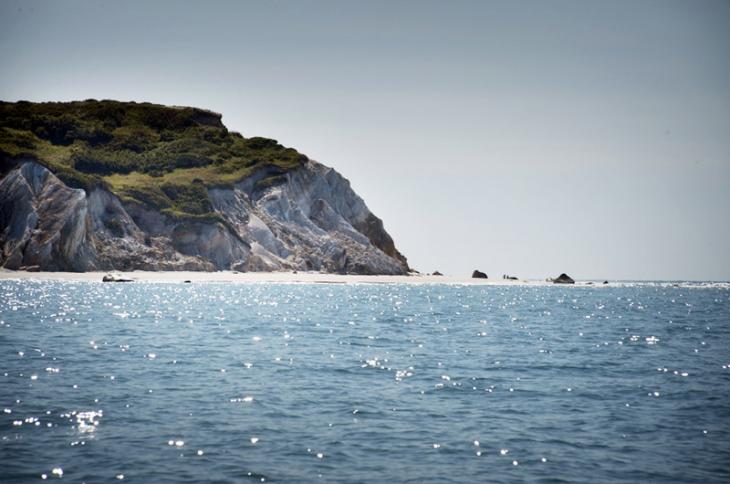
<p>A federal appeals court has rejected another bid to halt efforts by the Aquinnah Wampanoags to conduct a gambling operation on Martha’s Vineyard, narrowing the legal options for the town, state and community group.</p>
A federal appeals court has rejected another bid to halt efforts by the Aquinnah Wampanoags to conduct a gambling operation on Martha’s Vineyard, narrowing the legal options of the state, town and community group to an appeal to the U.S. Supreme Court.
The town of Aquinnah, the commonwealth and the Aquinnah/Gay Head Community Association had asked the full, six-judge U.S. Court of Appeals for the 1st Circuit to hear the case, after a three-judge panel of the same court ruled in favor of the Wampanoag Tribe of Gay Head (Aquinnah) last month.
In a one-sentence order issued Wednesday, the full court said it had denied an effort to hear the case, and indicated that the three-judge panel had also denied a request for a rehearing. The decision means the opponents now have one further appeal, to the nation’s highest court, which hears only about one per cent of the 7,000 to 8,000 petitions it receives each year.
In a statement, tribal chairman Cheryl Andrews-Maltais said she was “ecstatic” and called it a “great day for our tribe.” She added that she hoped opponents will now acknowledge the tribe’s right to economic development through gaming, like other federally recognized tribes.
“Maybe now they will stop fighting us, and wasting everyone’s valuable time and resources,” Ms. Andrews-Maltais said. “However if not, we are and remain prepared to continue to defend our rights.”
The Aquinnah selectmen have already authorized an appeal to the nation’s highest court, and now have until August 8 to formally ask the court to review the case, town counsel Ronald H. Rappaport said Thursday.
“Our clear objective is to ask the U.S. Supreme Court to accept the case, and that’s what we’re devoting our energy to,” he said.
The circuit court had ruled April 10 that the 1988 Indian Gaming Regulatory Act that lays out a national framework for gaming by tribes supersedes the 1987 Massachusetts Settlement Act, passed by the same Congress, which said the Aquinnah tribe must submit to state and local regulation, including restrictions on gambling.
In Wednesday’s order, the court said it lacked a majority to grant a hearing by the full court, but did not reveal the vote. Five of the court’s full-time judges participated, with the sixth, Judge David J. Barron, recused from the case.
Comments
The tribal leadership may
Bob EdgartownThe tribal leadership may think they have won. But, you have lost my respect and my support for the cliffs. I will no longer take guests to the beach or visit the cliffs. I will never spend a dime in any indian owned or operated places and will no longer recognize your people or culture except as a piece of island history.
this is textbook racism and i
durwood aquinnahthis is textbook racism and i hope that others who disagree with the actions of ANY subset of a racial, ethnic, or national group will better channel their feelings under comparable circumstances. if you wish to avoid supporting a gaming operation or other endeavor of the tribe, that's very much your right to do so. i do take exception to the notion that it is acceptable to punish the many hard-working wampanoag people who own or operate businesses that have nothing to do with gaming. additionally, no longer recognizing the wampanoag as a separate people or culture is petty; actually isn't new; and-- possibly contrary to intention-- reinforces us as a separate people. i wait for the day that your racist sentiments and misdirected ire are a part of island history.
Congratulations to the tribe!
Annmarie EdgartownCongratulations to the tribe! The Indians were here a lot longer than us before the white man came to their lands both here and across the country and took much of their lands by force. Little if any restitution was given with the exception of some token reservations by the government. So now the Indians find a way to support themselves on their land that people don't like, I say too bad. I am sure the tribe will thoughtfully provide gaming that will not interfere with their traditions or the stiff upper lips of some islanders. By the way they won't need Bob's few bucks when the big money starts rolling in. Can you say B-I-N-G-O!
I agree with the basic
CommenterI agree with the basic sentiments---based on the facts of white colonial dispossession of Native Americans.
Somehow I doubt that big bucks are going to come rolling in from bingo.
It is well known that gambling is a social problem, leading to an addiction.
I suppose it is OK as long at the White Man and Woman are the victims.
Money has always been made by some off of other people's desires, weaknesses, and addictions.
I just hope the snake doesn't come round to bite the Wampanoags themselves.
A casino would be a corrosive
Metacomet AquinnahA casino would be a corrosive desecration of hallowed ground, bringing a curse to MV wampanoags and the town of Aquinnah.
Whatever the casino supporters hope to gain, they will lose ten fold.
Considering the past foibles
Michael OBConsidering the past foibles I say let them have gaming; and see what happens.
Have the Wampanoags visited
JR TisburyHave the Wampanoags visited Atlantic City, Foxwoods, the Casino's in the West and Midwest? Have they seen what those communities are actually like in person? Not the casinos but the actual communities outside of the casinos? Have they spoken with law enforcement in those areas or city councils to see what it is like to live and work in communities where legalized gambling exists?
What can be done to make up for what happened to the Native Americans treated so unfairly? If this is what the Wampanoags want then I truly wish them the best of luck. Everything in life is a compromise. What the Wampanoags get for the money they receive may surprise them. The beauty and majesty of the cliffs and quite untouched feel of Aquinnah will be lost but not forgotten.
Add new comment